
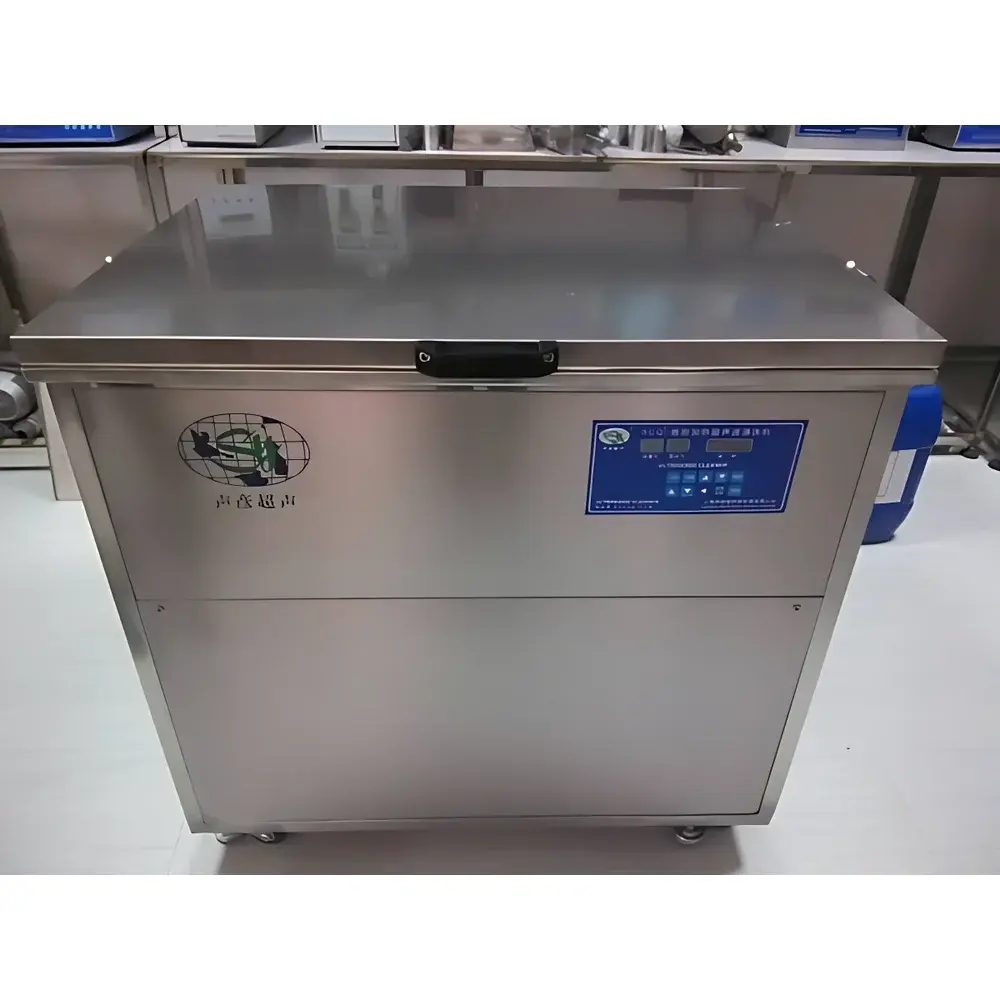
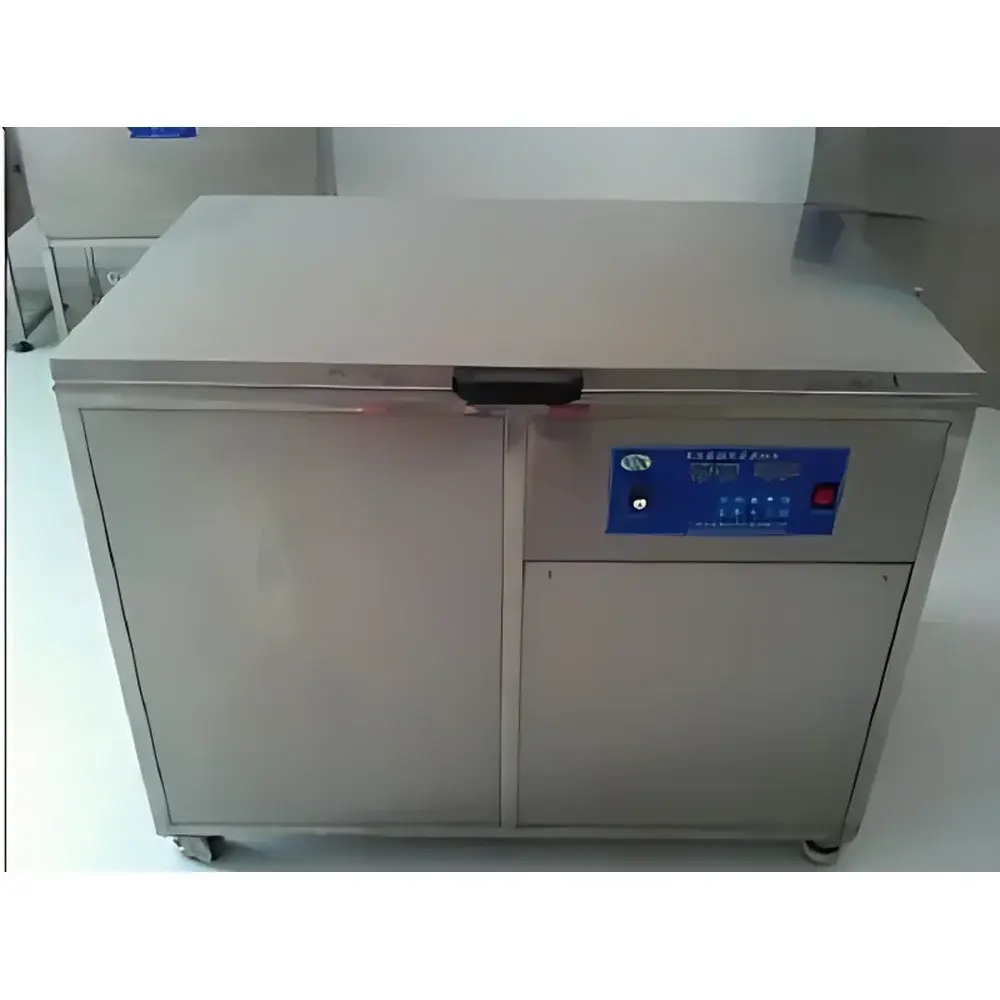
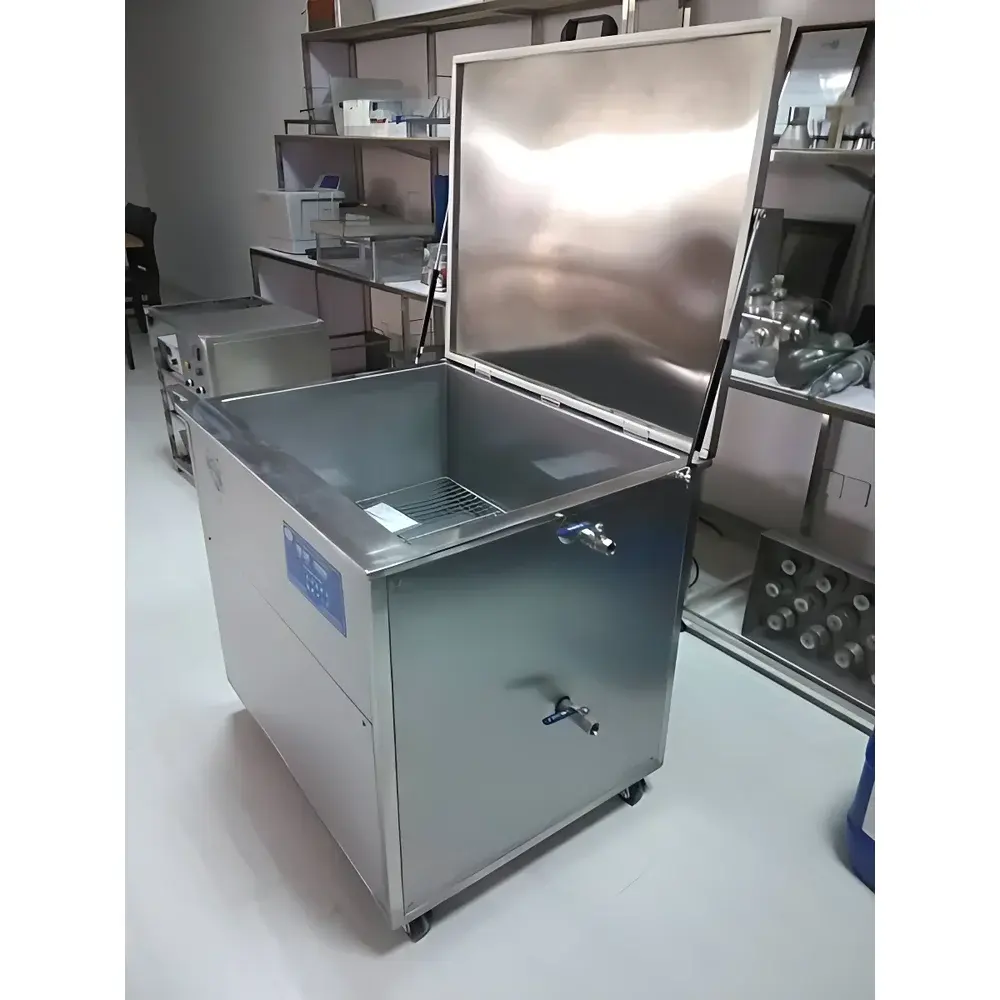
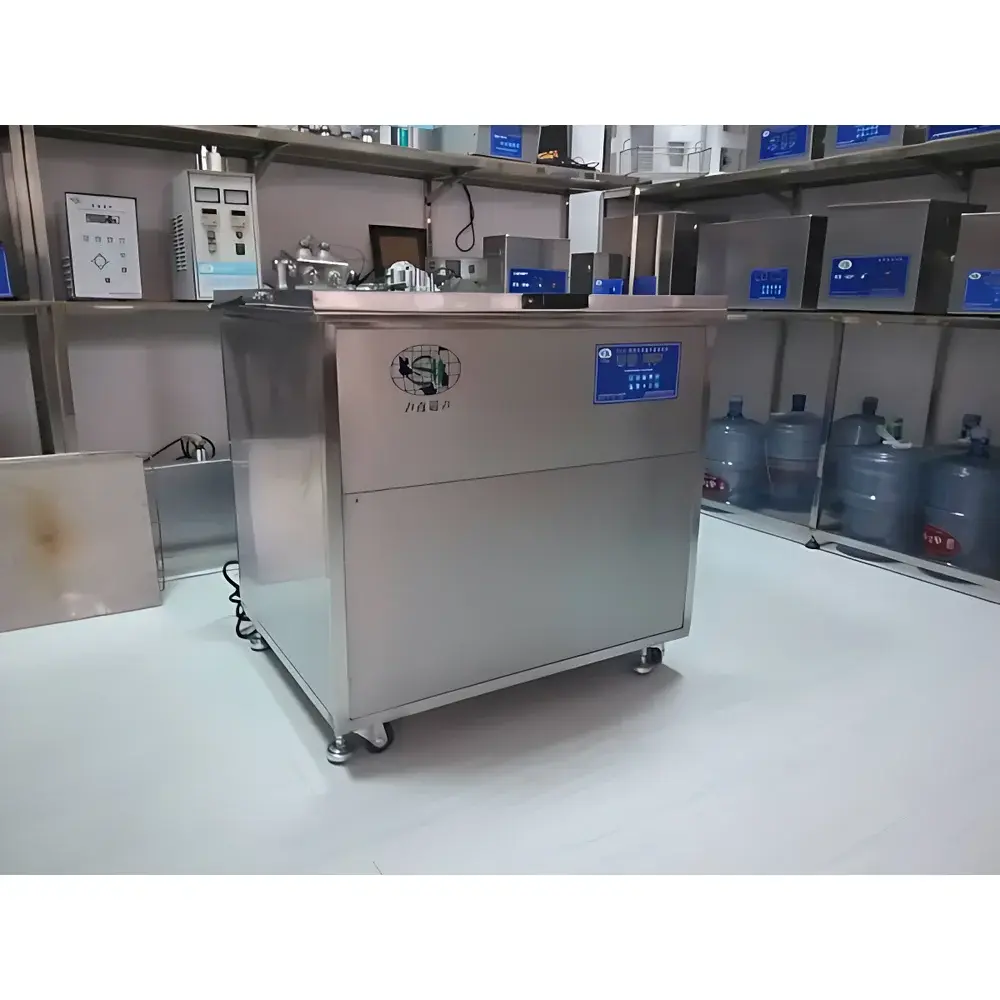
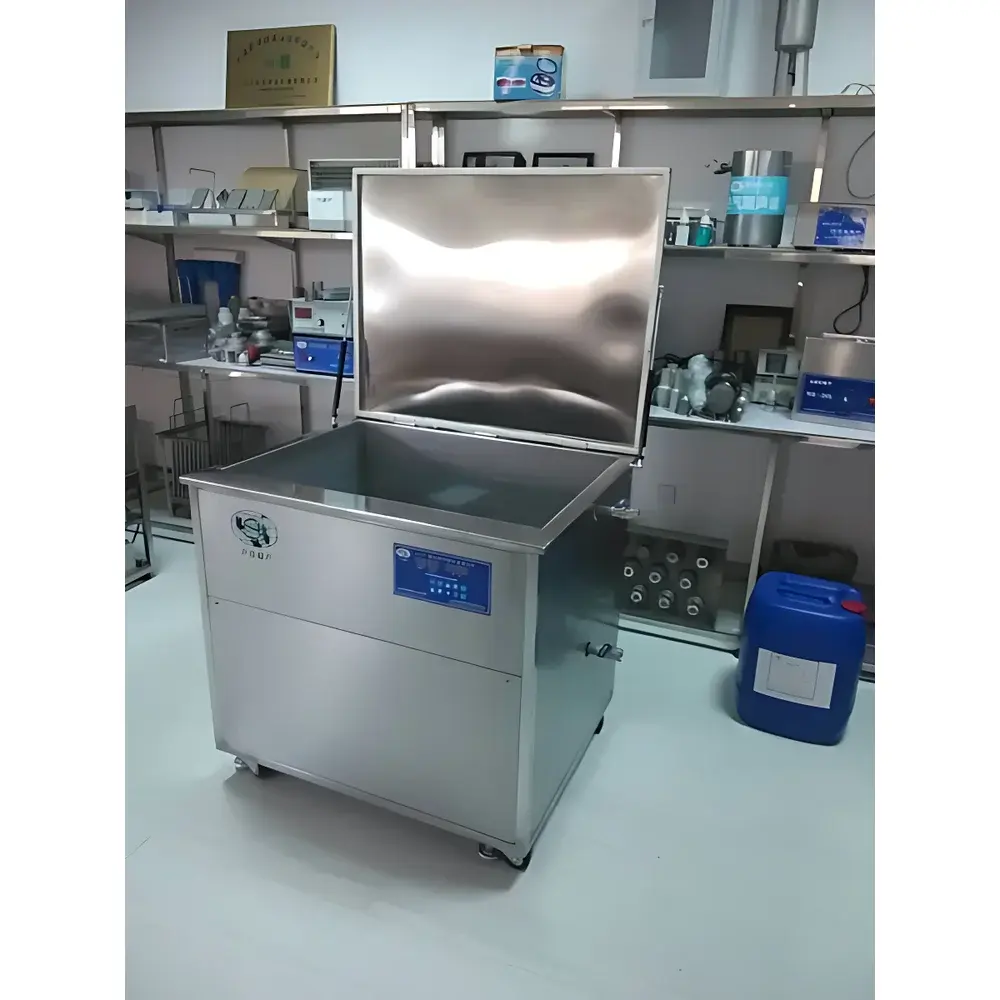
Shengyan SCQ-1010B 132L Benchtop Ultrasonic Cleaner with Multi-Frequency Generator
| Brand | Shengyan Ultrasonics (SYCS) |
|---|---|
| Origin | Shanghai, China |
| Model | SCQ-1010B |
| Capacity | 132 L |
| Internal Tank Dimensions | 830 × 530 × 300 mm |
| Ultrasonic Frequencies | 25 kHz / 35 kHz / 40 kHz / 60 kHz / 80 kHz / 100 kHz |
| Ultrasonic Power Output | 2000 W (adjustable from 10% to 100%) |
| Heating Power | 3000 W |
| Temperature Range | Ambient to 80 °C (max. 100 °C per optional configuration) |
| Timer Range | 1–600 min |
| Sound-Dampening Lid | Included |
| Manual Fill/Drain | Yes |
| Construction | Full SUS304 Stainless Steel Tank and Housing |
| Compliance | CE-marked design principles |
Overview
The Shengyan SCQ-1010B is a high-capacity, multi-frequency benchtop ultrasonic cleaner engineered for demanding laboratory, industrial, and clinical cleaning applications. It operates on the principle of acoustic cavitation—where high-frequency sound waves generate microscopic vacuum bubbles in liquid media that collapse violently upon contact with submerged surfaces, delivering mechanical energy sufficient to dislodge particulate contaminants, organic residues, biofilms, and entrapped air. Unlike single-frequency units, the SCQ-1010B supports six discrete ultrasonic frequencies (25, 35, 40, 60, 80, and 100 kHz), enabling users to select optimal energy coupling for diverse sample geometries and material sensitivities—from delicate optical lenses and microfluidic chips to robust metal components and surgical instruments. Its 132-liter tank volume accommodates large batches or oversized items such as PCB assemblies, glassware racks, dental instrument trays, and automotive parts without compromising uniformity of cleaning intensity across the bath.
Key Features
- Full SUS304 stainless steel construction—including tank, lid, and internal support frame—for long-term corrosion resistance in aqueous, alcoholic, and mild solvent-based cleaning solutions.
- Digitally adjustable ultrasonic power output (10–100% of 2000 W nominal), allowing precise control over cavitation intensity to prevent surface erosion on fragile substrates.
- Independent heating system (3000 W) with PID-controlled temperature regulation from ambient to 80 °C (extendable to 100 °C in validated configurations), supporting enhanced solubilization and degassing protocols.
- Programmable digital timer (1–600 minutes) with audible end-cycle alert and automatic shutdown for unattended operation under controlled conditions.
- Integrated sound-dampening lid reduces airborne noise to ≤65 dB(A) at 1 m distance, meeting occupational safety thresholds for continuous use in shared laboratory environments.
- Dual-safety architecture includes overtemperature cutoff, dry-run protection (auto-shutoff when liquid level falls below transducer array), and overload circuitry compliant with IEC 61000-4 electromagnetic compatibility standards.
Sample Compatibility & Compliance
The SCQ-1010B is validated for cleaning a broad spectrum of materials including borosilicate glass, fused silica, anodized aluminum, titanium alloys, stainless steel (316L, 420), silicone elastomers, and polymer substrates (e.g., PMMA, PC, PTFE). It supports cleaning validation per ASTM F2799 (Standard Guide for Validation of Cleaning Processes for Reusable Medical Devices) and aligns with ISO 15883-1 requirements for washer-disinfectors used in healthcare settings. While not certified as a medical device under FDA 21 CFR Part 820, its design facilitates integration into GMP/GLP-compliant quality systems through traceable parameter logging (when paired with external data acquisition modules) and repeatable process execution. All electrical components meet RoHS 2.0 directives, and the unit is supplied with CE-conformity documentation referencing EN 61000-6-3 (EMI emission) and EN 61000-6-2 (immunity).
Software & Data Management
The SCQ-1010B employs an embedded microcontroller-based interface with tactile membrane keypad and dual-line LCD display, offering direct access to frequency selection, power modulation, temperature setpoint, and timer configuration. Though it does not include built-in USB or Ethernet connectivity, its operational parameters are fully reproducible via manual entry—enabling strict adherence to SOP-defined cleaning cycles. For laboratories requiring audit-ready records, the unit can be interfaced with third-party data loggers (e.g., Omega OM-DAQPRO-5300 series) to capture time-stamped temperature, power, and cycle duration metadata. This supports compliance with FDA 21 CFR Part 11 when combined with appropriate electronic signature protocols and secure file storage practices.
Applications
- Life Sciences: Removal of protein residues from electrophoresis tanks, sonication-assisted cell lysis preparation, and pre-sterilization cleaning of pipette tips and centrifuge rotors.
- Electronics Manufacturing: Defluxing of printed circuit boards, removal of solder paste residues, and post-etch cleaning of semiconductor wafers and MEMS devices.
- Clinical & Dental Labs: Decontamination of orthodontic appliances, denture bases, endodontic files, and reusable laparoscopic instruments prior to autoclaving.
- Materials Research: Degassing of nanoparticle suspensions, dispersion stabilization of carbon nanotubes in solvents, and surface activation of polymeric membranes prior to coating.
- Quality Control: Validation of cleanliness per VDA 19.1 (automotive parts) and ISO 16232 (road vehicles), particularly for critical components exposed to lubricants or machining coolants.
FAQ
What cleaning solutions are compatible with the SCQ-1010B?
Aqueous detergents, ethanol, isopropanol, acetone, and low-concentration alkaline or acidic formulations (pH 2–12) may be used. Avoid halogenated solvents unless the unit is specifically modified for explosion-proof operation.
Is the unit suitable for sterilization?
No. The SCQ-1010B performs cleaning and disinfection-level decontamination but does not achieve sterility assurance levels (SAL) required for terminal sterilization. It serves as a prerequisite step before autoclaving or ethylene oxide treatment.
Can multiple frequencies be operated simultaneously?
No. Frequency selection is discrete and manually configured; simultaneous multi-frequency output is not supported. However, sequential frequency switching during a single cycle is possible via operator intervention.
What maintenance is required for long-term reliability?
Bi-weekly inspection of transducer mounting integrity, quarterly descaling of heating elements using 5% citric acid solution, and annual verification of temperature sensor calibration against NIST-traceable reference thermometers.
Does the unit support remote monitoring or IoT integration?
Not natively. Integration with building management systems or LIMS requires external signal conditioning hardware and custom scripting via analog voltage outputs (0–10 V) available on the rear panel interface port.



