
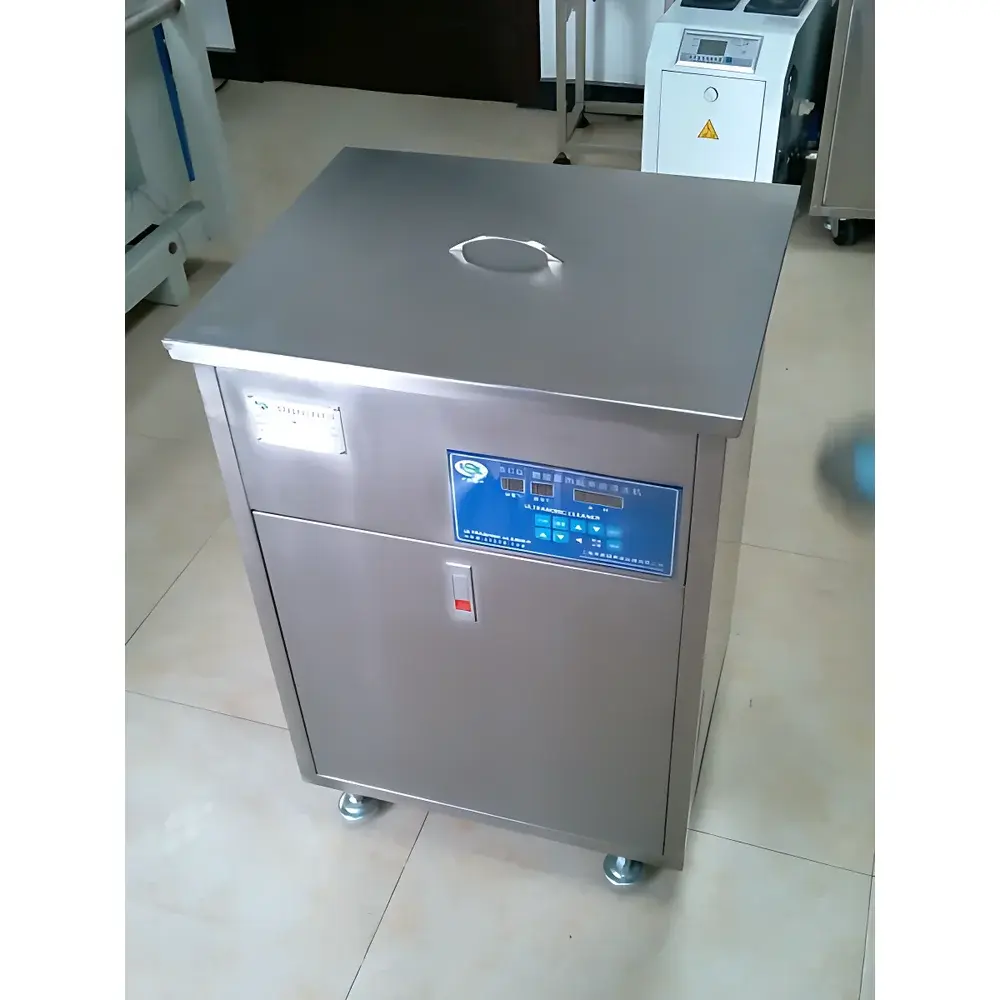
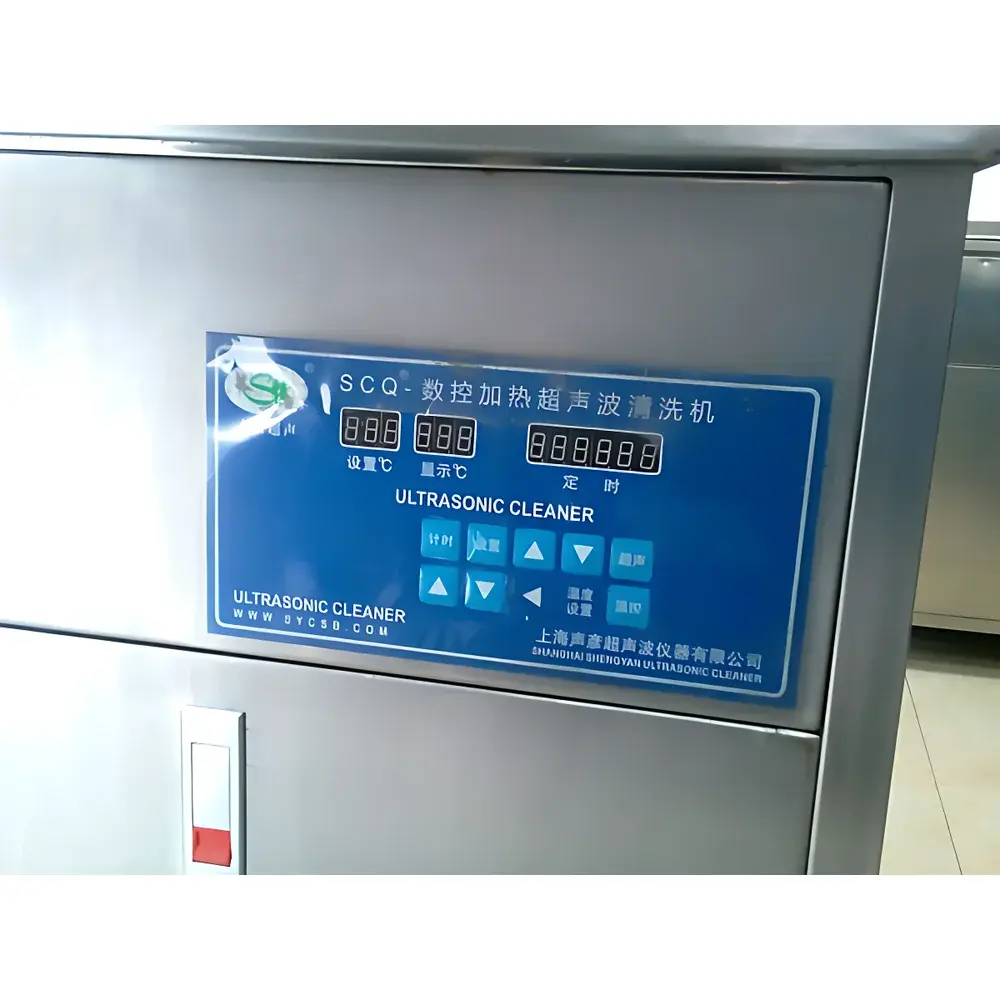
Shengyan SCQ-141120B Benchtop Ultrasonic Cleaner
| Brand | Shengyan Ultrasonics (SYCS) |
|---|---|
| Origin | Shanghai, China |
| Model | SCQ-141120B |
| Tank Capacity | 57.8 L |
| Ultrasonic Frequency | 28 kHz |
| Ultrasonic Power Output | 2000 W |
| Heating Power | 2500 W |
| Temperature Range | Ambient to 80 °C |
| Timer Range | 1–600 min (1 s resolution) |
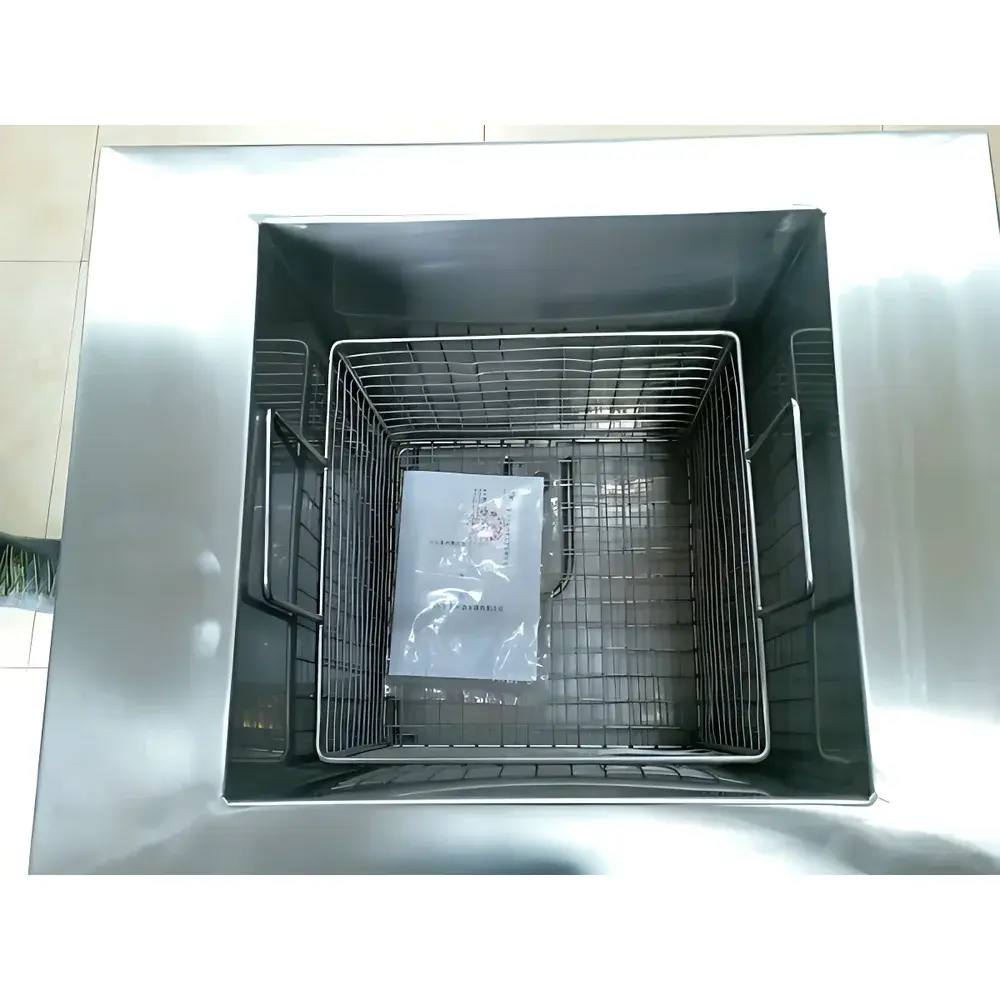
| Tank Dimensions (L×W×H) | 340 × 340 × 500 mm |
| External Dimensions (L×W×H) | 400 × 400 × 700 mm |
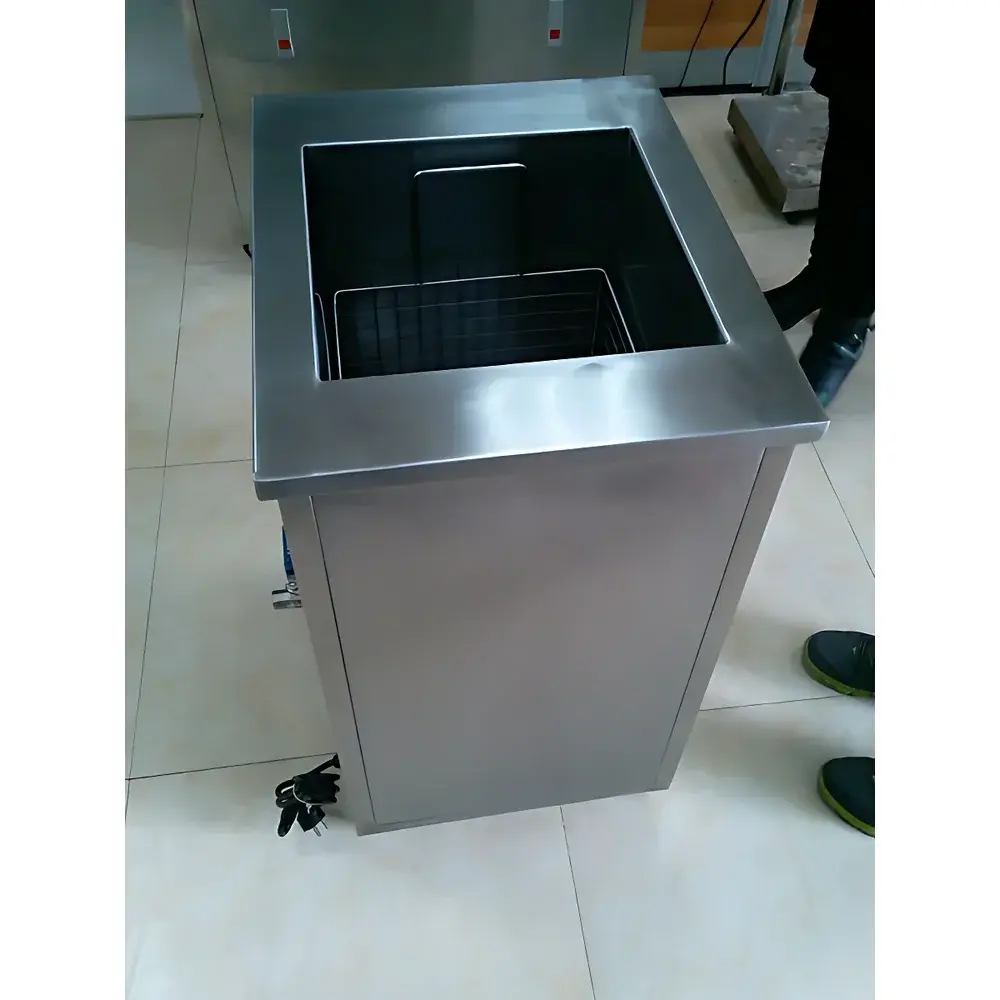
| Tank Material | SUS304 stainless steel, 2.0 mm wall thickness |
| Drain Port | Yes |
| Lid with Sound Dampening | Yes |
| Manual Fill/Drain | Yes |
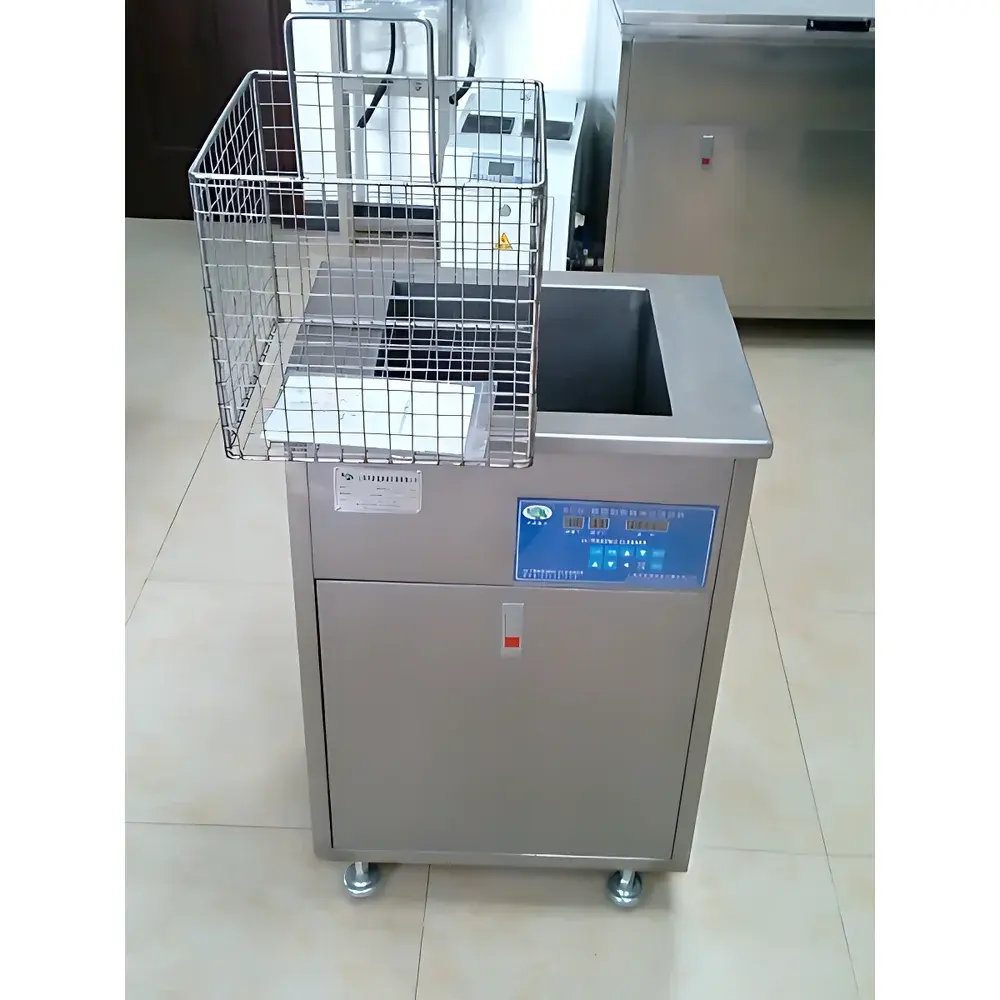
| Basket & Rack Included | Yes |
| Power Supply | AC 220 V / 50 Hz |
Overview
The Shengyan SCQ-141120B is a high-capacity, benchtop ultrasonic cleaner engineered for reproducible, high-efficiency cleaning of precision components across laboratory, industrial QC, and R&D environments. It operates on the principle of cavitation—generated by high-frequency mechanical vibrations transmitted through liquid media at 28 kHz—producing micro-scale implosions that dislodge particulate contamination, organic residues, oils, oxides, and biofilms from complex surface geometries without mechanical abrasion. Designed for sustained operation in regulated settings, the unit features a robust SUS304 stainless steel tank (2.0 mm wall thickness), integrated heating (up to 80 °C), and precise digital timing (1-second resolution over 1–600 minutes), enabling method-controlled cleaning protocols aligned with ASTM D4395, ISO 13892, and USP guidelines for equipment cleaning validation.
Key Features
- High-output 2000 W ultrasonic transduction system utilizing imported high-Q piezoelectric transducers bonded with German-sourced acoustic adhesives—rated for continuous operation at elevated temperatures (≤100 °C).
- Dual-circuit architecture: separate ultrasonic generator and tank assembly connected via shielded high-frequency cable—minimizing electromagnetic interference and facilitating service access.
- Advanced generator design based on self-tracking, externally excited oscillator topology—delivering stable frequency output with automatic impedance matching under variable load conditions; includes overvoltage, overcurrent, and short-circuit protection.
- Precision temperature control (ambient to 80 °C) with PID-based regulation and independent heating element (2500 W), supporting aqueous and mild solvent-based cleaning chemistries.
- Integrated sound-dampening lid reduces ambient noise to ≤65 dB(A) at 1 m distance—compliant with OSHA 29 CFR 1910.95 workplace noise exposure limits.
- Full accessory set included: perforated stainless steel basket, adjustable multi-tier rack, manual drain valve, and splash-resistant front-panel controls with LED display.
Sample Compatibility & Compliance
The SCQ-141120B accommodates a wide range of sample types—including glassware (vials, cuvettes, flasks), metal parts (gears, filters, surgical instruments), semiconductor wafers, optical lenses, printed circuit boards (PCBs), and porous ceramic substrates—within its 57.8 L capacity tank (340 × 340 × 500 mm internal volume). Its non-aggressive, chemistry-compatible cleaning mechanism preserves dimensional integrity and surface finish of delicate components. The unit meets CE marking requirements for electromagnetic compatibility (EMC Directive 2014/30/EU) and low-voltage safety (LVD Directive 2014/35/EU). When operated with validated cleaning agents and documented parameters, it supports GLP/GMP-aligned cleaning process qualification per FDA 21 CFR Part 211 and ISO 14644-1 cleanroom component preparation workflows.
Software & Data Management
While the SCQ-141120B operates via an embedded microcontroller interface (no PC connectivity), all operational parameters—including time, temperature, and power-on status—are logged internally with timestamped event records (last 100 cycles). Audit-trail functionality enables manual export via USB or serial interface (optional RS-232 module available) for integration into electronic lab notebooks (ELN) or quality management systems (QMS). Parameter lockout mode prevents unauthorized changes during routine operation—a prerequisite for FDA 21 CFR Part 11-compliant environments when paired with procedural SOPs and user-access controls.
Applications
- Mechanical engineering: removal of rust inhibitors, machining oils, carbon deposits, and filter media clogging residues from engine components and precision tooling.
- Surface finishing: pre-treatment cleaning prior to electroplating, anodizing, phosphating, or passivation—ensuring uniform coating adhesion per ASTM B689 and ISO 8502 standards.
- Medical device manufacturing: cleaning of reusable surgical instruments, endoscope channels, and implant-grade alloys in accordance with AAMI ST79 and ISO 15883-1.
- Electronics & semiconductors: residue-free removal of flux, solder paste, and photoresist residuals from PCB assemblies and silicon wafers.
- Laboratory operations: decontamination of volumetric glassware, chromatography columns, and cell culture vessels—supporting ISO/IEC 17025 method validation requirements.
- Optics & photonics: particle-free cleaning of mirrors, lenses, and laser optics without surface scratching or coating degradation.
FAQ
What is the maximum recommended operating temperature for aqueous solutions?
The unit is rated for continuous operation up to 80 °C; for extended thermal stability, use deionized water or low-volatility solvents compatible with SUS304.
Can this cleaner be used with flammable solvents?
No—this model lacks explosion-proof certification and is designed exclusively for aqueous or non-flammable, low-vapor-pressure cleaning solutions.
Is the ultrasonic power output adjustable?
No—the SCQ-141120B delivers fixed 2000 W output at 28 kHz; power modulation is not supported in this configuration.
Does the unit support automated fill/drain functions?
It includes a manual drain valve only; automated fluid handling requires external peristaltic pump integration (not supplied).
What maintenance intervals are recommended for optimal transducer performance?
Inspect transducer bonding integrity and tank weld seams annually; replace ultrasonic generator cooling fans every 24 months under continuous use; clean tank interior weekly with neutral pH detergent to prevent mineral buildup.



