
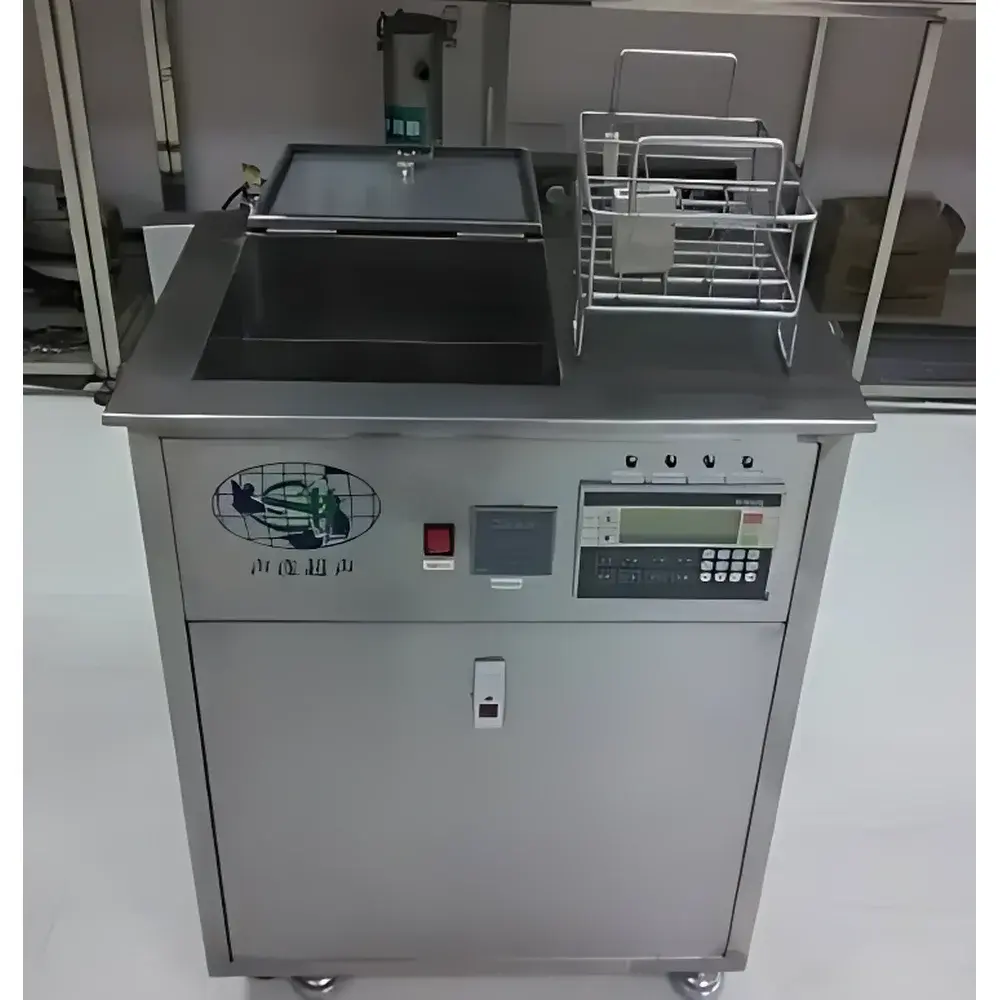
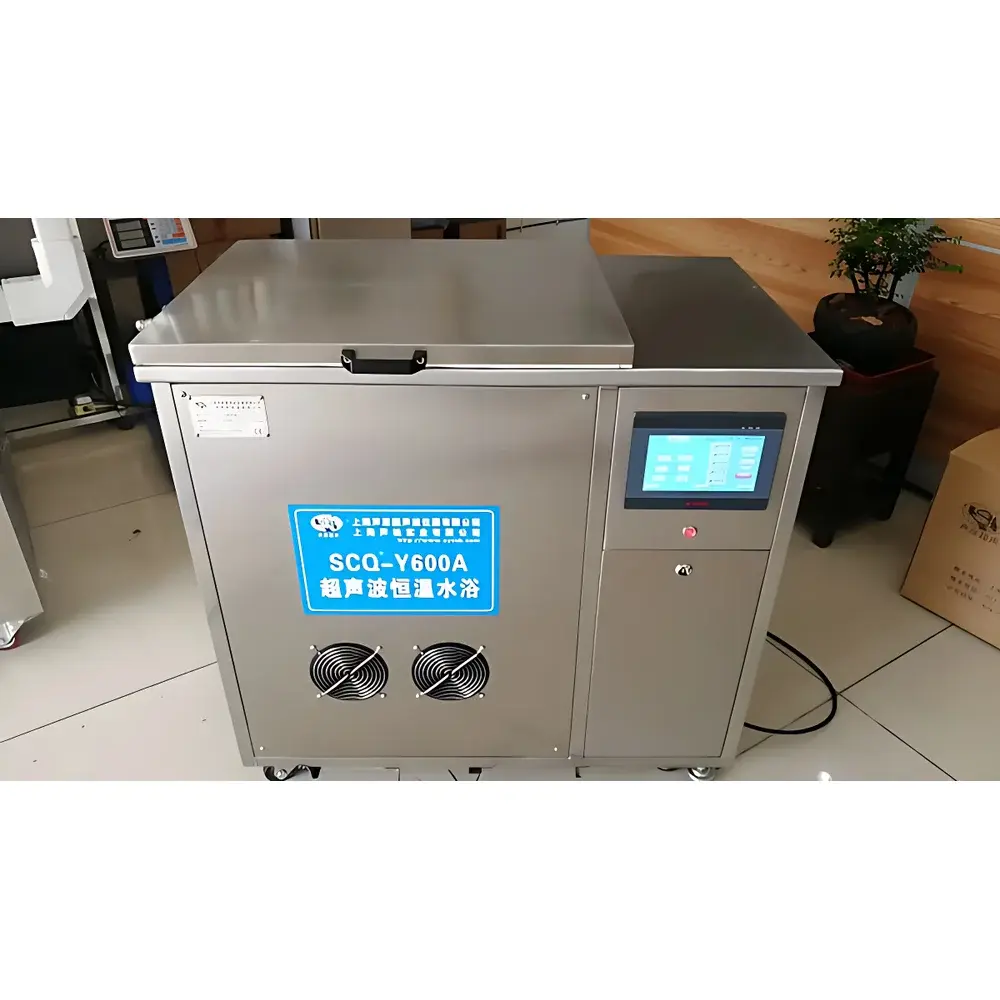
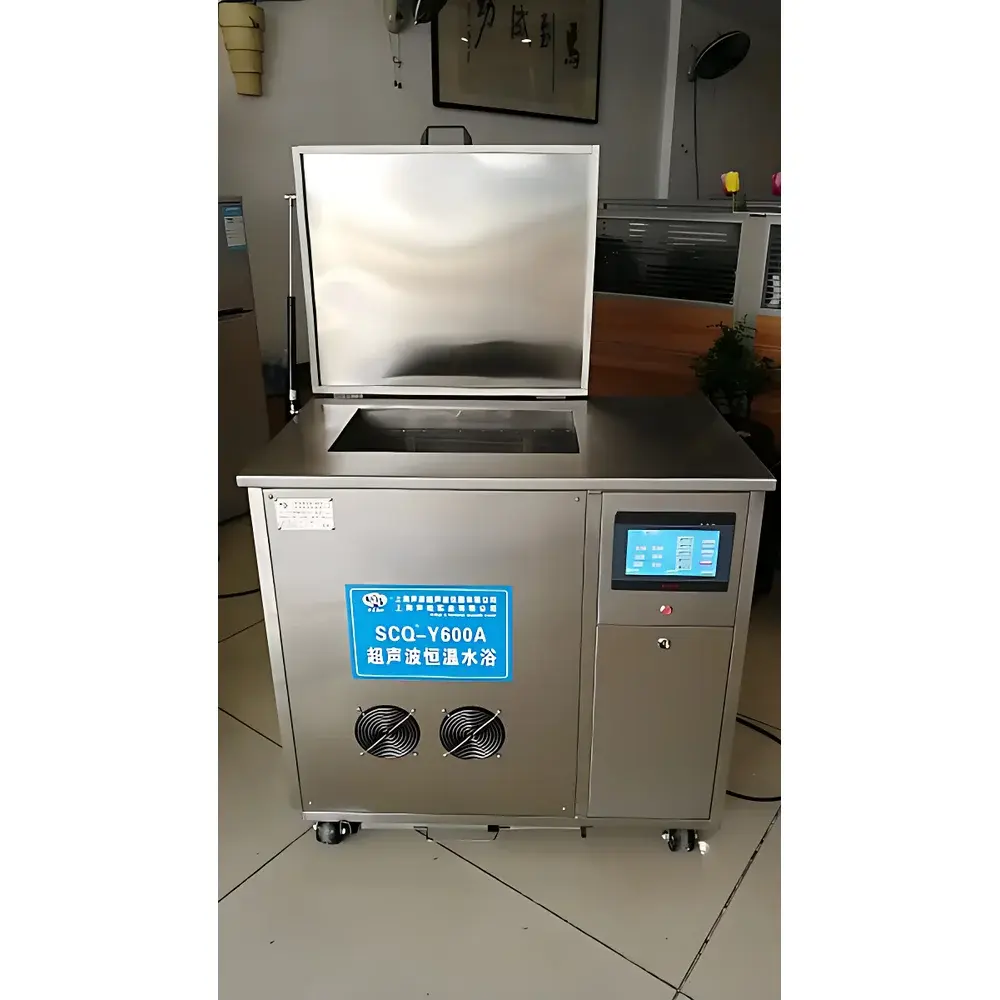
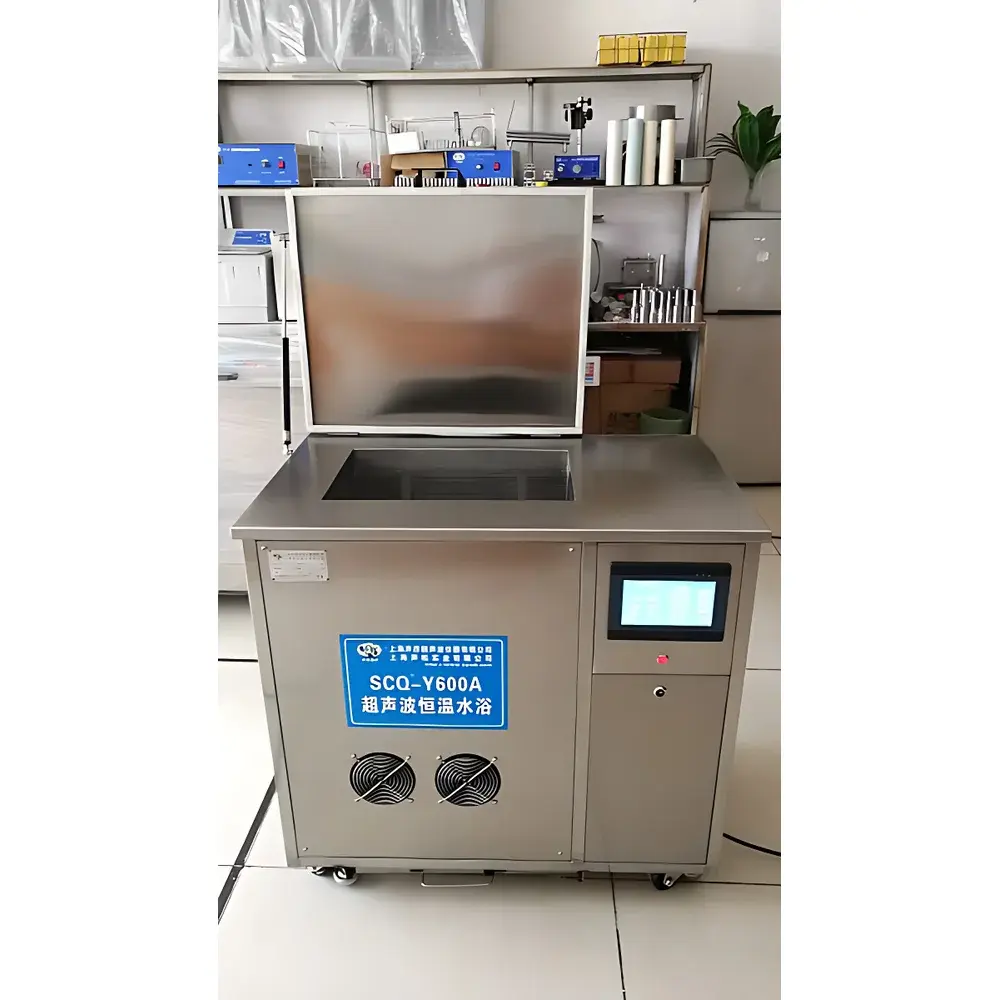
SYC Sycs SCQ-9201H Refrigerated Benchtop Ultrasonic Cleaner, 30 L Capacity
| Brand | SYC Sycs |
|---|---|
| Origin | Shanghai, China |
| Model | SCQ-9201H |
| Tank Volume | 30 L |
| Ultrasonic Frequency Options | 25 / 28 / 40 / 60 / 80 kHz (single-frequency selectable) |
| Ultrasonic Power Output | 600 W |
| Power Adjustment Range | 10–100% (continuously variable) |
| Temperature Control Range | 0–80 °C |
| Heating Power | 1200 W |
| Timer Range | 1–600 min |
| Lid | Sound-dampening cover included |
| Drain | Manual drain with SUS304 stainless steel valve |
| Fill | Manual fill with high/low liquid level protection |
| Tank Material | 2.0 mm thick AISI 304 stainless steel |
| Internal Dimensions | 500 × 300 × 200 mm |
| Power Supply | 220 V AC, 50 Hz |
Overview
The SYC Sycs SCQ-9201H is a refrigerated benchtop ultrasonic cleaner engineered for precision laboratory and industrial cleaning applications requiring stable thermal control during sonication. Unlike standard ultrasonic cleaners that generate heat through cavitation—potentially degrading temperature-sensitive samples—the SCQ-9201H integrates active cooling to maintain setpoint temperatures within ±1.5 °C across the full 0–80 °C operating range. Its core transduction system employs piezoelectric ceramic transducers bonded to the tank bottom, generating controlled acoustic cavitation in the cleaning medium at user-selectable frequencies (25, 28, 40, 60, or 80 kHz). This frequency flexibility enables optimization for diverse sample types: lower frequencies (25–40 kHz) deliver higher cavitation intensity for robust particulate removal from machined metal parts; higher frequencies (60–80 kHz) produce finer, more uniform bubble collapse suitable for delicate optics, semiconductor wafers, or biological substrates. The unit operates on the principle of acoustic cavitation—where rapid pressure fluctuations induce microbubble formation, growth, and violent implosion—generating localized shear forces, microstreaming, and transient hotspots (~5000 K, ~1000 atm) sufficient to dislodge contaminants without mechanical abrasion.
Key Features
- Refrigerated temperature stabilization system enabling true isothermal sonication—critical for enzymatic, polymer, or thermolabile sample processing
- Continuously adjustable ultrasonic power output (10–100% of 600 W nominal), allowing precise energy delivery to match cleaning aggressiveness with substrate fragility
- Programmable digital timer (1–600 minutes) with auto-shutdown and audible alert, supporting unattended operation under validated protocols
- AISI 304 stainless steel tank (500 × 300 × 200 mm, 30 L capacity) with 2.0 mm wall thickness—resistant to corrosion from aqueous, alkaline, and mild organic solvents
- Integrated sound-dampening lid reducing ambient noise to ≤65 dB(A) at 1 m distance, compliant with ISO 7779 and OSHA 29 CFR 1910.95 workplace noise limits
- Manual fill/drain system with dual-level liquid sensors (high/low) preventing dry-run damage and overflow incidents
- Heating element (1200 W) and PTC temperature sensor with PID feedback loop ensure rapid thermal equilibration and minimal overshoot
Sample Compatibility & Compliance
The SCQ-9201H accommodates a broad spectrum of laboratory and manufacturing components, including but not limited to: optical lenses and prisms, surgical instruments, printed circuit boards (PCBs), bearing assemblies, filter housings, chromatography columns, glassware, and ceramic substrates. Its design conforms to IEC 61000-6-3 (EMC emission limits) and IEC 61000-6-2 (immunity requirements). While not certified to UL/CSA standards, its electrical architecture meets EN 61010-1:2010 safety criteria for laboratory equipment. For regulated environments—including pharmaceutical QC labs operating under FDA 21 CFR Part 11 or ISO/IEC 17025—users may implement procedural controls (e.g., calibration logs, operator training records, maintenance schedules) to support GLP/GMP traceability. The absence of automated data export necessitates manual documentation of time, temperature, and power settings per batch.
Software & Data Management
The SCQ-9201H features a standalone microprocessor-based controller with LED display and membrane keypad interface—no external PC or proprietary software required. All operational parameters (frequency selection, power level, set temperature, timer duration) are stored in non-volatile memory and retained after power cycling. The system does not include USB, Ethernet, or RS-232 connectivity; therefore, electronic audit trails, remote monitoring, or integration into LIMS or MES platforms are not supported natively. Users must manually record parameter configurations and process outcomes in lab notebooks or electronic systems compliant with ALCOA+ principles (Attributable, Legible, Contemporaneous, Original, Accurate, Complete, Consistent, Enduring, Available).
Applications
This ultrasonic cleaner serves multiple technical functions beyond basic particulate removal. In analytical chemistry laboratories, it facilitates solvent extraction of residual pesticides from plant matrices (per AOAC 2007.01) and accelerates digestion of tissue samples prior to ICP-MS analysis. In materials science, it supports dispersion of nanomaterials (e.g., graphene oxide, TiO₂ nanoparticles) in aqueous or ethanolic suspensions, minimizing agglomeration via controlled cavitation-induced deagglomeration. In medical device manufacturing, it validates cleaning efficacy of lumened instruments per ISO 15883-1 and AAMI ST79 Annex D. Additional validated use cases include degassing of HPLC mobile phases, cleaning of NMR tube inserts, decapsulation of microelectronic packages, and preparation of TEM grids prior to staining.
FAQ
Does the SCQ-9201H support multi-frequency simultaneous operation?
No. It operates at a single user-selected frequency (25, 28, 40, 60, or 80 kHz) per cycle. Frequency switching requires manual reconfiguration via the front panel.
Is the refrigeration system compressor-based or thermoelectric?
The unit employs a sealed R134a vapor-compression refrigeration module integrated beneath the tank base, providing consistent cooling capacity independent of ambient conditions.
Can the unit be used with flammable solvents such as acetone or ethanol?
No. It is rated for aqueous and water-miscible solutions only. Use with volatile organic solvents poses fire hazard and voids warranty due to lack of explosion-proof certification.
What is the maximum allowable load weight in the tank?
The stainless steel basket supports up to 15 kg distributed load. Overloading may dampen cavitation efficiency and accelerate transducer fatigue.
How often should the transducers be recalibrated?
Transducer output is factory-characterized and does not require periodic recalibration. However, users should verify cleaning performance quarterly using standardized test foils (e.g., aluminum foil erosion test per ASTM D2603) and log results.



