
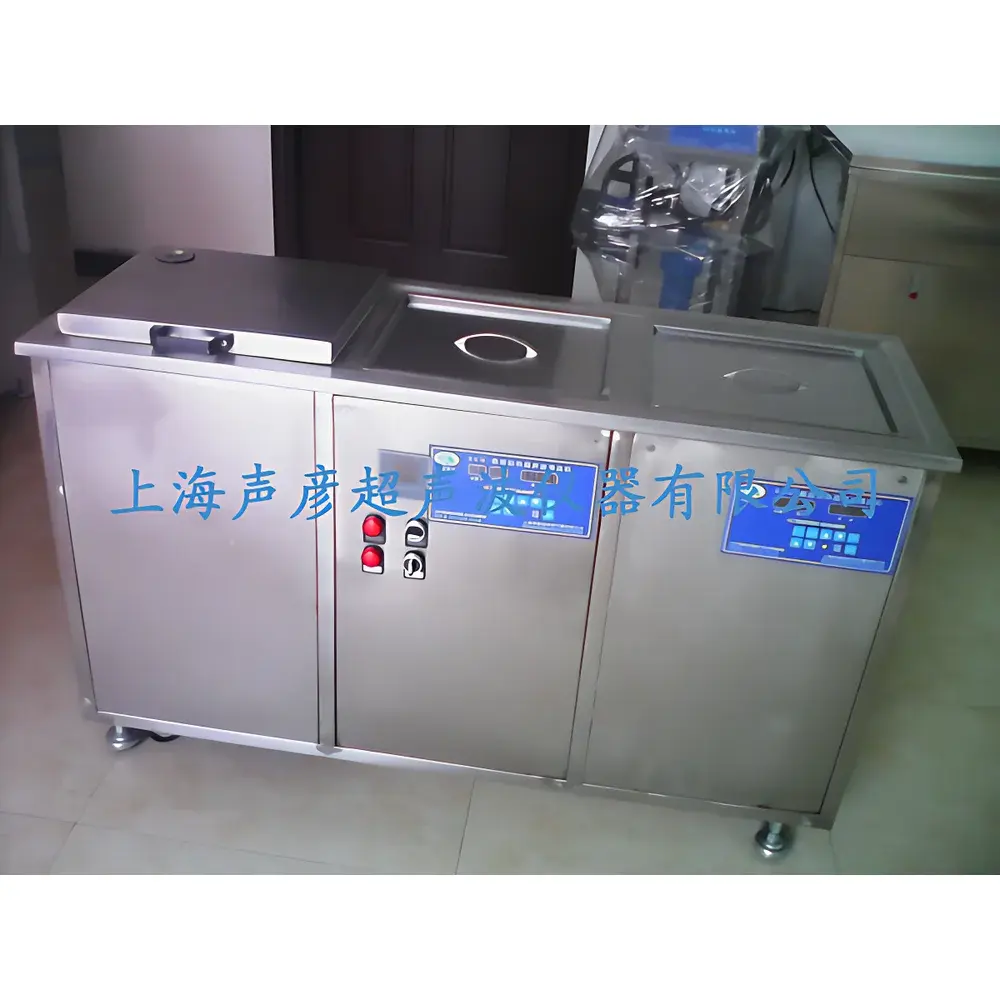
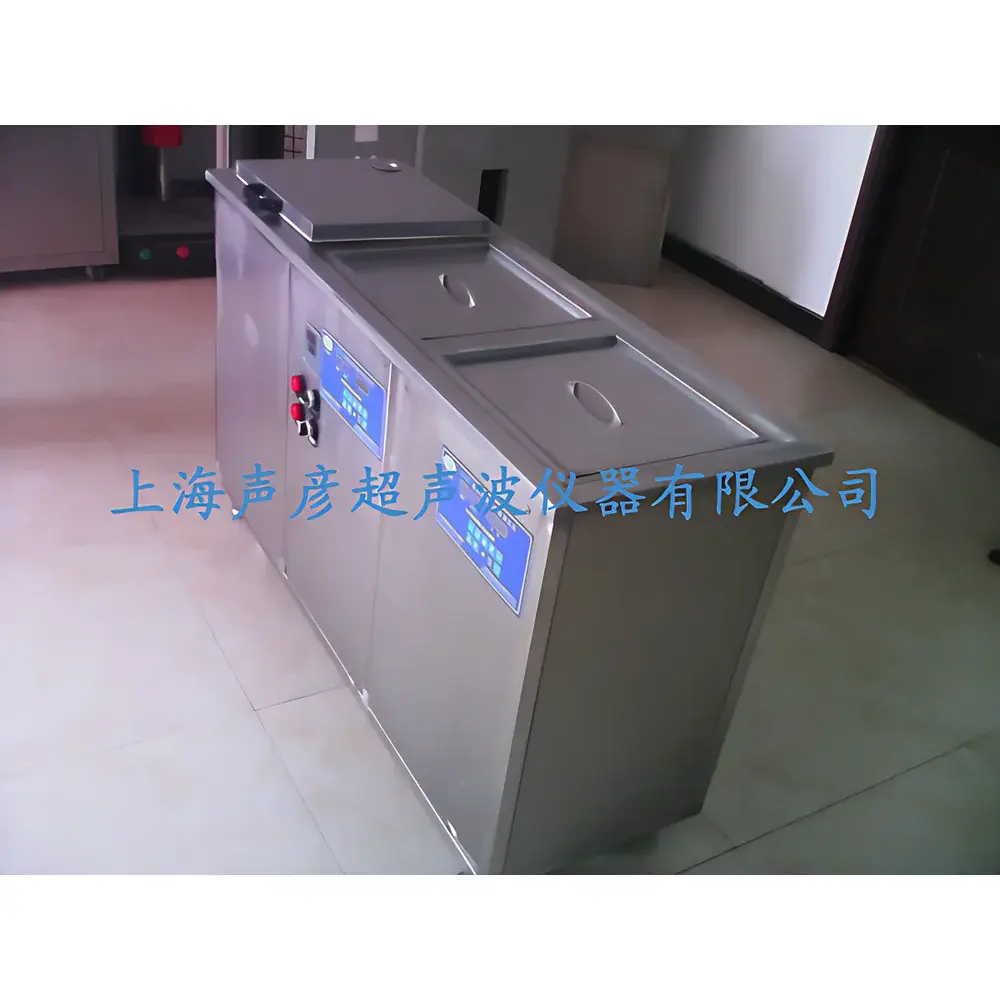
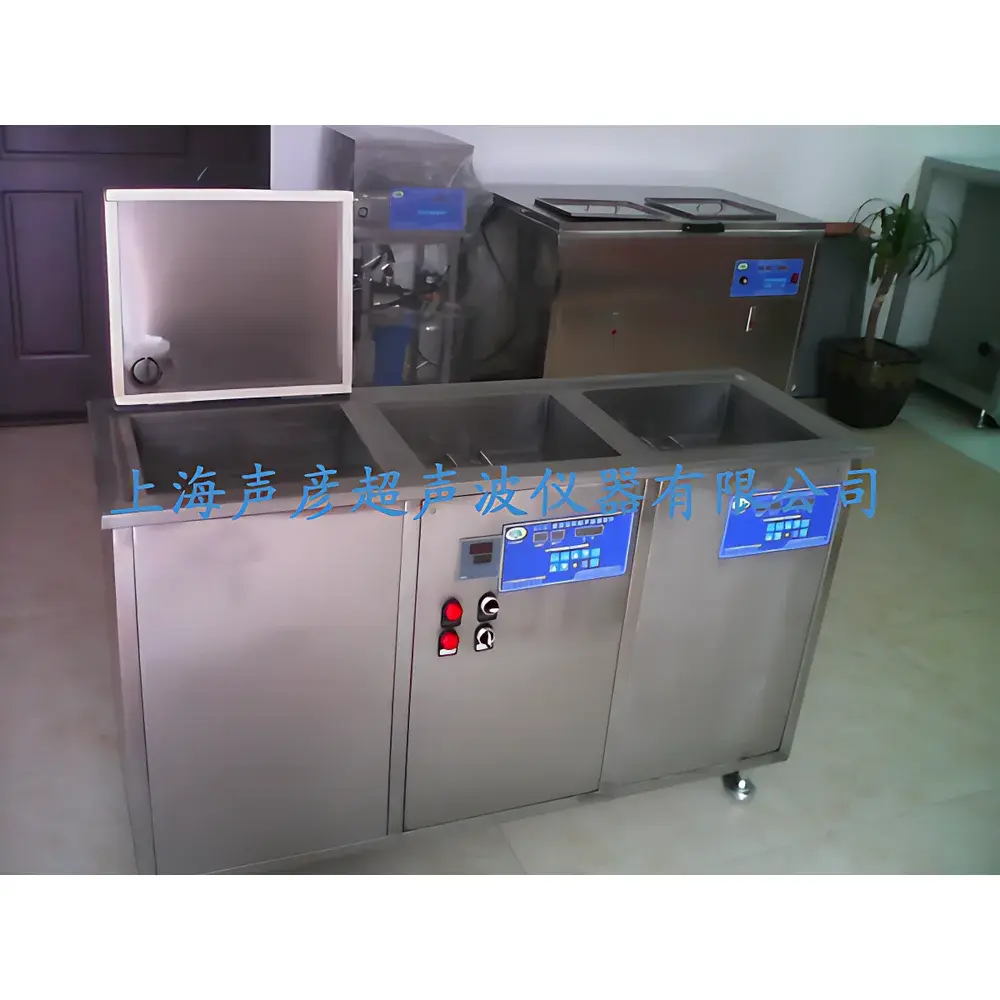
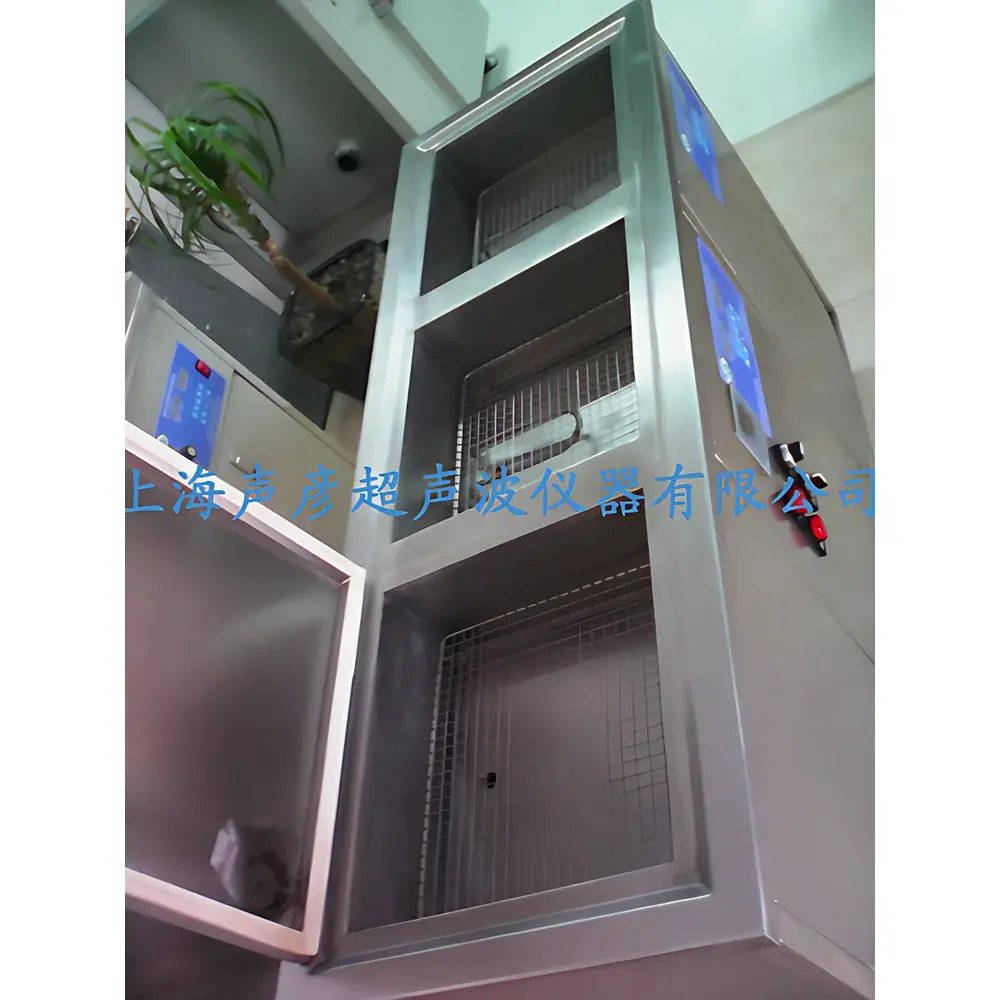
Shengyan Ultrasonic SCQ-140323 Triple-Tank Ultrasonic Cleaner
| Brand | Shengyan Ultrasonic (SYCS) |
|---|---|
| Origin | Shanghai, China |
| Model | SCQ-140323 |
| Capacity | 12 L per tank |
| Ultrasonic Frequency | 28 kHz |
| Ultrasonic Power | 600 W per tank |
| Heating Power (Tanks 1 & 2) | 700 W each |
| Drying Chamber Heating Power | 1 kW |
| Drying Fan Power | 0.75 kW |
| Motor Power (Drying) | 0.3 kW |
| Temperature Range (Cleaning Tanks) | Ambient to 80 °C |
| Temperature Range (Drying Chamber) | Ambient to 300 °C |
| Timer Range | 1 s – 600 min (adjustable in 1-second increments) |
| Power Supply | 220 V / 50 Hz |
| Tank Material | SUS304 stainless steel, 2.0 mm thickness |
| Sound-Dampening Lid | Yes |
| Manual Fill/Drain | Yes |
| Rack Included | Yes |
Overview
The Shengyan Ultrasonic SCQ-140323 Triple-Tank Ultrasonic Cleaner is an integrated, benchtop laboratory system engineered for sequential cleaning, rinsing, and thermal drying of precision components, glassware, and instrumentation parts. It operates on the principle of high-frequency acoustic cavitation—28 kHz ultrasonic energy induces controlled microbubble formation and implosion within the cleaning solution, generating localized shear forces that dislodge particulate contaminants, organic residues, and weakly adhered biofilms from complex geometries without mechanical abrasion. The three independent stainless-steel tanks (each 330 × 300 × 120 mm internal dimensions, 12 L capacity) support a standardized three-stage process: Stage 1 (ultrasonic degreasing/cleaning), Stage 2 (ultrasonic rinse or solvent exchange), and Stage 3 (forced-air thermal drying). This architecture aligns with standard laboratory workflows defined in ASTM D2603 (Ultrasonic Cleaning Performance Testing) and supports GLP-compliant documentation when paired with external logging systems.
Key Features
- Three functionally segregated tanks housed in a single compact chassis (approx. 1200 × 500 × 750 mm overall footprint), minimizing lab floor space while maintaining workflow separation.
- Each cleaning tank delivers consistent 600 W of ultrasonic power at 28 kHz—optimized for robust removal of oils, fluxes, polishing compounds, and particulates from metals, ceramics, and borosilicate glass.
- Independent heating control in Tanks 1 and 2 (700 W each) enables precise temperature regulation from ambient to 80 °C—critical for enhancing detergent efficacy and reducing surface tension during aqueous cleaning.
- Drying chamber (Tank 3) integrates a 1 kW heating element and a 0.75 kW axial fan, achieving uniform airflow and stable temperatures up to 300 °C—suitable for rapid moisture evaporation and low-residue drying of heat-stable components.
- SUS304 stainless-steel construction (2.0 mm wall thickness) ensures long-term corrosion resistance against alkaline detergents, mild solvents, and heated water—meeting ISO 15190:2020 requirements for material compatibility in cleanroom-adjacent environments.
- Sound-dampening lid included for each ultrasonic tank reduces operational noise to ≤65 dB(A) at 1 m distance, supporting compliance with OSHA 29 CFR 1910.95 workplace noise exposure limits.
- High-resolution digital timer (1-second resolution, 1–600 min range) allows reproducible cycle definition across all three stages—essential for method validation and inter-lab transferability.
Sample Compatibility & Compliance
The SCQ-140323 accommodates a wide range of laboratory and industrial specimens, including but not limited to: HPLC vials, syringe filters, pipette tips, optical lenses, semiconductor wafers (pre-metalization), surgical instruments, and printed circuit board assemblies. Its open-tank design with removable stainless-steel wire mesh racks facilitates loading of irregular or delicate items without fixture constraints. While the unit itself does not carry CE, UL, or FDA 510(k) certification, its electrical architecture (220 V / 50 Hz, IP20-rated enclosure) conforms to IEC 61010-1:2010 safety standards for laboratory equipment. Users implementing this system in regulated environments (e.g., pharmaceutical QC labs) must validate cleaning efficacy per USP and establish documented SOPs—including dwell time, temperature, and solution composition—to satisfy FDA 21 CFR Part 211 and EU GMP Annex 15 requirements.
Software & Data Management
The SCQ-140323 operates via standalone electromechanical controls with no embedded software or network interface. All parameters—timer setting, heater activation, and ultrasonic engagement—are managed through front-panel push-button switches and LED indicators. For audit-trail capability in regulated settings, integration with external data loggers (e.g., Omega OM-DAQPRO-5300 or Testo 176 T4) is recommended to record real-time temperature and cycle duration. No proprietary drivers or cloud connectivity are provided; configuration remains fully manual and deterministic—minimizing cybersecurity exposure and ensuring long-term operational stability without firmware dependencies.
Applications
- Pre-analytical sample preparation: Cleaning chromatography columns, autosampler vials, and electrode surfaces prior to electrochemical or spectroscopic analysis.
- Microelectronics manufacturing: Removal of photoresist residues and etch byproducts from silicon wafers and MEMS devices.
- Medical device reprocessing: Preliminary decontamination of reusable endoscopic accessories and orthopedic trial implants before steam sterilization.
- Materials science labs: Degreasing metal coupons prior to tensile testing or coating adhesion assessment (per ASTM D3359).
- Academic research: Routine maintenance of optical components, cuvettes, and quartz crystal microbalances where particle-free surfaces are essential.
FAQ
Is the ultrasonic frequency adjustable?
No. The unit operates exclusively at 28 kHz—a fixed frequency selected for optimal balance between penetration depth and cavitation intensity in aqueous and mildly alkaline solutions.
Can the drying chamber be used independently of the ultrasonic tanks?
Yes. Each tank functions autonomously; the drying chamber may be operated with or without prior ultrasonic treatment.
What is the maximum load weight supported by the wire mesh racks?
Each rack is rated for ≤3 kg distributed load. Overloading may compromise ultrasonic field uniformity and accelerate rack deformation.
Does the unit include a built-in detergent dosing system?
No. Detergent addition is manual and performed externally—ensuring full user control over concentration and compatibility with substrate materials.
Is distilled water required for operation?
Not mandatory, but recommended for applications requiring low ionic residue (e.g., semiconductor cleaning). Tap water may be used for general-purpose glassware cleaning when paired with appropriate chelating detergents.



