
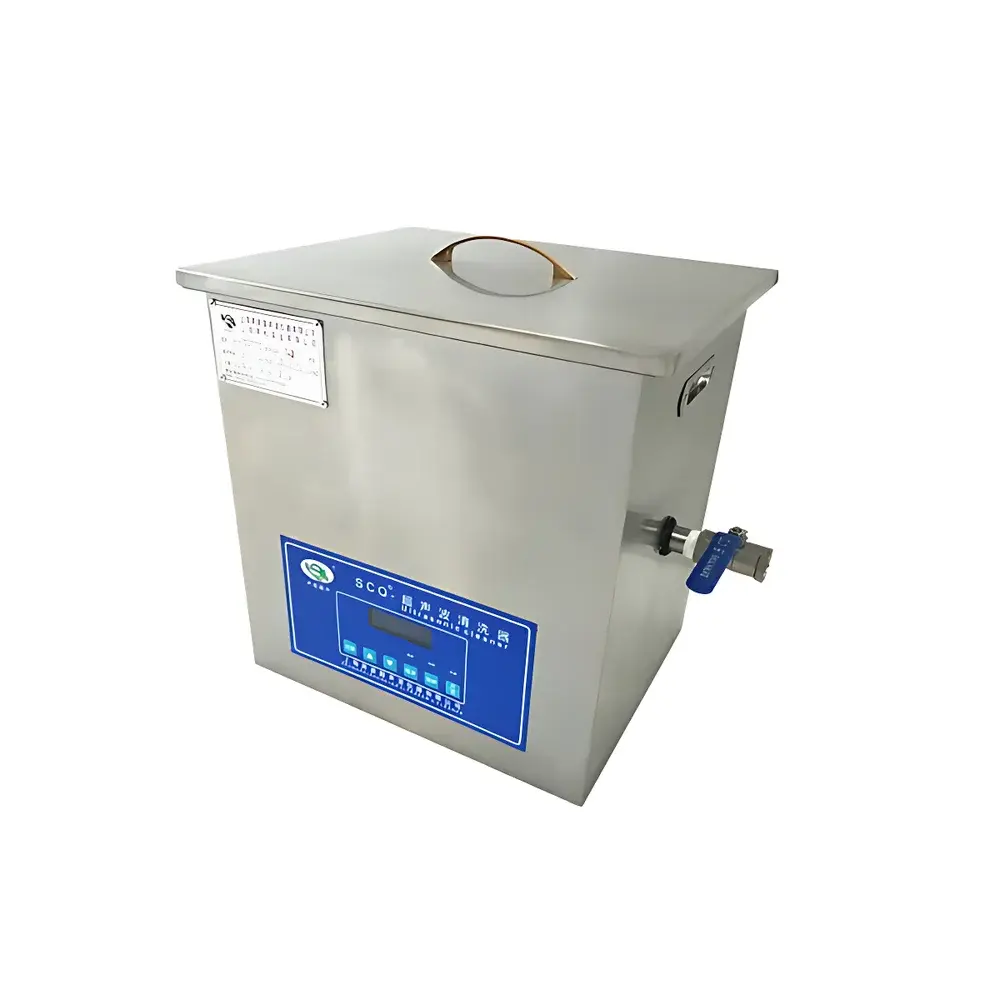
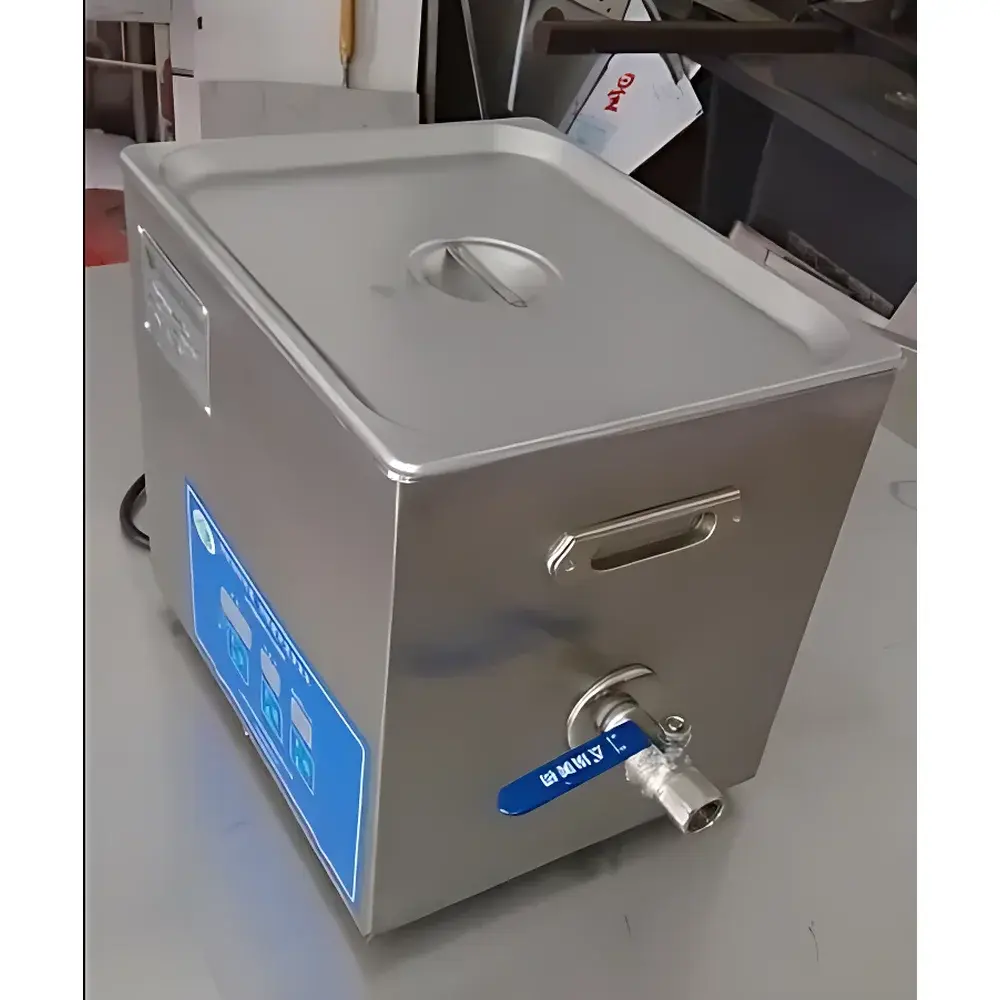
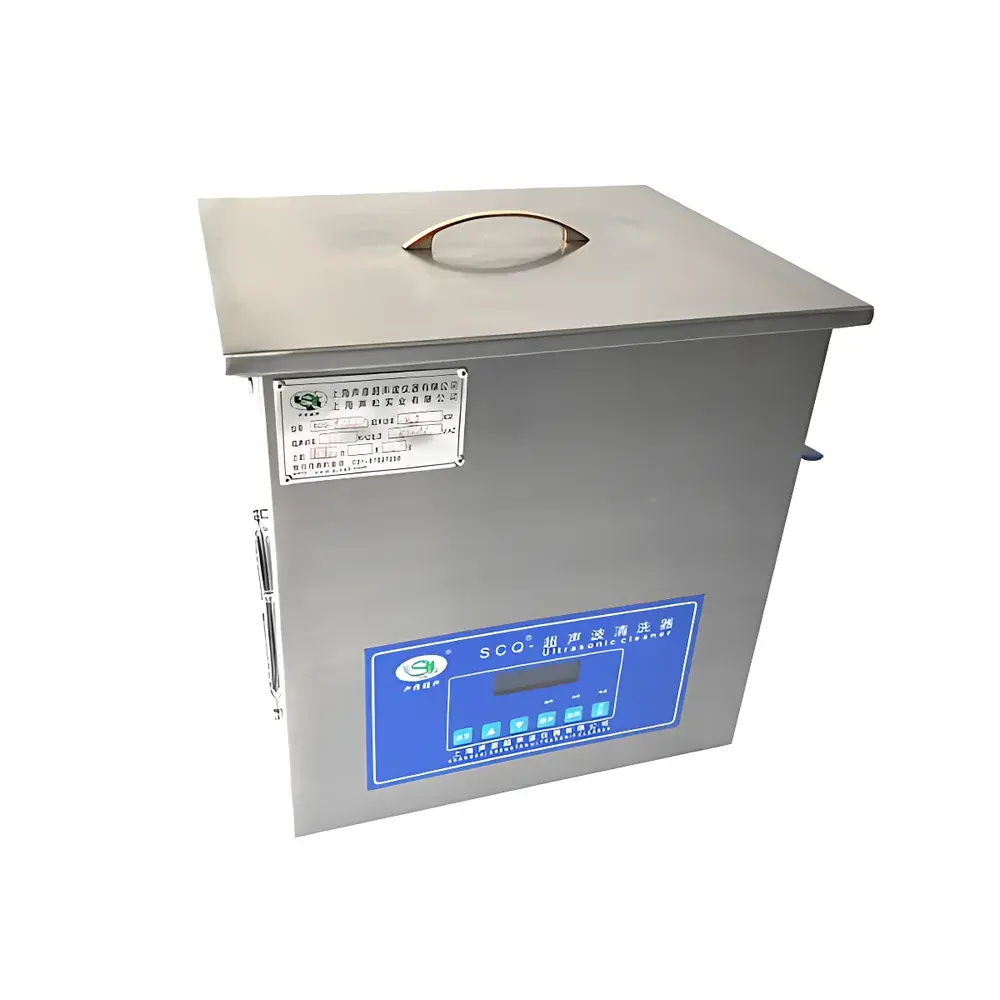
Shengyan SCQ-5201C Benchtop Ultrasonic Cleaner
| Brand | Shengyan Ultrasonics (SYCS) |
|---|---|
| Origin | Shanghai, China |
| Model | SCQ-5201C |
| Capacity | 10 L |
| Ultrasonic Frequency | 40 kHz |
| Ultrasonic Power Output | 300 W |
| Power Adjustment Range | 10–100% |
| Heating Power | 600 W |
| Temperature Control Range | Ambient to 80 °C |
| Timer Range | 1–600 min |
| Insulated Lid | Yes |
| Manual Fill/Drain | Yes |
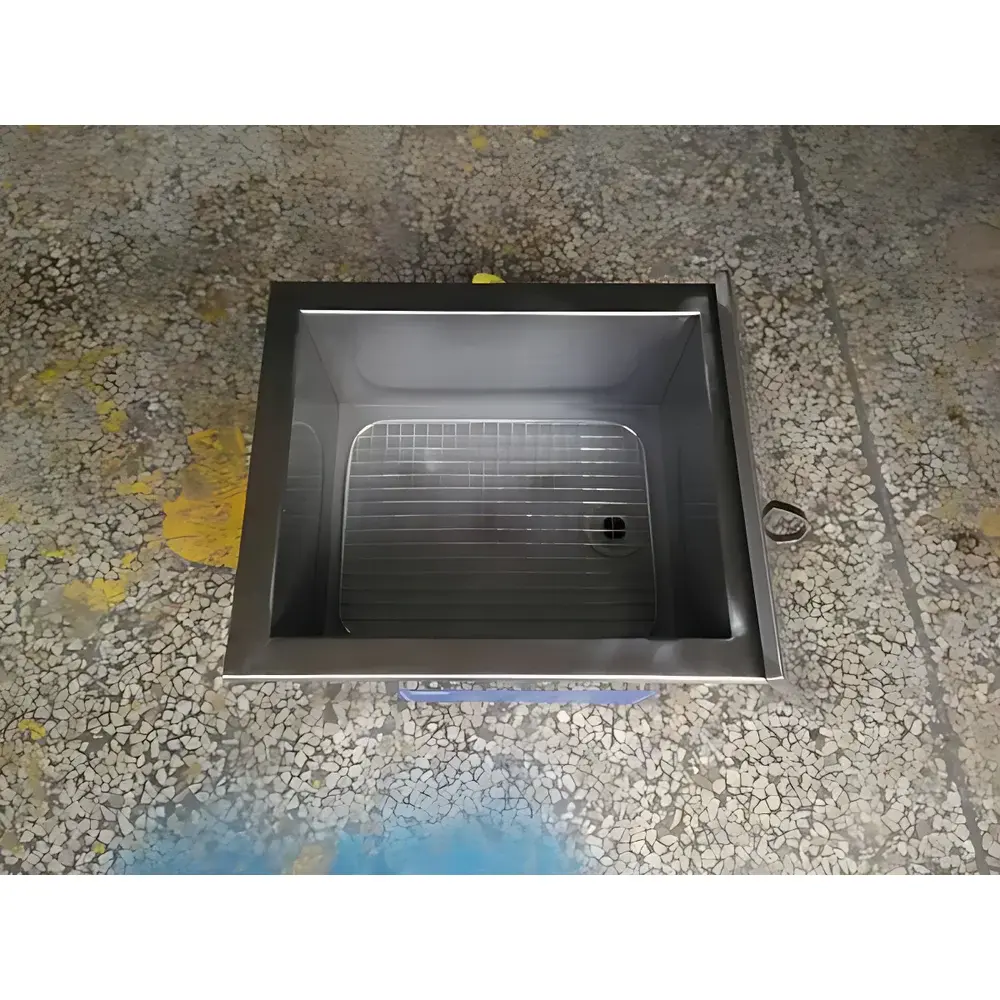
| Tank Dimensions (L×W×H) | 300 × 240 × 150 mm |
| Construction Material | SUS304 Stainless Steel |
| Safety Features | Overload protection, overheat protection, auto dry-run alarm (for tanks ≥10 L) |
Overview
The Shengyan SCQ-5201C is a CE-compliant, benchtop ultrasonic cleaner engineered for precision cleaning, degassing, and mild disinfection in regulated laboratory, clinical, and light industrial environments. It operates on the principle of cavitation—generated by high-frequency (40 kHz) piezoelectric transducers bonded to the stainless steel tank base—to produce microscopic implosions in the cleaning medium. These transient cavitation events deliver localized energy sufficient to dislodge particulate contaminants, organic residues, and biofilm from complex geometries—including blind holes, microchannels, and porous surfaces—without mechanical abrasion. Designed for reproducible, non-destructive cleaning of sensitive instrumentation, the SCQ-5201C integrates thermal control, adjustable power delivery, and programmable timing to support standardized cleaning protocols aligned with ISO 13485 (medical device manufacturing), ASTM D2603 (ultrasonic cleaning validation), and GLP-compliant documentation workflows.
Key Features
- 10-liter capacity tank constructed entirely from medical-grade SUS304 stainless steel—resistant to corrosion from aqueous alkaline, acidic, and enzymatic cleaning solutions; superior to common SUS201/SUS202 alternatives used in entry-tier units.
- Digitally controlled 40 kHz ultrasonic generator with linear 10–100% power adjustment—enabling optimization for delicate optics, MEMS devices, or heavily soiled metal components without compromising cavitation efficiency.
- Integrated heating system (600 W) with precise ±1 °C temperature regulation from ambient up to 80 °C—supporting temperature-dependent cleaning chemistries (e.g., enzymatic detergents, low-foaming alkaline formulations) and accelerating solvent-based degreasing cycles.
- Programmable digital timer (1–600 minutes) with audible end-cycle alert and automatic shutdown—ensuring repeatability across operator shifts and compliance with SOP-defined dwell times.
- Dual-safety architecture: real-time overtemperature cutoff, electronic overload protection, and dry-run detection (activated when liquid level falls below transducer plane)—critical for preventing transducer damage during unattended operation.
- Acoustically damped insulated lid with ergonomic latch mechanism—reducing airborne noise to <55 dB(A) at 1 m distance and minimizing solvent evaporation during heated cycles.
Sample Compatibility & Compliance
The SCQ-5201C accommodates a broad range of sample types including glassware (vials, cuvettes, pipettes), metallic components (surgical instruments, dental prostheses, watch movements), polymer substrates (PCB assemblies, optical lenses), and composite materials (ceramic dental implants, coated endoscopes). Its tank geometry (300 × 240 × 150 mm) supports standard laboratory racks and custom fixtures. All wetted surfaces meet USP Class VI biocompatibility requirements for contact with medical devices. The unit complies with IEC 61000-6-3 (EMC emissions) and IEC 61000-6-2 (immunity), and its electrical design conforms to IEC 61010-1 for laboratory equipment safety. Optional validation kits (IQ/OQ documentation templates, thermocouple mapping sets) are available to support FDA 21 CFR Part 11–aligned qualification in GMP-regulated labs.
Software & Data Management
While the SCQ-5201C operates via an intuitive front-panel interface (LED display + membrane keypad), it supports external data logging through optional RS-232 or USB-to-serial adapters. Logged parameters—including actual power output (%), bath temperature (°C), elapsed time (min), and cycle start/stop timestamps—can be exported to CSV for audit trail generation. When integrated into networked lab management systems, the unit enables centralized monitoring of cleaning cycle adherence, preventive maintenance scheduling (based on cumulative operating hours), and deviation reporting per ISO/IEC 17025 Clause 7.8.
Applications
- Pre-analytical sample preparation: removal of residual proteins and nucleic acids from HPLC vials, autosampler needles, and electrophoresis combs.
- Medical device reprocessing: cleaning of reusable laparoscopic trocars, biopsy forceps, and orthopedic instrument sets prior to sterilization.
- Electronics manufacturing: flux residue removal from SMT-assembled PCBs and solder paste stencil cleaning.
- Research instrumentation maintenance: restoration of quartz crystal microbalance (QCM) sensors and AFM probe holders.
- Forensic trace evidence processing: gentle particulate recovery from firearm components and textile swabs.
FAQ
Is the SCQ-5201C suitable for cleaning delicate optical components such as microscope slides or laser optics?
Yes—when operated at 20–40% power with deionized water or low-surface-tension solvents (e.g., IPA/water mixtures) and temperatures ≤40 °C, the unit delivers consistent, non-erosive cleaning without coating delamination.
Does the unit support validation for ISO 13485-certified cleanroom environments?
Yes—the SUS304 construction, dry-run alarm, and temperature stability enable documented IQ/OQ execution; full validation packages (including calibration certificates for temperature and timer) are available upon request.
Can the SCQ-5201C be used with enzymatic or alkaline detergents commonly employed in healthcare reprocessing?
Yes—its corrosion-resistant tank and sealed transducer housing are compatible with pH 4–11 aqueous cleaning agents; always verify compatibility with detergent manufacturer specifications before use.
What is the expected service life of the ultrasonic transducers under continuous daily operation?
With proper maintenance (regular descaling, avoidance of abrasive particles, and adherence to max. 8 h/day duty cycle), transducers maintain >95% nominal output after 5,000 operational hours—validated per MIL-STD-810G vibration and thermal cycling tests.
Is remote monitoring or integration with LIMS possible?
Yes—via optional serial communication modules and ASCII command protocol; third-party middleware (e.g., LabVantage, Thermo Fisher SampleManager) can ingest cycle metadata for electronic batch record linkage.



