
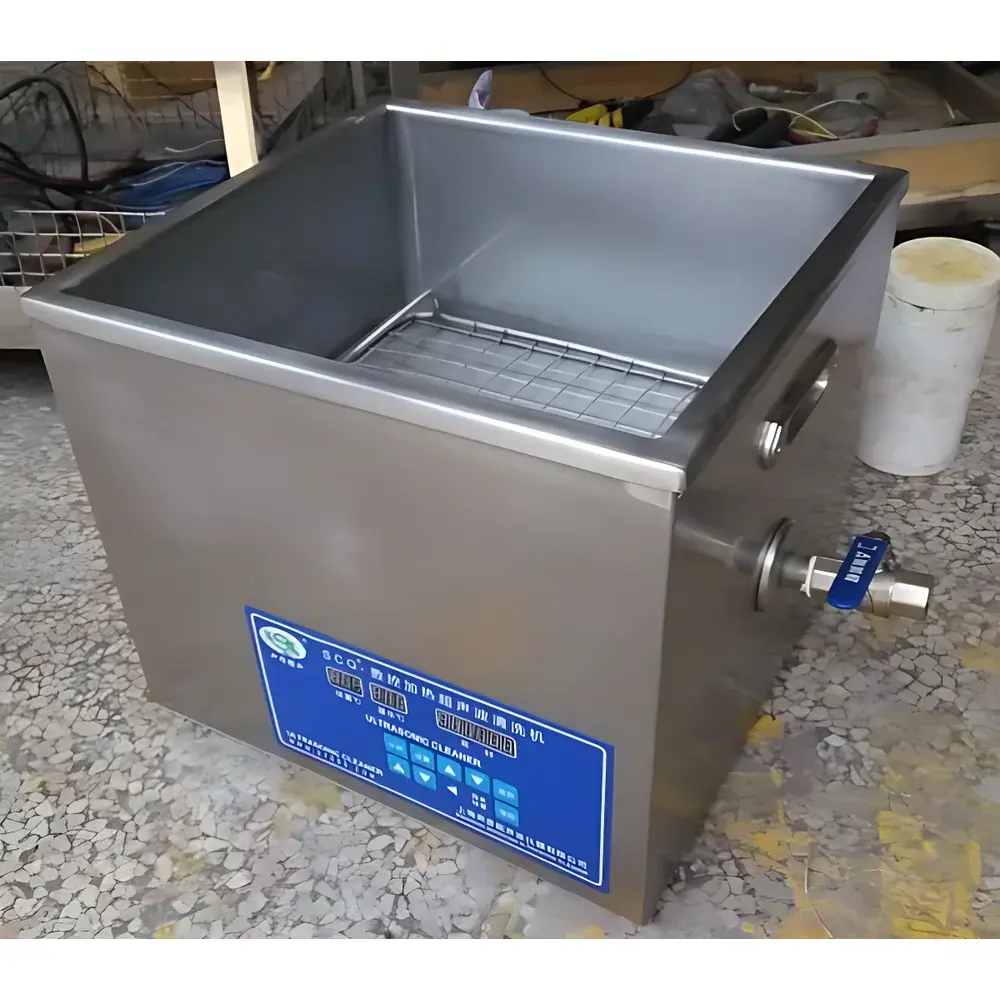
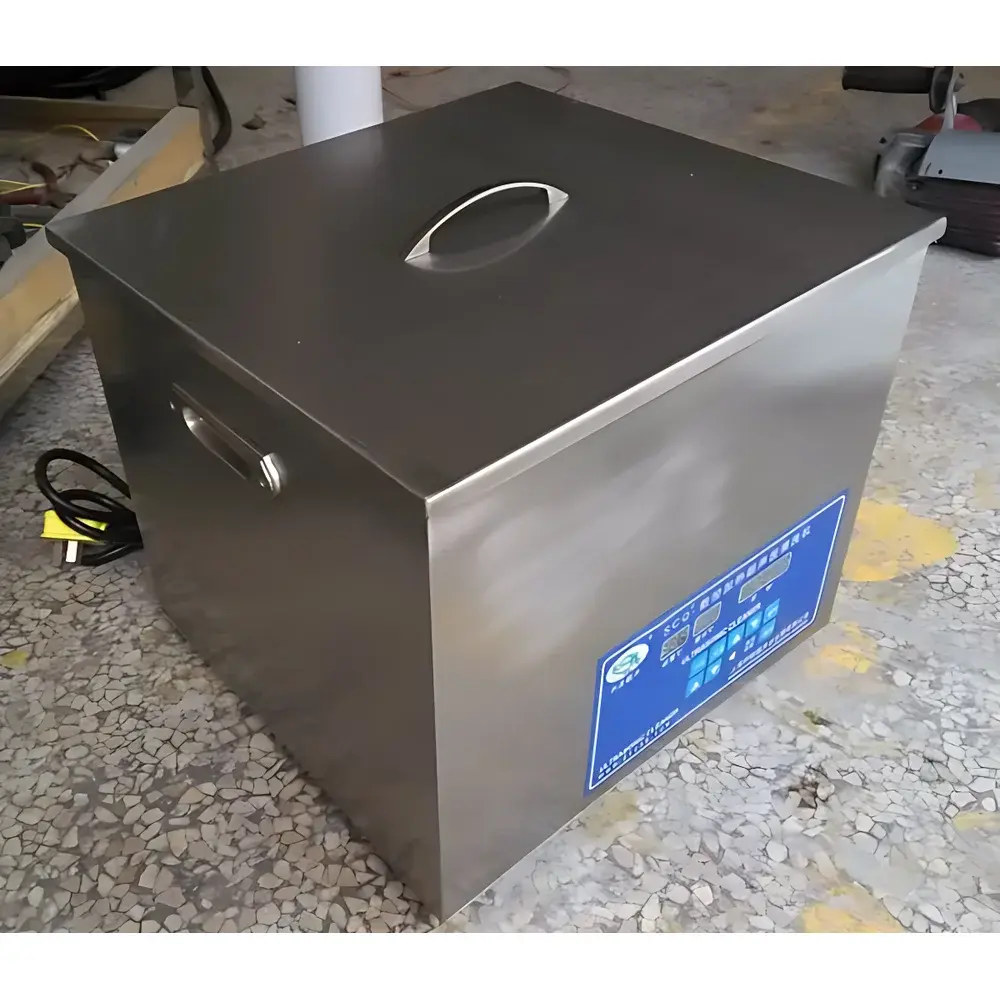
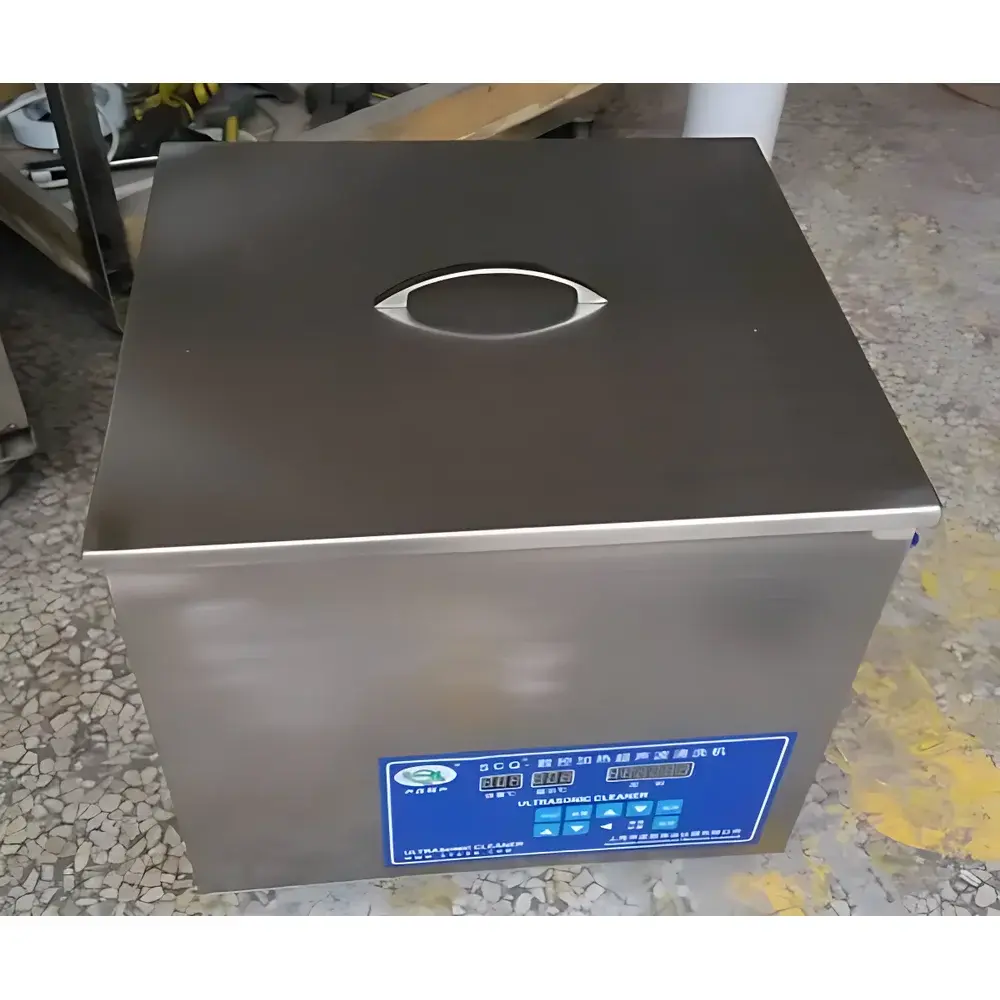
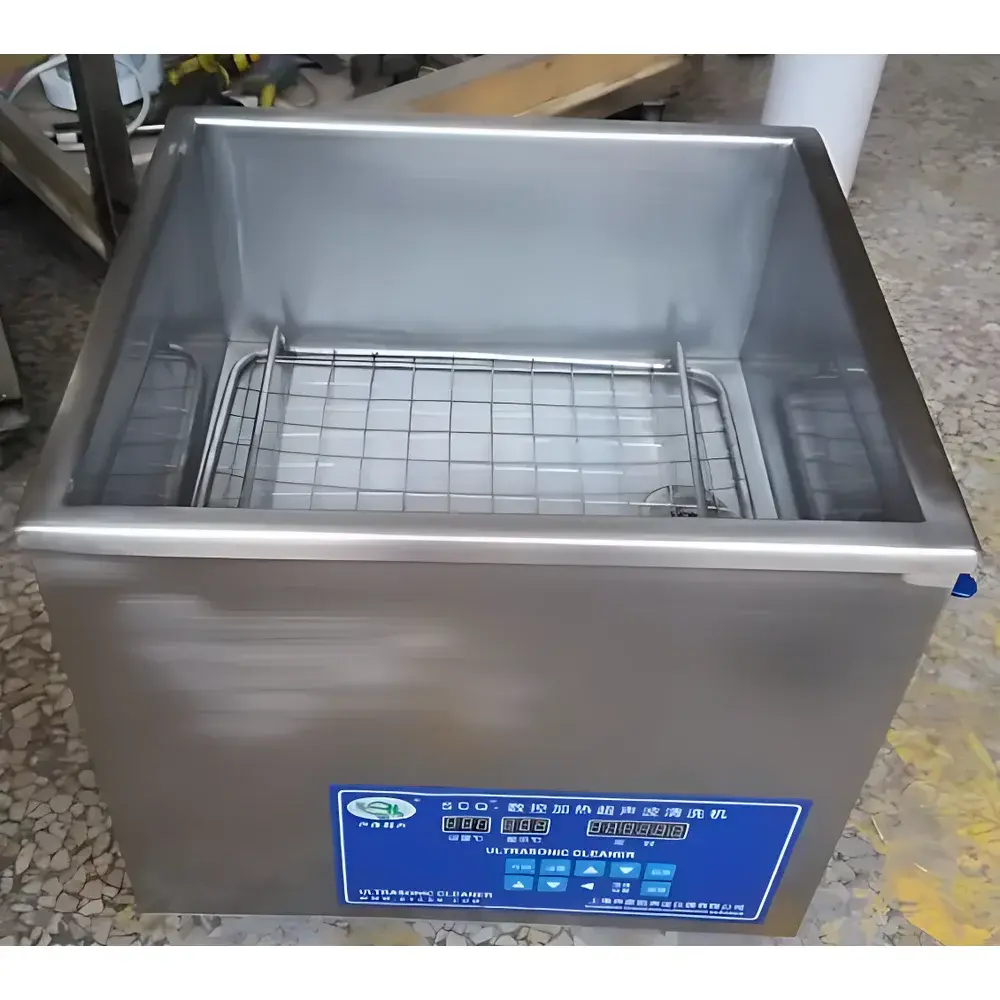
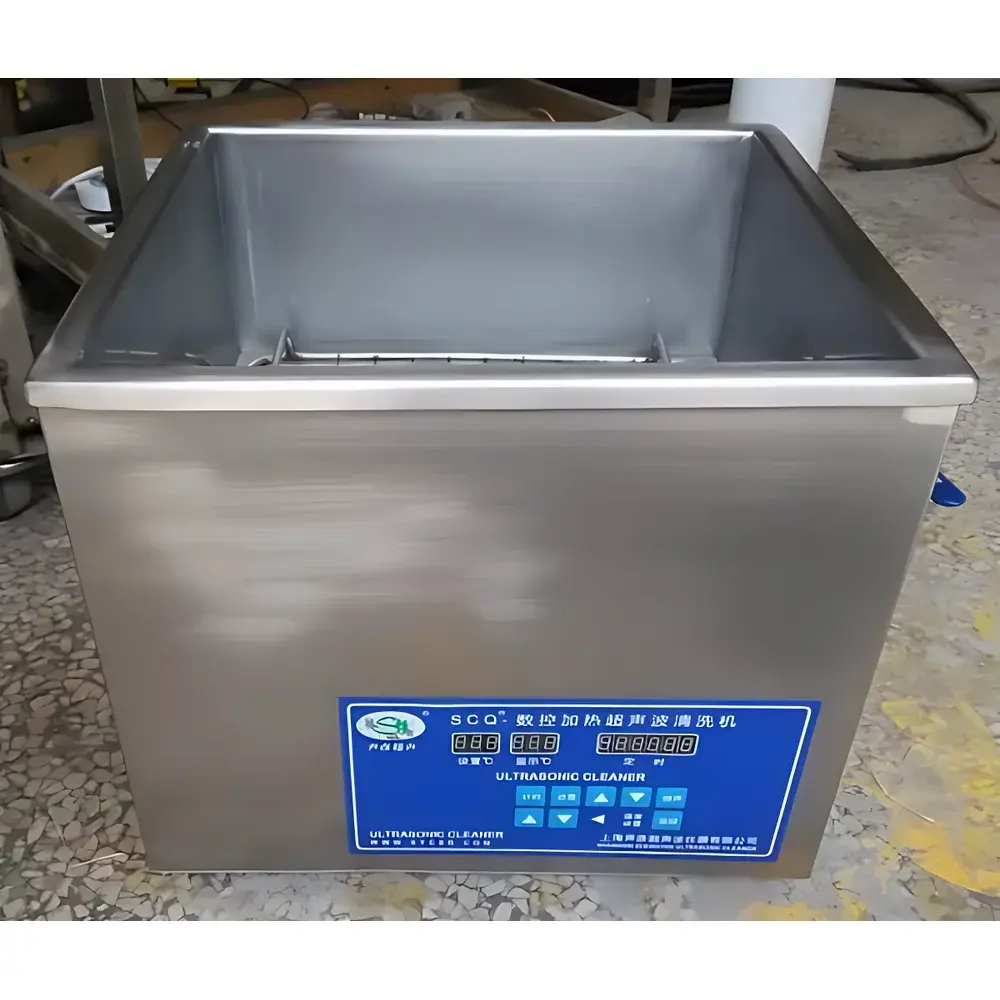
SYC Sycs SCQ-6201E Dual-Frequency Heated Ultrasonic Cleaner
| Brand | SYC Sycs |
|---|---|
| Origin | Shanghai, China |
| Manufacturer Type | Authorized Distributor |
| Product Category | Domestic |
| Model | SCQ-6201E |
| Instrument Type | General-Purpose |
| Capacity | 15 L |
| Ultrasonic Frequencies | 25/40 kHz and 35/50 kHz |
| Ultrasonic Power Output | 350 W |
| Power Adjustment Range | 10–100% |
| Heating Power | 600 W |
| Temperature Control Range | Ambient to 80 °C (extended range up to 100 °C per specification) |
| Timer Range | 1–600 min |
| Sound-Dampening Lid | Included |
| Drain Valve | Manual |
| Internal Tank Dimensions | 330 × 300 × 150 mm |
| Tank Material | SUS304 Stainless Steel |
| Heating Element | Embedded stainless-steel sheathed heater |
| Safety Protections | Overheat protection, overload protection, dry-run alarm (for tanks ≥10 L) |
| Compliance | Designed for GLP-compliant laboratory environments |
Overview
The SYC Sycs SCQ-6201E is a dual-frequency, digitally controlled heated ultrasonic cleaner engineered for high-reproducibility cleaning, degassing, and surface preparation in regulated laboratory and light industrial settings. It operates on the principle of cavitation—acoustic energy transmitted through liquid media generates transient microbubbles that collapse with localized energy release, enabling mechanical disruption of particulate contaminants, organic films, and biofilms from submerged surfaces. The dual-frequency capability (25/40 kHz and 35/50 kHz) allows users to select optimal acoustic spectra for diverse sample geometries and soil types: lower frequencies deliver higher cavitation intensity for robust removal of heavy oils and particulates, while higher frequencies provide finer, more uniform energy distribution suited for delicate optics, semiconductor wafers, and microfluidic components. With a 15 L capacity and SUS304 stainless-steel tank, the unit supports batch processing of glassware, surgical instruments, precision machined parts, and analytical components under temperature- and time-controlled conditions.
Key Features
- Dual-frequency transducer system supporting simultaneous or independent operation at 25/40 kHz and 35/50 kHz—enabling application-specific optimization without hardware modification
- Precise digital power regulation (10–100% in 1% increments) ensures consistent energy delivery across load variations and solvent viscosities
- Integrated heating module (600 W) with PID-controlled temperature regulation from ambient to 80 °C (extendable to 100 °C), minimizing thermal drift during extended cycles
- Programmable timer (1–600 minutes) with auto-shutdown and audible end-cycle alert for unattended operation
- Robust safety architecture including overtemperature cutoff, current-limiting overload protection, and automatic dry-run detection—critical for safeguarding transducers and tank integrity
- SUS304 stainless-steel tank and mesh basket (not SUS201/SUS202), offering superior corrosion resistance against alkaline detergents, acidic rinses, and halogenated solvents used in validated cleaning protocols
- Sound-dampening lid with ergonomic latch mechanism reduces ambient noise to ≤65 dB(A) at 1 m—meeting ISO 15710 occupational exposure guidelines for continuous lab use
Sample Compatibility & Compliance
The SCQ-6201E accommodates a broad range of substrates—including borosilicate glass, fused silica optics, titanium alloys, silicon wafers, stainless-steel surgical tools, and polymer-based microplates—without risk of pitting or etching when operated within recommended parameters. Its design conforms to key regulatory expectations for cleaning equipment in GxP environments: the stainless-steel construction meets ASTM A240/A240M requirements for corrosion-resistant austenitic alloys; temperature and timer logs (when integrated with optional RS232/USB data export) support audit trails aligned with FDA 21 CFR Part 11 Annex 11 principles; and its consistent cavitation performance enables qualification per ISO 15877 (ultrasonic cleaning validation) and USP “Cleaning and Sterilization of Laboratory Glassware.” The unit is routinely deployed in pre-sterilization preparation of ISO Class 5–7 cleanroom components and as a critical step in extractables/leachables sample preparation per USP .
Software & Data Management
While the SCQ-6201E features an embedded microcontroller-based interface with tactile membrane keys and LED display (no touchscreen), it supports external data capture via optional RS232 or USB-to-serial adapter. When connected to validated laboratory information management systems (LIMS) or electronic lab notebooks (ELN), operational parameters—including frequency selection, power level, set temperature, elapsed time, and cycle completion status—can be logged with timestamped metadata. This integration facilitates traceability for cleaning SOPs, supports deviation investigations, and contributes to full-cycle documentation required under ISO/IEC 17025 and EU GMP Annex 15. All firmware updates are delivered via secure manufacturer-signed binary packages, ensuring integrity and version control.
Applications
This instrument serves as a primary cleaning platform across multiple regulated domains: in pharmaceutical QC labs, it removes residual active pharmaceutical ingredients (APIs) and excipients from HPLC vials and syringe filters prior to analysis; in medical device manufacturing, it performs residue verification on laser-cut stents and electrosurgical handpieces per ISO 13485 clause 7.5.10; in semiconductor R&D, it executes particle-free wafer rinse steps before photolithography; in academic core facilities, it prepares TEM grids and AFM cantilevers for ultra-low-contamination imaging; and in clinical microbiology, it decontaminates reusable bronchoscopes and biopsy forceps in accordance with AAMI ST91 and CDC Guideline for Disinfection and Sterilization. Its versatility extends to non-destructive degassing of solvents for HPLC mobile phase preparation and emulsification of nanoparticle suspensions for drug delivery studies.
FAQ
What frequency combination is recommended for cleaning optical lenses?
For coated optics, 35/50 kHz operation at 40–60% power and 35–45 °C is typically optimal—balancing gentle cavitation with sufficient energy to dislodge fingerprint residues without damaging anti-reflective layers.
Does the unit support validation documentation packages?
Yes—SYC provides IQ/OQ templates, calibration certificates for temperature and timer functions, and material compliance statements (RoHS, REACH, FDA 21 CFR 177.1520 for tank lining) upon request.
Can the SCQ-6201E be used with flammable solvents?
No—this model is rated for aqueous and water-miscible detergent solutions only. For volatile organic solvents, explosion-proof variants (e.g., SCQ-EX series) with intrinsically safe transducers and purge systems are required.
Is the drain valve compatible with standard lab floor drain connections?
The manual ball-valve drain features a 1/2″ NPT female thread, allowing direct connection to common PVC or stainless-steel lab drainage tubing using standard adapters.
How often should the transducer array be serviced?
Under normal usage (≤4 hrs/day, aqueous detergents), no scheduled maintenance is required; however, annual inspection of transducer bond integrity and impedance matching is advised for GMP-regulated installations.



