
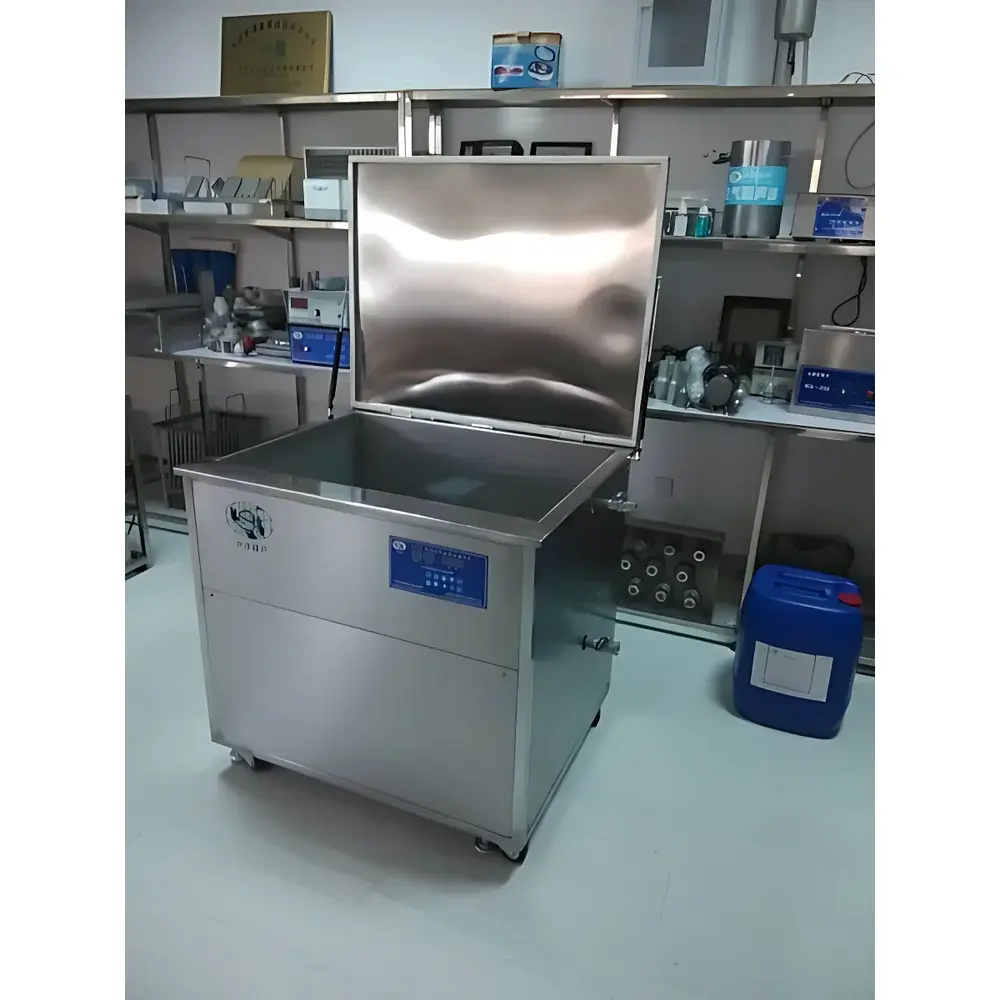
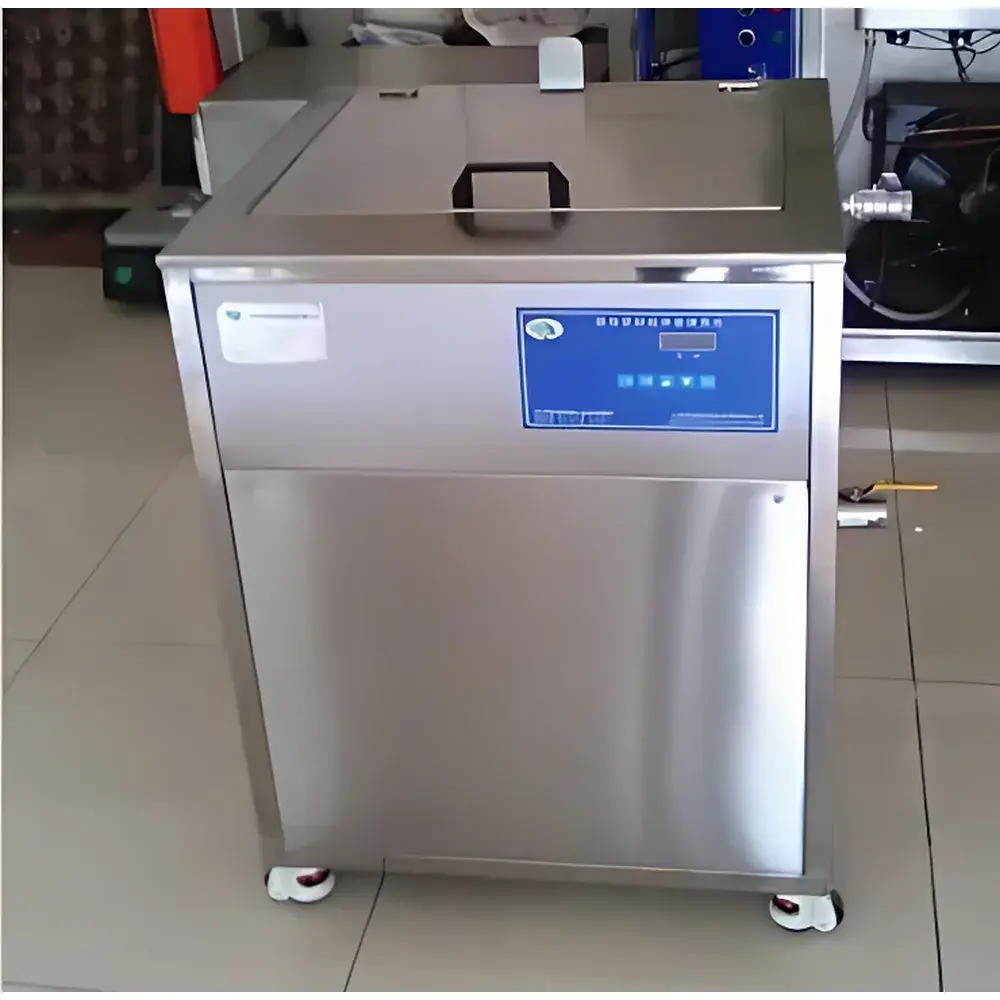
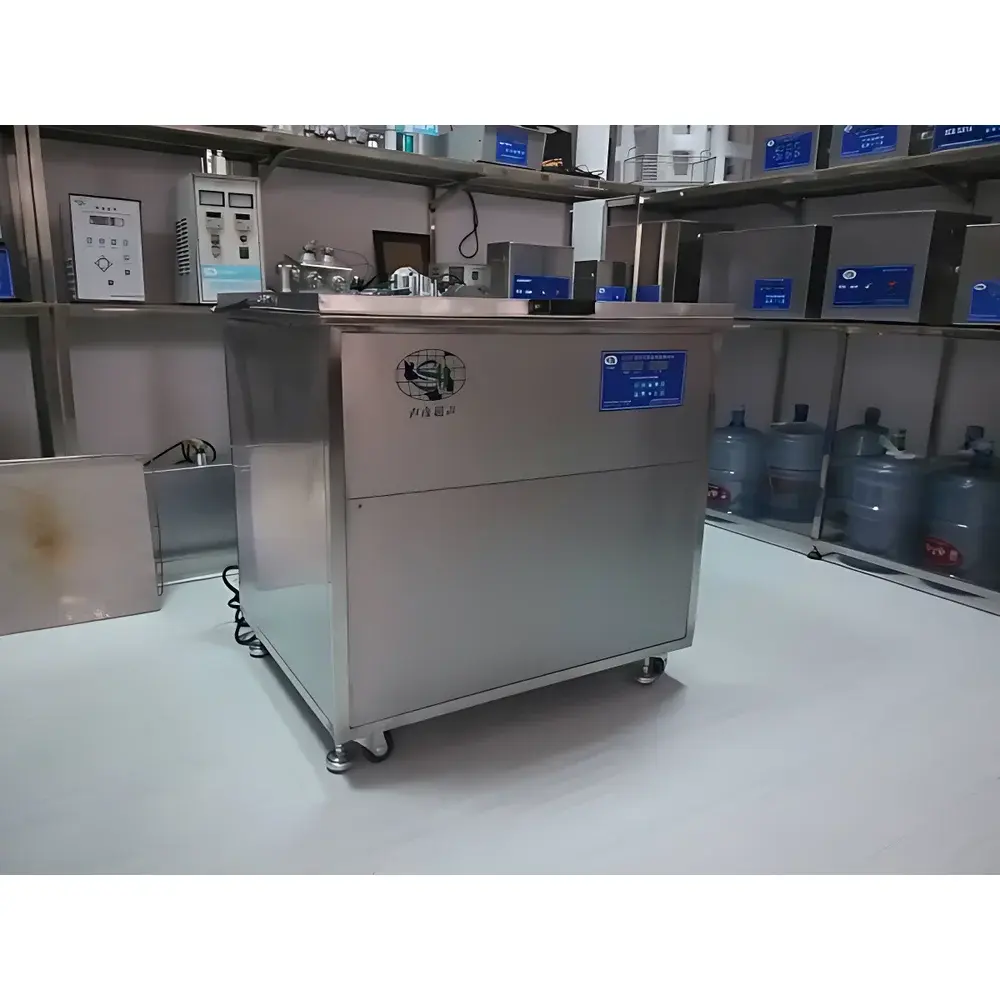
Shengyan SCQ-1001B High-Power Benchtop Ultrasonic Cleaner
| Brand | Shengyan Ultrasonics (SYCS) |
|---|---|
| Origin | Shanghai, China |
| Model | SCQ-1001B |
| Tank Capacity | 78 L |
| Ultrasonic Frequency Options | 25 / 28 / 40 / 60 / 100 kHz |
| Ultrasonic Power Output | 1500 W |
| Power Adjustment Range | 10–100% |
| Heating Temperature Range | Ambient to 80 °C |
| Timer Range | 1–600 min |
| Sound-Dampening Lid | Included |
| Drain Valve | Manual |
| Construction | Full SUS304 Stainless Steel Tank & Housing |
Overview
The Shengyan SCQ-1001B is a high-power, benchtop-capable ultrasonic cleaner engineered for demanding laboratory, industrial, and clinical cleaning applications. It operates on the principle of acoustic cavitation—where high-frequency sound waves generate microscopic vacuum bubbles in liquid media that collapse violently upon reaching resonance, producing localized shockwaves and microstreaming forces. This physical mechanism enables efficient removal of particulate contaminants, organic residues, biofilms, and entrapped air from complex geometries—including blind holes, crevices, and porous surfaces—without mechanical abrasion or chemical aggressiveness. Designed for reproducible, non-destructive cleaning of delicate instrumentation, the SCQ-1001B supports multi-modal operation across five discrete ultrasonic frequencies (25, 28, 40, 60, and 100 kHz), allowing users to optimize energy coupling for diverse sample types—from heavy-duty metal components to fragile optical lenses and microfluidic devices.
Key Features
- 1500 W nominal ultrasonic power output with continuous 10–100% adjustable amplitude control—enabling precise energy modulation for sensitive or heavily soiled samples.
- Five selectable ultrasonic frequencies (25 / 28 / 40 / 60 / 100 kHz) via front-panel digital interface; frequency selection directly influences cavitation intensity, penetration depth, and particle size sensitivity.
- Heating capability up to 80 °C with PID-controlled thermostatic regulation—enhancing solvent efficacy and accelerating degassing and dissolution kinetics.
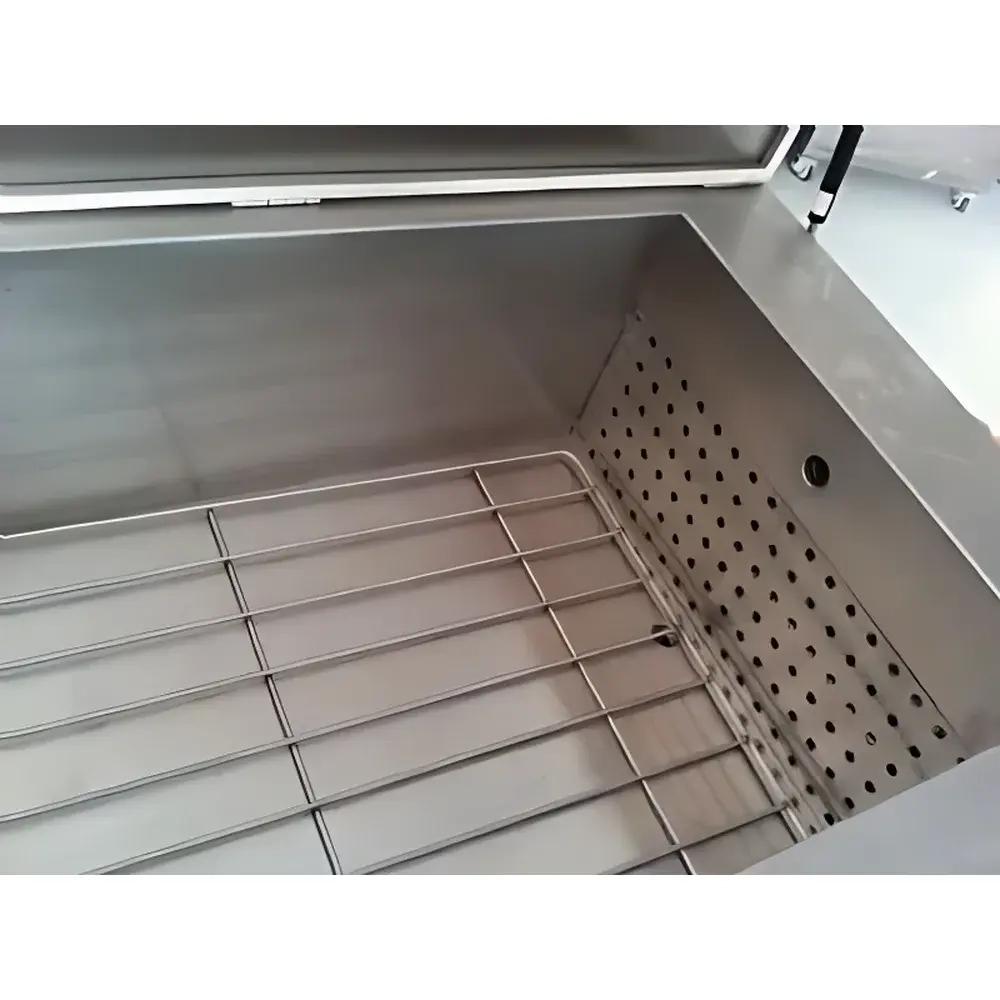
- Full SUS304 stainless steel tank (650 × 400 × 300 mm internal dimensions) and housing—resistant to corrosion from aqueous, alcoholic, and mild organic solvents; compliant with ISO 15195 and CLSI EP25-A guidelines for material compatibility in diagnostic and analytical environments.
- Integrated sound-dampening lid with safety interlock—reducing airborne noise to <65 dB(A) at 1 m distance and preventing solvent evaporation during extended cycles.
- Digital timer with 1–600 minute programmable range and auto-shutdown—ensuring protocol repeatability and operator safety under unattended operation.
- Manual drain valve and removable SUS304 mesh basket—facilitating rapid solution exchange and residue-free post-cycle handling.
- Over-temperature and over-current protection circuits—meeting IEC 61010-1 safety requirements for laboratory electrical equipment.
Sample Compatibility & Compliance
The SCQ-1001B accommodates a broad spectrum of sample categories: glassware (vials, cuvettes, pipettes), metallic components (PCBs, surgical instruments, watch mechanisms), polymers (lens housings, microtiter plates), ceramics (dental prosthetics), and biological substrates (tissue culture inserts, endoscopes). Its open architecture supports immersion in deionized water, ethanol, isopropanol, alkaline detergents, and low-volatility surfactant solutions. The unit complies with key international standards relevant to cleaning validation: ASTM D2603 (cavitation erosion resistance), ISO 13408-1 (aseptic processing—cleaning and sterilization), and USP (ultrasonic cleaning of pharmaceutical manufacturing equipment). Optional traceable calibration reports are available per ISO/IEC 17025-accredited protocols.
Software & Data Management
While the SCQ-1001B utilizes an embedded microcontroller-based control system without external PC connectivity, all operational parameters—including frequency selection, power level, temperature setpoint, and elapsed time—are digitally displayed and stored in non-volatile memory. Cycle logs (date/time stamp, duration, temperature profile, and frequency used) are retained for up to 1,000 runs and accessible via front-panel navigation—supporting GLP-compliant recordkeeping. For facilities requiring electronic audit trails, optional RS-232 or USB-to-serial adapters enable integration with LIMS or custom logging software under 21 CFR Part 11-compliant configurations (user authentication, electronic signatures, and immutable data export).
Applications
- Pre-analytical sample preparation: removal of residual proteins, lipids, or nucleic acids from labware prior to HPLC, mass spectrometry, or ELISA workflows.
- Electronics manufacturing: flux residue and solder paste removal from SMT assemblies and PCBs prior to AOI or functional testing.
- Clinical diagnostics: decontamination of reusable endoscopic accessories, dental handpieces, and ophthalmic instruments in accordance with AAMI ST91 and EN ISO 15883-1.
- Materials science: dispersion of nanomaterials (e.g., graphene oxide, TiO₂ nanoparticles) in aqueous or organic media for stable colloidal suspension preparation.
- Jewelry and precision optics: non-abrasive polishing and anti-fog film removal from coated lenses, gemstones, and watch crystals.
- Automotive R&D: cleaning of fuel injectors, sensors, and MEMS components prior to leak testing or coating adhesion evaluation.
FAQ
What frequency should I select for cleaning delicate optical components?
For lenses, prisms, or coated substrates, 60 kHz or 100 kHz is recommended—higher frequencies produce smaller, less energetic cavitation bubbles, minimizing surface pitting while maintaining effective contaminant detachment.
Can the SCQ-1001B be used for ultrasonic-assisted extraction (UAE)?
Yes—its wide frequency range and thermal control support accelerated solvent-based extraction of botanical analytes, environmental pollutants, or tissue metabolites; however, dedicated UAE protocols require validation per AOAC 2007.01 or ISO 21569.
Is the unit suitable for GMP-regulated environments?
With optional IQ/OQ documentation packages, temperature mapping reports, and 21 CFR Part 11-compliant data export modules, the SCQ-1001B meets baseline qualification requirements for use in pharmaceutical QC laboratories.
Does the stainless steel tank resist hydrochloric or nitric acid solutions?
SUS304 provides moderate resistance to dilute (<5%) HCl and HNO₃ below 40 °C; for aggressive acid cleaning, consult Shengyan’s chemical compatibility matrix and consider supplemental passivation per ASTM A967.
How often should the transducer array be serviced?
Under normal usage (≤8 h/day), no routine transducer maintenance is required; annual inspection of bonding integrity and impedance matching is advised per manufacturer service bulletin SY-CS-2023-07.



