
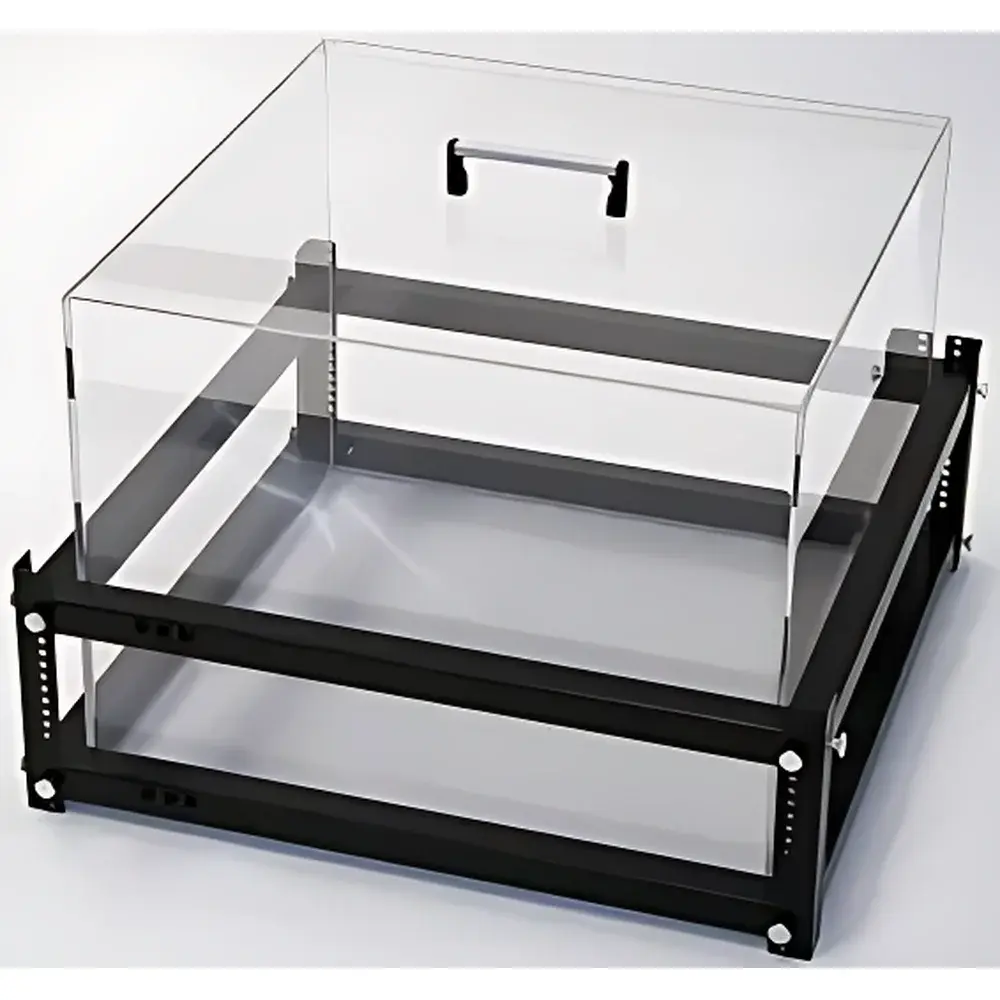
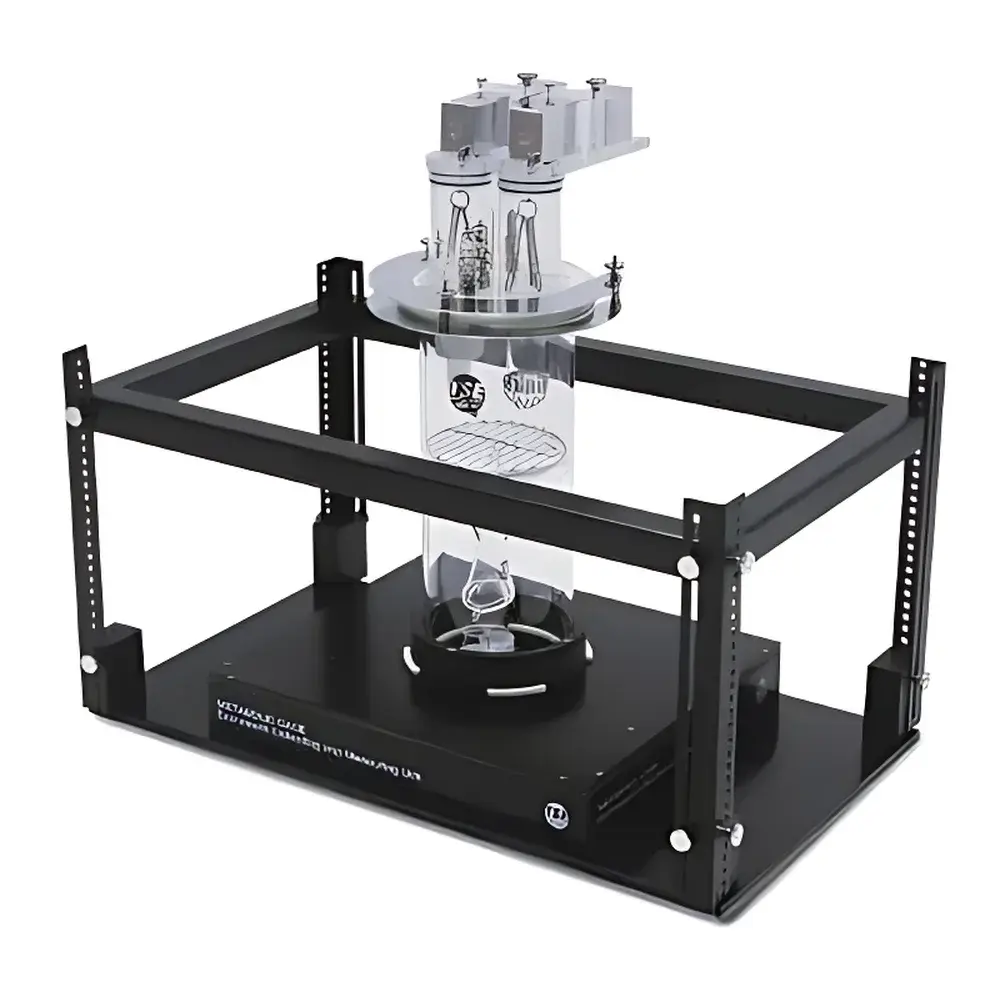
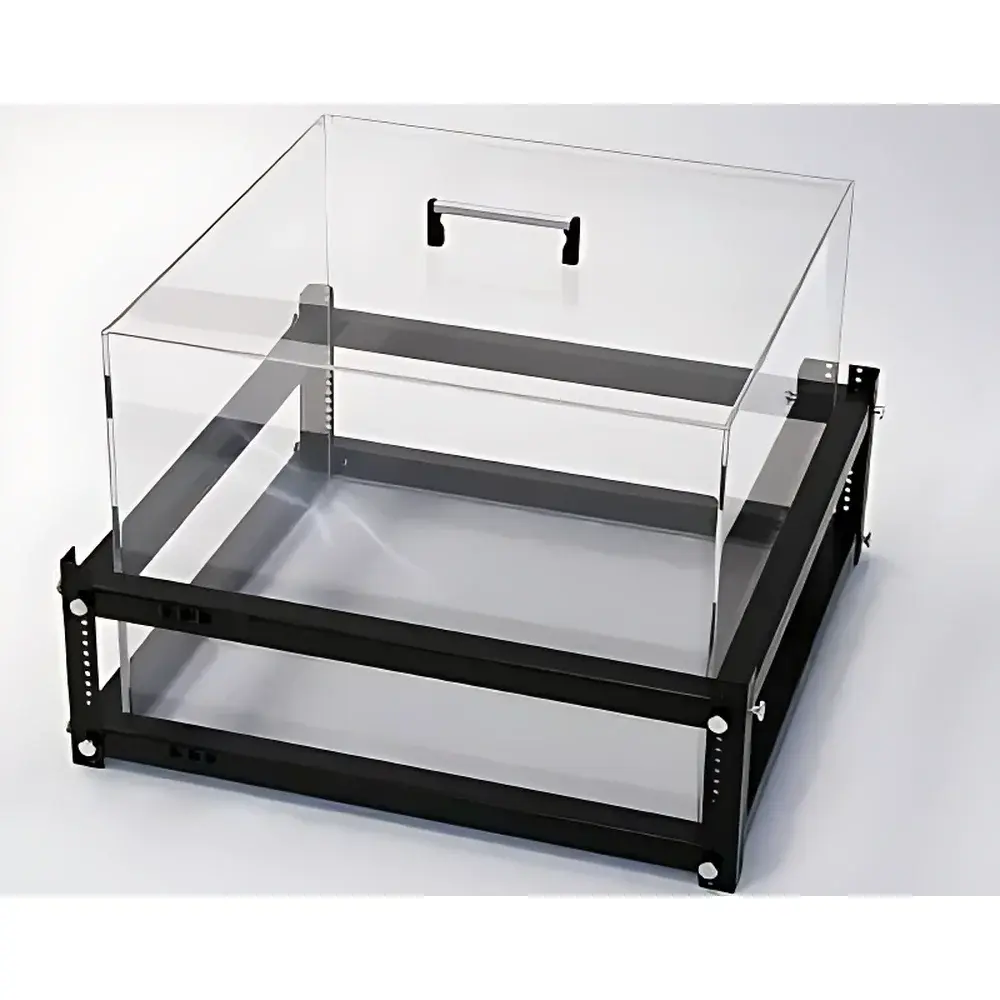
ActiMot2 System by TSE Systems
| Brand | TSE Systems |
|---|---|
| Origin | Germany |
| Model | ActiMot2 System |
| Application | Automated In-Cage Spontaneous Locomotor Activity Monitoring for Rodents |
| Measurement Principle | Dual-Modality Infrared Beam Break + Optional InfraMot Thermal Motion Sensing |
| Cage Compatibility | Standard Home Cages, CaloCage (Indirect Calorimetry), PhenoCage (Metabolic Phenotyping) |
| Spatial Resolution | Configurable XYZ Beam Grid (X/Y: ≤10 mm spacing |
| Z | 3-layer vertical stratification) |
| Temporal Resolution | 10 ms Beam State Sampling |
| Region Definition | User-Defined Center/Periphery Zones (Open-Field Analog) |
| Motion Classification | Ambulation (Beam Crossings ≥2 Consecutive Beams) vs. Fine Motor Activity (Single-Beam Interruptions with Configurable Refractory Period ≥50 ms) |
| Calibration-Free Operation | Self-Validating Beam Array with Dynamic Baseline Adjustment |
| Obstruction Handling | Persistent Beam Block (e.g., bedding accumulation) Automatically Excluded from Activity Counting |
| Environmental Integration | Compatible with Temperature/Humidity-Controlled Vivaria and ISO 17025-Accredited Behavioral Testing Suites |
Overview
The ActiMot2 System by TSE Systems is a modular, calibration-free infrared beam-based platform engineered for continuous, non-invasive quantification of spontaneous locomotor and fine motor behavior in group-housed or singly housed rodents within standard home cages. Unlike conventional open-field systems requiring transfer stress and limited temporal coverage, the ActiMot2 operates directly inside the animal’s residence—enabling longitudinal assessment under ethologically relevant conditions. Its core measurement architecture relies on a three-dimensional (X-Y-Z) infrared beam grid that fully encloses the cage perimeter, detecting beam interruptions with 10 ms temporal resolution. Each interruption is algorithmically classified as either ambulatory movement (defined as sequential crossing of ≥2 adjacent beams along a trajectory) or fine motor activity (isolated, sub-second interruptions such as grooming, rearing, or tremor-like motion), with user-configurable refractory periods (50–500 ms) to suppress artifactual signals from tail flicks or cage contact artifacts. Optional integration of the InfraMot thermal motion sensor—mounted on the cage lid—provides complementary detection of low-amplitude, non-beam-breaking movements (e.g., respiration-coupled torso shifts, subtle postural adjustments), thereby increasing sensitivity to behavioral states not resolved by beam break alone.
Key Features
- True in-cage monitoring without handling or environmental disruption—supports 24/7 recording across circadian cycles
- XYZ-configurable infrared frame with scalable spatial resolution (standard 10 mm horizontal pitch; 3-tier vertical layering for rearing and vertical exploration analysis)
- No hardware calibration required: real-time baseline drift compensation and automatic exclusion of persistent beam occlusions (e.g., bedding, food debris)
- Dual-signal classification engine distinguishing ambulation from fine motor activity using configurable inter-beam timing thresholds
- Region-of-interest definition: users define center/periphery zones analogous to open-field paradigms, enabling anxiety-related metrics (e.g., % time in center, latency to first center entry)
- Native compatibility with TSE’s CaloCage (indirect calorimetry) and PhenoCage (integrated metabolic phenotyping) platforms—enabling concurrent activity, energy expenditure, and substrate utilization analysis
- Robust mechanical design compliant with IEC 61000-6-3 (EMC) and ISO 14155 (clinical research device principles), validated for use in GLP-compliant preclinical facilities
Sample Compatibility & Compliance
The ActiMot2 System supports both mouse (C57BL/6, BALB/c, CD-1, etc.) and rat (Sprague-Dawley, Wistar, Long-Evans) models in standard polycarbonate or static/dynamic ventilated cages (up to 45 × 25 × 20 cm). It is compatible with bedding materials including corn cob, aspen shavings, and paper-based substrates, provided beam paths remain unobstructed during normal cage maintenance intervals. The system meets ISO/IEC 17025 requirements for measurement traceability when operated within TSE-certified installation protocols. Data acquisition complies with FDA 21 CFR Part 11 Annex 11 expectations through optional audit-trail-enabled software licensing, supporting electronic signatures and immutable raw-data archiving. All firmware and sensor modules undergo biannual metrological verification per DIN EN ISO/IEC 17025:2017 standards at TSE’s accredited calibration laboratory in Bad Homburg, Germany.
Software & Data Management
Acquisition and analysis are performed via TSE’s proprietary NeuroScore v5.2 software suite, which provides synchronized multi-parameter export (activity counts, zone occupancy, velocity vectors, bout duration histograms) in CSV, HDF5, and MAT formats. Raw beam-state timestamps are preserved at millisecond granularity for retrospective reanalysis. The software includes built-in statistical modules for repeated-measures ANOVA, circadian rhythm decomposition (Cosinor analysis), and machine-learning-assisted clustering of activity motifs (k-means + DTW distance). All data files embed EXIF-style metadata (cage ID, animal RFID tag, protocol timestamp, operator ID, environmental loggers), ensuring full ALCOA+ compliance (Attributable, Legible, Contemporaneous, Original, Accurate, Complete, Consistent, Enduring, Available). Exported datasets are compatible with third-party tools including MATLAB, Python (via tseio package), GraphPad Prism, and R (actimotR library).
Applications
- Longitudinal neurobehavioral phenotyping in transgenic and knockout rodent models (e.g., Parkinson’s, Huntington’s, autism spectrum disorders)
- Preclinical evaluation of CNS-active compounds—including sedatives, stimulants, anxiolytics, and antipsychotics—under undisturbed housing conditions
- Metabolic-behavioral coupling studies in diet-induced obesity, diabetes, and aging cohorts via integration with CaloCage/PhenoCage
- Validation of circadian entrainment and sleep-wake fragmentation in shift-work or jet-lag paradigms
- Assessment of functional recovery following spinal cord injury, stroke, or peripheral nerve lesion
- Standardized behavioral endpoints for regulatory submissions under OECD Test No. 426 (Neurotoxicity Study) and ICH S7A (Safety Pharmacology)
FAQ
Can the ActiMot2 System be used with automated feeding or watering systems?
Yes—the beam frame is mechanically isolated from cage accessories and maintains signal integrity even when integrated with IntelliCage-compatible sipper tubes or pellet dispensers.
Is it possible to synchronize ActiMot2 data with EEG/EMG recordings?
Yes—NeuroScore supports TTL pulse input/output triggering and NTP time synchronization, enabling precise alignment with electrophysiological acquisition systems (e.g., Tucker-Davis Technologies, Intan Technologies).
Does the system require regular recalibration after cage cleaning?
No—each frame performs autonomous optical self-checks before each recording session and dynamically adjusts baseline thresholds based on ambient IR noise levels.
How is data integrity ensured during power outages or network interruptions?
All frames include onboard flash memory buffering (≥72 hours at 10 ms sampling), and NeuroScore implements atomic write operations to prevent partial file corruption.
Can multiple ActiMot2 units be managed centrally in large-scale phenotyping facilities?
Yes—TSE’s Phenotype Manager Server enables centralized configuration, remote diagnostics, role-based access control, and federated database aggregation across up to 256 simultaneously active cages.





