
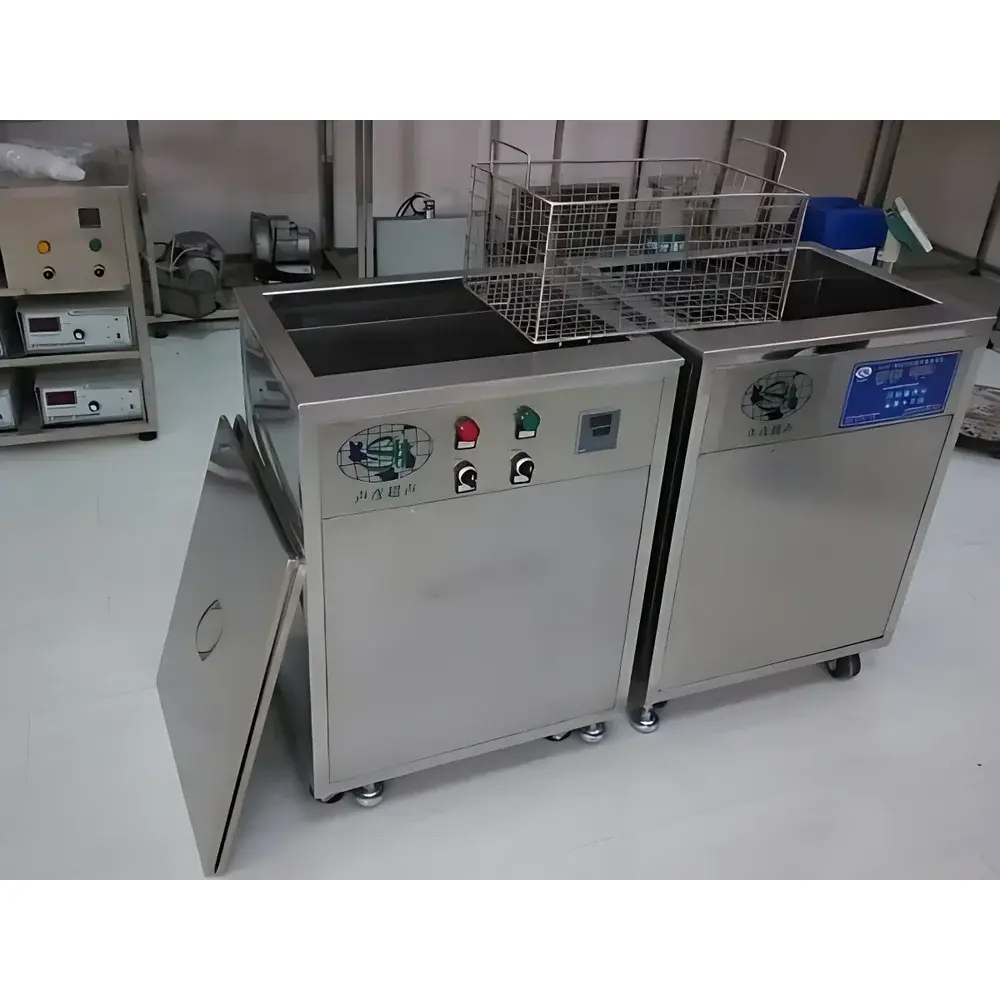
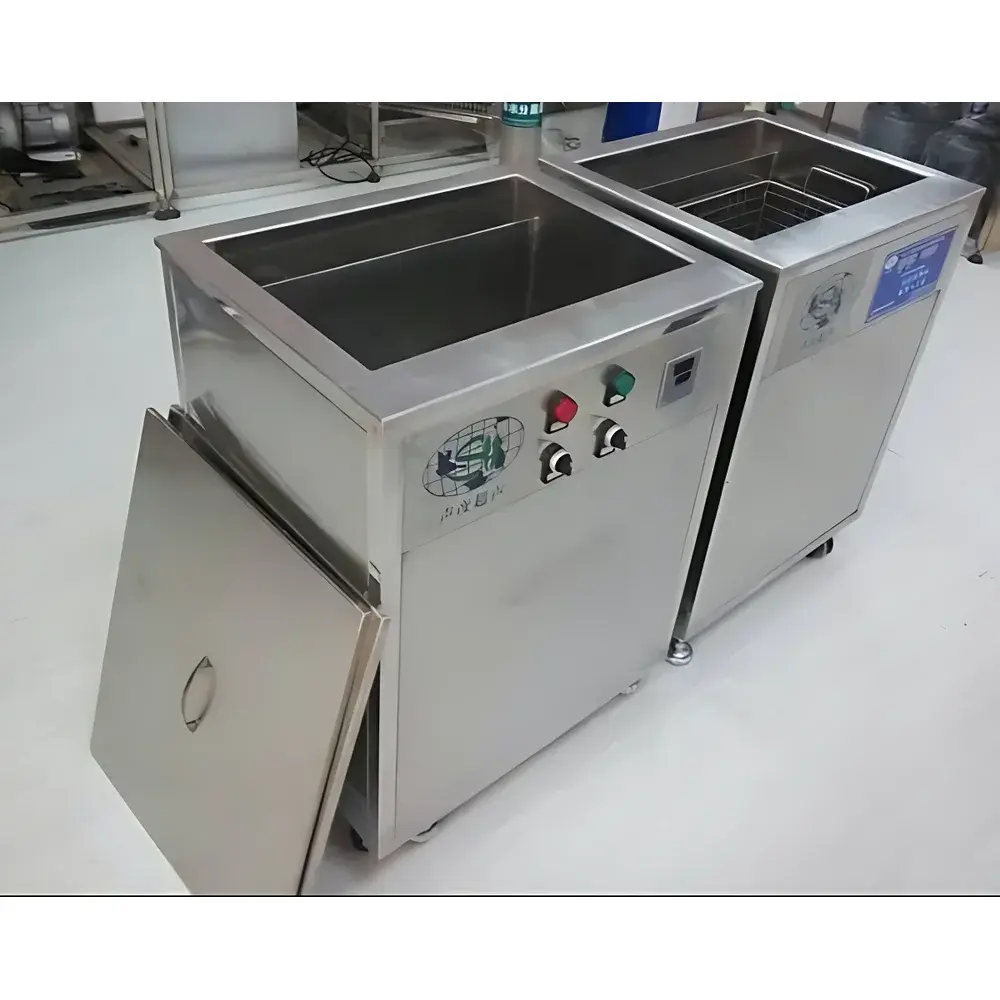
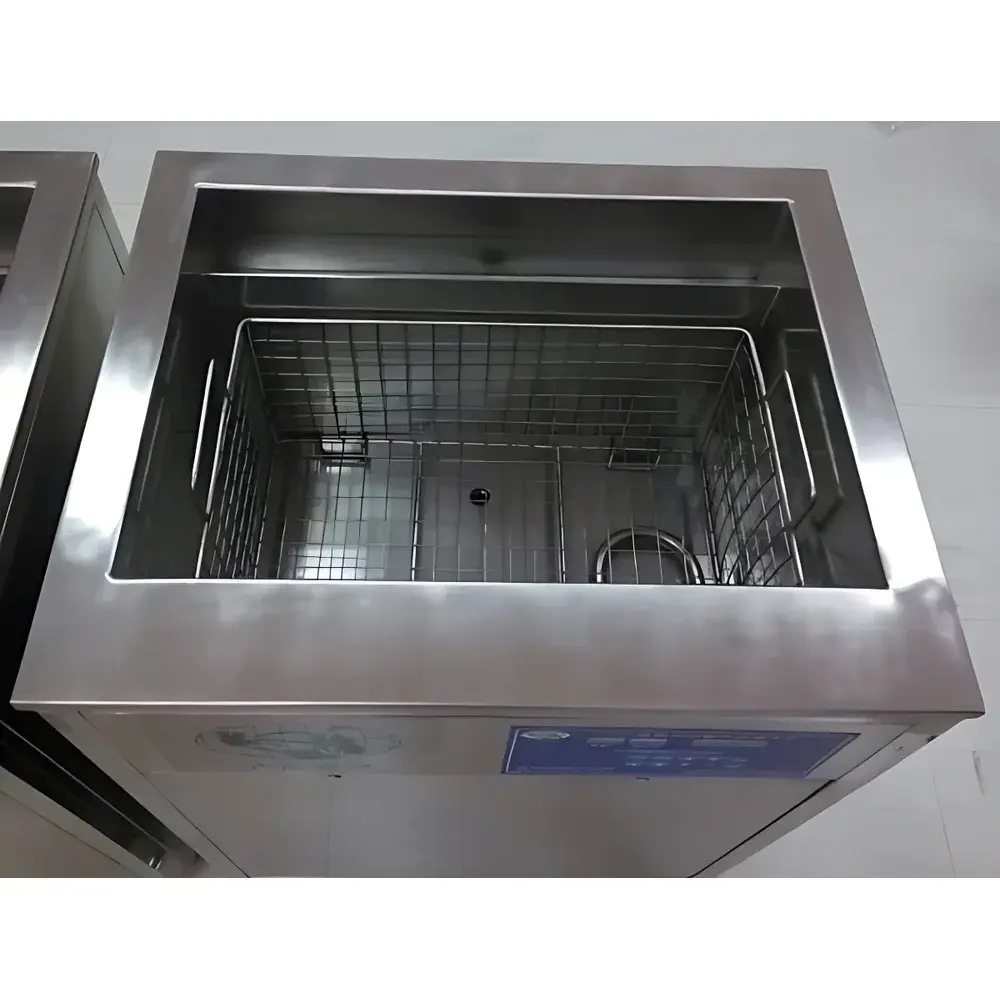
Shengyan SCQ-13119 Dual-Tank Ultrasonic Cleaner with Bubble Rinsing Station
| Brand | Shengyan Ultrasonics (sycs) |
|---|---|
| Origin | Shanghai, China |
| Model | SCQ-13119 |
| Tank Capacity | 52.5 L per tank |
| Ultrasonic Frequency | 28 kHz |
| Ultrasonic Power | 1200 W |
| Heating Range | Ambient to 80 °C |
| Timer Range | 1–600 min |
| Temperature Control | Yes |
| Power Adjustment | No |
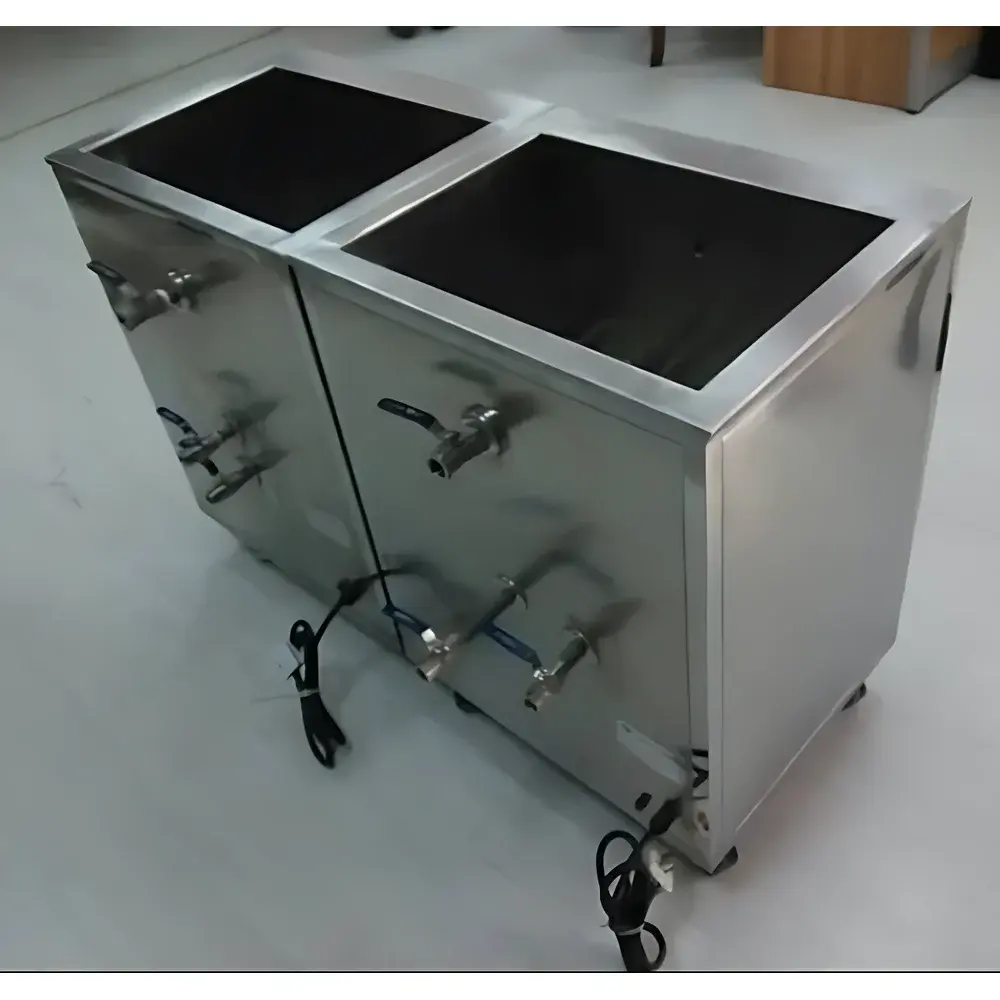
| Drain/Inlet | Manual |
| Lid | Sound-Dampening Cover |
| Construction | Inner tank & outer shell — SUS304 stainless steel (2.0 mm / 1.0 mm thickness) |
| Electrical Supply | 220 V, 50 Hz |
| Primary Tank Function | Ultrasonic Cleaning |
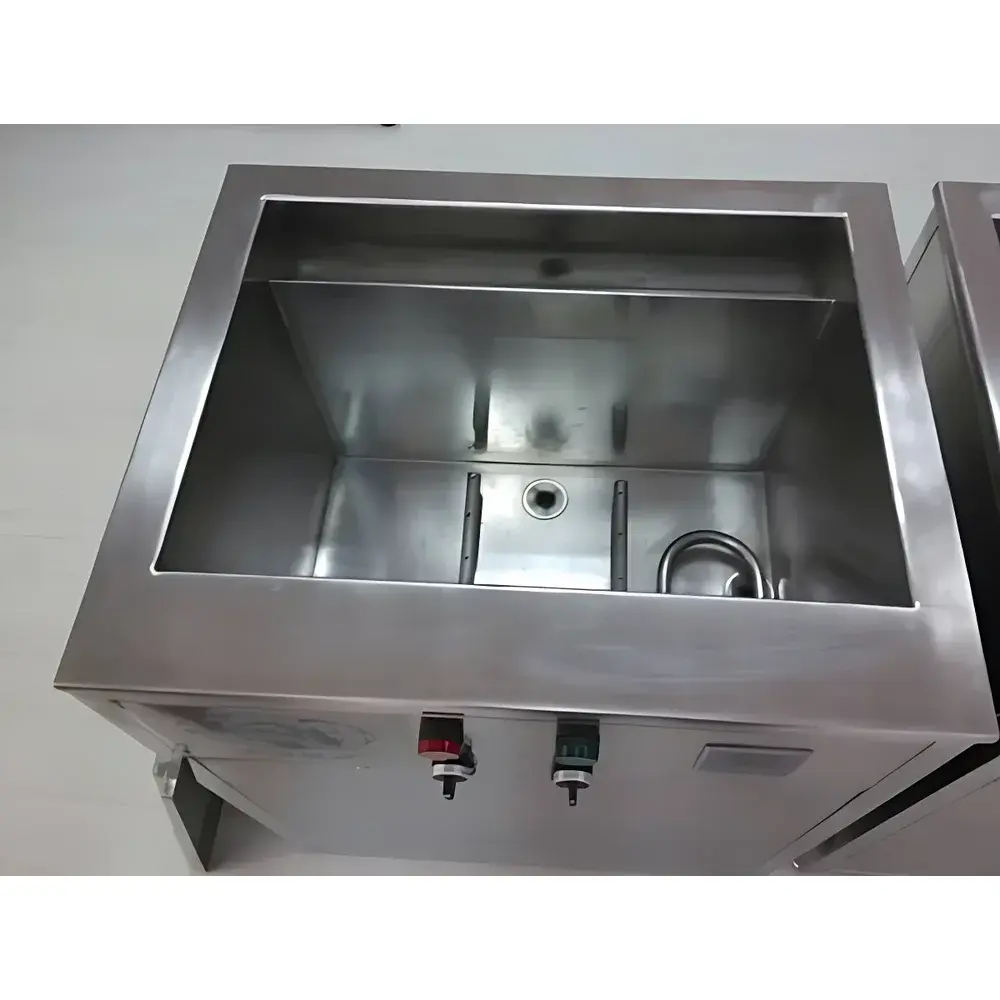
| Secondary Tank Function | Air-Bubble Agitation Rinse |
| Circulation Pump (Rinse Tank) | 500 W |
| Heating Power (per tank) | 2000 W |
| Overflow Port | Yes |
| Basket Included | One standard mesh basket |
Overview
The Shengyan SCQ-13119 is a dual-function laboratory-grade ultrasonic cleaning system engineered for high-reliability, multi-stage sample preparation workflows. It integrates two independently controlled 52.5 L tanks in a single robust chassis: the first operates as a high-power ultrasonic cleaning station (28 kHz, 1200 W), while the second functions as a dedicated air-agitated rinse station—commonly referred to as a “bubble rinse” or “aeration rinse” tank. This configuration eliminates cross-contamination risks between cleaning and rinsing steps, a critical requirement in analytical laboratories handling trace-level samples, precision optics, semiconductor wafers, medical device components, and reusable labware. The system employs piezoelectric transducers bonded to the bottom of the primary tank to generate cavitation fields optimized for particle dislodgement from complex geometries. In the secondary tank, a 500 W submersible circulation pump drives compressed air through a diffuser plate, producing uniform micro-bubble agitation that physically displaces residual cleaning solution without introducing mechanical shear or thermal stress. Both tanks feature independent digital temperature control (ambient to 80 °C), precise timer operation (1–600 minutes), and integrated sound-dampening lids compliant with ISO 9241-210 ergonomic safety guidelines for operator exposure.
Key Features
- Dual-tank architecture with fully isolated fluid paths—no shared plumbing or recirculation between ultrasonic and rinse stages
- SUS304 stainless steel construction throughout: 2.0 mm gauge inner tank walls and 1.0 mm outer shell for corrosion resistance and structural integrity under continuous thermal cycling
- Fixed-frequency 28 kHz ultrasonic generator delivering consistent cavitation intensity across full load conditions; suitable for medium-to-high viscosity cleaning solutions (e.g., aqueous alkaline, mild solvent blends)
- Independent heating systems (2000 W per tank) with PID-controlled thermostats enabling stable temperature maintenance ±1.5 °C over extended cycles
- Manual fill/drain interface with dedicated inlet, outlet, and overflow ports—designed for integration into lab water distribution networks or standalone deionized water reservoirs
- Integrated sound-dampening lid with safety interlock switch meeting IEC 61000-6-3 EMC emission limits for laboratory environments
Sample Compatibility & Compliance
The SCQ-13119 accommodates a broad range of substrates including glassware (volumetric flasks, cuvettes, pipette tips), metal components (stainless steel surgical instruments, calibration standards), ceramic filters, and polymer-based microfluidic devices. Its non-contact cleaning mechanism avoids surface abrasion, making it suitable for delicate optics and MEMS assemblies. The system complies with general-purpose laboratory equipment requirements per ISO/IEC 17025:2017 Clause 6.4 (equipment verification), and supports GLP documentation through timestamped operational logs when paired with external data acquisition modules. While not certified to FDA 21 CFR Part 11 out-of-the-box, its deterministic timer/heating controls and manual process repeatability align with IQ/OQ validation protocols for Class II cleaning applications in pharmaceutical QC labs.
Software & Data Management
The SCQ-13119 operates via an embedded microcontroller-based front-panel interface with LED display and tactile membrane keys. All parameters—including time, temperature, and on/off status—are locally stored in non-volatile memory with battery-backed retention. No proprietary software or USB connectivity is included; however, the unit’s analog voltage outputs (0–5 V DC) for temperature and timer status enable integration with third-party SCADA systems or LabVIEW-based monitoring platforms. For audit-trail compliance, users are advised to pair the instrument with external electronic logbooks or validated environmental monitoring systems recording start/end timestamps, setpoints, and observed deviations.
Applications
- Pre-analytical sample preparation for ICP-MS, HPLC, and GC-MS—removing organic residues and adsorbed metals from quartz and PTFE components
- Cleaning of reusable filtration housings and syringe filters prior to sterility testing (USP )
- Routine decontamination of electrophoresis combs, gel trays, and PCR tube racks in molecular biology labs
- Removal of polishing compounds and coolant residues from metrology artifacts and calibration masters
- Bubble-rinse stabilization of nanoparticle suspensions prior to DLS or TEM sample mounting
FAQ
Is the ultrasonic frequency adjustable?
No—the system operates at a fixed 28 kHz frequency, optimized for macro-cavitation and efficient removal of particulates >5 µm in size.
Can this unit be connected to a continuous water supply?
Yes—both tanks feature standardized G1/2″ BSP threaded inlet and outlet ports compatible with laboratory-grade quick-connect fittings and solenoid valves.
Does the bubble rinse tank include filtration?
No—this model provides only air-agitated rinsing; inline particulate filtration requires external installation upstream of the inlet port.
What is the maximum allowable liquid temperature during ultrasonic operation?
The system supports sustained operation up to 80 °C in both tanks, though optimal cavitation efficiency is achieved between 40–60 °C depending on solution vapor pressure.
Is the mesh basket autoclavable?
Yes—the included SUS304 mesh basket is rated for repeated autoclaving at 134 °C, 3 bar saturated steam per EN 285.



