
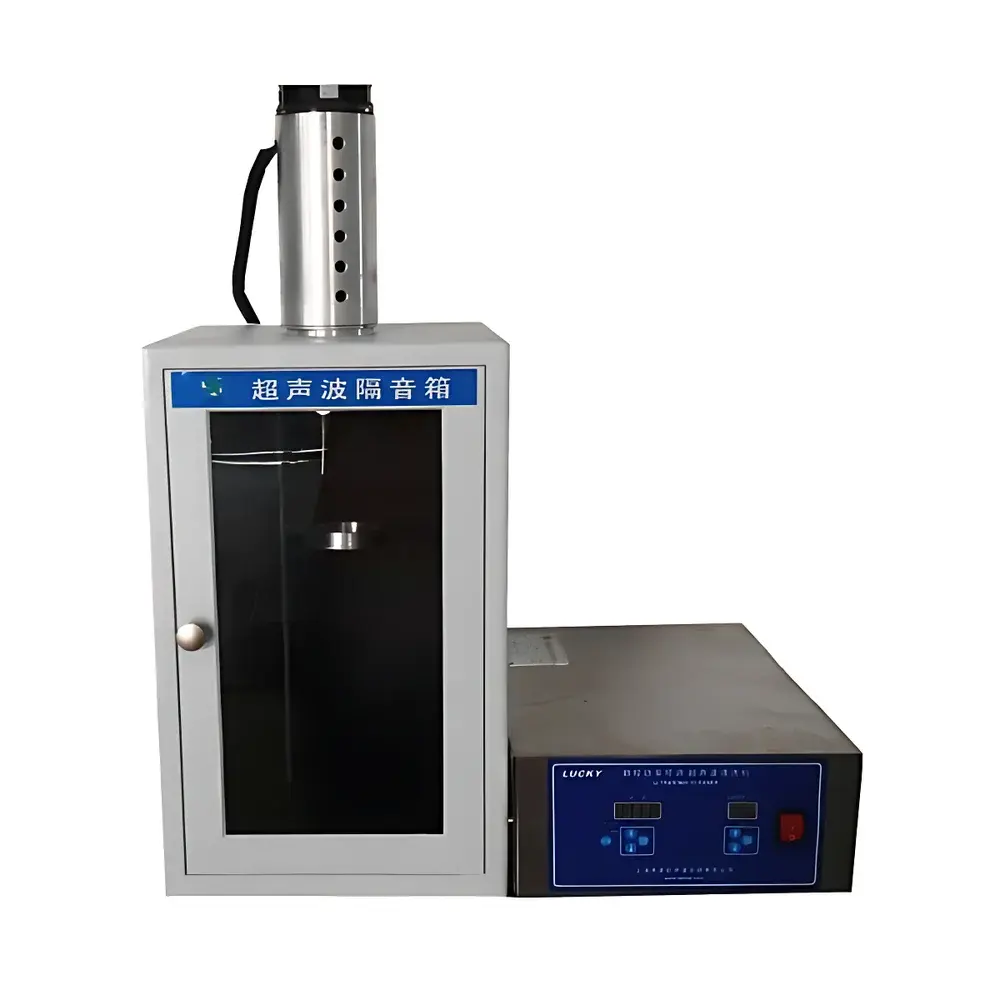
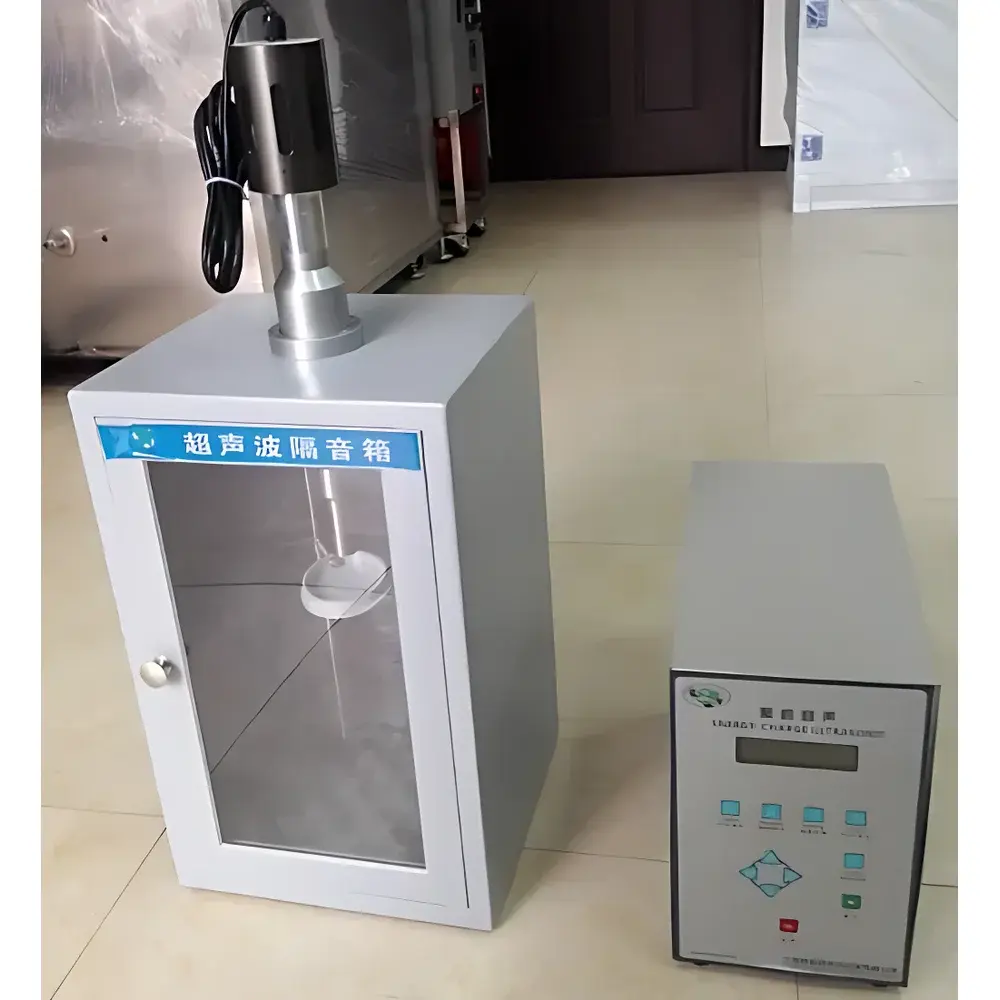
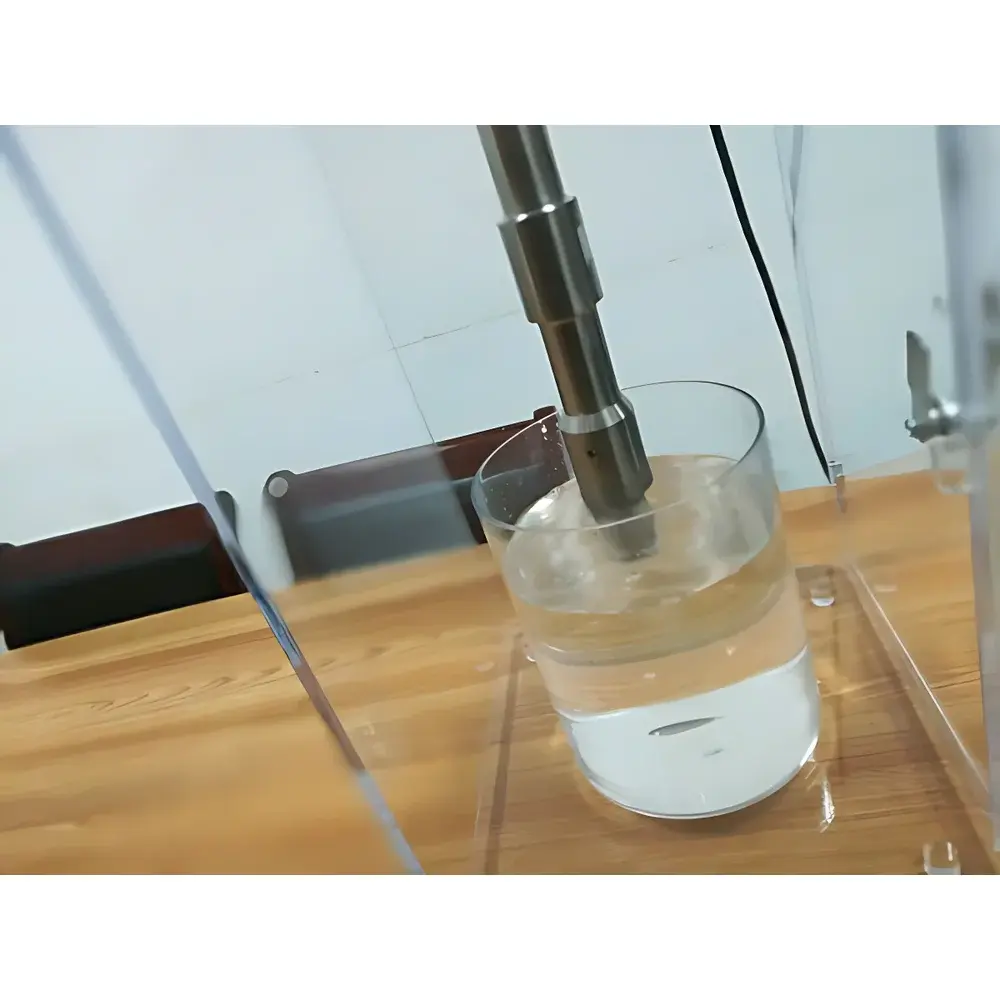
Shengyan Ultrasonic Extractor SCQ-1800F
| Brand | Shengyan Ultrasonic (SYCS) |
|---|---|
| Origin | Shanghai, China |
| Model | SCQ-1800F |
| Ultrasonic Power | 1800 W |
| Frequency Range | 20–120 kHz (customizable) |
| Heating Power | 2000 W |
| Temperature Control Range | 5–80 °C |
| Sample Volume Capacity | 0.5–2000 mL |
| Voltage/Frequency | 220 V, 50 Hz |
| Probe Tip Diameters Available | 10–80 mm (titanium alloy) |
| Display | Digital time & power setting |
| Safety Features | Automatic frequency tracking, overload protection |
| Chamber | Sound-insulated enclosure with sample tray |
Overview
The Shengyan Ultrasonic Extractor SCQ-1800F is an industrial-grade benchtop ultrasonic processor engineered for reproducible, scalable liquid-phase extraction and sample homogenization in research, quality control, and pilot-scale laboratories. It operates on the principle of high-intensity ultrasonic cavitation—where rapid pressure fluctuations generated by piezoelectric transducers induce microbubble formation, growth, and violent collapse in liquids—resulting in localized shear forces, microstreaming, and thermal effects sufficient to disrupt cell membranes, solubilize intracellular compounds, and enhance mass transfer across phase boundaries. Unlike low-power bath-type ultrasonicators, the SCQ-1800F delivers focused energy via interchangeable titanium alloy probes (sonotrodes), enabling direct coupling into viscous or heterogeneous samples while maintaining stable amplitude output across variable load conditions.
Key Features
- Adjustable Cavitation Intensity: Continuous 10–100% ultrasonic power regulation (0–1800 W nominal) ensures precise control over mechanical stress applied to biological matrices or solid-liquid mixtures—critical for preserving thermolabile analytes during natural product extraction or protein isolation.
- Multi-Frequency Capability: Frequency range spanning 20–120 kHz supports application-specific optimization: lower frequencies (20–40 kHz) maximize inertial cavitation for robust cell lysis and particle size reduction; higher frequencies (60–120 kHz) favor milder, more uniform micro-mixing ideal for emulsification or nanoparticle dispersion.
- Integrated Thermal Management: Independent 2000 W heating system with PID-controlled temperature regulation (5–80 °C, ±0.5 °C accuracy) enables temperature-assisted extraction protocols compliant with pharmacopoeial methods (e.g., USP <711> dissolution, EP 2.9.30 herbal extract preparation).
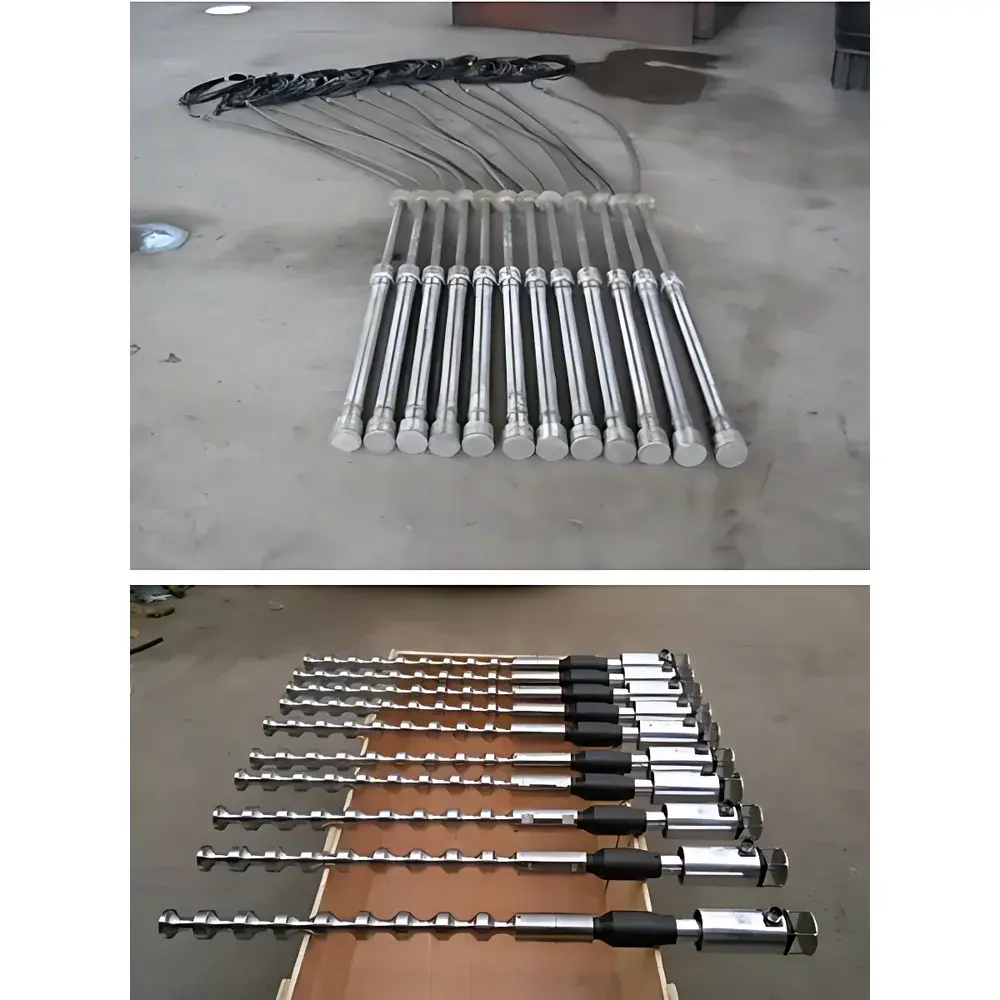
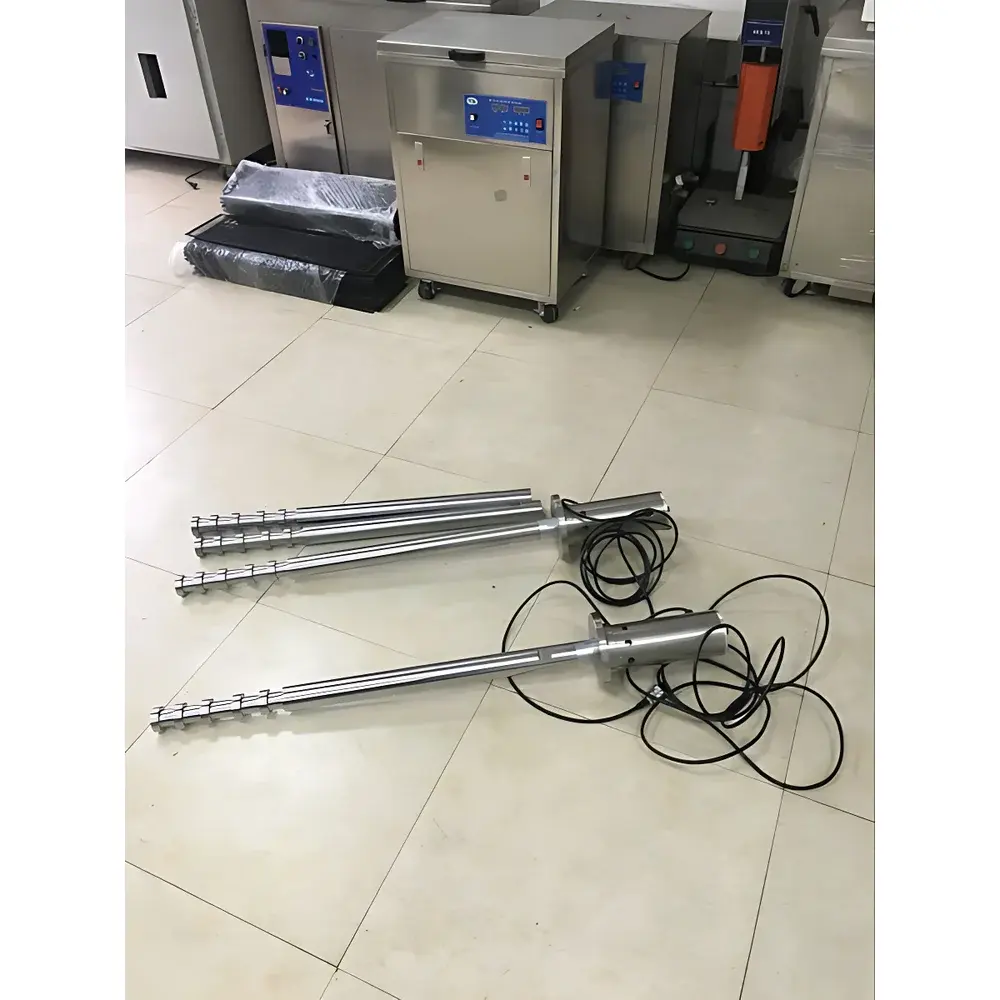
- Robust Probe Architecture: Titanium alloy sonotrodes (10–80 mm tip diameter) provide exceptional acoustic transmission efficiency and corrosion resistance. All probes are calibrated for amplitude linearity and undergo fatigue testing per ISO 17025-accredited procedures.
- Operational Safety & Compliance: Built-in automatic frequency tracking maintains resonance under changing impedance (e.g., viscosity shifts during extraction); electronic overload protection prevents transducer damage during stall or dry-running events. The sound-dampened enclosure meets IEC 61000-3-2 harmonic emission limits and reduces operator noise exposure to <70 dB(A) at 1 m.
Sample Compatibility & Compliance
The SCQ-1800F accommodates a broad spectrum of sample types—from microbial cultures and plant tissues to polymer dispersions and metal oxide slurries—within volumes ranging from 0.5 mL (microscale probe configuration) to 2 L (large-volume jacketed reactor mode). Its design aligns with Good Laboratory Practice (GLP) documentation requirements: digital parameter logging (time, power, temperature, frequency) supports audit-ready data integrity when paired with external timestamped storage. While not FDA 21 CFR Part 11-certified out-of-the-box, the device’s deterministic control architecture and non-volatile parameter memory facilitate validation under GMP Annex 11 frameworks for regulated extract manufacturing (e.g., botanical active ingredient isolation per EMA Guideline on Quality of Herbal Medicinal Products).
Software & Data Management
The SCQ-1800F features a front-panel LCD interface supporting real-time monitoring and manual programming of extraction cycles (up to 99-step sequences with ramp/hold profiles). Time-stamped operational logs—including cumulative ultrasonic exposure, thermal history, and fault codes—are exportable via USB port in CSV format for traceability. Optional RS-485 Modbus RTU interface allows integration into centralized lab automation systems (e.g., LabVantage, Thermo Fisher SampleManager) for automated batch reporting and SOP-driven workflow execution. All firmware adheres to IEC 62304 Class B software safety standards.
Applications
- Phytochemical extraction: Accelerated release of polyphenols, alkaloids, and terpenoids from dried herbs, roots, and seeds—reducing solvent consumption and processing time vs. Soxhlet or maceration.
- Microbial cell disruption: Efficient lysis of E. coli, yeast, and filamentous fungi for recombinant protein recovery without denaturation-sensitive additives.
- Nanomaterial synthesis: Facilitation of sonochemical reduction and stabilization of metallic nanoparticles (Ag, Au, ZnO) in aqueous media.
- Environmental analysis: Extraction of PAHs, PCBs, and organochlorine pesticides from soil/sediment matrices prior to GC-MS quantification (EPA Method 3550C).
- Food & beverage R&D: Homogenization of dairy emulsions, enzymatic pretreatment of starch suspensions, and allergen epitope exposure studies.
FAQ
Is the SCQ-1800F suitable for continuous operation?
Yes—rated for duty cycles up to 8 hours/day under ambient temperatures ≤35 °C and relative humidity ≤80% non-condensing, provided adequate ventilation around the transducer housing.
Can I validate the ultrasonic output amplitude?
Calibration is performed using NIST-traceable calorimetric methods (ASTM E2810) at factory; users may verify amplitude consistency via standardized aluminum foil erosion tests per ISO 20487.
Does it support external temperature probes?
The unit accepts PT100 input (optional accessory) for immersion-based temperature feedback, enhancing control fidelity in exothermic reactions or large-volume extractions.
What maintenance is required for long-term reliability?
Annual inspection of transducer bonding integrity and sonotrode thread wear is recommended; titanium probes require no lubrication but must be cleaned with ethanol after use with organic solvents.
Is remote monitoring possible?
Via optional Ethernet-to-Modbus gateway, enabling SCADA-level supervision and alarm notification through standard OPC UA servers.
Related Products



