
Anyty 3R-YD3D1200S Portable 3D Extended Depth-of-Field Digital Microscope
| Brand | Anyty |
|---|---|
| Origin | Beijing, China |
| Manufacturer Type | Direct Manufacturer |
| Origin Category | Domestic (China) |
| Model | 3R-YD3D1200S |
| Imaging Sensor | CMOS |
| XY Translation Stage Travel Range | 10 mm |
| Focus Step Resolution | 0.2 µm |
| Measurement Accuracy | ≤5% RSD for repeated volumetric measurements |
| Output | PDF inspection reports with embedded images and metrology data |
| Vibration Damping | Integrated mechanical anti-vibration design |
| Compliance | Designed for ISO/IEC 17025-aligned lab environments and in-process QC workflows |
Overview
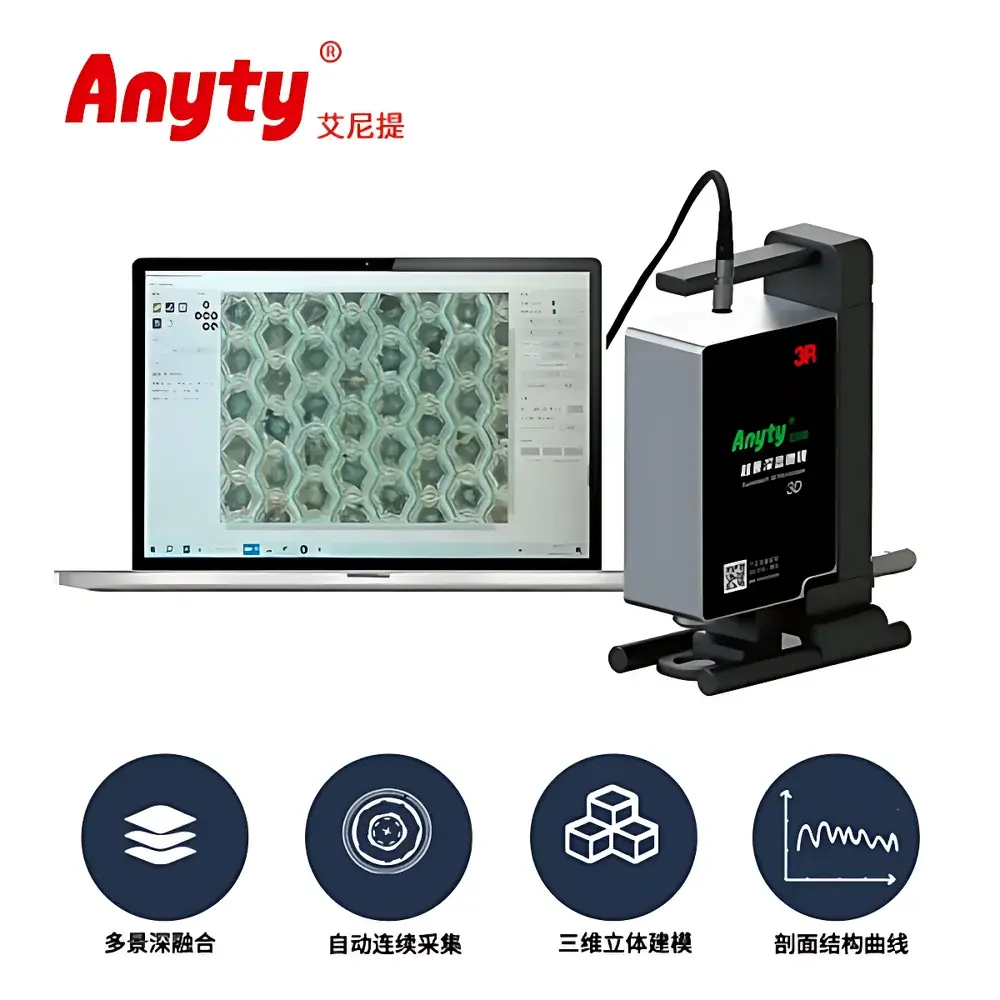
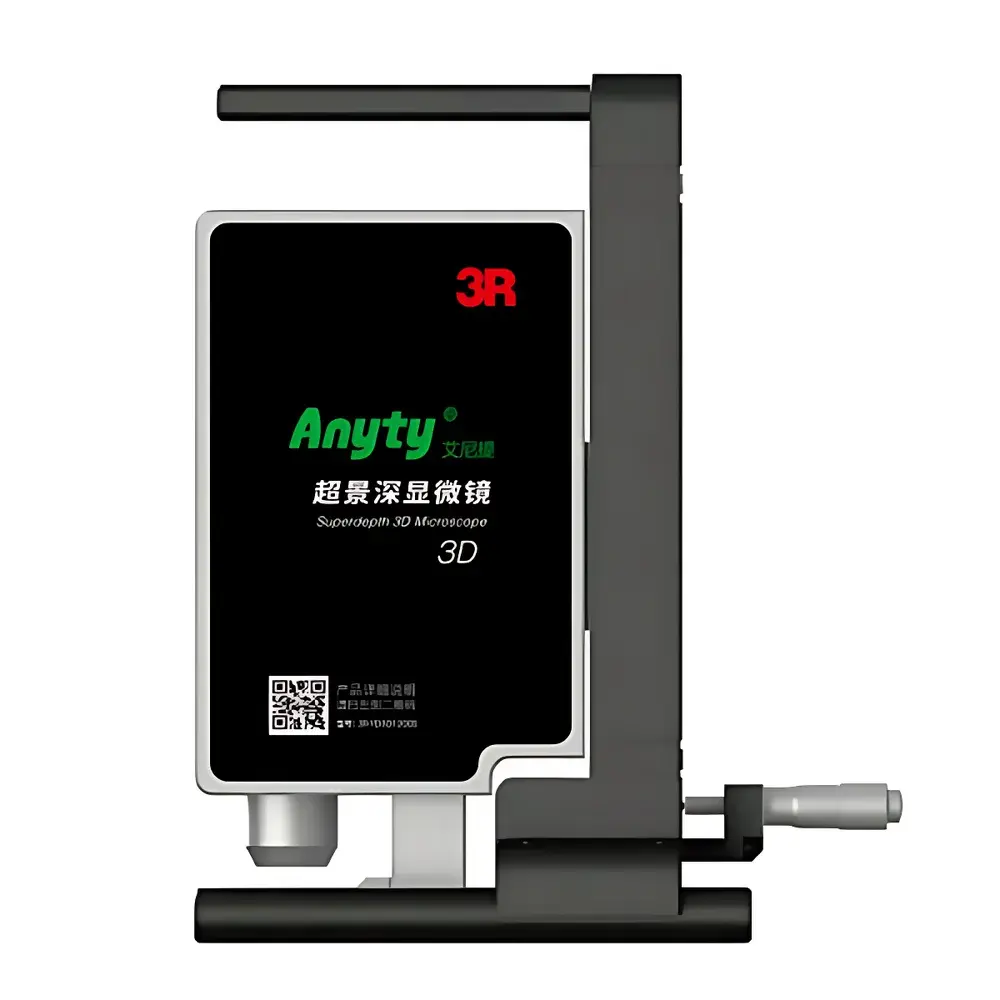
The Anyty 3R-YD3D1200S is a portable, self-contained 3D extended depth-of-field (EDF) digital microscope engineered for high-precision surface metrology and rapid visual inspection in non-laboratory settings. Unlike conventional optical microscopes limited by shallow depth of field at high magnifications, the 3R-YD3D1200S employs sequential focal plane stacking combined with real-time Z-axis motorized scanning to synthesize fully focused 3D topographic representations from a series of 2D image slices. This computational imaging architecture enables consistent visualization and quantitative analysis of complex, non-planar surfaces—including textured coatings, machined finishes, PCB solder joints, and microstructured materials—without requiring sample tilting or manual refocusing. Its battery-powered, cordless operation and compact form factor (W × D × H < 180 × 120 × 210 mm) support deployment in production floors, field service locations, cleanrooms, and quality control checkpoints where space, power infrastructure, or mobility constraints preclude traditional benchtop systems.
Key Features
- Integrated 3D EDF imaging engine with automated Z-stack acquisition and real-time depth fusion algorithm
- High-resolution optical objective lens system capable of resolving ≥1000 line pairs per millimeter (lp/mm) on standardized test targets
- Precision motorized Z-axis drive with programmable step resolution down to 0.2 µm, enabling sub-micron vertical sampling for accurate surface profiling
- Compact XY translation stage with ±5 mm travel range (10 mm total linear displacement) for controlled lateral positioning under fixed-field observation
- Dedicated hardware-level vibration isolation platform mitigating low-frequency mechanical disturbances typical in industrial environments (e.g., floor-borne vibrations from nearby machinery)
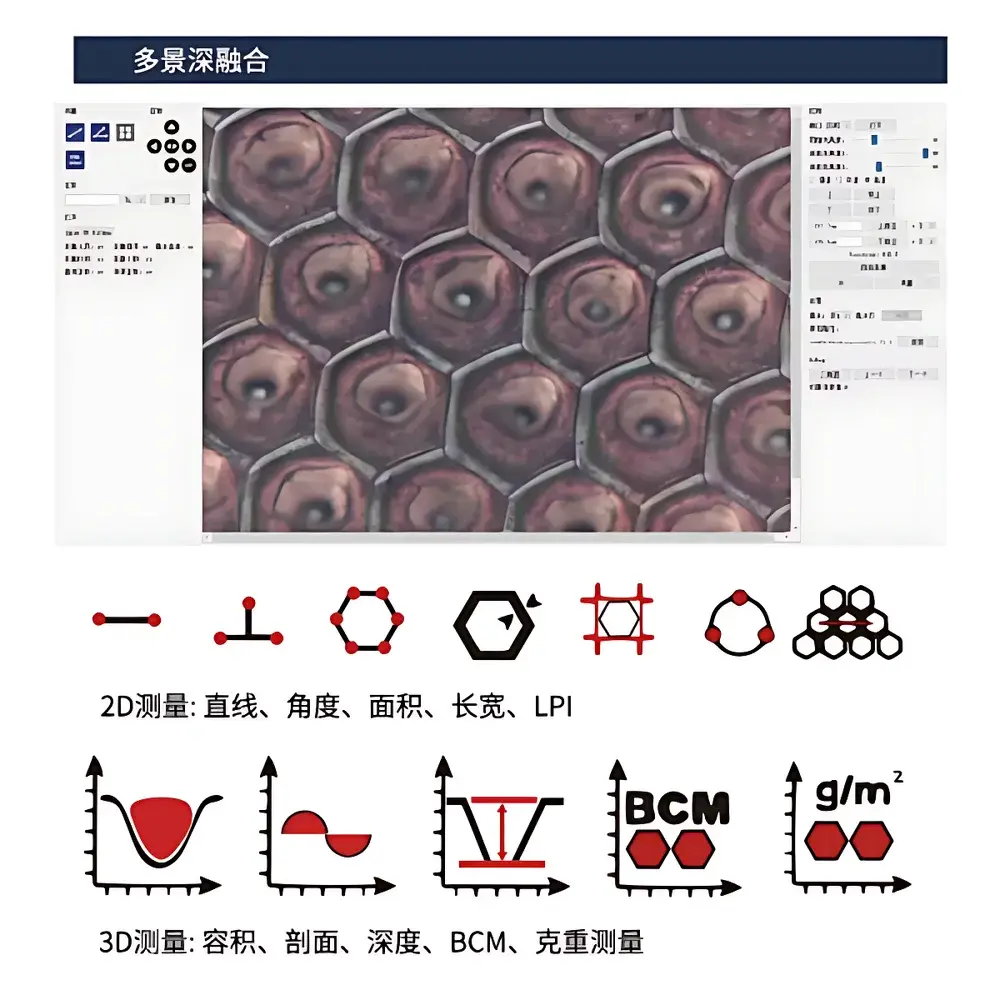
- On-device measurement suite supporting calibrated 2D and 3D metrology: linear distance, angular deviation, area, perimeter, and volumetric calculation via numerical integration of reconstructed height maps
- Embedded report generation engine producing ISO-compliant PDF documents containing annotated images, coordinate-stamped measurement tables, and traceable metadata (timestamp, operator ID, calibration status)
Sample Compatibility & Compliance
The 3R-YD3D1200S accommodates solid, opaque, or semi-transparent specimens up to 60 mm in height and 80 mm in footprint without auxiliary fixtures. It supports direct imaging of metallic, ceramic, polymer, and composite surfaces without conductive coating or vacuum requirements. While not certified to IEC 61000-4-x immunity standards as a standalone unit, its electromagnetic emissions comply with FCC Part 15 Class B and CE RED Directive limits. The measurement traceability framework aligns with ISO/IEC 17025 clause 7.7 (uncertainty estimation) and supports GLP/GMP documentation workflows through exportable audit logs and version-controlled calibration records. All dimensional outputs are referenced to NIST-traceable calibration standards performed during factory verification.
Software & Data Management
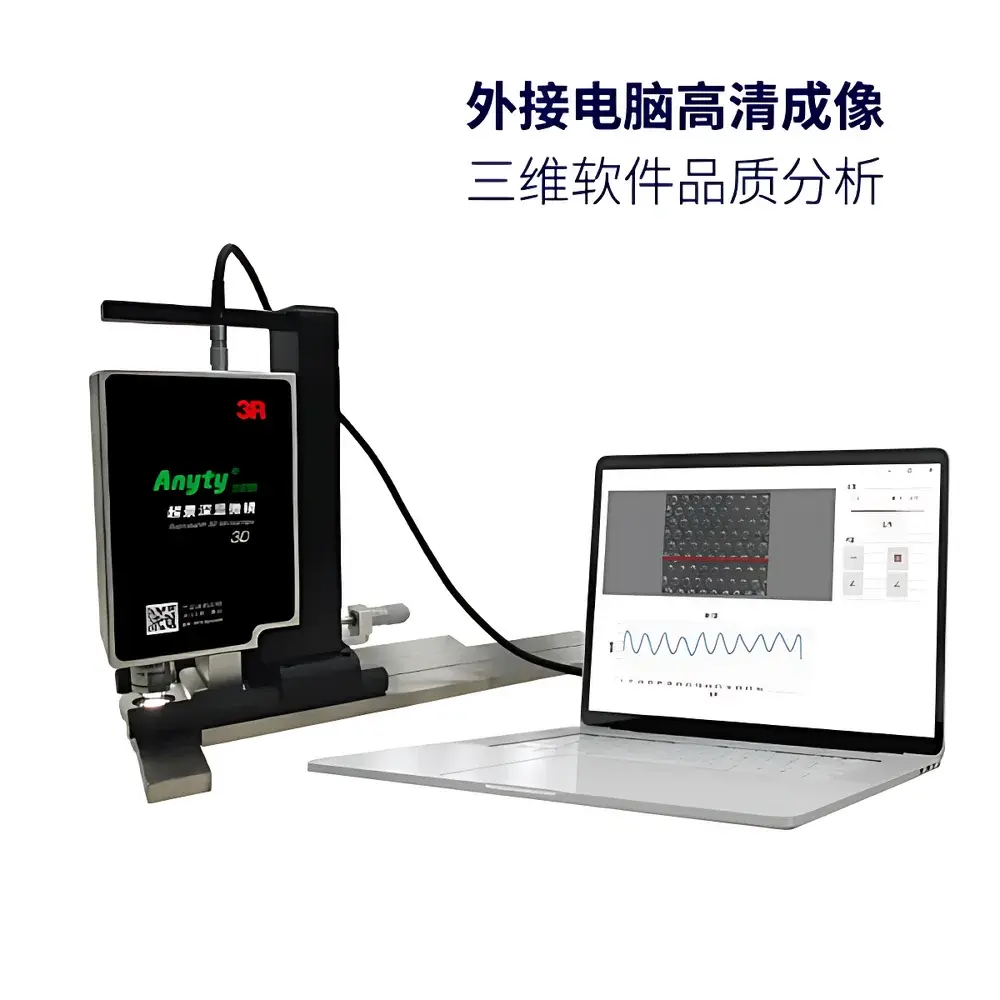
The device operates with proprietary firmware v3.2+ and interfaces via USB-C to Windows 10/11 host systems for advanced post-processing using the bundled Anyty MetroStudio software. This application provides raw stack export (TIFF/RAW), batch processing of multi-location inspections, statistical process control (SPC) charting, and configurable pass/fail tolerance overlays. Data integrity is maintained through SHA-256 hashing of exported PDF reports and optional integration with network-based LIMS platforms via RESTful API endpoints. Audit trails record all user-initiated actions—including focus parameter changes, measurement annotations, and report exports—with timestamps and operator identifiers satisfying FDA 21 CFR Part 11 electronic record requirements when deployed in regulated manufacturing.
Applications
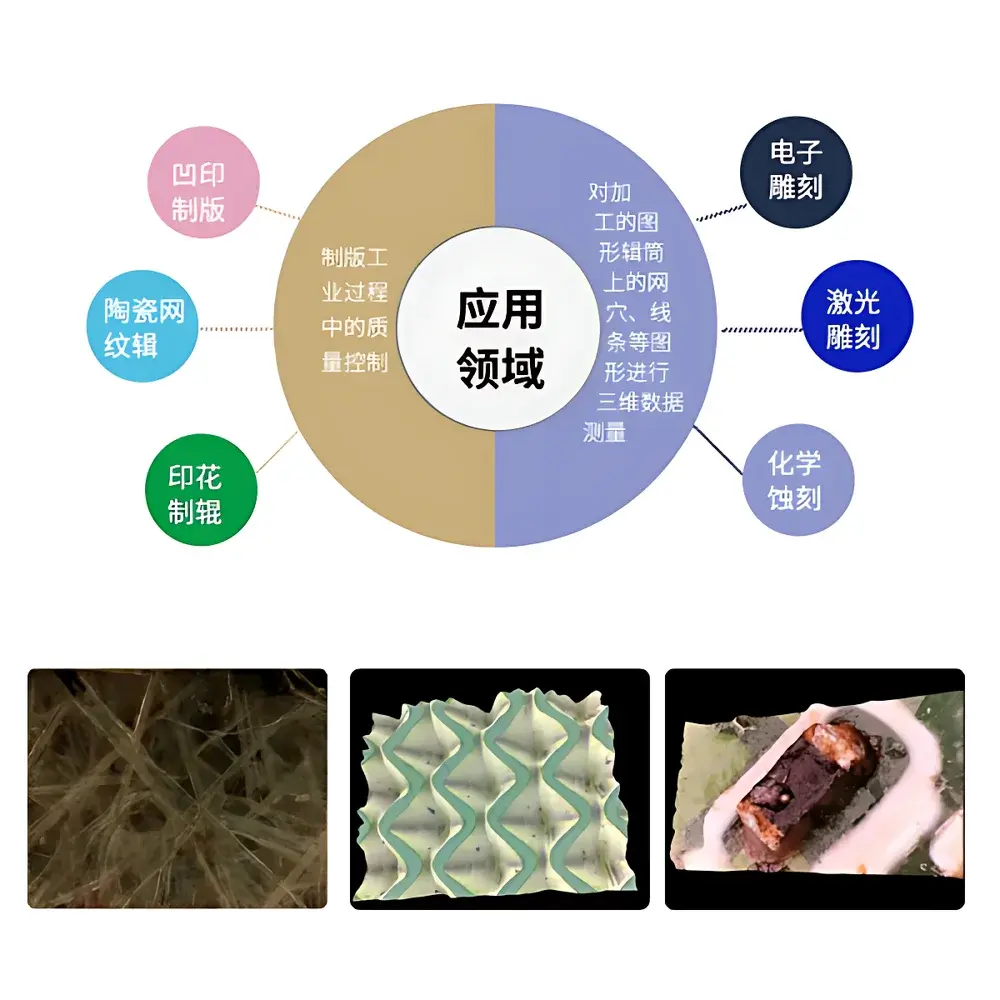
- Micro-defect identification and quantification on semiconductor wafers, MEMS devices, and thin-film solar cells
- In-line verification of laser engraving depth, weld seam geometry, and additive manufacturing layer fidelity
- Surface roughness assessment (Ra, Rz equivalents) for ISO 4287-compliant finish evaluation without stylus contact
- Forensic toolmark analysis and counterfeit component authentication in customs and regulatory labs
- Educational use in materials science curricula for comparative morphology studies of natural vs. synthetic microstructures
- Maintenance inspection of turbine blades, medical implants, and aerospace fasteners under ambient lighting conditions
FAQ
Does the 3R-YD3D1200S require external power or a PC to operate?
No—it functions autonomously with an internal rechargeable Li-ion battery (rated for ≥4 hours continuous scanning at 15 fps), and all core imaging, focusing, and reporting tasks execute onboard.
Can measurement data be exported to Excel or CSV formats?
Yes—MetroStudio software supports export of tabular metrology results to .csv and .xlsx, including column headers for statistical analysis and SPC integration.
Is the Z-axis focus mechanism calibrated traceably?
Each unit ships with a certificate of calibration referencing NIST-traceable step gauges; recalibration intervals are recommended every 12 months or after 10,000 focus cycles.
What is the maximum working distance achievable with standard optics?
The default objective provides a working distance of 52 mm at 10× magnification, extendable to 95 mm using optional long-working-distance lens adapters (sold separately).
How is measurement uncertainty quantified for volumetric analysis?
Volumetric repeatability is validated per ISO 5725-2:2019 methodology, yielding relative standard deviation (RSD) ≤5% across five repeated acquisitions on certified reference blocks with known cavity volumes.




