
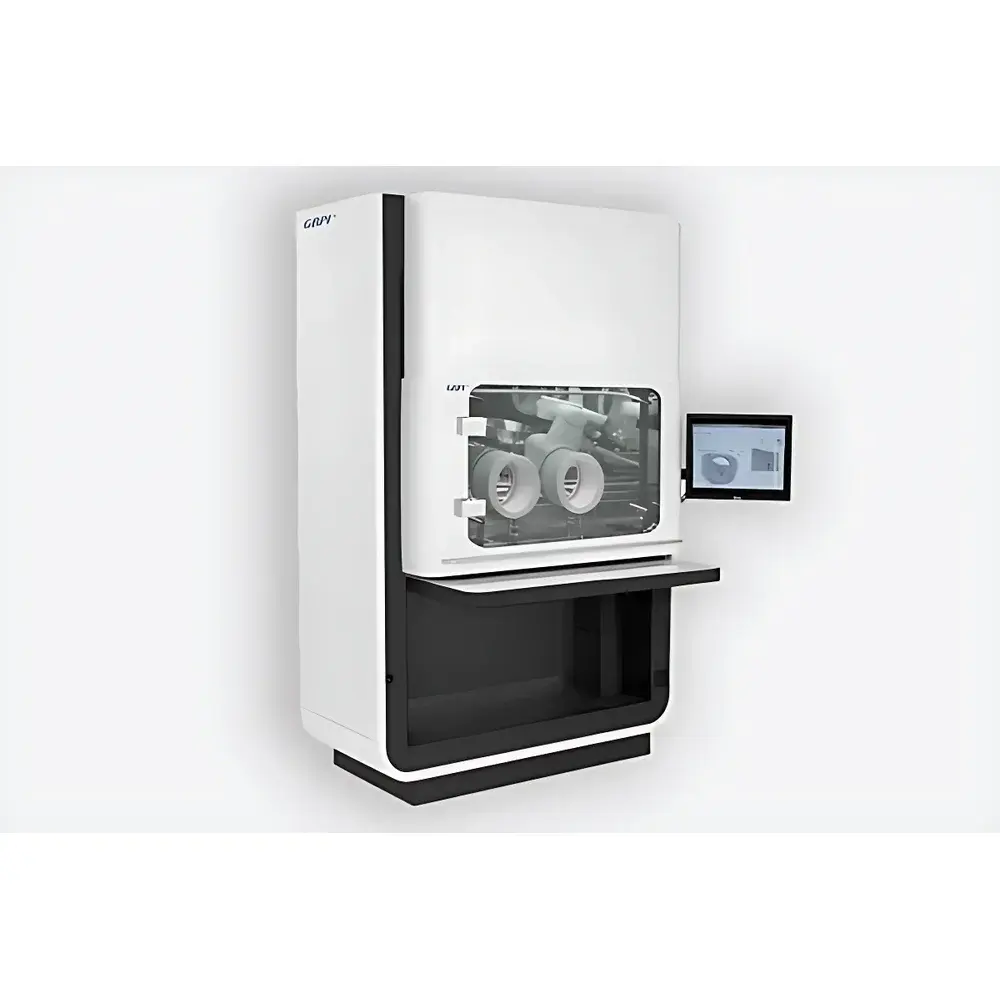
GBPI GB-XF1000S Bacterial Filtration Efficiency (BFE) Tester for Medical Masks
| Brand | GBPI |
|---|---|
| Origin | Guangdong, China |
| Manufacturer Type | Direct Manufacturer |
| Regional Classification | Domestic (China) |
| Model | GB-XF1000S |
| Instrument Category | Aerosol Detector |
| Price Range | USD 14,000 – 42,000 (based on exchange rate ~¥100,000–¥300,000) |
| Compliance Standards | YY 0469–2004, YY/T 0969–2013, ASTM F2100, ASTM F2101, EN 14683 |
Overview
The GBPI GB-XF1000S Bacterial Filtration Efficiency (BFE) Tester is a fully integrated, negative-pressure aerosol-based test system engineered for precise quantitative assessment of bacterial particle capture performance in medical face masks and filter materials. It operates on the principle of controlled microbial aerosol generation, dual-path parallel sampling, and viable colony enumeration—aligned with internationally recognized microbiological filtration test protocols. The instrument generates a standardized Staphylococcus aureus (ATCC 6538P) bioaerosol with a mass median aerodynamic diameter (MMAD) of 3.0 ± 0.3 µm and geometric standard deviation (GSD) ≤ 1.5, ensuring reproducible challenge conditions per ASTM F2101 and ISO 18184-derived methodologies. Dual independent Andersen six-stage impactors (A- and B-path) collect size-resolved particles across six discrete aerodynamic cut-points (≥7.0, 4.7–7.0, 3.3–4.7, 2.1–3.3, 1.1–2.1, and 0.6–1.1 µm), enabling simultaneous upstream challenge and downstream penetration measurement under strictly regulated flow and pressure conditions.
Key Features
- Negative-pressure biosafety cabinet with ≥5 m³/min ventilation capacity and adjustable cabinet vacuum (–50 to –200 Pa), certified for operator protection during aerosol handling.
- Dual independent 28.3 L/min sampling circuits with real-time flow monitoring (resolution: 0.1 L/min; accuracy: ±2.5% FS) and pre-flowmeter pressure sensing (–20 to 0 kPa, ±2.5% FS).
- Programmable microbial aerosol generator delivering 8–10 L/min nebulization flow (±2.5% FS), optimized for consistent S. aureus dispersion and droplet size distribution.
- Integrated peristaltic pump (0.006–3.0 mL/min, resolution 0.001 mL/min, ±2.5% FS) for precise liquid delivery to the nebulizer head.
- Embedded high-performance industrial microcomputer with 10.4-inch bright TFT capacitive touchscreen interface, supporting intuitive parameter configuration, real-time data visualization, and audit-ready operation logs.
- Robust thermal and fire-retardant insulation between inner and outer cabinet layers; front-mounted tempered glass viewing door with switchable access control.
- Modular, height-adjustable support frame (±10 cm range) with dual-mode casters (locking + mobility); detachable design for maintenance and spatial reconfiguration.
- Onboard high-efficiency particulate air (HEPA) filter rated ≥99.99% efficiency for particles ≥0.3 µm, installed downstream of the aerosol chamber to protect internal components and exhaust integrity.
Sample Compatibility & Compliance
The GB-XF1000S is validated for flat-sheet mask materials, finished surgical masks, and respirator filter media up to 150 mm × 150 mm. Sample holders conform to ISO/IEC 17025-compliant dimensional tolerances and sealing specifications to prevent edge leakage. All operational parameters—including aerosol chamber negative pressure (–90 to –120 Pa, ±2.0% FS), environmental temperature (–40 to 99 °C, ±2.5% FS), and spray pressure (0–300 kPa, ±2.5% FS)—are continuously monitored and logged. The system supports full traceability per GLP and GMP requirements, with optional 21 CFR Part 11–compliant software modules available for electronic signature, user role management, and immutable audit trails. Regulatory alignment includes YY 0469–2004 (Chinese standard for surgical masks), YY/T 0969–2013 (disposable medical masks), ASTM F2100 (performance specification for medical face masks), ASTM F2101 (test method for BFE), and EN 14683 (European standard for medical masks).
Software & Data Management
The embedded control firmware records >100,000 test sessions with timestamped metadata: flow rates, pressure differentials, ambient temperature, aerosol generation parameters, and impactor stage collection data. Raw CFU counts from agar plates are manually entered or imported via USB drive; the system automatically calculates BFE (%) as: [(Control CFU – Test CFU) / Control CFU] × 100. Export formats include CSV and PDF reports compliant with laboratory information management system (LIMS) ingestion protocols. Data encryption, user authentication tiers (admin/operator/auditor), and configurable auto-backup intervals ensure data integrity and regulatory readiness. Optional cloud synchronization enables remote calibration validation and inter-laboratory comparison studies.
Applications
- Quality control testing of surgical masks, procedure masks, and N95-equivalent respirators in manufacturing environments.
- Regulatory submission support for FDA 510(k), CE marking, and NMPA registration dossiers.
- Method validation and verification studies in metrology institutes and national standards laboratories.
- Research into filtration mechanisms of novel nanofiber, electret-charged, or antimicrobial-coated media.
- Comparative evaluation of material aging effects (e.g., humidity exposure, UV degradation) on BFE retention.
- Training and proficiency testing for ISO/IEC 17025-accredited microbiology and materials testing labs.
FAQ
What microorganism is used for BFE testing on the GB-XF1000S?
Staphylococcus aureus ATCC 6538P is the reference strain specified in ASTM F2101 and YY 0469–2004. The system includes protocol guidance for culture preparation, viability confirmation, and aerosol concentration targeting (2200 ± 500 CFU per sample).
Does the instrument meet ISO/IEC 17025 requirements for accredited testing?
Yes—the GB-XF1000S provides full parameter traceability, uncertainty budgeting inputs, and digital record retention aligned with ISO/IEC 17025:2017 Clause 7.5 (technical records) and Clause 7.7 (result reporting). Calibration certificates for integrated sensors are provided with NIST-traceable references.
Can the system be used for viral filtration efficiency (VFE) testing?
While not configured for live virus handling, the aerosol generation and impactor architecture are compatible with bacteriophage surrogates (e.g., Φ6, MS2) when paired with appropriate biosafety level (BSL-2+) containment upgrades and validated protocols per ISO 18184 or ASTM E1052.
Is third-party calibration support available?
GBPI offers annual calibration services with documented uncertainty statements and certificate issuance compliant with ISO/IEC 17025. Field service engineers perform on-site verification of flow meters, pressure transducers, temperature sensors, and aerosol output consistency.
What maintenance is required for long-term operational stability?
Routine tasks include HEPA filter replacement every 6–12 months (dependent on usage), nebulizer head cleaning after each test series, impactor stage decontamination using ethanol/IPA, and quarterly verification of touchscreen responsiveness and USB data export functionality.
Related Products







