
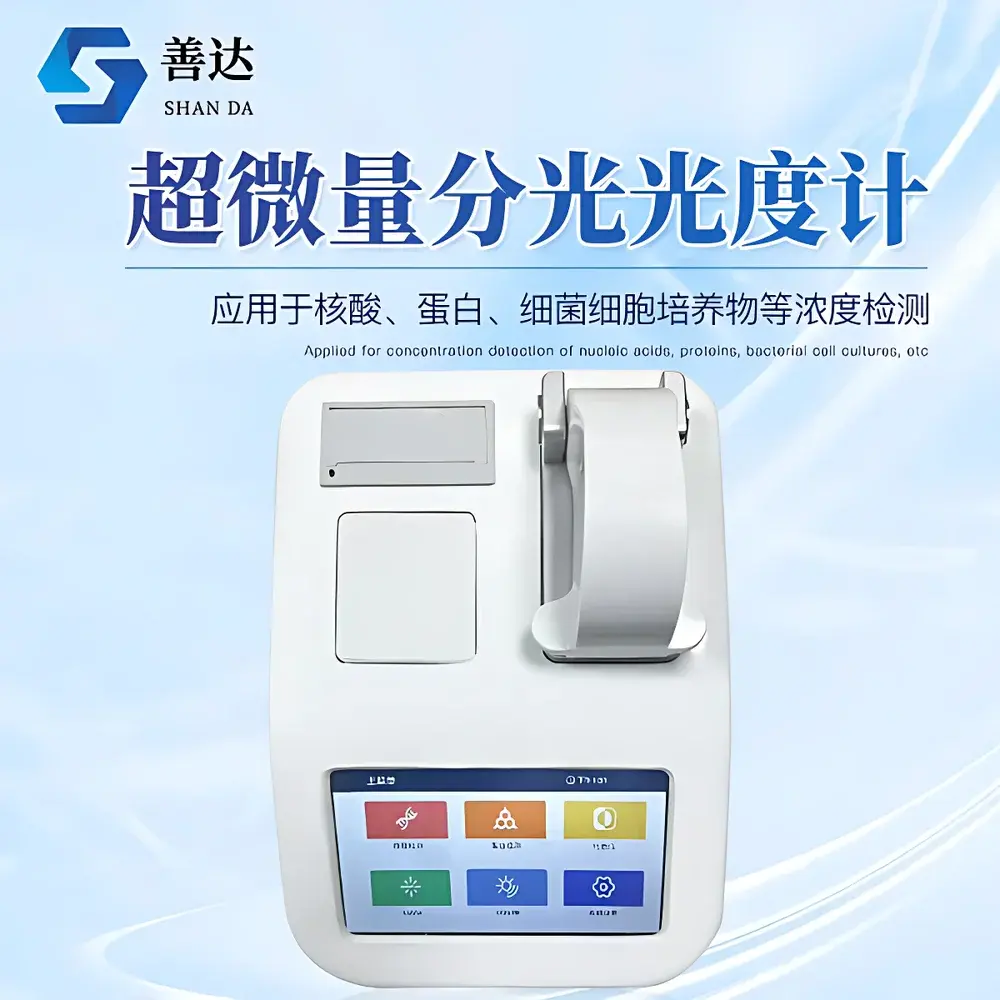
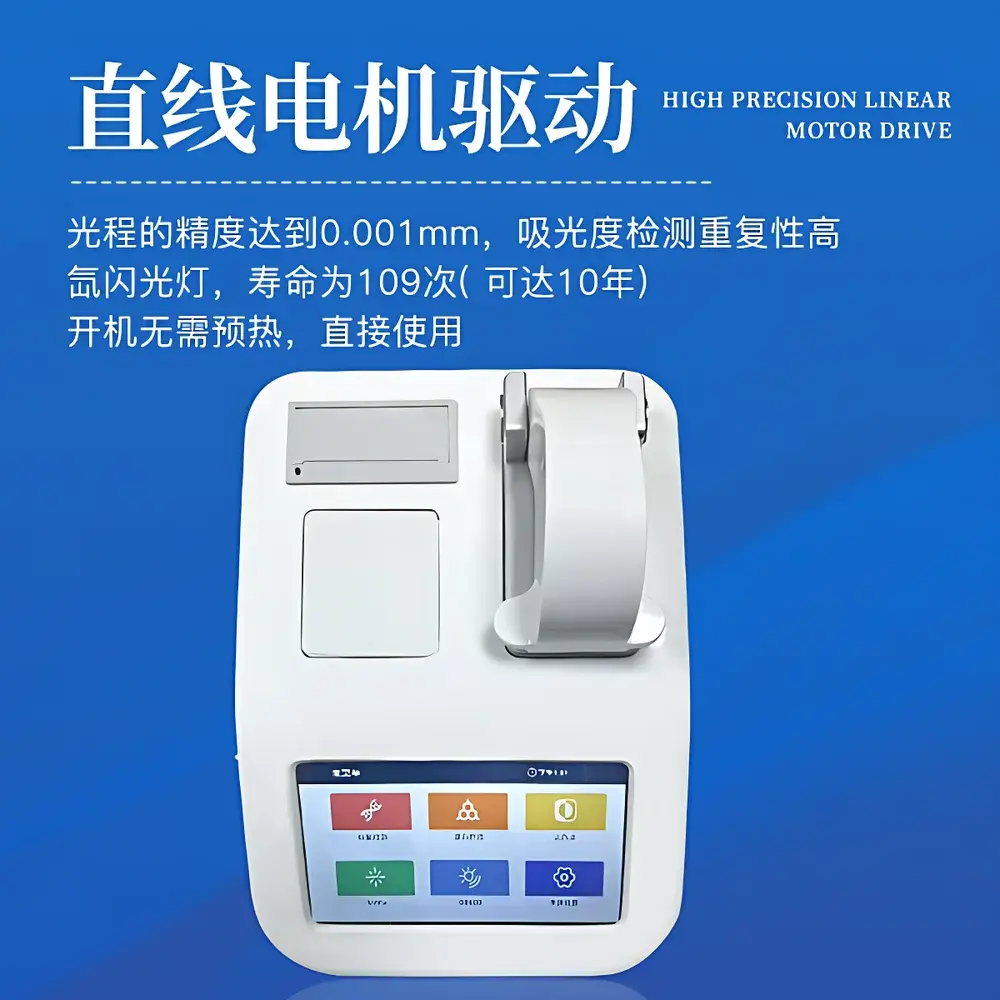
Shanda SD-ND600 Ultra-Micro Spectrophotometer
| Brand | Shanda |
|---|---|
| Origin | Shandong, China |
| Model | SD-ND600 |
| Wavelength Range | 185–910 nm |
| Wavelength Accuracy | ±1 nm |
| Wavelength Resolution | ≤1.8 nm (FWHM at Hg 546 nm) |
| Absorbance Accuracy | ±1% (7.332 Abs at 260 nm) |
| Absorbance Precision | 0.002 Abs |
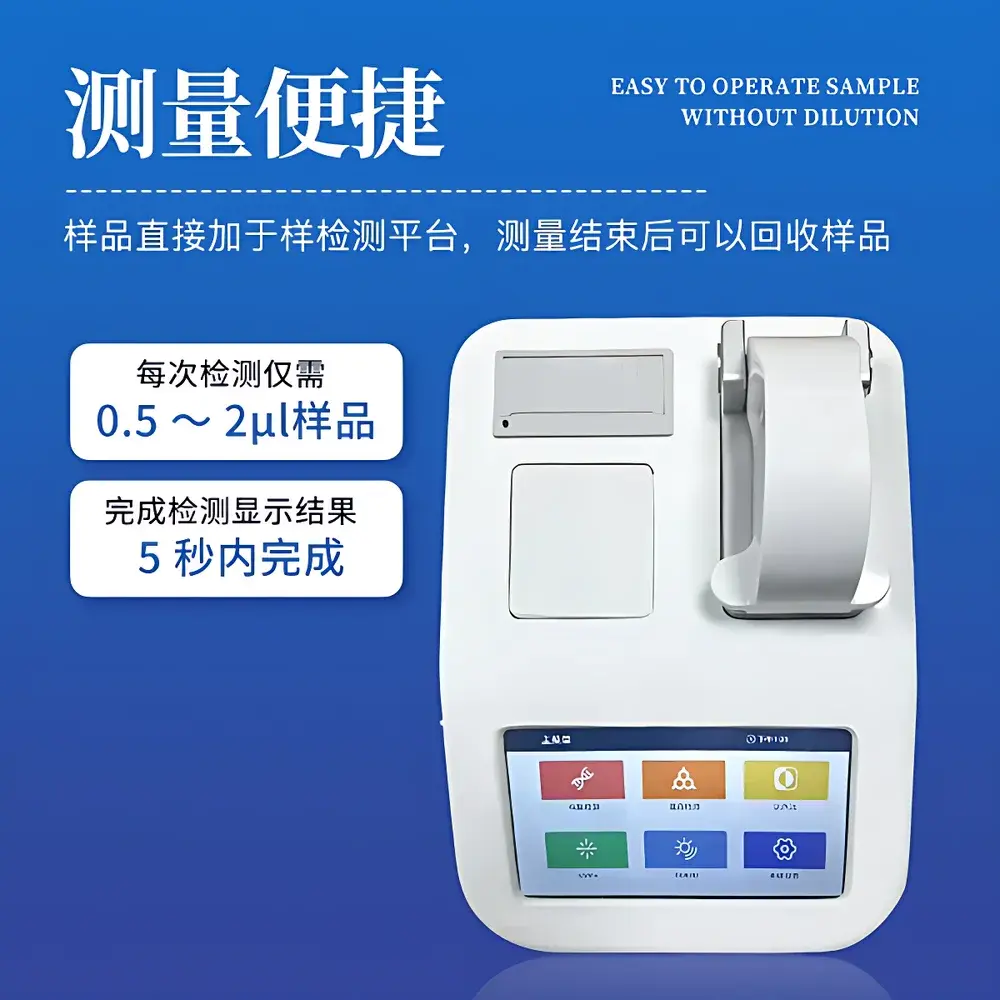
| Sample Volume | 0.5–2.0 µL |
| Pathlength Options | 0.02, 0.05, 0.1, 0.5, and 1.0 mm (automatically selected) |
| Measurement Time | ≤5 s per sample |
| Cuvette Mode OD600 Range | 0–4 A |
| dsDNA Quantitation Range | 2–38,880 ng/µL |
| BSA Protein Range | 0.06–820 mg/mL |
| Light Source | Pulsed Xenon Lamp (10-year lifetime) |
| Detector | 3648-pixel Linear CCD Array |
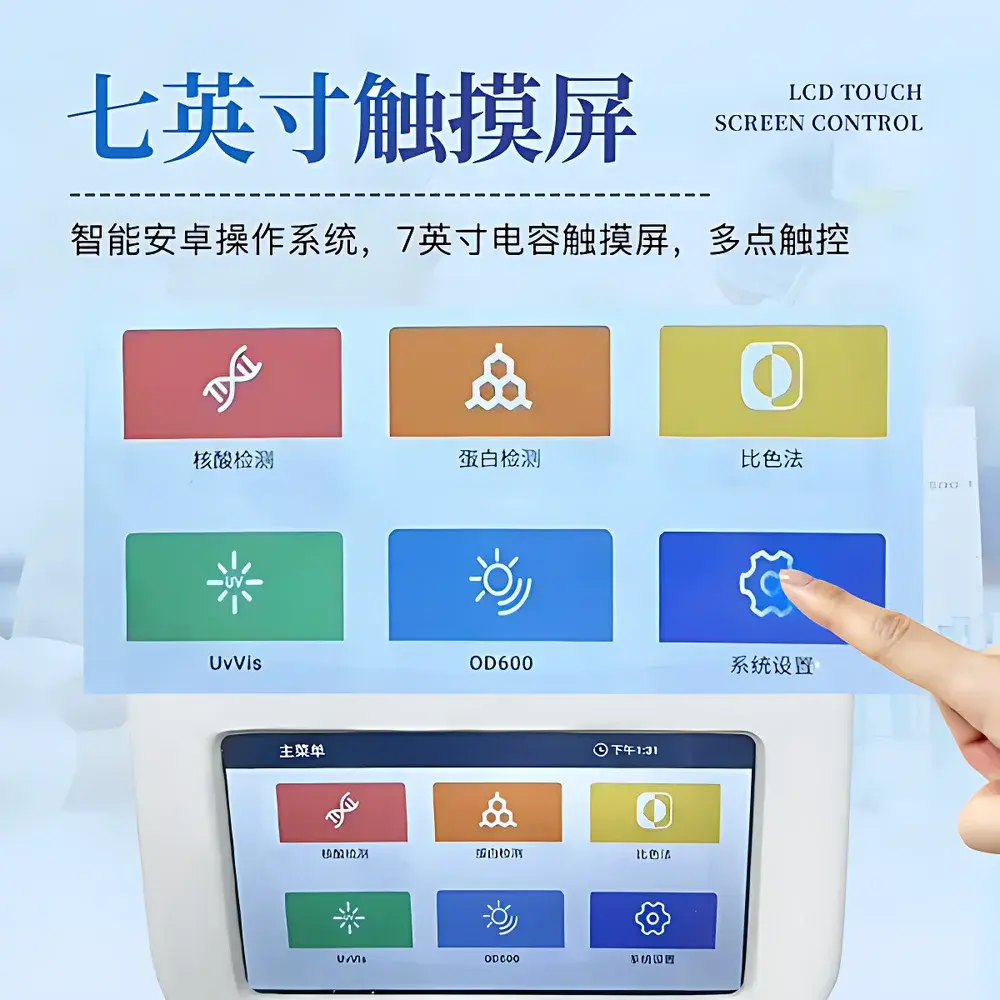
| Display | 7-inch Capacitive Touchscreen (Android OS) |
| Data Export | USB flash drive, SD-RAM card |
| Optional Fluorescence Module | Ex 460 nm / Em 525 nm |
| Dimensions (W×D×H) | 270 × 210 × 196 mm |
| Weight | 3.5 kg |
Overview
The Shanda SD-ND600 Ultra-Micro Spectrophotometer is a benchtop UV-Vis absorption instrument engineered for rapid, high-fidelity quantification of nucleic acids, proteins, and microbial cultures without dilution or cuvette handling. It operates on the principle of surface-tension-based microvolume absorbance measurement: a small liquid column is suspended between two optical surfaces—typically quartz fiber and hardened aluminum—and illuminated by a pulsed xenon lamp across a continuous spectral range from 185 to 910 nm. The transmitted light is dispersed via a fixed grating and captured by a high-resolution 3648-pixel linear CCD array, enabling full-spectrum acquisition in under 5 seconds. Unlike conventional spectrophotometers requiring cuvettes and extensive sample preparation, the SD-ND600 eliminates pathlength variability through automatic selection of five discrete optical pathlengths (0.02–1.0 mm), ensuring accurate Beer-Lambert law compliance across an exceptionally broad concentration range—up to 50× wider than standard 1-cm-path instruments.
Key Features
- Microvolume compatibility: Requires only 0.5–2.0 µL of undiluted sample, minimizing reagent consumption and cross-contamination risk.
- Zero warm-up operation: Pulsed xenon lamp enables immediate measurement upon power-on; no stabilization delay required.
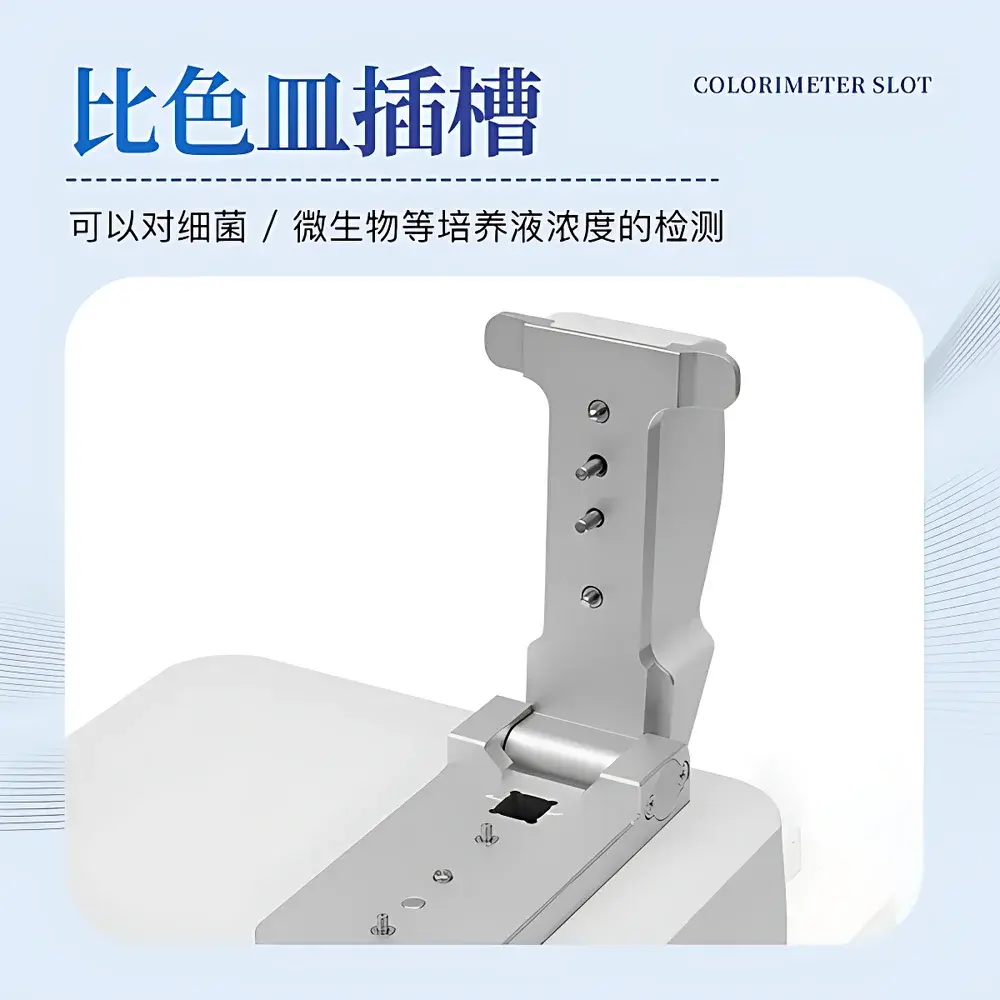
- Dual-mode detection: Supports both microvolume drop-based analysis and standard 1-cm cuvette mode (OD600 calibrated at 600 ± 1 nm) for bacterial culture density assessment.
- High dynamic range: Measures dsDNA from 2 to 38,880 ng/µL and BSA from 0.06 to 820 mg/mL without manual dilution—critical for crude lysates or concentrated bioprocess streams.
- Integrated Android platform: 7-inch capacitive touchscreen runs embedded application firmware with real-time spectrum visualization, auto-peak identification, and on-device data storage.
- Regulatory-ready output: Built-in thermal printer generates GLP-compliant reports with timestamp, operator ID, sample ID, and full spectral metadata; USB and SD-RAM interfaces support audit-trail-compatible data archival.
- Long-life optical architecture: Flashing xenon source delivers >109 pulses with stable spectral output; quartz fiber sampling stage ensures mechanical durability and chemical resistance to common buffers and solvents.
Sample Compatibility & Compliance
The SD-ND600 accommodates aqueous and mildly organic solutions—including TE buffer, PBS, RIPA lysates, and LB/TSB culture media—without compromising baseline stability or photometric linearity. Its optical path design inherently rejects scattering artifacts common in turbid samples such as E. coli suspensions, enabling reliable OD600 measurements up to 4.0 A. The instrument conforms to core performance benchmarks defined in ISO 8579-1 (spectrophotometer verification), ASTM E275 (UV-Vis method validation), and USP <857> (spectrophotometric analysis of biomolecules). While not FDA 21 CFR Part 11–certified out-of-the-box, its data export structure (CSV + PNG spectra + XML metadata) supports integration into validated LIMS environments where electronic signatures and audit trails are implemented at the system level.
Software & Data Management
Powered by a customized Android 9.0 OS, the SD-ND600’s onboard software provides intuitive workflow navigation, preconfigured assay templates (A260/A280 ratio, Nanodrop-style protein extinction, Bradford/Lowry calibration curves), and real-time deviation alerts for outlier absorbance values. All spectra and quantitative results are stored locally in a timestamped SQLite database with optional password protection. Data export options include USB mass storage mode (FAT32 formatted drives) and SD-RAM cards (Class 10, up to 128 GB), generating machine-readable CSV files compliant with Excel, GraphPad Prism, and Python pandas workflows. No proprietary drivers or cloud dependencies are required—data integrity is preserved through deterministic file naming (e.g., SDND600_20240522_143218_A260.csv) and embedded EXIF-like metadata tags.
Applications
- Quantitative QC of plasmid preps, PCR products, and RNA isolates prior to sequencing or transfection
- Routine monitoring of protein expression yields in bacterial, yeast, and mammalian cell cultures
- High-throughput OD600 tracking during fermentation optimization and growth curve analysis
- Verification of labeling efficiency in fluorescent dye conjugation protocols
- Field-deployable nucleic acid screening in resource-limited settings (enabled by battery-powered operation via optional external power bank)
- Teaching laboratory use for Beer-Lambert law demonstrations and spectral deconvolution exercises
FAQ
Does the SD-ND600 require routine wavelength calibration?
No. The fixed-grating monochromator and xenon lamp spectral stability eliminate the need for user-performed wavelength calibration; factory calibration is traceable to NIST SRM 2034 (Holmium Oxide).
Can the instrument measure colored or viscous samples?
Yes—within limits. Samples with strong visible absorbance (e.g., Coomassie-stained eluates) or viscosity <50 cP may require pathlength adjustment or dilution; the auto-pathlength algorithm prioritizes optimal signal-to-noise ratio over maximum pathlength.
Is the optional fluorescence module compatible with common dyes?
The 460/525 nm configuration supports SYBR Green I, EvaGreen, and FITC-labeled antibodies; however, excitation/emission filters are fixed and non-interchangeable—custom modules require OEM consultation.
What maintenance is recommended for long-term accuracy?
Daily wipe-down of the quartz fiber stage with lint-free ethanol swabs; annual inspection of lamp intensity decay (accessible via service menu); no optical alignment or detector recalibration is field-serviceable.
Related Products





