
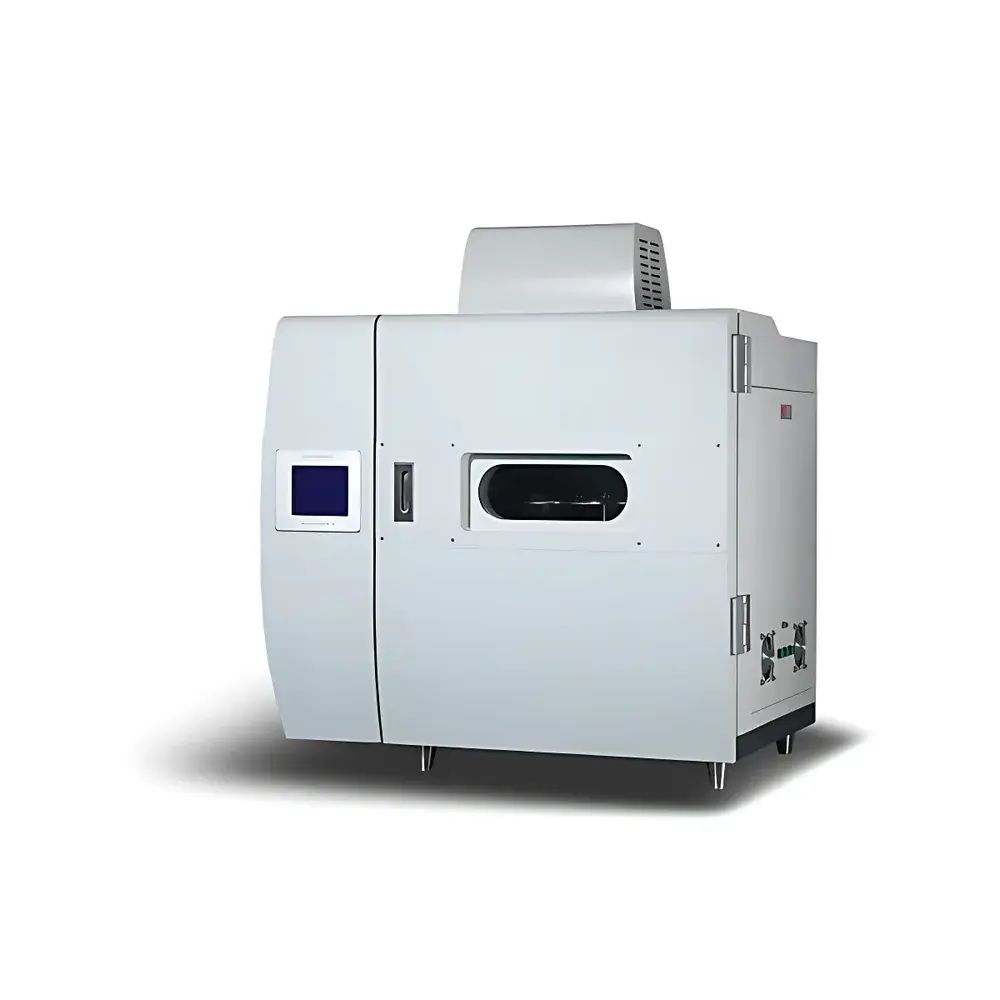
GBPI ZF900B Automatic Residue-on-Evaporation Analyzer
| Brand | GBPI |
|---|---|
| Model | ZF900B |
| Origin | Guangdong, China |
| Manufacturer | GBPI Packaging Instruments Co., Ltd. |
| Measurement Range | 0–80 g (residue mass) |
| Weighing Accuracy | ±0.2 mg |
| System Resolution | 0.1 mg |
| Temperature Control Range | Ambient to 130 °C |
| Temperature Stability | ±0.2 °C |
| Air Circulation Velocity | 0.2 m/s |
| Sample Volume Capacity | 0–200 mL per vessel |
| Independent Test Positions | 8 |
| Power Supply | AC 220 V, 50 Hz |
| Rated Power | 1000 W |
| Dimensions (W×D×H) | 937 × 660 × 830 mm |
Overview
The GBPI ZF900B Automatic Residue-on-Evaporation Analyzer is an engineered solution for quantitative determination of non-volatile residue following solvent evaporation—a critical parameter in food contact material (FCM) safety assessment. Designed in strict alignment with Chinese national standards—including GB/T 5009.60–2003 (plastic tableware), GB/T 5009.64–2003 (polyethylene food packaging), GB/T 5009.68–2003 (acrylic resin coatings), GB/T 5009.69–2008 (formaldehyde-melamine resins), GB/T 5009.203–2003 (nanomaterials in food packaging), and GB/T 9740–2008 (evaporation residue methodology)—the instrument implements a gravimetric principle: test specimens are immersed in standardized simulant solutions (e.g., 4% acetic acid, 20% ethanol, n-heptane), extracted under controlled conditions, and the resulting extract is evaporated to dryness under precisely regulated thermal and airflow conditions. The residual mass—expressed in milligrams per square decimeter (mg/dm²) or milligrams per specimen—is then determined via high-resolution microbalance integration within a thermally stabilized chamber.
Key Features
- Eight independent, parallel test stations—each equipped with dedicated evaporation vessels and real-time weight monitoring—enable simultaneous analysis of heterogeneous samples (e.g., differing polymer types, simulant media, or exposure durations) without cross-contamination or data coupling.
- Integrated water bath–assisted evaporation chamber ensures uniform thermal distribution and eliminates localized overheating; temperature is actively maintained from ambient to 130 °C with ±0.2 °C stability, verified by traceable PT100 sensors.
- Externally sourced heating system isolates electrical components from the evaporation zone—no high-voltage elements reside inside the sealed chamber—meeting IEC 61010-1 requirements for laboratory equipment safety.
- Hermetically sealed evaporation path with vacuum-assisted solvent recovery prevents atmospheric release of volatile organics; exhaust vapors are routed through a condensation trap and optional vacuum pump (accessory), supporting ISO 14001-compliant lab practices.
- Programmable gas purge (N₂ or compressed air) accelerates solvent removal while minimizing oxidation of heat-sensitive residues—critical for polyphenol- or lipid-rich extracts.
- Automated sequence control includes auto-zero calibration before each cycle, dynamic drift compensation during weighing, over-temperature cutoff, and audible/visual fault alerts synchronized with on-screen status logs.
Sample Compatibility & Compliance
The ZF900B accommodates solid, semi-rigid, and flexible food contact materials—including polyolefin films (PE, PP), polystyrene containers, PVC-coated metals, epoxy-lined cans, and silicone elastomer gaskets—as well as multi-layer laminates and coated paperboard. Each 200 mL sample vessel accepts immersion volumes ranging from 10 mL to full capacity, supporting both surface-area-normalized (e.g., mg/dm²) and specimen-based (e.g., mg/unit) reporting formats. All operational parameters—including dwell time, ramp rate, final drying temperature, and purge flow rate—are configurable to satisfy method adaptations required by ASTM F838 (bacterial retention), ISO 10993-12 (extractables testing), and EU Regulation (EC) No. 10/2011 Annex IV migration protocols. Data integrity conforms to GLP principles, with audit-trail-enabled user authentication, electronic signatures, and immutable timestamped records.
Software & Data Management
The embedded Windows-based control software provides ISO/IEC 17025-aligned workflow management: method templates are preloaded for all cited GB/T standards, with editable parameters locked by role-based access control (administrator, analyst, reviewer). Real-time graphs display mass vs. time curves for each station, enabling visual validation of endpoint stability (e.g., ≤0.1 mg change over 30 min). Export options include CSV, PDF, and XML formats compliant with LIMS integration; raw weighing data includes metadata (operator ID, environmental temperature/humidity, balance serial number, calibration certificate expiry). Optional 21 CFR Part 11 compliance package adds electronic signature enforcement, biometric login, and encrypted database logging.
Applications
- Regulatory testing of food packaging compliance per Chinese National Food Safety Standards (GB series)
- Migration studies for novel biopolymer films (PLA, PHA) under acidic, alcoholic, and fatty food simulants
- Quality control of industrial food processing equipment linings (epoxy, PTFE, rubber)
- Extractables profiling in pharmaceutical primary packaging (blow-fill-seal vials, blister foils)
- Stability assessment of ink adhesion on printed food cartons after solvent exposure
- Validation of cleaning efficacy in reusable food-grade transport containers
FAQ
What standards does the ZF900B directly support?
It is preconfigured for GB/T 5009.60–2003, GB/T 5009.64–2003, GB/T 5009.68–2003, GB/T 5009.69–2008, GB/T 5009.203–2003, and GB/T 9740–2008—with method files available for immediate deployment.
Can the instrument be used for non-food applications?
Yes—its gravimetric evaporation architecture applies equally to pharmaceutical excipient residue testing (USP , EP 3.1.13), cosmetic packaging extractables (ISO 10993-18), and industrial coating volatiles analysis (ASTM D2369).
Is external vacuum required for normal operation?
No—the built-in vacuum recovery module operates independently; an external vacuum pump is only recommended for high-boiling-point solvents (e.g., glycerol, triacetin) or accelerated throughput in high-volume labs.
How is weighing accuracy maintained across thermal cycles?
Each station integrates a 0.1 mg resolution analytical balance with internal automatic calibration using a certified 200 g weight; thermal drift compensation algorithms adjust for chamber-induced buoyancy shifts in real time.
What maintenance is required for long-term reliability?
Quarterly verification of temperature uniformity (per ISO/IEC 17025 clause 5.5.2), annual balance recalibration by accredited service provider, and routine cleaning of condensate traps and gas filters—documented via built-in maintenance log.





