
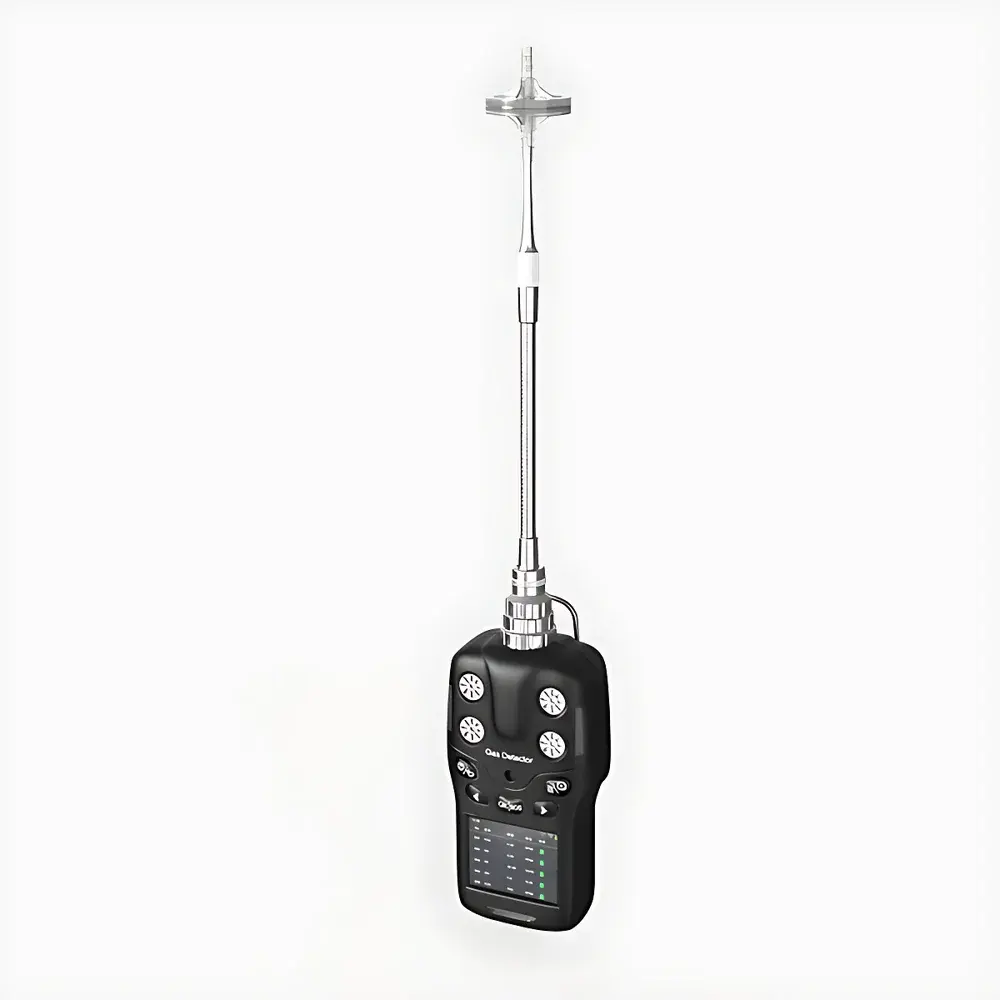
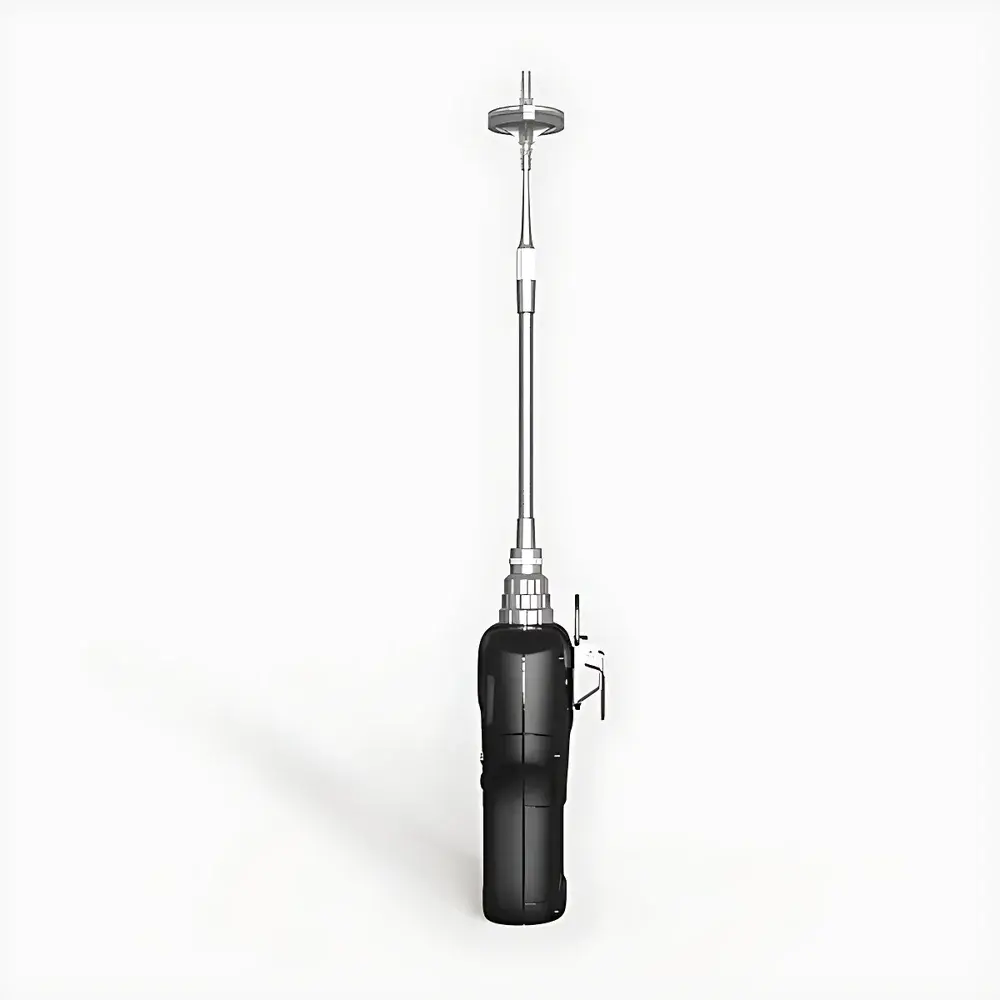
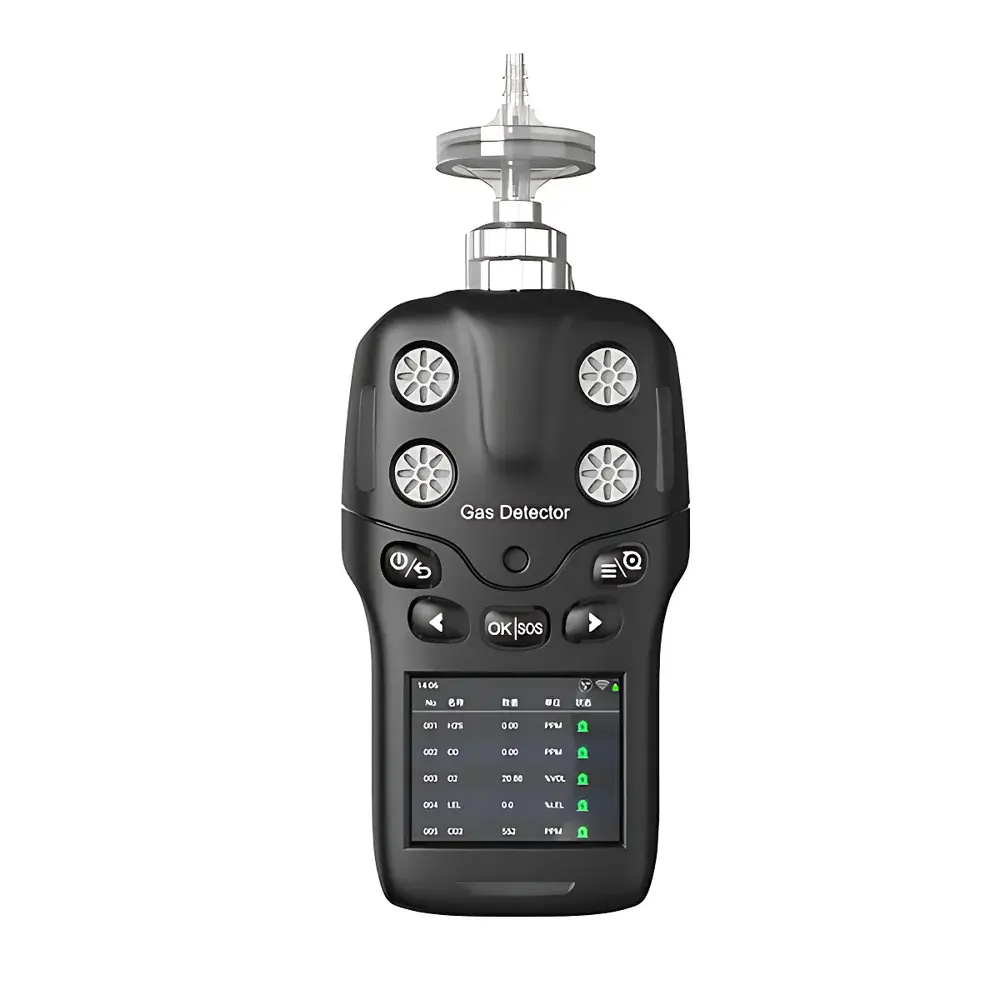
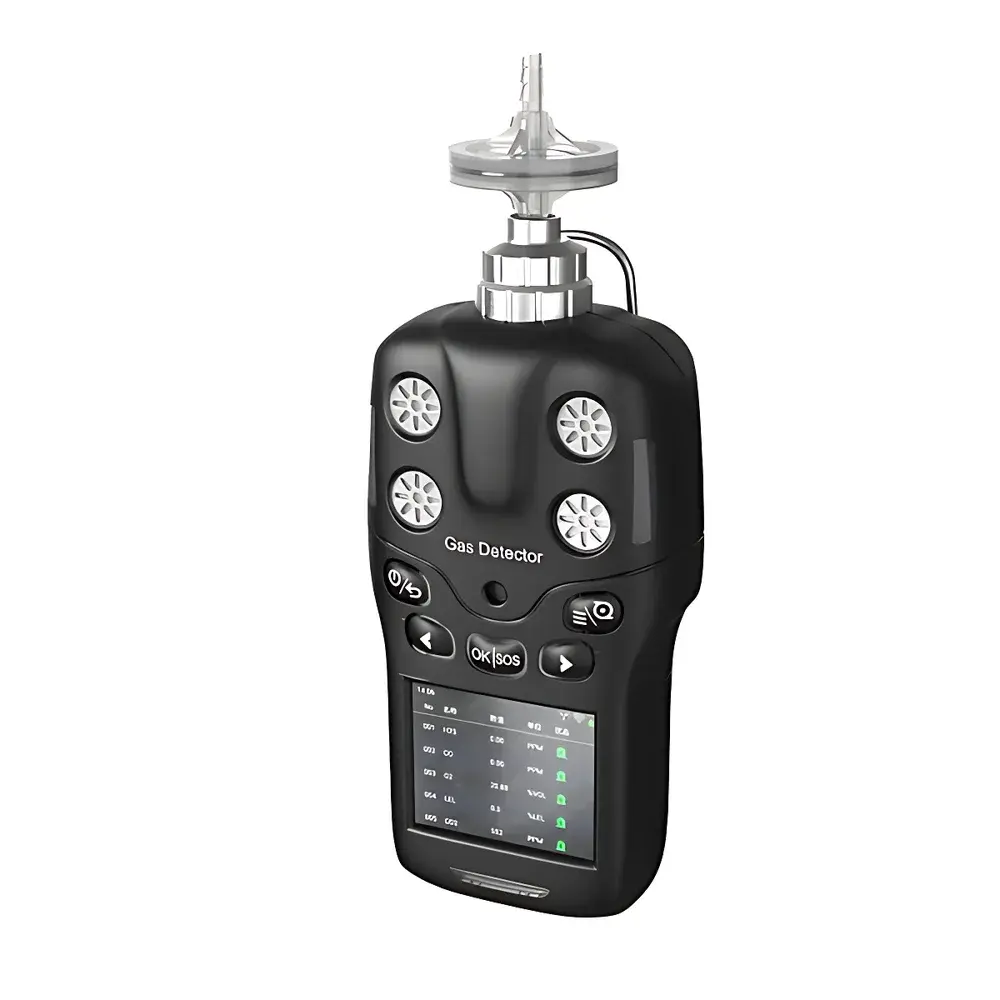
Eranntex MS400-S-CO2 Portable Carbon Dioxide Analyzer
| Brand | Eranntex |
|---|---|
| Origin | Guangdong, China |
| Manufacturer Type | Manufacturer |
| Model | MS400-S-CO2 |
| Instrument Type | Portable |
| Detection Target | Multi-component gases |
| Measurement Range (CO₂) | 0–5000 ppm |
| Repeatability | ≤±2% F.S. |
| Resolution | 1 ppm (0–1000 ppm) |
| Response Time (T90) | ≤20 s |
| Zero Drift | ≤±2% F.S. |
| Span Drift | ≤±2% F.S. |
| Linearity Error | ≤±2% F.S. |
| Ingress Protection | IP68 |
| Explosion Protection | Ex ia IICT4 Ga |
| Display | 2.4″ color LCD |
| Data Storage | ≥1,000,000 records (expandable to >10 million with optional SD card) |
| Power | Rechargeable 7.4 V / 2700 mAh Li-polymer battery (≥20 h operation in pump-suction mode) |
| Operating Temperature | –20 °C to +55 °C (customizable to –40 °C to +70 °C) |
| Humidity Range | 10–95% RH |
Overview
The Eranntex MS400-S-CO2 is a high-integrity, intrinsically safe portable carbon dioxide analyzer engineered for field-deployable quantitative gas monitoring in hazardous and non-hazardous environments. It employs dual-mode sampling—integrated pump-suction (adjustable flow: 0.5–1 L/min, 10-step regulation) and diffusion-based detection—to ensure representative sampling across diverse operational conditions including confined spaces, industrial process areas, emergency response zones, and environmental assessment sites. The instrument supports multi-gas configuration via hot-swappable digital sensors utilizing NDIR (non-dispersive infrared) technology for CO₂ measurement—a method selected for its long-term stability, immunity to cross-interference from common background gases (e.g., CO, CH₄, O₂), and compliance with ISO 8573-1 and ASTM D6245 standards for ambient CO₂ quantification. Its core architecture integrates real-time thermobarometric compensation (temperature, humidity, pressure, altitude), enabling trace-level accuracy under dynamic environmental gradients without manual recalibration.
Key Features
- Intrinsically safe circuit design certified to IEC 60079-0, IEC 60079-11 (Ex ia IICT4 Ga), and GB/T 3836.1–2021 & GB/T 3836.4–2021.
- IP68-rated enclosure constructed from flame-retardant PC/TPU composite with integrated TPE impact protection; validated for ≥3 m drop resistance per MIL-STD-810G.
- Dual-sampling flexibility: user-selectable pump-suction or passive diffusion mode; automatic pump blockage alarm and flow monitoring.
- Modular digital sensor platform: plug-and-play NDIR CO₂ sensor (0–5000 ppm range) with auto-identification, zero-point auto-tracking, and multi-point target calibration support.
- Comprehensive alarm system: configurable low/high/STEL/TWA thresholds; simultaneous visual (LED strobe), audible (>95 dB at 30 cm), vibratory, and voice alerts; fault-specific notifications (sensor failure, battery depletion, pump obstruction, fall detection, SOS).
- 2.4″ high-resolution color LCD with real-time graphical display of concentration trends, bar charts, and tabular data; adjustable brightness and contrast for low-light operations.
- Embedded environmental sensing: integrated temperature (–40 °C to +70 °C, ±0.5 °C), relative humidity (0–100% RH, ±3% RH), barometric pressure, and altitude modules.
Sample Compatibility & Compliance
The MS400-S-CO2 is validated for continuous monitoring of CO₂ in complex gas matrices containing VOCs, combustible gases (e.g., CH₄, H₂), toxic species (e.g., H₂S, CO, NH₃), and oxidants (e.g., O₂, Cl₂). Its NDIR CO₂ sensor exhibits negligible interference from water vapor (<±0.5% signal deviation at 95% RH), CO (<±0.3% at 1000 ppm), and methane (<±0.2% at 5% vol)—per EN 14181 verification protocols. Regulatory conformance includes GB 15322.3–2019 (portable combustible gas detectors), GB/T 20936.1–2022 (explosive atmosphere gas detectors), and metrological certification under China’s CPA (Certified Pattern Approval) scheme. For international deployment, the device meets CE marking requirements under the ATEX Directive 2014/34/EU and supports GLP-compliant audit trails when paired with optional cloud-connected firmware.
Software & Data Management
Data acquisition adheres to ISO/IEC 17025 traceability principles: all measurements are timestamped, geotagged (optional北斗/Beidou positioning), and stored with full metadata (sensor ID, calibration history, environmental conditions). Internal memory retains ≥1 million records with user-defined logging intervals (1 s to 24 h); optional microSD expansion enables >10 million entries. Export formats include CSV and encrypted binary logs compatible with Eranntex Cloud Platform and third-party LIMS via HTTP, MQTT, TCP, or UDP. Remote firmware updates and diagnostic telemetry are supported over Wi-Fi or 4G LTE (NB-IoT optional), with secure OTA authentication. Audit-ready features include immutable event logs, electronic signatures for calibration events, and 21 CFR Part 11–compliant user access controls when configured with enterprise-grade cloud services.
Applications
This analyzer serves mission-critical roles across occupational health and safety (OHS), industrial hygiene, and environmental compliance domains. Typical use cases include: verification of ventilation efficacy in HVAC systems per ASHRAE Standard 62.1; leak detection in CO₂-rich industrial processes (e.g., beverage carbonation, fermentation, refrigeration); confined space entry pre-screening per OSHA 1910.146; post-incident atmospheric assessment following chemical releases; indoor air quality (IAQ) surveys aligned with WHO and EPA guidelines; and ambient CO₂ baseline studies for climate monitoring networks. Its ruggedized design and extended battery life make it suitable for unattended field deployments in municipal wastewater treatment plants, landfill gas collection sites, agricultural silos, and underground utility vaults.
FAQ
What CO₂ detection principle does the MS400-S-CO2 employ?
It uses non-dispersive infrared (NDIR) spectroscopy with a dual-wavelength reference-compensated optical path, ensuring high selectivity and long-term stability without consumables.
Can the instrument measure CO₂ alongside other gases simultaneously?
Yes—up to four independent gas channels may be configured using interchangeable digital sensors (e.g., CO, O₂, H₂S, VOCs), each with independent on-device activation/deactivation control.
Is calibration required before each use?
No. The NDIR CO₂ sensor features zero-point auto-tracking and requires only periodic span calibration (recommended every 6–12 months depending on usage intensity and regulatory requirements).
Does the device support regulatory reporting formats?
Yes—data exports include ISO 17025–aligned metadata headers and are compatible with EPA Method TO-15, EN 14662, and ISO 16000-28 reporting templates.
What wireless protocols are supported for remote data transmission?
Standard Bluetooth 5.0 and Wi-Fi 802.11 b/g/n; optional modules add LoRaWAN, Mesh networking, 4G LTE-M, and NB-IoT—all with real-time signal strength indicators and TLS 1.2–secured payload encryption.







