
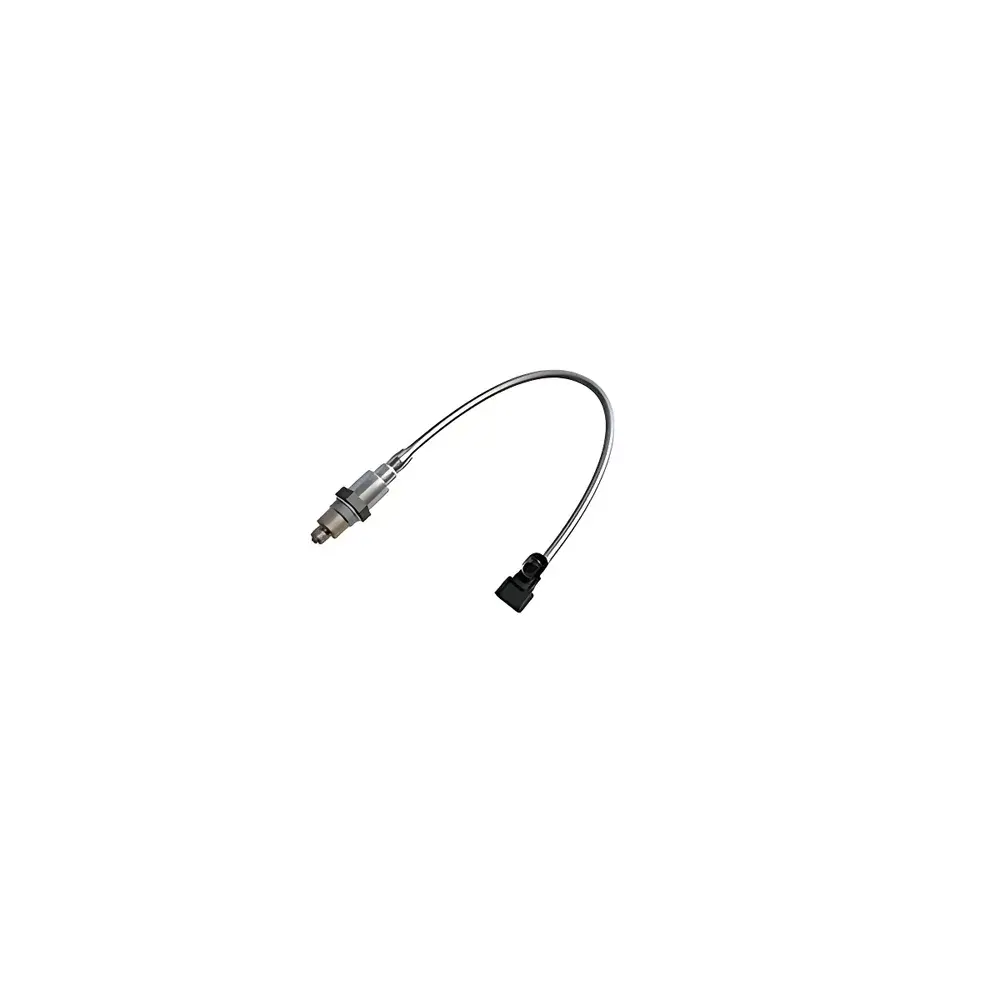
Cubic ZS-XF-01 Concentration-Cell Type Oxygen Sensor
| Brand | Cubic |
|---|---|
| Origin | Hubei, China |
| Manufacturer Type | Authorized Distributor |
| Country of Origin | China |
| Model | ZS-XF-01 |
| Heating Element Resistance | 3.2 Ω ± 0.8 Ω |
| Supply Voltage | 10.8 V – 16.5 V DC |
| Light-Off Time | ≤15 s |
| Measurable Air–Fuel Ratio Range | 0–2 |
| IP Rating | IP67 |
| Operating Principle | Electrochemical Concentration-Cell (Switch-Type) with Integrated Pumping Reference and On-Chip Heater |
Overview
The Cubic ZS-XF-01 is a solid-state, planar concentration-cell type oxygen sensor engineered for high-reliability measurement of oxygen partial pressure in combustion exhaust streams and industrial process gases. Unlike galvanic or zirconia-based wideband sensors, the ZS-XF-01 operates on the Nernst principle applied to a dual-chamber electrochemical cell: one chamber is exposed to the sample gas, while the other maintains a stable reference oxygen activity via an integrated micro-pump and sealed reference reservoir—eliminating dependence on ambient air. This architecture enables robust, zero-reference-air operation in enclosed or pressurized environments where atmospheric access is impractical or unreliable. The sensor incorporates a monolithic ceramic substrate with co-fired electrodes, a proprietary yttria-stabilized zirconia (YSZ) electrolyte, and an integrated thin-film heater optimized for rapid thermal stabilization. Its switch-type output delivers binary indication of stoichiometric threshold crossing (λ = 1), making it especially suited for closed-loop feedback control in internal combustion engine management, burner optimization, and inerting system monitoring.
Key Features
- Planar ceramic structure with fully integrated pumping reference chamber—no external air reference required
- On-chip thin-film heater enabling light-off time ≤15 seconds at nominal supply voltage
- Thermal Shock Protection (TSP) circuitry mitigates transient thermal stress during rapid ambient temperature changes
- Self-contained reference oxygen source ensures stable baseline across varying environmental conditions
- Compact footprint (22 mm × 22 mm × 5.5 mm) compatible with OEM integration into engine control units and compact gas analyzers
- IP67-rated housing provides protection against dust ingress and temporary water immersion (up to 1 m for 30 min)
- Heater resistance tightly controlled at 3.2 Ω ± 0.8 Ω for consistent thermal profile and power budget predictability
Sample Compatibility & Compliance
The ZS-XF-01 is validated for continuous exposure to exhaust gases containing CO, CO₂, NOx, unburned hydrocarbons, and water vapor at temperatures up to 400 °C (sensor tip). It exhibits minimal cross-sensitivity to CO₂ and H₂O under typical combustion conditions and maintains functional stability in gas streams with particulate loading below ISO 8573-1 Class 4. While not certified to ATEX or IECEx for hazardous area use, its IP67 enclosure and intrinsic current-limiting design support deployment in non-classified industrial enclosures per EN 60529. The sensor complies with RoHS 2015/863/EU and REACH SVHC screening requirements. For regulatory traceability, full material declarations and RoHS test reports are available upon request.
Software & Data Management
The ZS-XF-01 outputs a differential Nernst voltage (typically 0–1.1 V) proportional to log(O₂sample/O₂reference) and a pump current signal used for closed-loop λ control. It interfaces directly with standard analog input modules (12–16 bit ADC) or dedicated oxygen controller ICs (e.g., Analog Devices ADuCM360). No embedded firmware or proprietary protocol is required. When integrated into systems subject to FDA 21 CFR Part 11 or EU Annex 11 compliance, the analog output supports audit-trail-capable data acquisition when paired with validated DAQ hardware and timestamped logging software. Calibration data—including individual sensor-specific Nernst slope and offset coefficients—is provided in machine-readable CSV format for integration into automated calibration management workflows.
Applications
- Real-time λ monitoring in gasoline and LPG engine ECU systems
- Oxygen setpoint control in industrial furnace combustion management
- Blanketing gas verification in pharmaceutical nitrogen purging systems
- Leak detection in vacuum-assisted packaging lines
- Process safety interlocks for inert gas delivery in chemical reactors
- Secondary air injection diagnostics in aftertreatment systems
FAQ
Does the ZS-XF-01 require ambient air for reference?
No. It uses an integrated electrochemical pump to maintain a stable internal reference oxygen partial pressure, eliminating dependency on external air.
What is the maximum continuous operating temperature at the sensing element?
The ceramic chip is rated for continuous exposure up to 400 °C; however, sustained operation above 350 °C requires active thermal management of the housing to prevent degradation of sealing materials.
Can this sensor be used in humid or condensing environments?
Yes—the IP67 housing and hydrophobic gas diffusion barrier protect against liquid ingress, and the YSZ electrolyte is chemically stable in saturated water vapor up to 100 °C.
Is individual sensor calibration data supplied?
Yes. Each unit is factory-characterized, and a calibration certificate with Nernst slope, zero offset, and heater resistance values is included in the shipment documentation.
How is long-term drift managed in field applications?
Drift is minimized through stable YSZ microstructure and TSP-enabled thermal cycling resilience; recommended recalibration interval is 12 months under continuous operation or after 500 thermal cycles.







