
SKC PEM Personal Environmental Monitor (PM10/PM2.5)
| Brand | SKC |
|---|---|
| Origin | USA |
| Model | PEM |
| Flow Rates | 2, 4, or 10 L/min |
| Filter Diameter | 37 mm |
| Compliance | EPA Method IP-10A |
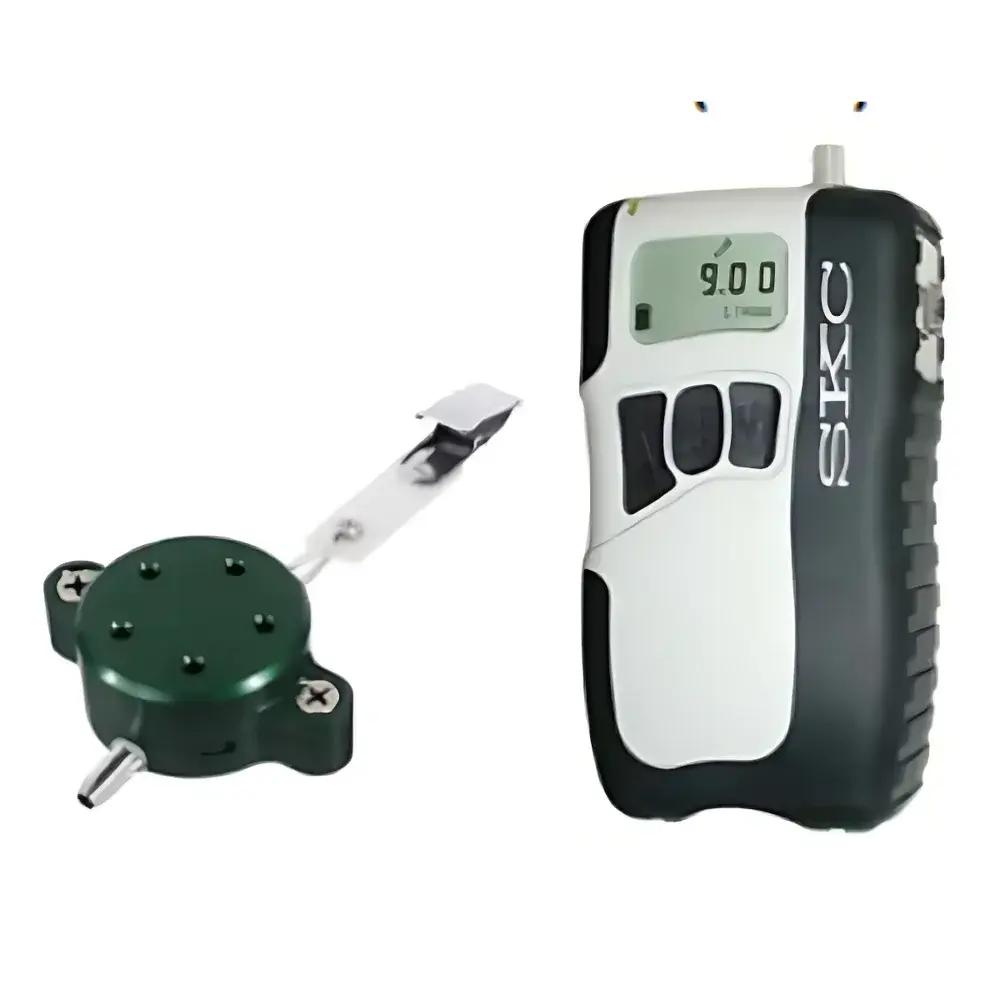
| Recommended Pumps | AirChek TOUCH (220–5000TC) for 2 & 4 L/min |
| Filter Type | PTFE membrane |
Overview
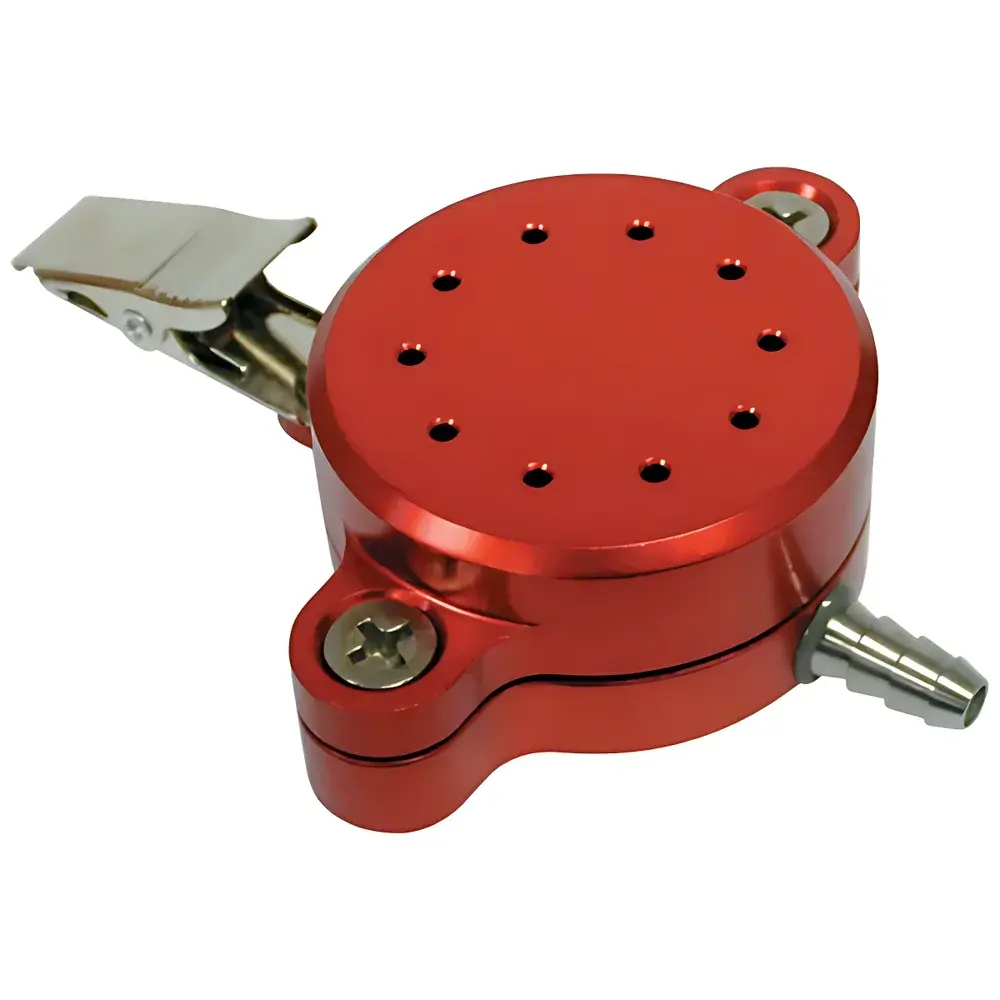
The SKC PEM Personal Environmental Monitor is a compact, lightweight inertial impactor-based particulate sampler engineered for quantitative collection of respirable and thoracic aerosol fractions in occupational and indoor environmental settings. Designed in strict accordance with U.S. EPA Method IP-10A, the PEM operates on the principle of multi-nozzle inertial impaction to achieve precise size-selective separation of airborne particles. At defined flow rates (2, 4, or 10 L/min), aerosol-laden air is accelerated through an array of precision-machined nozzles in the top cap assembly. Particles with aerodynamic diameters exceeding the 50% cut-point—either 10 µm (PM10) or 2.5 µm (PM2.5)—exhibit sufficient inertia to deviate from the airstream and impact onto a lubricated stainless-steel impaction ring. Submicron and fine particles below the cut-point remain entrained in the airflow and are subsequently collected onto a standard 37 mm PTFE membrane filter seated in the base. This two-stage physical separation ensures high-fidelity mass concentration data aligned with regulatory definitions of PM10 and PM2.5, supporting compliance-driven exposure assessment protocols.
Key Features
- Modular three-component design: top cap, impaction ring assembly, and base—enabling rapid field assembly and filter exchange without tools
- Calibrated multi-nozzle inlet geometry optimized for stable cut-point performance across all three flow rates (2, 4, and 10 L/min)
- Chemically inert, non-reactive PTFE filter support and impaction surface—minimizing adsorption artifacts and ensuring compatibility with gravimetric, ICP-MS, and ion chromatography analysis
- Low-profile form factor (≤90 mm height, ≤65 mm diameter) with integrated pump-mount interface—designed for unobtrusive wear in the breathing zone per OSHA and NIOSH personal sampling guidelines
- Traceable calibration documentation available per ISO/IEC 17025-accredited laboratory procedures
- No internal electronics or power requirements—ensuring intrinsic safety in hazardous locations and eliminating battery-related drift or downtime
Sample Compatibility & Compliance
The PEM is validated for use with 37 mm PTFE membrane filters (e.g., SKC PVC-free PTFE, catalog #225-1703) and compatible with standard analytical workflows including gravimetric mass determination (ASTM D6280, ISO 7708), elemental analysis (NIOSH Method 7300), and organic carbon quantification (NIOSH Method 5042). Its mechanical design and performance characteristics are explicitly cited in EPA Method IP-10A for indoor air quality investigations and LEED v4.1 Indoor Environmental Quality (IEQ) credit documentation. The device meets the dimensional and functional requirements of EN 13205:2021 for personal aerosol samplers and supports GLP-compliant recordkeeping when paired with SKC’s certified calibration pumps and audit-ready log sheets.
Software & Data Management
As a passive, analog sampling device, the PEM does not incorporate embedded firmware or wireless connectivity. However, it integrates seamlessly into digital exposure monitoring ecosystems via companion pump platforms: the AirChek TOUCH (220–5000TC) provides real-time flow logging, temperature/pressure compensation, and USB-exportable CSV datasets compliant with FDA 21 CFR Part 11 audit trail requirements; the Leland Legacy offers NIST-traceable flow verification and programmable duty-cycle scheduling. All raw filter mass data, pump calibration certificates, and sampling metadata may be aggregated in LIMS-compatible formats using SKC’s ExposureWatch™ software suite—supporting automated exposure limit comparison (e.g., ACGIH TLVs®, OSHA PELs) and statistical reporting per ISO 9001 quality management frameworks.
Applications
- Occupational hygiene surveys for construction, mining, pharmaceutical manufacturing, and semiconductor fabrication
- Indoor air quality assessments in schools, hospitals, and green-certified commercial buildings (LEED, WELL Building Standard)
- Source apportionment studies requiring spatially resolved PM2.5/PM10 fractionation under variable ventilation conditions
- Validation of HVAC filtration efficiency and real-time particle monitor correlation studies
- Long-term trend analysis in community air monitoring networks where low-power, maintenance-free operation is critical
FAQ
What filter types are compatible with the PEM?
Standard 37 mm PTFE membrane filters are required; polyvinyl chloride (PVC) and mixed cellulose ester (MCE) membranes are not recommended due to potential static charging and particle bounce effects.
Can the PEM be used for outdoor ambient monitoring?
While primarily designed for personal and indoor sampling, the PEM may be deployed in sheltered outdoor microenvironments when mounted on a calibrated pump with weather-protected inlet housing—though EPA Method IP-10A validation applies specifically to indoor applications.
Is flow calibration required before each sampling event?
Yes. Per ISO 15767 and NIOSH Manual of Analytical Methods (NMAM) Chapter 2, flow must be verified at the inlet using a primary-standard calibrator (e.g., bubble meter or electronic flow calibrator) immediately prior to and after sampling.
How is the impaction ring cleaned or replaced?
The stainless-steel impaction ring is single-use and discarded after each sample; no cleaning is performed to prevent cross-contamination and maintain consistent inertial cutoff performance.
Does the PEM require regulatory certification for use in EU markets?
The PEM itself is not CE-marked as it contains no electrical components; however, when used with CE-marked pumps (e.g., AirChek TOUCH), the full sampling system complies with Directive 2014/30/EU (EMC) and 2014/35/EU (LVD) for workplace exposure assessment under EU-OSHA Framework Directive 89/391/EEC.
Related Products







