
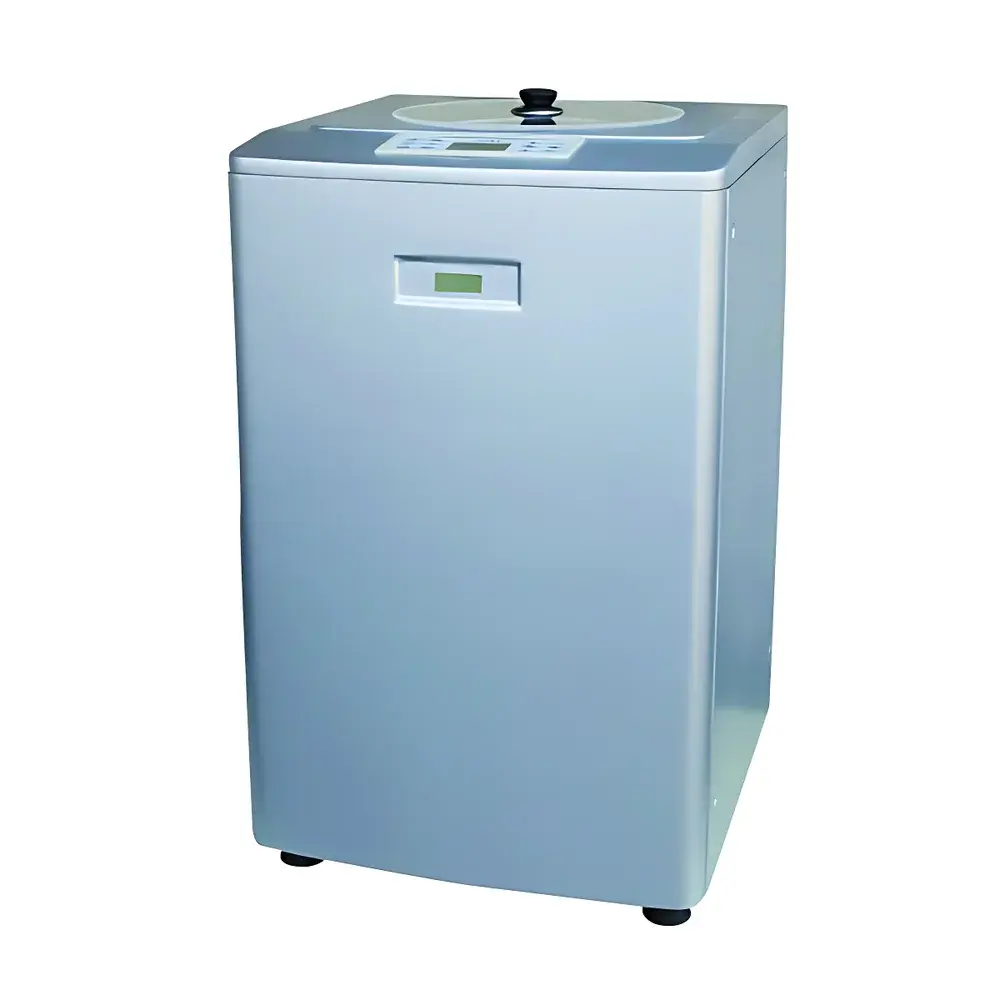
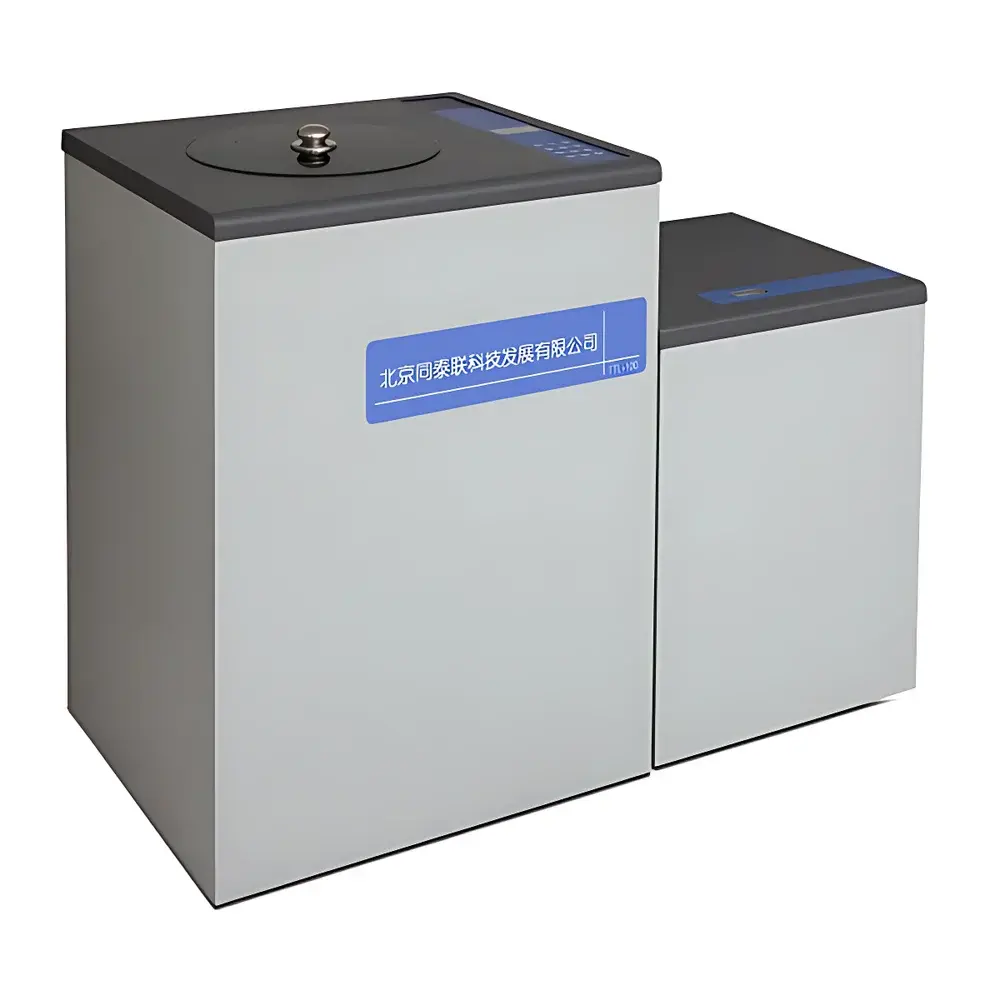
Tongtailian TTL-100 Automated Vial Washer for HPLC/GC Sample Vials
| Brand | Tongtailian (TTL) |
|---|---|
| Origin | Beijing, China |
| Manufacturer Type | OEM Manufacturer |
| Region of Origin | Domestic (PRC) |
| Model | TTL-100 |
| Chamber Volume | 18 L |
| Heating Power Supply | AC 220 V, 50 Hz |
| Operating Wash Temperature | 35 °C |
| Compatible Vial Outer Diameter | 11.05 ± 0.5 mm |
| Max. Vial Height | 32 ± 1 mm |
| Max. Batch Capacity | ≤97 vials per cycle |
| Ultrasonic Tank Volume | 10 L |
| External Dimensions (L×W×D) | 540 × 550 × 845 mm |
| Control Interface | LCD with Chinese-language UI |
| Water Source | Municipal tap water |
| Conductivity of Output Rinse Water | ≤0.067 µS/cm (equivalent to ≥15 MΩ·cm resistivity) |
| Safety Protections | Low-water-level cutoff, dry-run prevention, inlet pressure monitoring, automatic valve interlock, audible alarm, fault-code display |
Overview
The Tongtailian TTL-100 is an automated, benchtop vial washer engineered specifically for high-throughput cleaning of chromatographic sample vials—primarily 2 mL and 4 mL HPLC, GC, and LC-MS autosampler vials with standardized 11–12 mm outer diameters. It employs a dual-stage cleaning methodology combining programmable ultrasonic cavitation (at 40 kHz nominal frequency) with precisely controlled temperature-regulated rinse cycles, followed by optional air-drying via ambient or low-heat convection. The system is designed to remove trace organic residues, particulate contaminants, and adsorbed analytes without mechanical abrasion or thermal degradation—critical for laboratories requiring consistent baseline integrity, low carryover, and method validation compliance. Its architecture integrates a dedicated TTL-100F integrated water purification module that delivers Type I ultrapure rinse water (≥15 MΩ·cm at 25 °C), eliminating reliance on external DI or Milli-Q systems and reducing variability introduced by third-party water sources.
Key Features
- Microprocessor-controlled wash sequencing with 3 preloaded, validated cleaning protocols (Standard, Heavy Residue, and Rinsing-Only) plus fully customizable program editing via LCD interface
- Real-time operational feedback including step-by-step process visualization, fill-level indicators, inlet pressure status, and fault diagnostics with alphanumeric error codes
- Integrated ultrasonic transducer array (10 L tank volume) operating at fixed frequency with automatic activation only upon confirmed minimum liquid level—preventing transducer damage during dry operation
- Dual-safety water supply management: monitors municipal inlet pressure (alarm triggers if <0.1 MPa), auto-shuts valve upon line interruption, and coordinates synchronized start/stop with TTL-100F purification unit
- Intelligent fluid control system prevents overflow and dry-run conditions through redundant float switches and timed solenoid valve actuation
- Acoustic alarm and on-screen alert for all critical events—including low reservoir level, temperature deviation >±2 °C from setpoint, and power interruption recovery state
- Stainless steel 304 chamber and fluid pathways ensure corrosion resistance and compatibility with common alkaline and neutral aqueous cleaning agents
Sample Compatibility & Compliance
The TTL-100 accommodates standard crimp-top and screw-cap chromatography vials conforming to ASTM D5295 (vial dimensional tolerances) and USP (glass container characterization). Supported formats include 11.05 ± 0.5 mm OD × 32 ± 1 mm height cylindrical vials—compatible with Agilent, Waters, Thermo Fisher, and Shimadzu autosamplers. While the instrument itself does not carry CE, UL, or FDA 510(k) certification, its operational logic and audit-ready event logging (time-stamped cycle records, parameter settings, and fault history) support alignment with GLP and ISO/IEC 17025 documentation requirements. When deployed in regulated QC environments, users may validate individual wash cycles per ICH Q5C and USP Analytical Instrument Qualification guidelines.
Software & Data Management
The TTL-100 operates via embedded firmware without external PC dependency. All user-defined programs, cycle logs (date/time stamp, selected protocol, actual temperature profile, and completion status), and alarm histories are stored internally in non-volatile memory for ≥1,000 cycles. Data export is not supported via USB or network interface; however, printed cycle reports can be generated using optional RS-232–connected label printers. For laboratories requiring electronic records compliant with 21 CFR Part 11, integration with third-party LIMS or ELN platforms must be achieved via discrete digital I/O signals (start/stop/pause/status) rather than native software connectivity.
Applications
- Routine decontamination of HPLC/GC vials between potency assays in pharmaceutical stability studies
- Removal of phospholipid matrix interference in bioanalytical LC-MS/MS workflows
- Preparation of blank vials for method detection limit (MDL) and limit of quantitation (LOQ) verification
- Reconditioning of reused vials in environmental testing labs processing EPA Method 8270/8260 samples
- Supporting ISO 17025 accredited testing where documented cleaning efficacy—verified by swab testing or surrogate spike recovery—is required per SOP
FAQ
What types of cleaning solutions are compatible with the TTL-100?
Aqueous-based neutral or mildly alkaline detergents (pH 7–10) formulated for laboratory glassware are recommended. Strong acids, halogenated solvents, and high-concentration ethanol (>30% v/v) are prohibited due to material compatibility and ultrasonic transducer safety constraints.
Can the TTL-100 dry vials after washing?
No. The TTL-100 performs only wash-rinse cycles. Air-drying must be conducted separately in a laminar flow hood or dedicated drying oven.
Is the TTL-100F water purification module mandatory?
Yes. The TTL-100 is functionally coupled to the TTL-100F unit for final rinse water generation. Standalone operation without the purification module violates design intent and compromises residue removal efficacy.
Does the system support IQ/OQ documentation packages?
Tongtailian provides basic factory test reports and dimensional specifications. Full qualification documentation (IQ/OQ/PQ) must be developed in-house or by a qualified third party per user-specific regulatory context.
What maintenance intervals are recommended?
Ultrasonic transducers require annual performance verification using aluminum foil erosion test per ASTM E1753. Chamber gaskets and inlet filters should be inspected quarterly; water purification cartridges replaced every 6 months or after 1,200 L of processed water, whichever occurs first.



