
Teclis FOAMSCAN Foam Analyzer
| Brand | Teclis Scientific (France) |
|---|---|
| Origin | France |
| Model | FOAMSCAN |
| Gas Flow Range | 20–500 mL/min (mass flow controlled) |
| Stirring Speed | 500–6000 rpm (software-controlled) |
| Temperature Measurement | Pt100 sensor (ambient or optional water bath coupling) |
| Dual-Camera Imaging System | Primary foam height + secondary bubble structure |
| Modular Foaming Methods | Gas injection (via sintered glass frit), Mechanical stirring, External foam introduction |
| Automated Cleaning System | Dual-fluid (water + optional cleaning agent), integrated waste pump |
| Compliance | Designed for GLP-compliant lab environments |
Overview
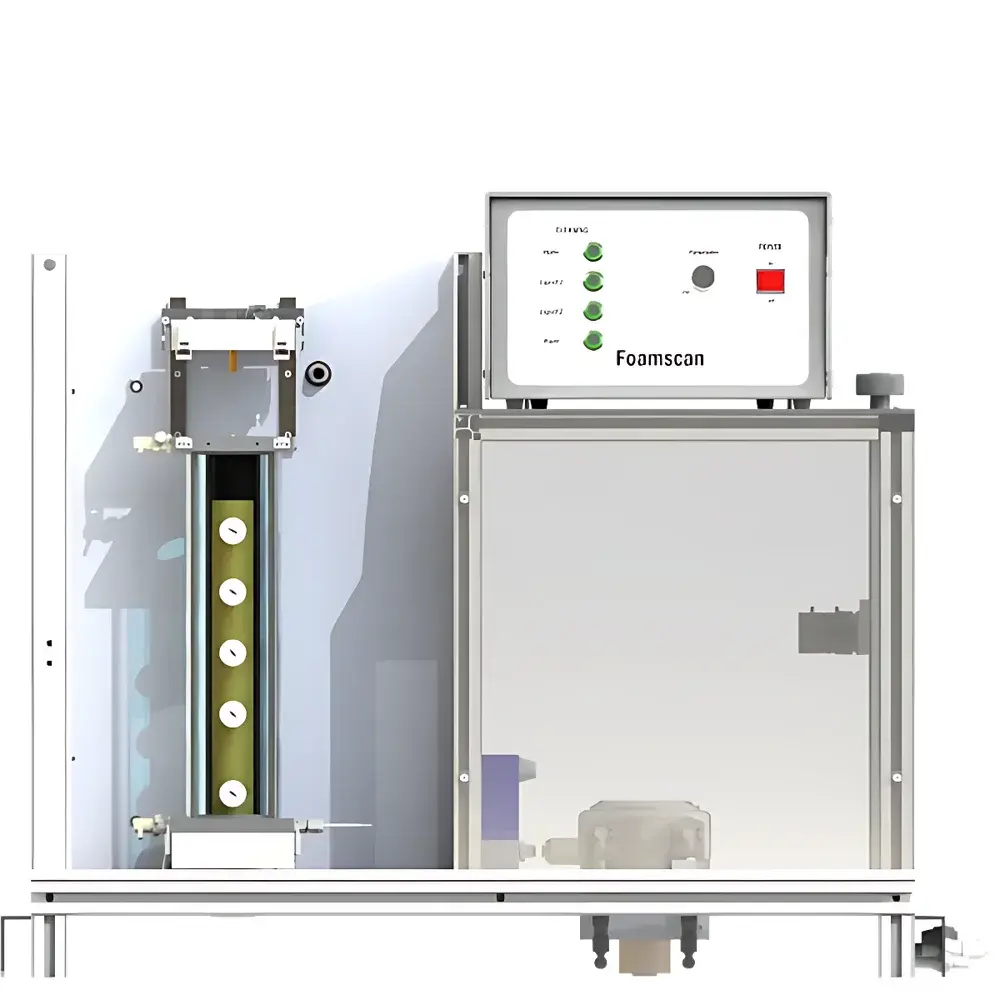
The Teclis FOAMSCAN Foam Analyzer is a modular, laboratory-grade instrument engineered for quantitative, reproducible characterization of foams across industrial R&D and quality control settings. It operates on three complementary physical principles: gas-liquid dispersion via controlled mass flow through sintered glass frits; mechanical air entrainment via variable-speed turbine agitation; and external foam introduction under standardized optical and electrical monitoring. By integrating real-time image analysis (two synchronized CCD cameras), conductivity-based liquid fraction measurement, and precise environmental parameter logging (temperature, atmospheric pressure, flow rate, rotational speed), the FOAMSCAN delivers concurrent, time-resolved metrics on foam generation kinetics, structural evolution, drainage dynamics, and collapse mechanisms. Its architecture supports both fundamental interfacial science investigations—such as surfactant adsorption kinetics and lamella stability—and applied formulation development for antifoams, stabilizers, and process-optimized foaming agents.
Key Features
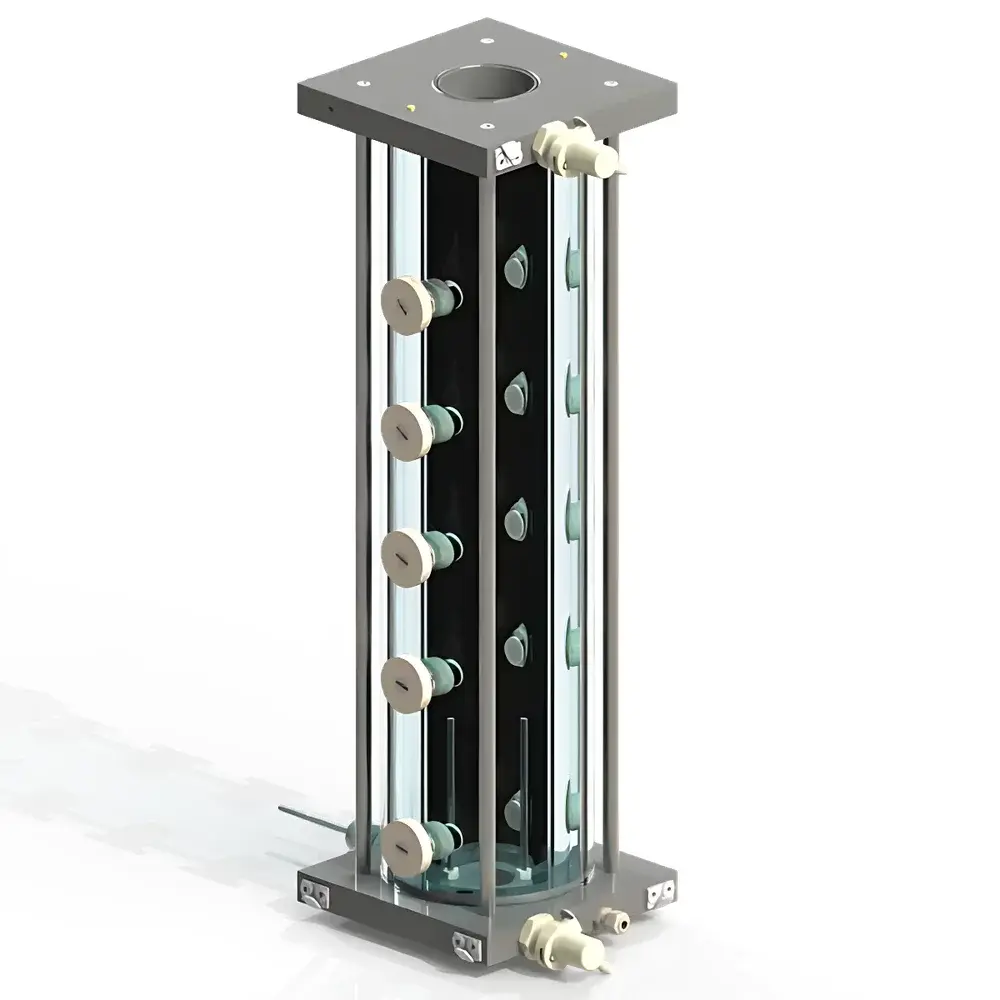
- Triple-mode foaming capability: gas injection (20–500 mL/min, MFC-controlled), mechanical stirring (500–6000 rpm, viscosity-adaptive), and external foam introduction using calibrated quartz or borosilicate tubes (25 mL or 500 mL options)
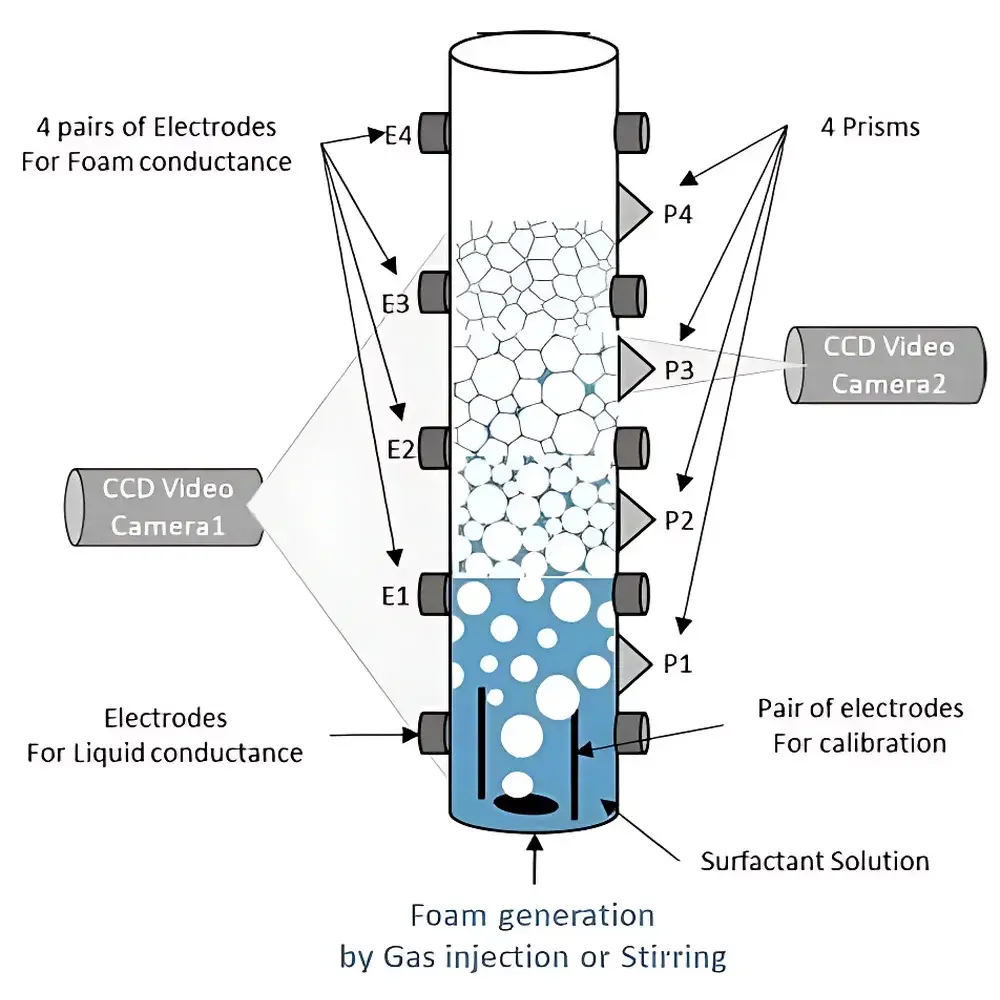
- Dual-camera imaging system: primary camera tracks foam column height and macroscopic evolution; secondary high-resolution CCD captures bubble morphology at multiple vertical positions via precision-mounted right-angle prisms
- Real-time conductivity sensing: measures liquid volume and liquid fraction continuously throughout foam lifetime, enabling accurate calculation of foam density and drainage rate
- Integrated environmental monitoring: Pt100 temperature probe embedded in sample; built-in barometric pressure sensor for dynamic flow calibration; optional thermostatic coupling via quick-disconnect fittings
- Fully automated cleaning sequence: dual-fluid delivery (water + configurable cleaning solution); programmable pre- and post-measurement cycles; integrated waste pump and top-feed rinse system
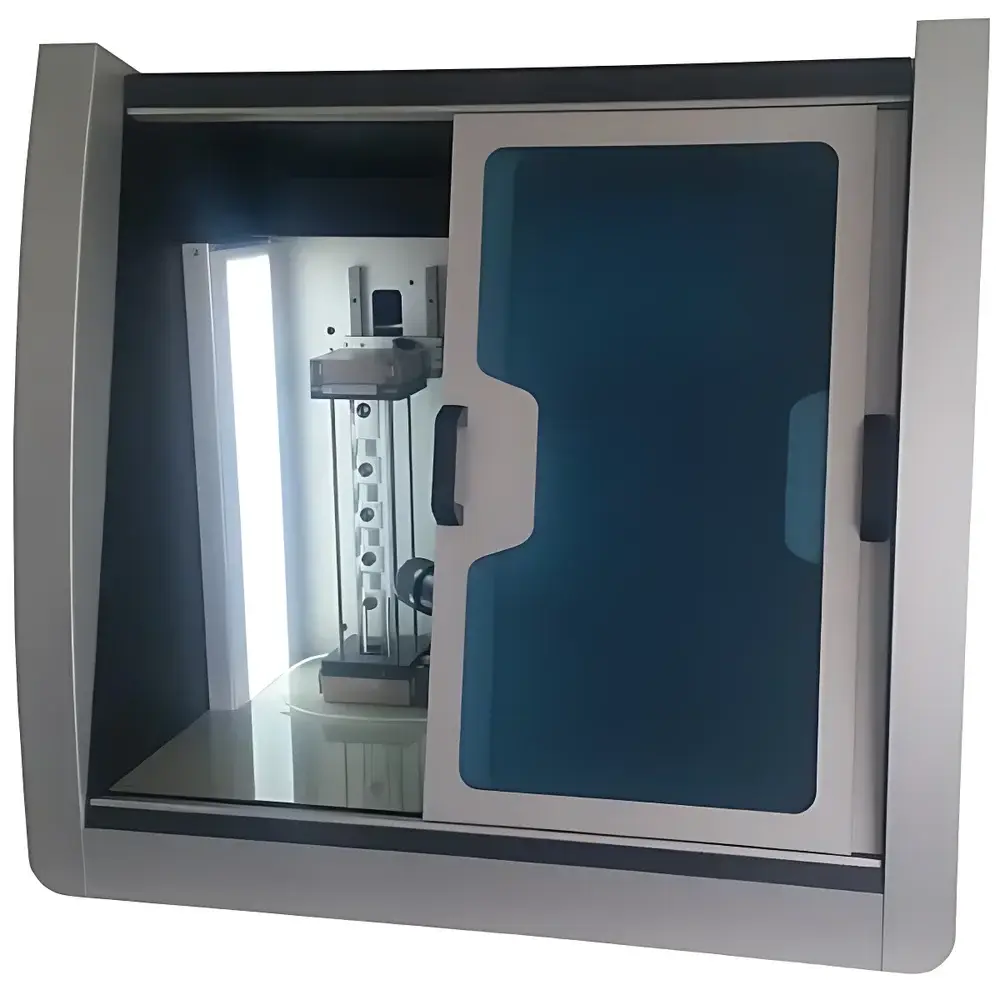
- Modular optical enclosure: light-tight housing minimizes ambient interference and protects optical components from dust and aerosol contamination
Sample Compatibility & Compliance
The FOAMSCAN accommodates aqueous and non-aqueous formulations within standard operating temperature range (ambient, ±0.5 °C resolution). Sample vessels include interchangeable 25 mL quartz cuvettes for high-precision bubble statistics and 500 mL borosilicate columns for industrial-scale foam behavior assessment. All measurements are traceable to SI units via calibrated mass flow controllers (NIST-traceable), conductivity cells, and Pt100 sensors. The system supports audit-ready data integrity: software enforces user authentication, timestamps all actions, logs configuration parameters with each run, and maintains immutable experiment records. Exported Excel files retain full metadata, satisfying documentation requirements under ISO/IEC 17025, ASTM D1173 (Standard Test Method for Foaming Properties of Surface-Active Agents), and internal GLP/GMP protocols.
Software & Data Management
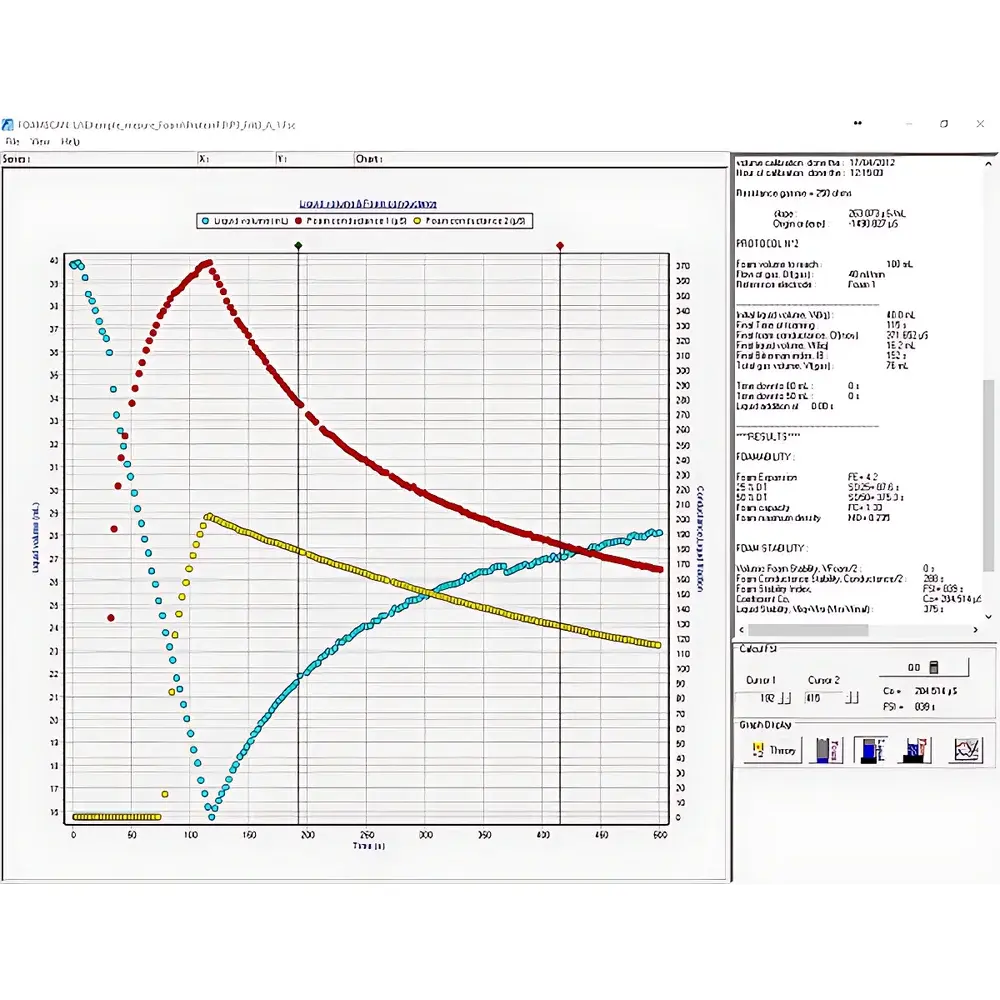
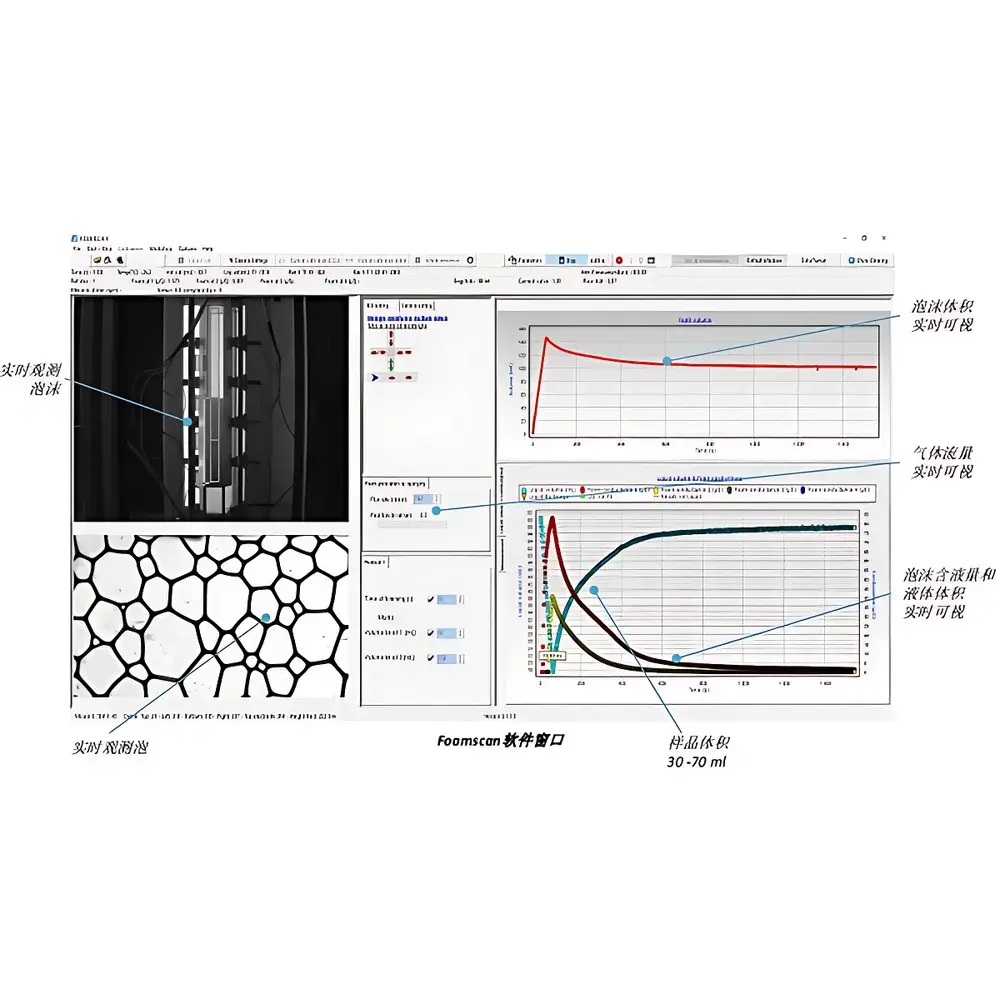
FOAMSCAN Control Software provides unified acquisition, visualization, and analysis. During acquisition, users monitor four synchronized live feeds: foam column video, bubble structure image, experimental parameter summary, and real-time plots of foam volume, liquid volume, and liquid fraction. Post-acquisition, BubbleStatistics module performs automated segmentation and morphometric analysis—including bubble diameter distribution (min/max/mean), Sauter mean diameter, circularity, eccentricity, area-weighted density, polydispersity index, and temporal evolution of liquid fraction. All results are exportable to .xlsx with embedded metadata. Comparative analysis tools enable side-by-side overlay of multiple experiments without external processing. Software architecture complies with FDA 21 CFR Part 11 requirements for electronic records and signatures when deployed with appropriate IT validation.
Applications
- Surfactant screening and formulation optimization in detergents, personal care products (shaving foams, toothpastes, mousses), and food systems (beer head stability, ice cream overrun, meringue texture)
- Evaluation of defoamers and antifoams in chemical processing, wastewater treatment, and pulp & paper manufacturing
- Characterization of foamed cement, lightweight concrete, and acoustic/thermal insulation materials in civil engineering
- Research into froth flotation chemistry and oilfield foam flooding efficiency
- Pharmaceutical emulsion and aerogel development where gas-phase dispersion governs final product performance
FAQ
What foaming methods does the FOAMSCAN support?
It supports three distinct modes: gas injection through sintered glass frits, mechanical stirring with a three-blade turbine, and external foam introduction using standardized sample tubes.
Can measurements be performed at controlled temperatures?
Yes—the system includes a Pt100 sensor for ambient temperature monitoring, and optional integration with external thermostatic baths via quick-disconnect fittings enables isothermal studies between 5 °C and 60 °C.
How is liquid fraction quantified?
Through real-time conductivity measurement across two electrodes immersed in the foam column, enabling continuous calculation of liquid volume and liquid fraction independent of optical opacity.
Is the software compliant with regulatory data integrity standards?
When validated per site-specific IT policies, the software supports 21 CFR Part 11 compliance features including electronic signatures, audit trails, and secure user access controls.
What sample volumes can be analyzed?
Standard configurations include 25 mL quartz cuvettes for high-resolution bubble analysis and 500 mL borosilicate columns for macroscopic foam behavior; custom tube geometries are available upon request.



