
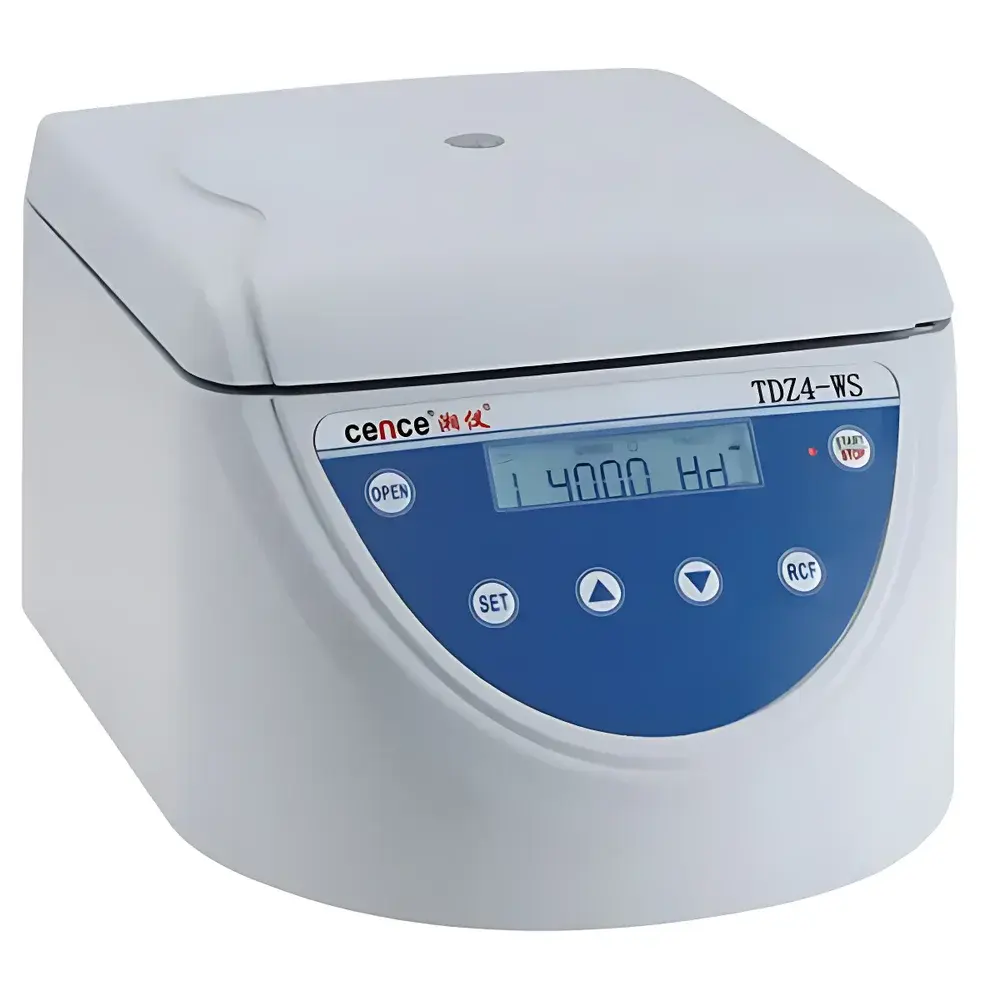
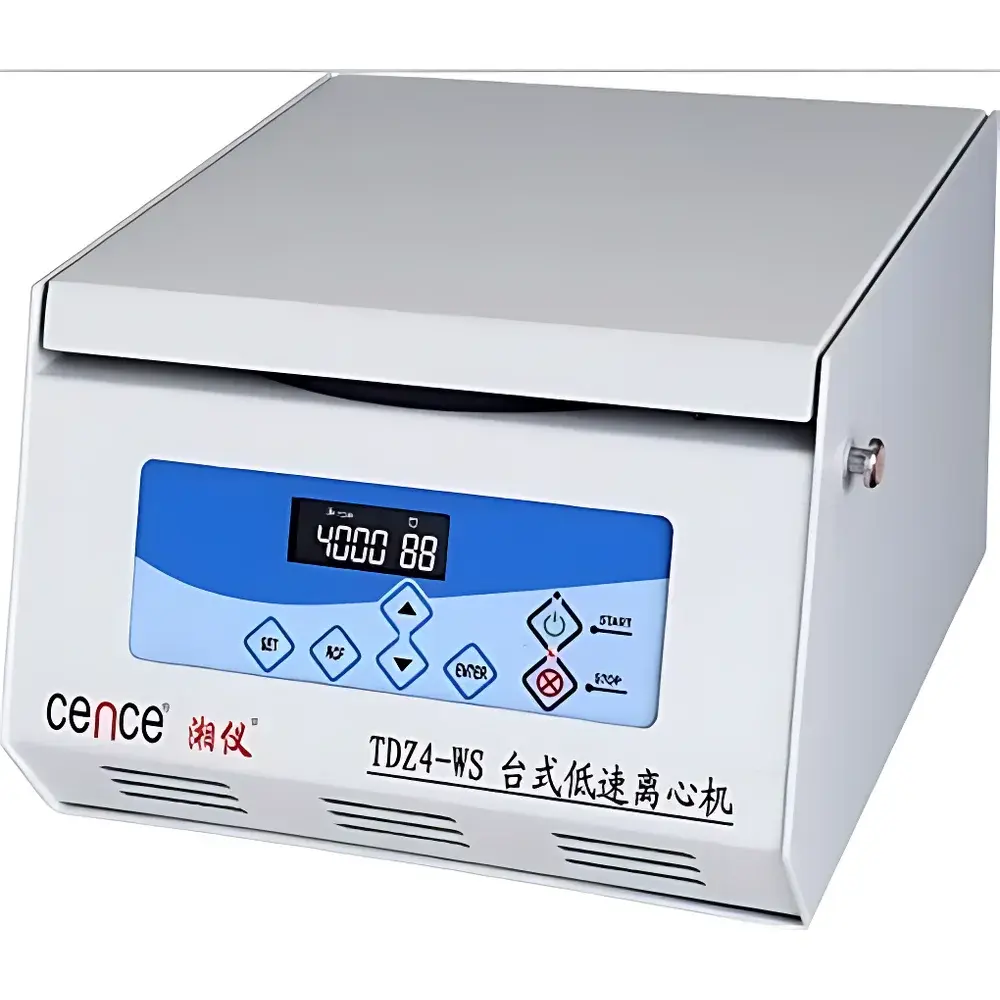
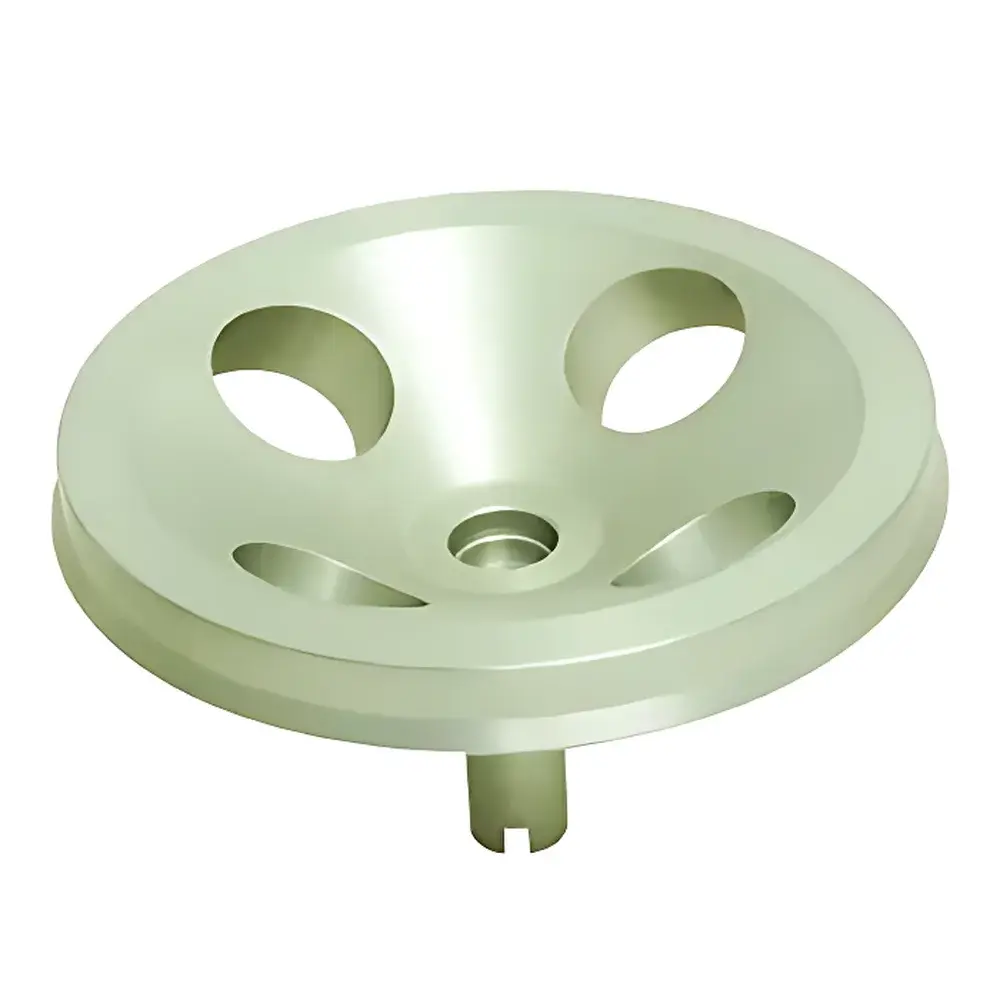
Xiangyi TDZ4-WS Benchtop Low-Speed Centrifuge
| Brand | Xiangyi |
|---|---|
| Origin | Hunan, China |
| Manufacturer Type | Direct Manufacturer |
| Product Category | Domestic |
| Model | TDZ4-WS |
| Instrument Type | Benchtop Centrifuge |
| Speed Class | Low-Speed Centrifuge (≤ 4000 rpm) |
| Function | General-Purpose Centrifuge |
| Configuration | Fixed-Angle Rotor Centrifuge |
| Maximum Capacity | 4 × 50 mL |
| Maximum Speed | 4000 rpm |
| Maximum RCF | 2580 × g |
| Dimensions (L×W×H) | 325 × 370 × 250 mm |
| Weight | 12 kg |
| Speed Accuracy | ±30 rpm |
| Timer Range | 1–99 min |
| Noise Level | <62 dB(A) |
| Power Supply | AC 220 V ±22 V, 50/60 Hz, 5 A |
| Power Consumption | 100 W |
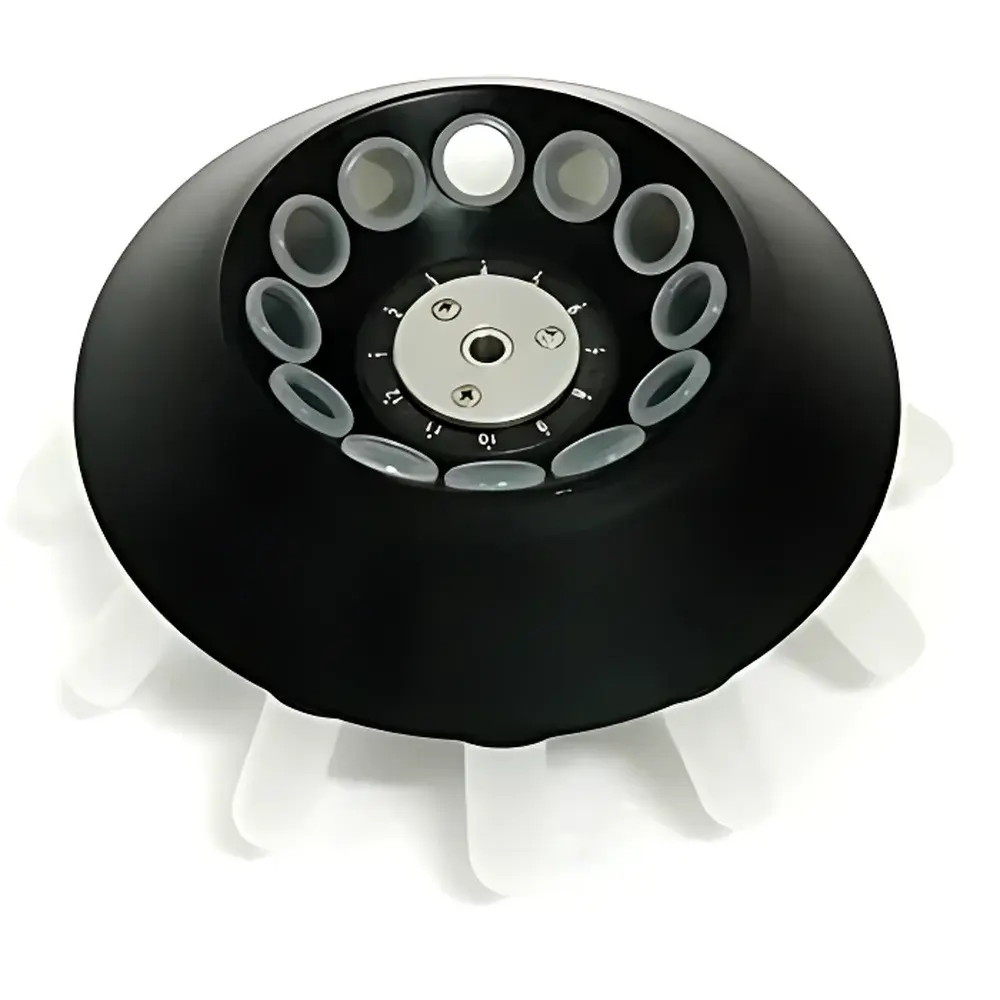
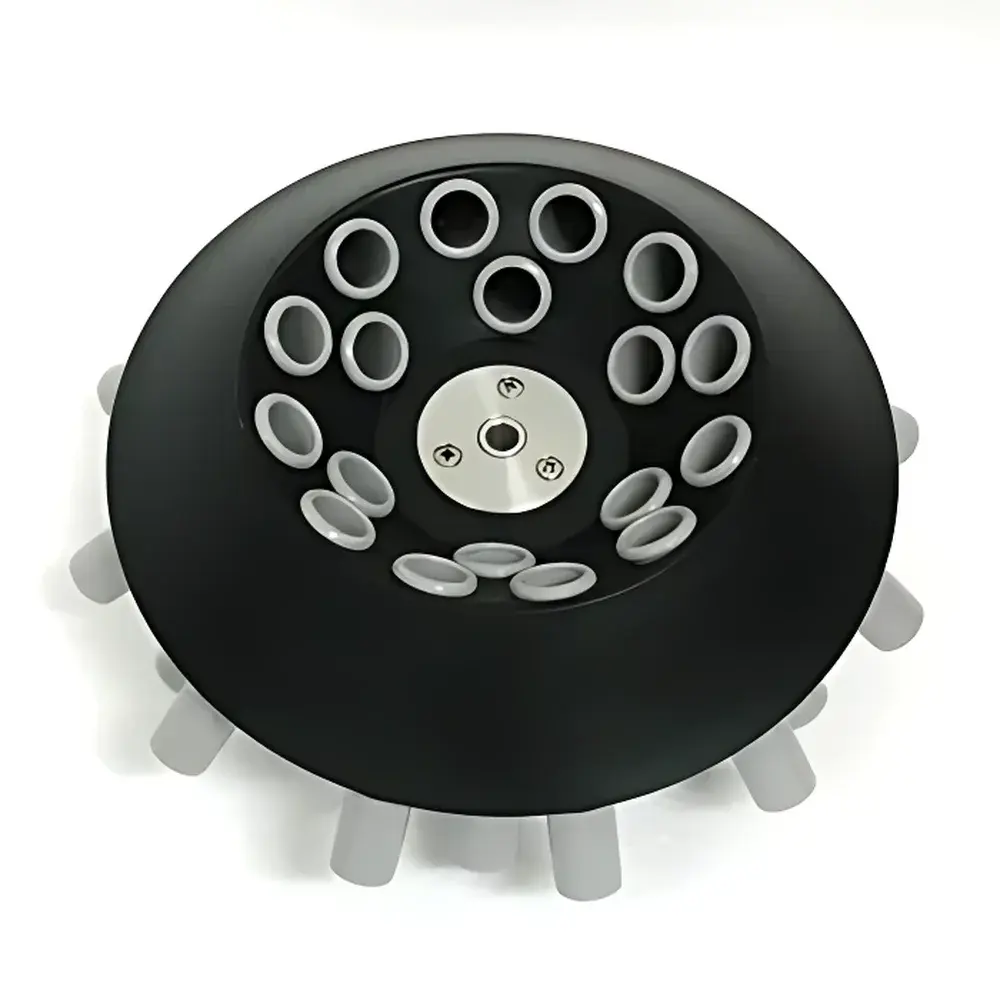
| Rotor Compatibility | 12 × 20 mL, 18 × 10 mL, 4 × 50 mL fixed-angle rotors |
Overview
The Xiangyi TDZ4-WS Benchtop Low-Speed Centrifuge is a precision-engineered, microprocessor-controlled laboratory centrifuge designed for routine separation tasks in academic research laboratories, quality control environments, and clinical support settings. Operating on the principle of sedimentation under controlled centrifugal force, the instrument utilizes a brushless DC motor to deliver stable rotational dynamics at speeds up to 4000 rpm, generating a maximum relative centrifugal force (RCF) of 2580 × g. Its low-speed classification makes it especially suitable for applications requiring gentle pelleting of cells, precipitates, or particulates without inducing shear-induced damage—such as erythrocyte separation, serum/plasma preparation, yeast harvesting, and polymer pellet recovery. The unit’s compact footprint (325 × 370 × 250 mm) and lightweight construction (12 kg) enable seamless integration onto standard lab benches without structural reinforcement.
Key Features
- Microprocessor-based control system with intuitive touch-panel interface and backlit LCD display for real-time monitoring of speed, RCF, time, and status.
- Automatic RCF calculation and direct parameter input—users may set either rotational speed (rpm) or target RCF; the system dynamically adjusts accordingly.
- Self-balancing mechanism incorporating specialized shock-absorbing dampers ensures operational stability even with minor sample imbalances, reducing mechanical stress and extending service life.
- Full stainless-steel housing provides corrosion resistance, mechanical rigidity, and compliance with basic laboratory hygiene standards.
- Precision timer with dual-mode countdown: displays remaining time in minutes until the final minute, then switches automatically to second-level resolution for enhanced procedural control.
- Brushless DC motor delivers consistent torque output, minimal heat generation, and maintenance-free operation over extended duty cycles.
- Acoustic optimization achieves noise emission below 62 dB(A) at rated load—suitable for shared laboratory spaces where ambient noise control is prioritized.
Sample Compatibility & Compliance
The TDZ4-WS supports three interchangeable fixed-angle rotors: 12 × 20 mL, 18 × 10 mL, and 4 × 50 mL configurations—all rated for full-speed operation at 4000 rpm and 2200–2580 × g. Tubes compatible with common polypropylene, polycarbonate, and glass formats (e.g., conical-bottom centrifuge tubes, serum tubes, and universal sample vials) can be accommodated without adapter requirements. While not certified for biosafety level (BSL)-2 or higher containment, the device meets general-purpose mechanical safety standards applicable to Class I laboratory equipment per GB/T 13306–2011 (Chinese national standard for lab instrument labeling and documentation) and conforms to electromagnetic compatibility (EMC) requirements under GB 4824–2019. It is routinely deployed in GLP-aligned workflows for sample preparation prior to downstream analysis (e.g., HPLC, spectrophotometry, ELISA), though it does not include 21 CFR Part 11-compliant audit trail functionality.
Software & Data Management
The TDZ4-WS operates as a standalone instrument without external software dependency. All operational parameters—including run history, preset protocols, and rotor-specific calibration data—are retained in non-volatile memory. The embedded firmware supports up to 10 user-defined program slots, each storing speed, time, acceleration/deceleration profiles (standard ramp), and auto-lid lock status. No proprietary PC software is provided; however, users may document run logs manually or integrate instrument outputs into LIMS via timestamped manual entry. For regulatory traceability, printed records (via optional external thermal printer interface) or photographed LCD readouts serve as acceptable raw data evidence under ISO/IEC 17025 clause 7.5.2.
Applications
- Routine blood fractionation: separation of whole blood into packed red cells, buffy coat, and platelet-poor plasma.
- Cell culture processing: harvesting adherent or suspension mammalian cells at low g-forces to preserve membrane integrity.
- Environmental microbiology: concentration of waterborne bacteria or protozoan cysts from large-volume filtration eluates.
- Food & beverage QA: clarification of juice extracts, dairy emulsions, or starch suspensions prior to viscosity or turbidity measurement.
- Educational labs: demonstration of sedimentation kinetics, density gradient principles, and rotor physics fundamentals.
- Pharmaceutical pre-formulation: isolation of excipient aggregates or insoluble drug particles from aqueous dispersions.
FAQ
What is the maximum tube volume supported by the TDZ4-WS?
The instrument accommodates up to four 50 mL conical tubes simultaneously using its largest fixed-angle rotor.
Does the TDZ4-WS offer variable acceleration or deceleration rates?
No—it employs a single standard ramp profile for both acceleration and braking; no programmable soft-start or gentle-stop modes are available.
Is rotor imbalance compensation fully automatic during operation?
Yes—the integrated dynamic balancing system detects and compensates for minor mass asymmetries (< ±5% load difference across opposing positions) without user intervention.
Can the TDZ4-WS be used for centrifuging hazardous biological samples?
It is not equipped with sealed rotors or biocontainment certification; use requires appropriate secondary containment (e.g., sealed buckets or aerosol-tight tube caps) and adherence to institutional biosafety protocols.
What voltage and frequency ranges does the power supply support?
The unit accepts AC 220 V ±22 V at 50 Hz or 60 Hz, making it compatible with standard mains in China, most ASEAN countries, and parts of South America.



