
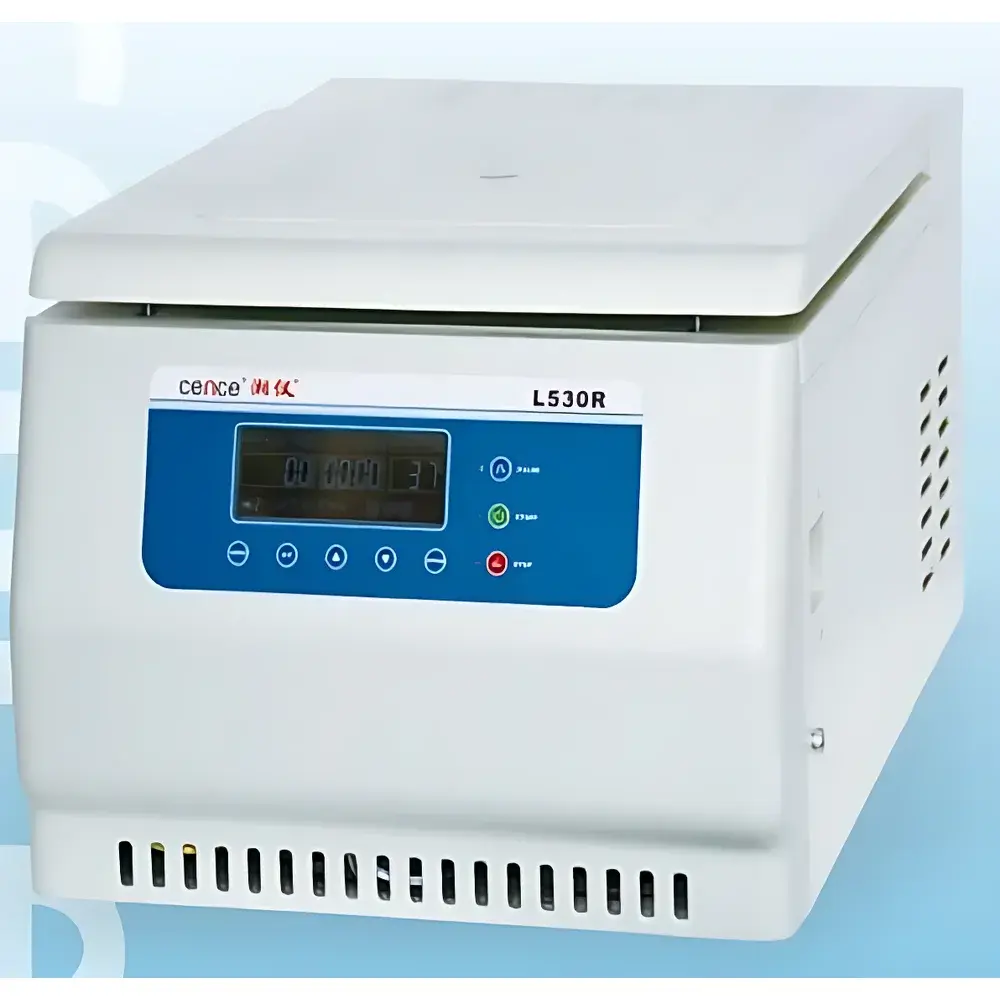
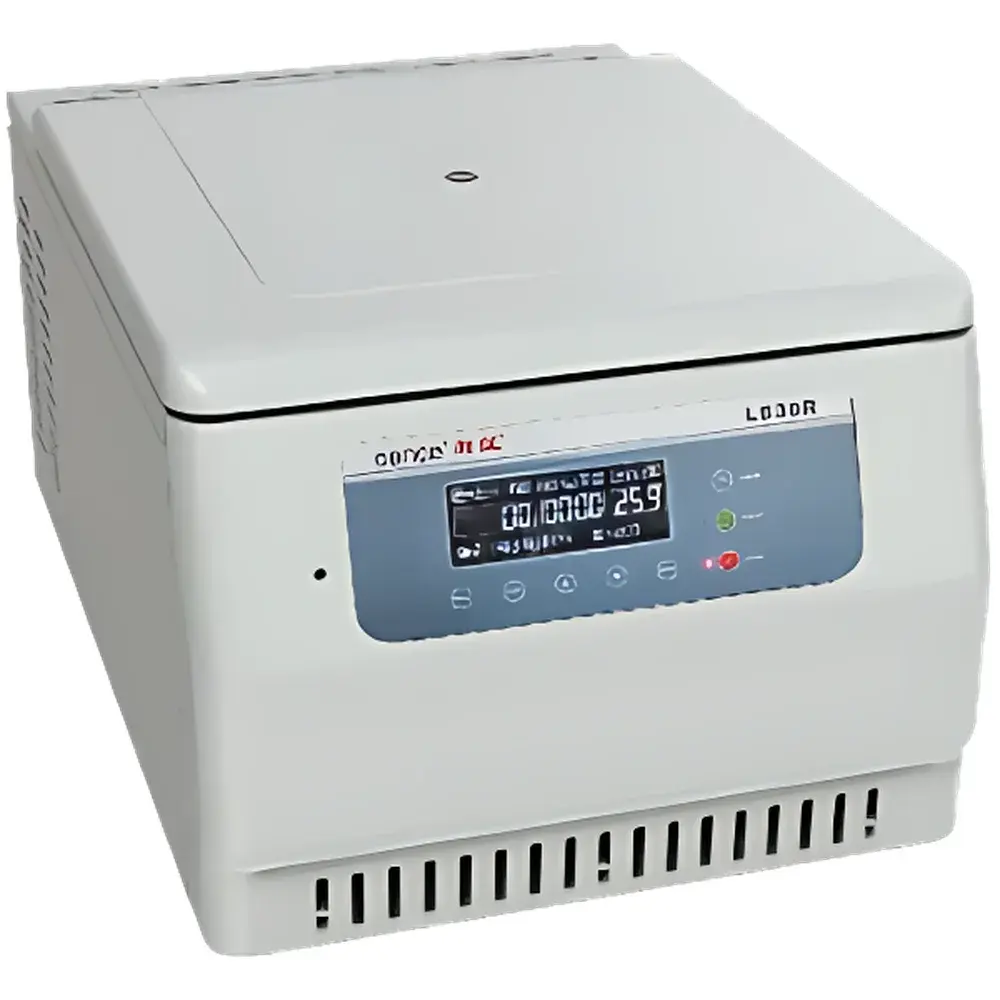
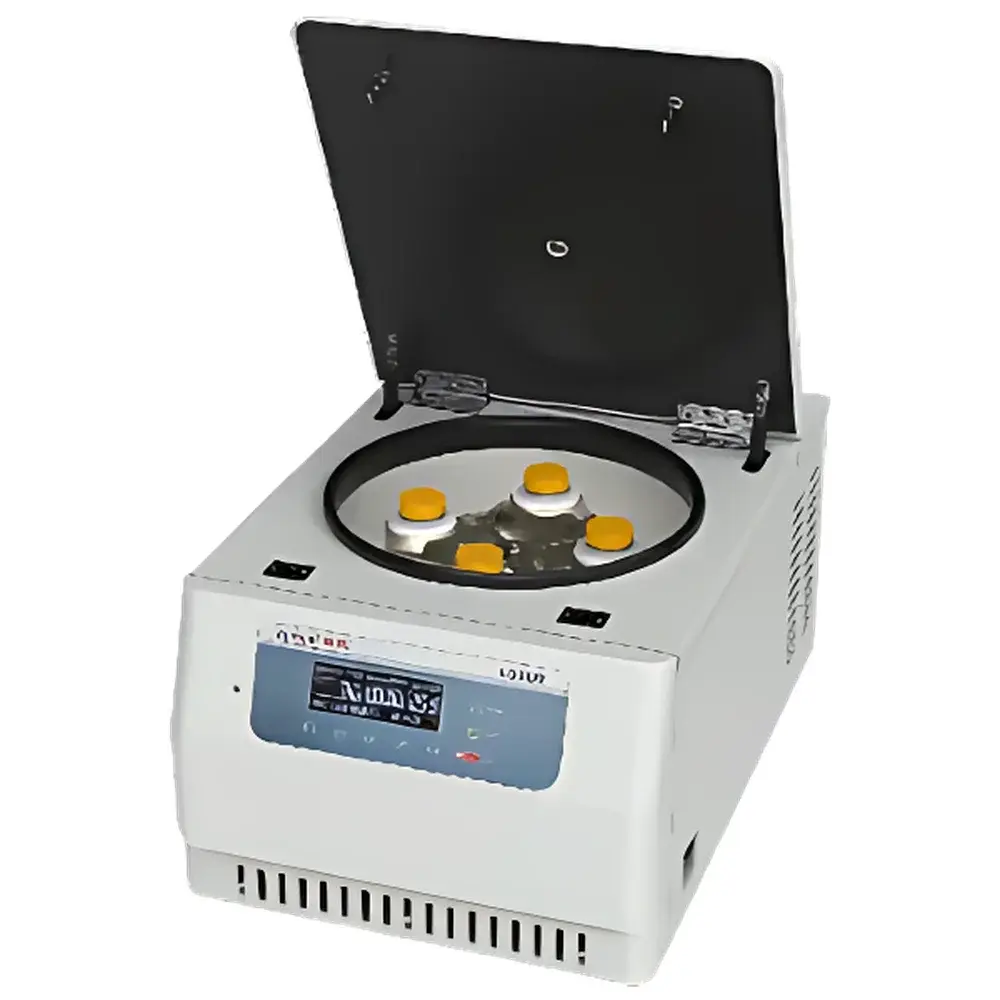
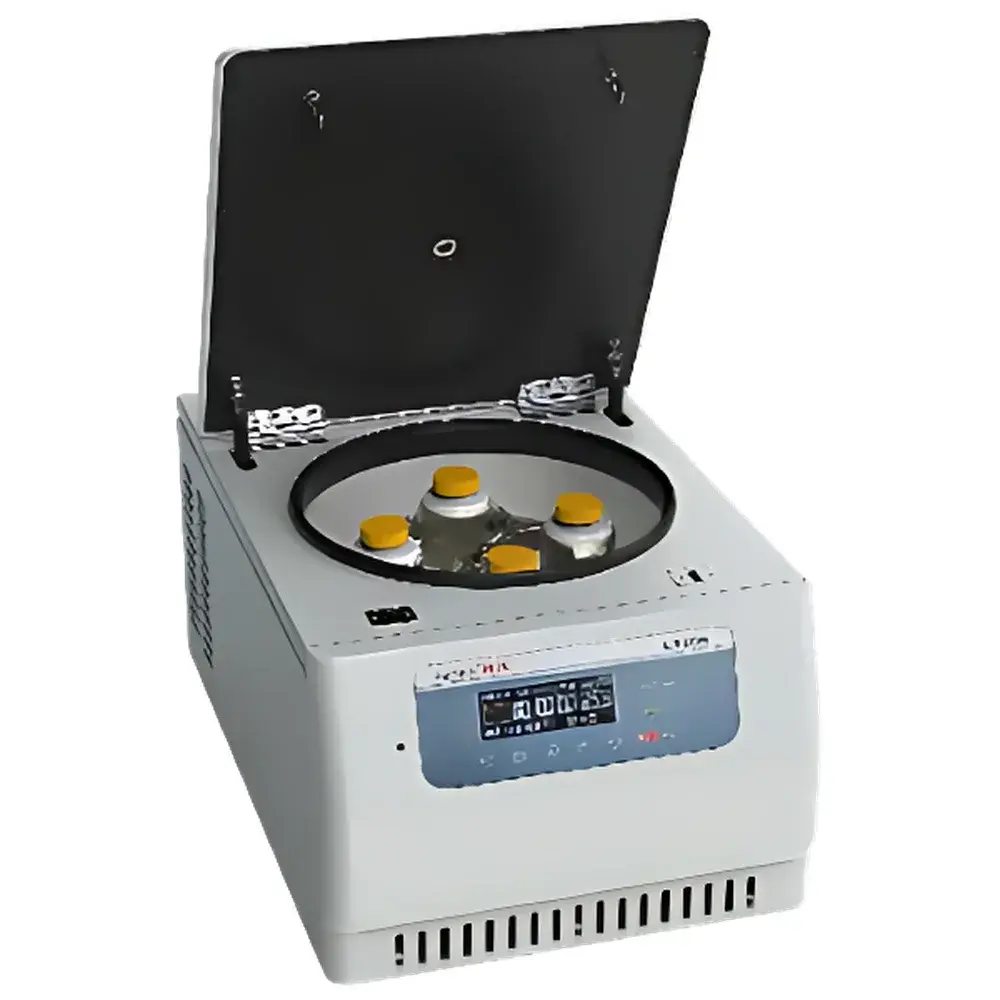
Xiangyi L530R Benchtop Low-Speed Refrigerated Centrifuge
| Brand | Xiangyi |
|---|---|
| Origin | Hunan, China |
| Manufacturer Type | Direct Manufacturer |
| Product Category | Domestic |
| Model | L530R |
| Instrument Type | Benchtop Centrifuge |
| Speed Range | Up to 5300 rpm |
| Max RCF | 5010 × g |
| Max Capacity | 4 × 250 mL |
| Temperature Range | -20°C to +40°C |
| Temp Control Accuracy at 4°C | ±0.5°C (PID-controlled) |
| Refrigeration System | Inverter-driven eco-friendly compressor |
| Drive System | Microprocessor-controlled DC brushless motor |
| Rotor Compatibility | Fixed-angle rotors standard |
| Safety Features | Overspeed protection, overtemperature cutoff, automatic rotor recognition (via mechanical coding), lid interlock, imbalance detection, dual-stage damping suspension |
| Dimensions (W×D×H) | 470 × 730 × 380 mm |
| Compliance | Designed per IEC 61010-1:2010 (Safety Requirements for Electrical Equipment for Measurement, Control, and Laboratory Use) |
Overview
The Xiangyi L530R is a microprocessor-controlled benchtop low-speed refrigerated centrifuge engineered for routine separation tasks in clinical diagnostics, cell biology, microbiology, and basic life science laboratories. It operates on the principle of sedimentation under controlled gravitational force (RCF), where differential particle density, size, and shape enable stratified separation of biological suspensions—including whole blood, cultured cells, bacterial pellets, and tissue homogenates—within temperature-stabilized environments. Unlike high-speed or ultracentrifuges, the L530R is optimized for gentle yet efficient pelleting of intact cells and subcellular components without shear-induced lysis, making it ideal for downstream applications such as DNA/RNA extraction, ELISA sample preparation, and serum/plasma isolation. Its integrated refrigeration system maintains precise thermal control across the full operational range (–20 °C to +40 °C), ensuring sample integrity during extended runs—a critical requirement for heat-labile analytes and enzyme-sensitive preparations.
Key Features
- Inverter-driven eco-refrigeration system enables dynamic frequency modulation based on rotor inertia and set speed, delivering consistent cooling performance even at maximum load and 5300 rpm—sustaining internal chamber temperatures ≤ –4 °C at rated speed.
- PID-based intelligent temperature regulation (Patent No. ZL201922274761.7) achieves ±0.5 °C stability at 4 °C reference point, minimizing thermal drift during multi-step protocols.
- DC brushless motor provides high torque, zero carbon dust emission, silent operation, and maintenance-free service life exceeding 20,000 hours.
- Automatic RCF calculation and real-time display eliminate manual conversion errors; users input rpm or radius, and the system computes and applies corresponding relative centrifugal force.
- Programmable memory stores up to 10 user-defined methods, each configurable with independent time, speed, temperature, acceleration/deceleration profiles, and hold conditions.
- Nine selectable acceleration and ten deceleration curves—including soft-brake modes—reduce resuspension of delicate pellets; dual-stage mechanical damping isolates vibration transmission to lab benches and adjacent instrumentation.
- Comprehensive safety architecture includes lid interlock with force-sensing latch, real-time imbalance detection (< 5 g mass differential), overspeed cutoff, overtemperature shutdown, and automatic rotor identification via mechanical coding slots.
Sample Compatibility & Compliance
The L530R accommodates a wide array of primary and secondary sample containers through standardized rotor interfaces. Standard configuration includes a 4-place fixed-angle rotor compatible with 250 mL centrifuge bottles (e.g., polypropylene conical tubes), while optional accessories extend compatibility to 15/50 mL Falcon tubes, PCR strips, microtubes (0.2–2.0 mL), and hematocrit capillaries via dedicated buckets, swing-out carriers, and precision-machined adapters. All rotors are certified to ISO 15520:2021 (Rotors for Laboratory Centrifuges – Safety Requirements) and undergo full burst testing at 1.5× maximum rated speed. The instrument complies with IEC 61010-1:2010 for electrical safety and EMC immunity (EN 61326-1:2013). While not FDA 21 CFR Part 11–validated out-of-the-box, its programmable method storage and timestamped run logs support GLP/GMP-aligned documentation when used with external electronic lab notebook (ELN) integration.
Software & Data Management
The L530R features an embedded 4.3-inch TFT-LCD touchscreen interface with intuitive icon-driven navigation. All parameters—including actual vs. set rpm, real-time RCF, elapsed time, remaining time, chamber temperature, and error codes—are continuously displayed. Each run generates a non-editable log entry containing date/time stamp, rotor ID, speed profile, temperature history, and final status (completed/aborted/error). Logs are exportable via USB port in CSV format for traceability and QA review. No proprietary software installation is required; data files are natively readable in Excel or laboratory information management systems (LIMS). Firmware updates are performed locally via USB stick, with version rollback capability for validation continuity.
Applications
- Clinical labs: Serum/plasma separation from whole blood (EDTA, heparin, SST tubes); PBMC isolation using Ficoll density gradients; urine sediment concentration.
- Cell culture facilities: Harvesting adherent and suspension mammalian cells (HEK293, CHO, Jurkat) at 300–500 × g; yeast and bacterial pellet collection (E. coli, S. cerevisiae) prior to lysis.
- Plant and agricultural research: Crude organelle enrichment (chloroplasts, mitochondria) from leaf homogenates; starch granule isolation from tuber extracts.
- Quality control labs: Particle settling tests in colloidal formulations; stability assessment of emulsions and suspensions per USP .
- Educational settings: Teaching centrifugation principles, RCF/rpm relationships, and cold-sample handling techniques in undergraduate biochemistry and molecular biology courses.
FAQ
What is the minimum temperature achievable at maximum speed (5300 rpm)?
At 5300 rpm with a full 4 × 250 mL load, the chamber temperature stabilizes at ≤ –4 °C within 15 minutes of start-up, verified by calibrated NIST-traceable thermistors.
Does the L530R support swing-bucket rotors?
No—this model is configured exclusively for fixed-angle rotors. Swing-bucket capability requires the L630R or higher-tier platform.
Can I validate temperature uniformity across the rotor chamber?
Yes. The unit includes a built-in calibration mode that activates all temperature sensors simultaneously; users may cross-check readings against external Class A platinum RTDs per ISO/IEC 17025 guidelines.
Is rotor lifetime tracked or logged by the system?
Rotor usage is not automatically recorded; however, each rotor carries a stamped serial number and manufacturer’s recommended service interval (typically 5 years or 10,000 cycles), documented in the supplied rotor logbook.
How does the imbalance detection system respond during operation?
Upon detecting >5 g mass asymmetry, the system immediately initiates controlled deceleration (≤ 3 s to stop), displays “Imbalance” on screen, and locks the lid until manual re-balancing and reset confirmation.
Related Products



