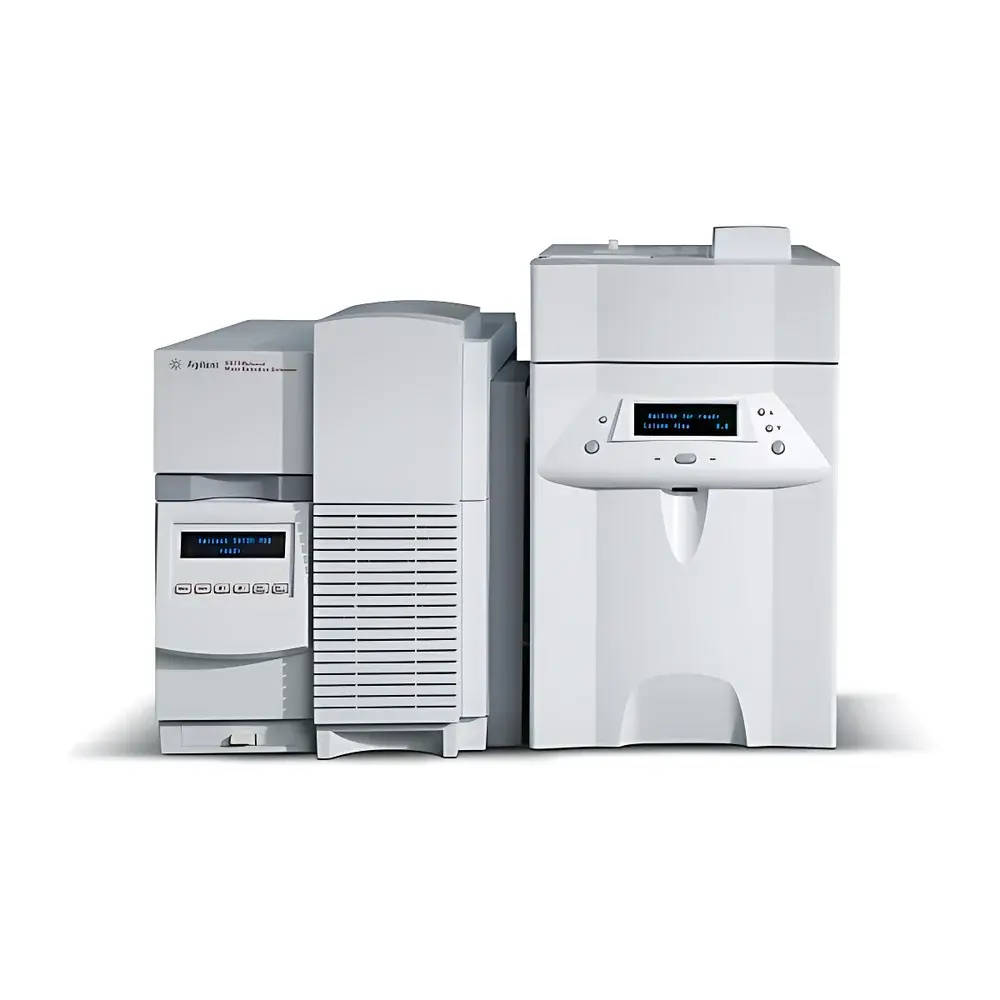
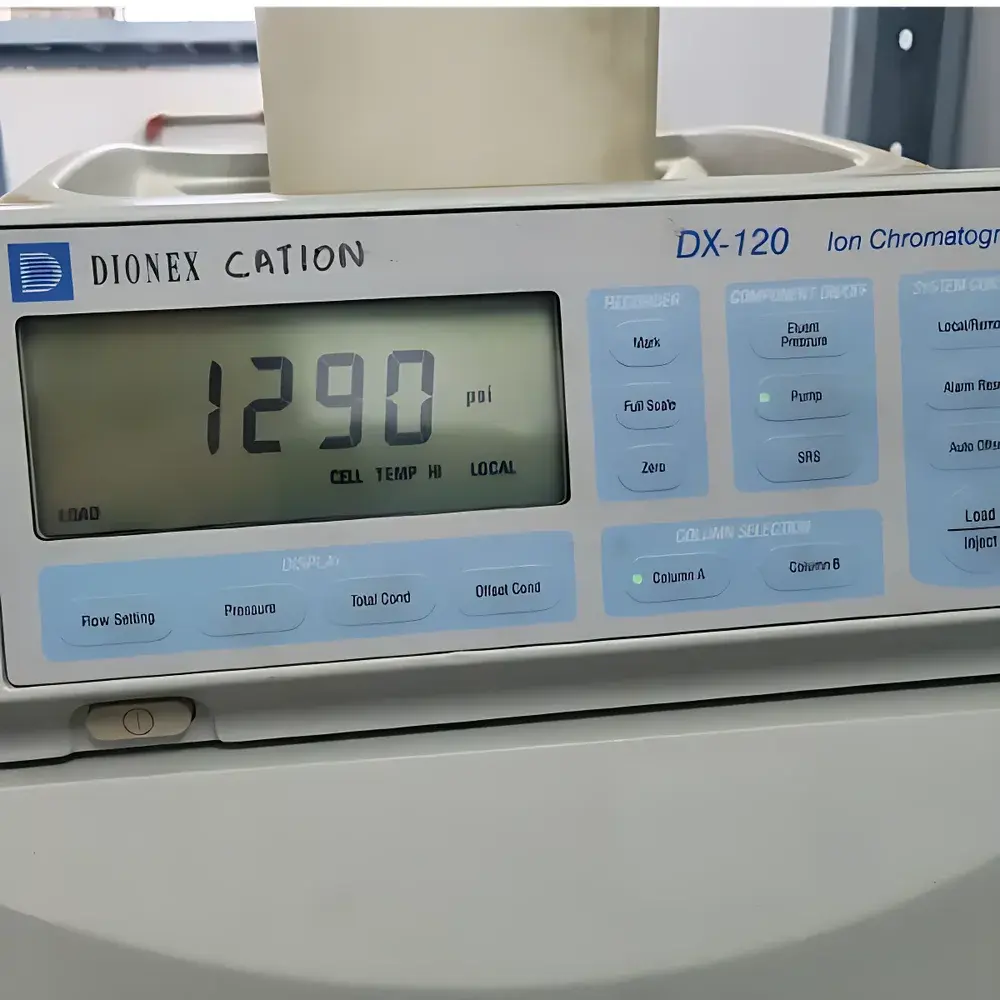
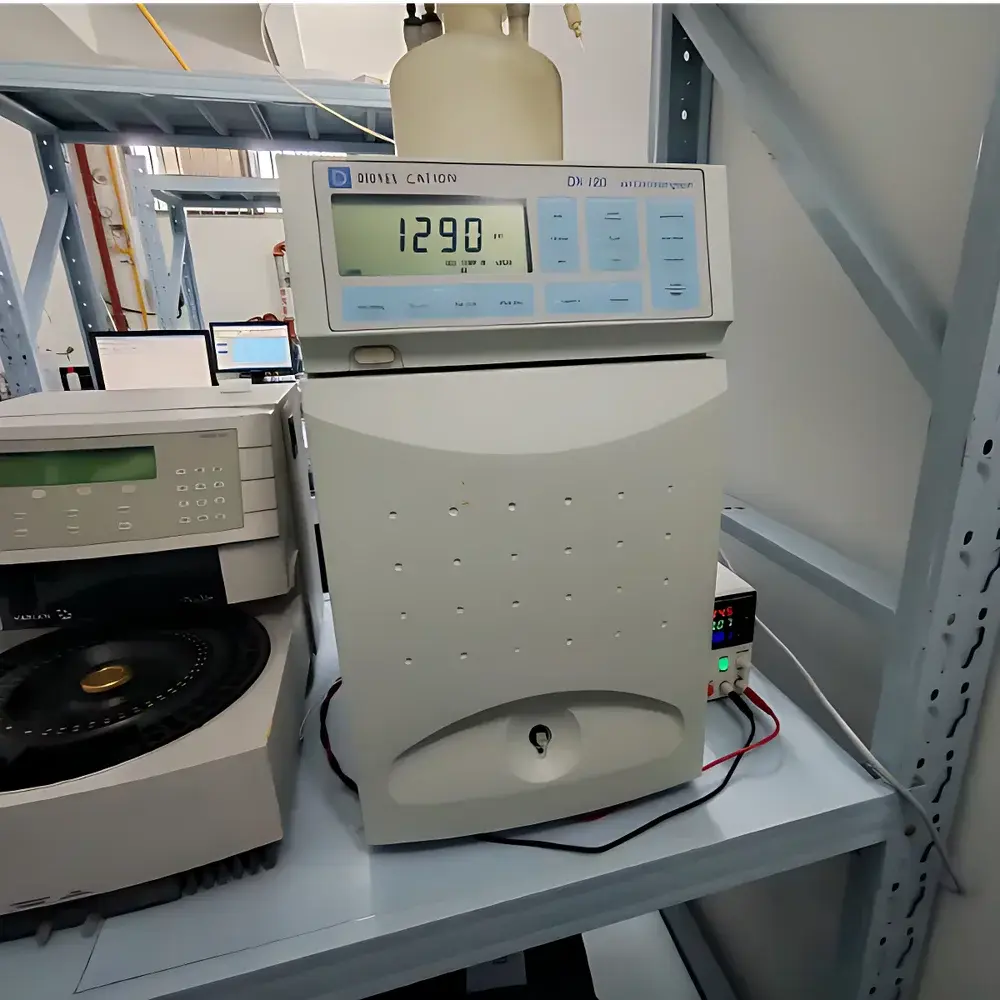
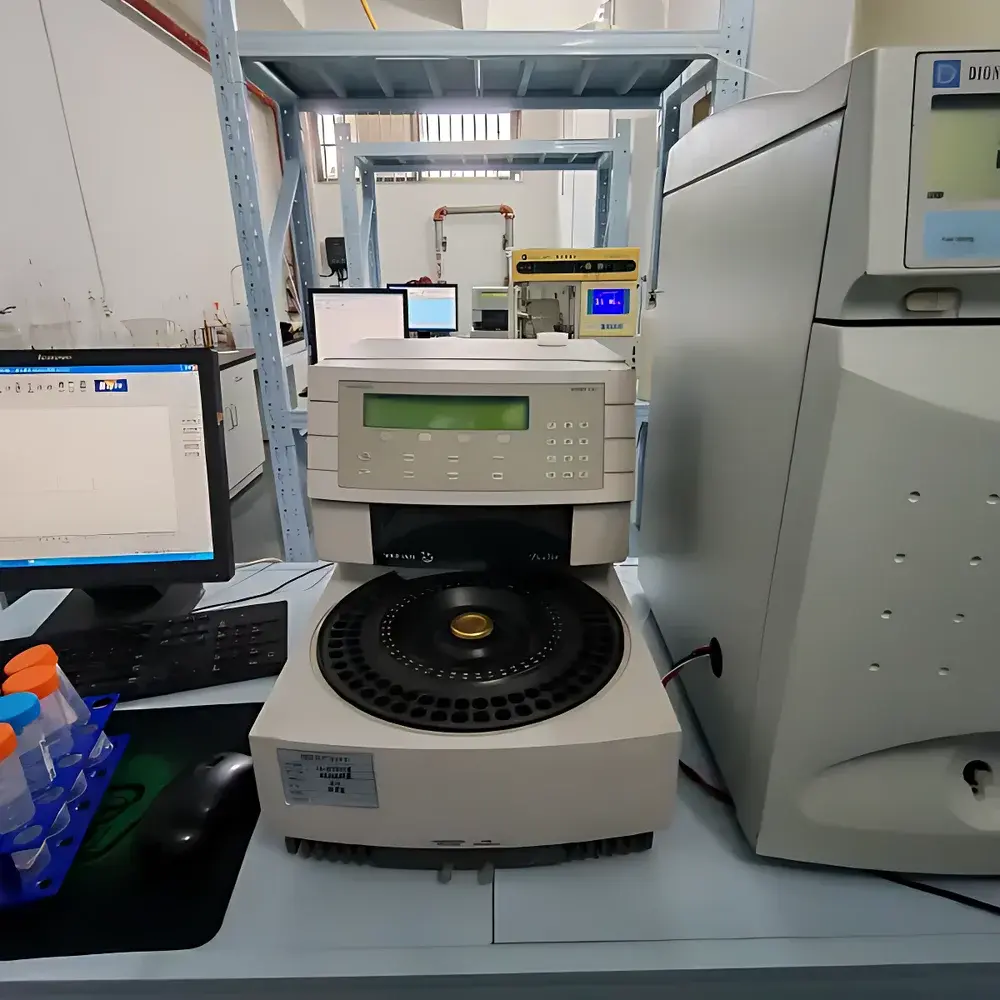
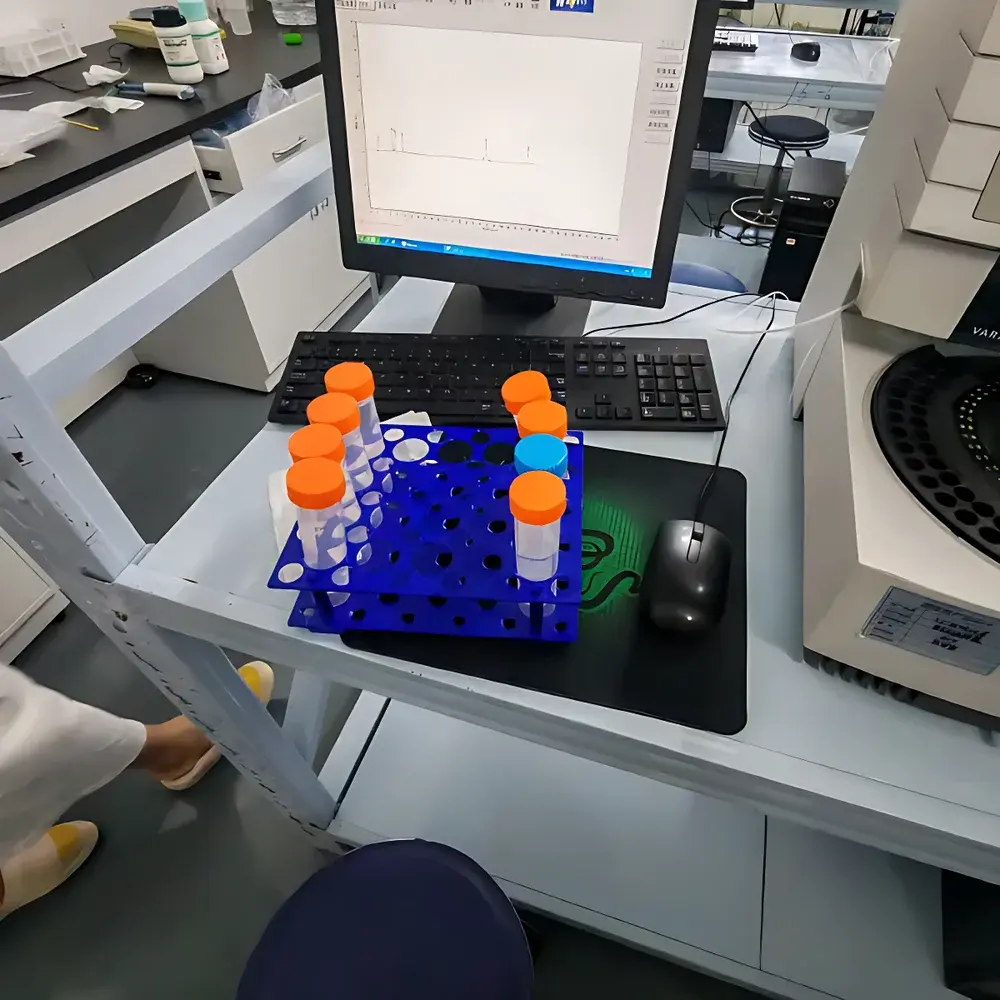
Dionex DX-120 Ion Chromatograph (Refurbished, 90% Condition)
| Brand | Dionex |
|---|---|
| Origin | USA |
| Manufacturer Type | Authorized Distributor |
| Origin Category | Imported |
| Model | DX-120 |
| Instrument Age | >10 Years |
| Pump Flow Rate | 0.5–4.0 mL/min |
| Max Pump Pressure | 4000 psi (27.5 MPa) |
| Conductivity Detector Range | 0–1700 µS |
| Temperature Compensation | 1.5–1.9%/°C |
| Detector Cell Volume | 1.25 µL |
| Operating Temperature | 10–40°C |
| Dimensions (H×W×L) | 60 × 30 × 40 cm |
| Weight | ~40 kg |
| Power Input | 100 V/50 Hz, 115 V/60 Hz, or 220–240 V/50 Hz |
Overview
The Dionex DX-120 Ion Chromatograph is a robust, benchtop anion and cation analysis system engineered for high reproducibility in routine environmental, industrial, and quality control laboratories. Based on suppressed conductivity detection and high-pressure eluent delivery, the DX-120 implements classical ion exchange chromatography principles—separating ionic species via selective retention on packed analytical columns (e.g., AS14, CS12), followed by post-column suppression to enhance sensitivity and reduce background conductivity. Its single-piston reciprocating pump delivers precise, pulse-free flow across a wide range (0.5–4.0 mL/min) at pressures up to 4000 psi (27.5 MPa), enabling compatibility with both standard and high-efficiency columns. Designed for operational longevity, the system maintains stable baseline performance under ambient lab conditions (10–40°C), with functional operation verified down to 4°C—supporting cold-room workflows where sample integrity is critical.
Key Features
- Single-piston reciprocating pump with constant-volume flow control and pressure monitoring for consistent eluent delivery
- Temperature-compensated conductivity detector (0–1700 µS full scale) featuring a low-dead-volume cell (1.25 µL) optimized for high-resolution peak detection
- Dual-column capability with integrated eluent selection valve, supporting method flexibility for anion/cation switching and simple gradient elution
- High-salt tolerance configuration validated for direct analysis of samples containing phosphate concentrations up to 500 mg/kg—reducing need for dilution or pre-treatment
- Stainless steel 316 wetted components throughout the flow path, including detector electrodes and fluidic manifolds, ensuring chemical resistance to aggressive matrices
- Modular architecture accommodating optional accessories: autosamplers (e.g., AS40), electrolytic eluent generators (EG40), and membrane suppressors (e.g., ASRS 300)
Sample Compatibility & Compliance
The DX-120 is routinely deployed for trace-level quantification of common inorganic ions—including F⁻, Cl⁻, NO₂⁻, Br⁻, NO₃⁻, PO₄³⁻, SO₄²⁻, Na⁺, NH₄⁺, K⁺, Mg²⁺, and Ca²⁺—in water, wastewater, food extracts, and pharmaceutical formulations. Detection limits typically fall within the low-ppt to sub-ppb range when coupled with appropriate column chemistry and suppression. The system supports compliance with widely referenced regulatory methods, including EPA Methods 300.0, 300.1, and 317.0 for drinking water analysis; ISO 10304-1 for water quality; and ASTM D4327 for anion determination. While the instrument itself does not include built-in 21 CFR Part 11 audit trail functionality, its data acquisition environment (when paired with legacy Chromeleon 6.x or compatible third-party software) can be configured to meet GLP/GMP documentation requirements through external validation protocols and controlled user access.
Software & Data Management
Data acquisition and processing are performed using Thermo Fisher Scientific’s Chromeleon Chromatography Data System (CDS), version 6.8 or earlier—compatible with Windows XP/7 platforms. Chromeleon provides full instrument control, sequence management, peak integration, calibration curve generation (linear, quadratic, or weighted), and report export in PDF, CSV, or XML formats. Raw data files (.chm) retain full detector signal fidelity and are timestamped with acquisition metadata. For labs requiring electronic record integrity, Chromeleon installations may be qualified per internal SOPs to support audit-ready workflows—including user logins, method versioning, and electronic signature capture—though native digital signature enforcement requires supplementary IT infrastructure.
Applications
- Environmental monitoring: Routine analysis of surface water, groundwater, and effluent for regulatory reporting under national water quality standards
- Pharmaceutical QC: Quantification of counterions (e.g., Cl⁻, Na⁺) in active pharmaceutical ingredients and excipients per USP <645> and EP 2.2.38
- Food & beverage testing: Determination of preservative anions (e.g., nitrite, benzoate) and mineral cations in dairy, beverages, and processed foods
- Power generation: Monitoring of chloride and sulfate ingress in boiler feedwater and steam condensate to prevent corrosion
- Academic research: Method development for novel ion-selective columns and suppression chemistries, leveraging the system’s open fluidic architecture
FAQ
Is the DX-120 compatible with modern operating systems such as Windows 10 or 11?
Chromeleon 6.x is officially unsupported on Windows 10/11; operation requires virtualization (e.g., Windows 7 VM) or legacy hardware. Thermo Fisher does not provide updated drivers for native OS compatibility.
What suppressor types are supported with this model?
The DX-120 accepts both chemical (e.g., ASRS-Ultra II) and electrolytic (e.g., ASRS 300) suppressors via standard 1/16″ PEEK tubing interfaces and compatible power modules.
Does the unit include an autosampler?
This refurbished unit is offered in base configuration; autosampler inclusion must be confirmed separately with the supplier, as original AS40 or AS50 units vary in firmware revision and mechanical wear.
Can the system perform gradient elution?
Yes—via the built-in eluent selection valve, enabling step-gradient or dual-eluent isocratic methods; continuous gradients require external mixing modules not natively integrated.
What maintenance intervals are recommended for long-term reliability?
Seal kits (pump, injector, suppressor) should be replaced every 6–12 months depending on usage frequency; detector cell electrodes require periodic passivation and visual inspection for pitting or deposition.
Related Products