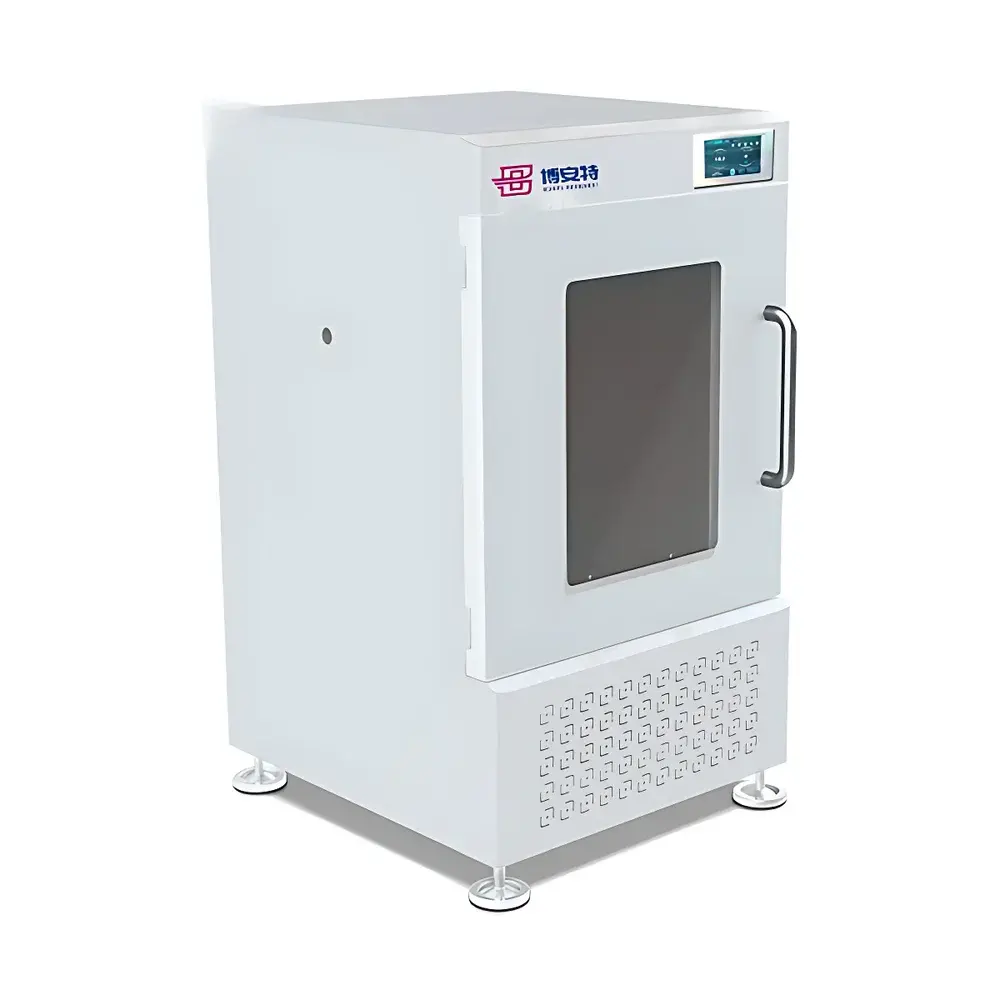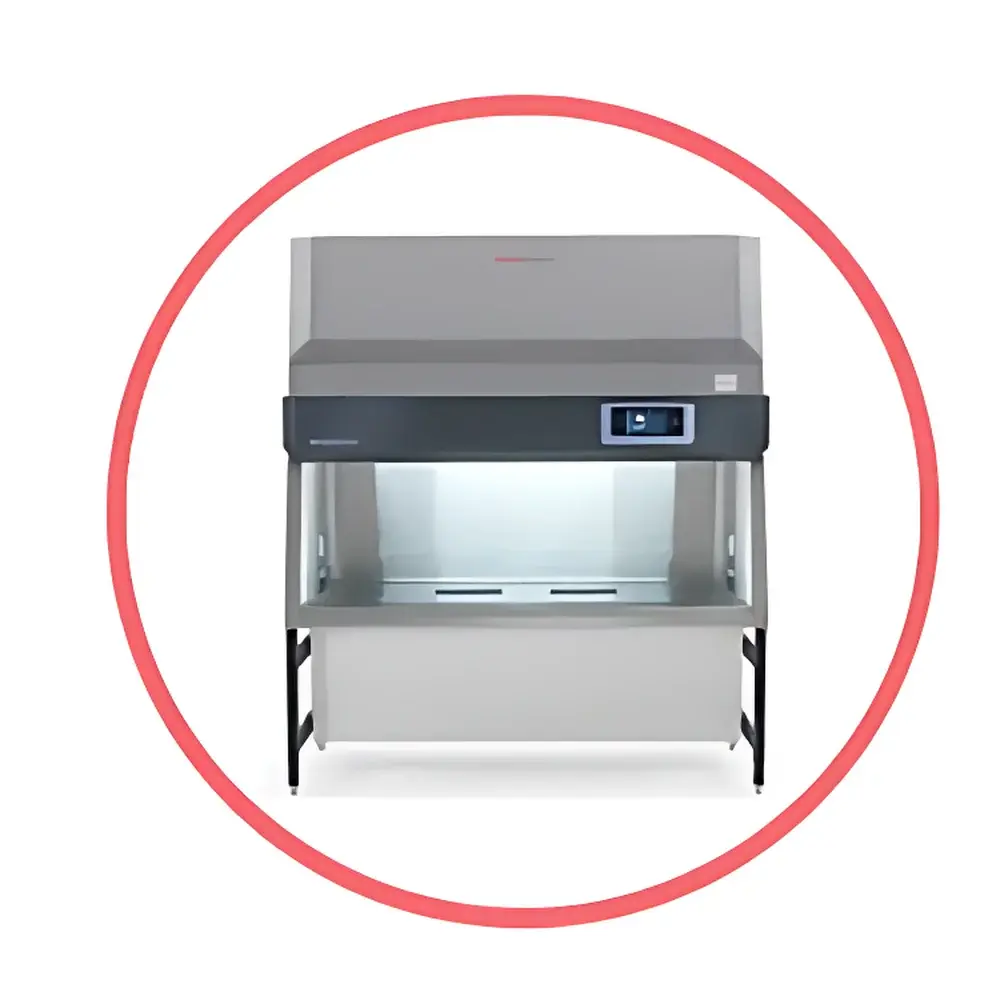
Thermo Scientific Maxisafe™ 2030i Class II Biological Safety Cabinet
| Brand | Thermo Scientific |
|---|---|
| Origin | USA |
| Manufacturer Type | Original Equipment Manufacturer (OEM) |
| Product Category | Imported Instrument |
| Model | Maxisafe™ 2030i |
| Instrument Class | Class II Biological Safety Cabinet |
| Dimensions (L×W×H) | 870 × 1900 × 1536 mm |
Overview
The Thermo Scientific Maxisafe™ 2030i is a certified Class II, Type A2 biological safety cabinet engineered for high-integrity containment of biological agents, cytotoxic compounds, and low-to-moderate risk chemical vapors. It operates on the principle of inward airflow (personnel protection), downward laminar airflow (product protection), and recirculated/externally exhausted air (cross-contamination control), conforming to EN 12469:2006 and independently verified to DIN 12980:2021 — the stringent German standard for cabinets handling cytostatic and cytotoxic substances. Its triple-filter configuration comprises a prefilter, a primary HEPA filter (H14, ≥99.995% @ 0.1 µm), and a secondary exhaust HEPA or carbon-impregnated filter, delivering cumulative particulate retention performance exceeding that of conventional Class II cabinets by a factor of 10⁵. The cabinet’s negative-pressure work chamber enables safe, bag-in/bag-out (BIBO) filter replacement without exposure to contaminated surfaces — a critical requirement for GLP-compliant laboratories and oncology research facilities.
Key Features
- Intelligent dual DC brushless motor system continuously monitors inflow and downflow velocities in real time, dynamically adjusting fan speed to maintain ISO 14644-1 Class 5 (ISO Class 5) laminar flow integrity under variable load and sash position conditions.
- Motorized, push-button sash control with programmable stop positions ensures compliance with regulatory sash height requirements (e.g., 200 mm for routine operation per EN 12469); full-hinge sash design permits 180° opening for unrestricted access during decontamination and equipment servicing.
- Work surface and interior chamber fabricated from electropolished 316L stainless steel — offering superior resistance to pitting corrosion, chloride-induced stress cracking, and aggressive disinfectants including 70% ethanol, hydrogen peroxide vapor (HPV), and sodium hypochlorite solutions.
- Integrated UV-C lamp with automatic exposure time calibration based on sensor-measured intensity decay, ensuring consistent microbial inactivation (≥3-log reduction of Bacillus atrophaeus spores) across operational cycles.
- Transparent side panels constructed from tempered, anti-static acrylic enhance ambient illumination within the work area while maintaining structural rigidity and optical clarity compliant with IEC 61000-4-3 immunity standards.
- User-accessible front-panel USB 2.0 port supports secure export of audit logs, airflow history, UV exposure records, and sash position timestamps — compatible with laboratory information management systems (LIMS) and electronic lab notebooks (ELN).
Sample Compatibility & Compliance
The Maxisafe™ 2030i is validated for use with biosafety level (BSL)-1, BSL-2, and select BSL-2+ agents requiring enhanced containment (e.g., lentiviral vectors, replication-deficient adenoviruses). Its DIN 12980 certification confirms suitability for handling cytotoxic drugs under EU GMP Annex 1 (2022) and USP hazardous drug compounding guidelines. All airflow performance data are traceable to NIST-calibrated anemometers and documented per ISO/IEC 17025-accredited test protocols. The cabinet meets electromagnetic compatibility (EMC) requirements per EN 61326-1 and electrical safety standards per EN 61010-1.
Software & Data Management
Embedded firmware supports multi-level user authentication via role-based password protection (administrator, technician, operator), restricting access to calibration, service mode, and parameter modification functions. Audit trails record all critical events — including sash movement, UV activation/deactivation, airflow deviations >±10%, and filter life estimation — with tamper-resistant timestamps aligned to UTC. Data export complies with FDA 21 CFR Part 11 requirements for electronic records and signatures when integrated with validated third-party LIMS platforms.
Applications
- Cell culture maintenance and transfection workflows involving viral vectors and CRISPR-Cas9 reagents
- Preparation and dispensing of sterile pharmaceutical intermediates under aseptic conditions
- Hazardous drug compounding in hospital pharmacies per USP and
- Molecular diagnostics sample processing for PCR, NGS library prep, and RNA extraction
- GLP-regulated toxicology studies involving genotoxic compounds
- Biomanufacturing support activities including media preparation and filter integrity testing
FAQ
What certifications does the Maxisafe™ 2030i hold beyond EN 12469?
It carries independent third-party verification to DIN 12980:2021 for cytotoxic substance handling and conforms to ISO 14644-1 Class 5 for cleanroom-compatible airflow performance.
Can the cabinet be integrated into a building’s exhaust system?
Yes — it supports both hard-ducted and thimble-connected exhaust configurations with automatic static pressure compensation to maintain stable inflow velocity across variable duct backpressure.
Is the UV lamp cycle programmable?
UV exposure duration is automatically adjusted based on real-time irradiance measurement; manual override and fixed-timer modes are available in technician mode.
How often must the HEPA filters be replaced?
Filter service intervals are calculated dynamically using differential pressure monitoring and cumulative runtime; typical replacement occurs every 3–5 years depending on usage intensity and environmental particulate load.
Does the cabinet support remote monitoring via Ethernet or Wi-Fi?
Standard configuration includes RS-485 Modbus RTU output; optional Ethernet/IP module enables integration with facility SCADA systems and centralized HVAC monitoring platforms.