
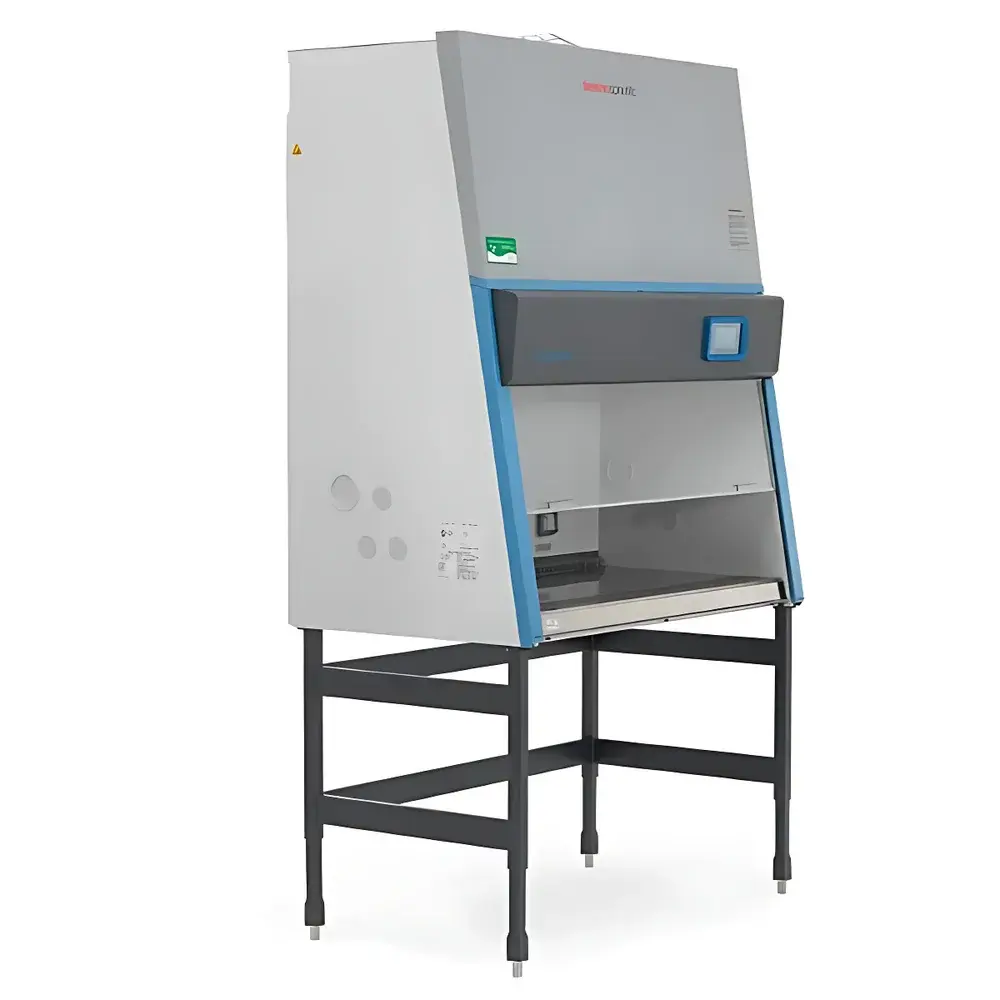
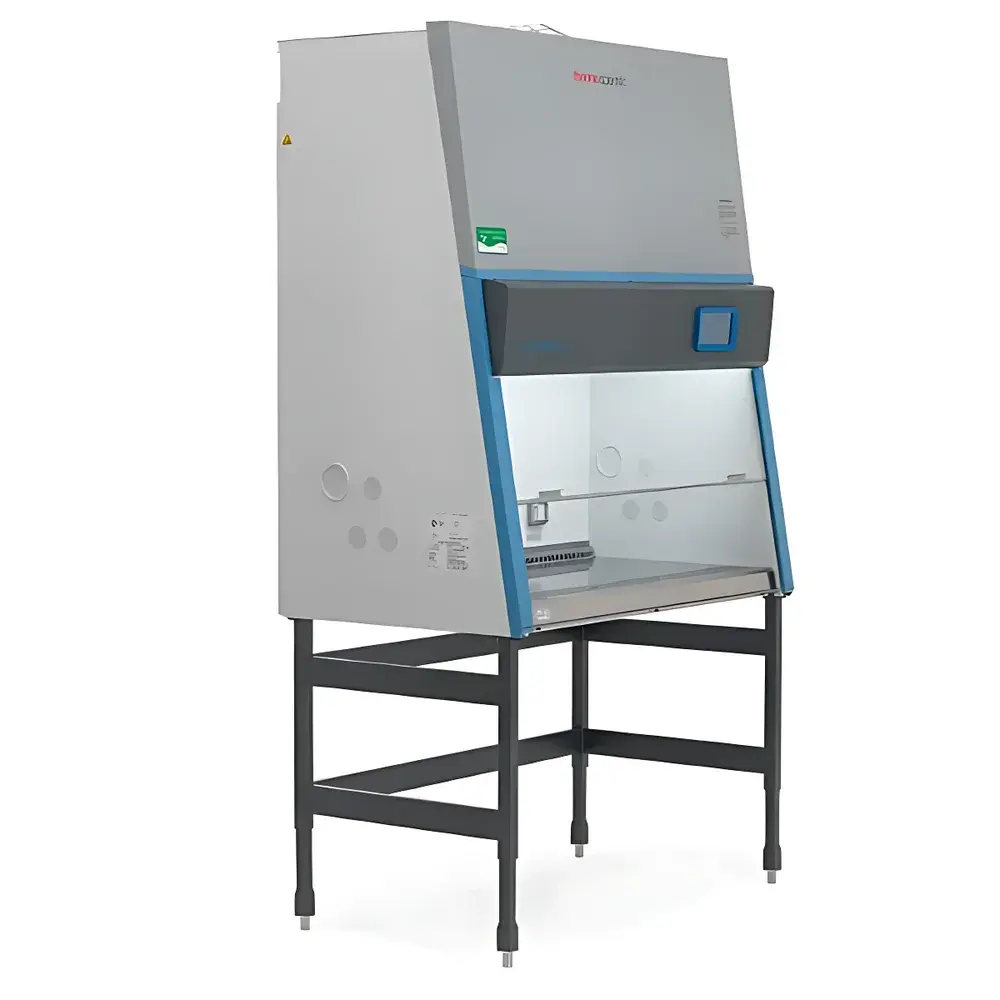
Thermo Scientific™ 1500 Series Biological Safety Cabinet (Domestically Manufactured in Shanghai)
| Brand | Thermo Fisher Scientific |
|---|---|
| Origin | Shanghai, China |
| Manufacturer Type | Authorized Distributor |
| Origin Classification | Domestically Produced |
| Model | Thermo Scientific™ 1500 Series Biological Safety Cabinet (Domestically Manufactured in Shanghai) |
| Pricing | Available Upon Request |
Overview
The Thermo Scientific™ 1500 Series Biological Safety Cabinet (BSC) is a Class II, Type A2 or B2 cabinet engineered for precision containment and personnel protection in biosafety Level 1–3 laboratories. Designed and validated to meet the stringent requirements of NSF/ANSI 49 (2022), EN 12469:2022, and AS 2252.2–2017, this domestically manufactured unit delivers consistent laminar airflow, certified HEPA filtration (≥99.995% @ 0.3 µm), and integrated airflow monitoring to ensure reliable protection of operators, products, and the environment. Its dual-mode operation—recirculating 70% of air internally (A2) or exhausting 100% externally (B2)—supports diverse workflows including molecular biology, cell culture, clinical diagnostics, and handling of low-to-moderate risk biological agents. The cabinet employs a robust aerodynamic architecture based on the principle of inward inflow velocity (≥0.5 m/s at work opening), downward downflow (≥0.3 m/s), and balanced exhaust-to-inflow ratios—critical for maintaining containment integrity during routine operations and transient events such as door movement or equipment insertion.
Key Features
- Class II, Type A2 or B2 configuration with independent certification per NSF/ANSI 49 and EN 12469
- Dual HEPA filtration system: supply air filtered via pre-filter + main HEPA; exhaust air processed through secondary HEPA (A2) or dedicated ducted exhaust (B2)
- Real-time digital airflow monitoring with audible/visual alarms for inflow velocity deviation, filter saturation, or loss of containment margin
- Integrated UV germicidal lamp with safety interlock and timer-controlled activation
- Ergonomic sash design with counterbalanced vertical lift mechanism and microprocessor-controlled sash position memory
- Stainless steel work surface and interior chamber with seamless welded corners for decontamination compatibility (e.g., vaporized hydrogen peroxide or formaldehyde)
- Compliance-ready architecture supporting GLP/GMP documentation requirements, including audit trails for alarm events and operational logs
Sample Compatibility & Compliance
The 1500 Series accommodates standard laboratory equipment up to 150 mm in height beneath the sash, including centrifuges, pipetting stations, and small incubators. It supports safe handling of Risk Group 1–2 biological agents (per WHO and CDC classifications), select CMR substances (carcinogenic, mutagenic, reprotoxic), and low-volatility chemical compounds when used with appropriate exhaust integration. All units undergo third-party performance verification prior to shipment—including face velocity mapping, smoke pattern visualization, particle challenge testing (using PAO or DOP aerosols), and containment validation via potassium iodide (KI) or microbial tracer methods. Regulatory alignment includes full adherence to ISO 14644-1 (cleanroom classification), IEC 61010-1 (safety of lab equipment), IEC 61326-1 (EMC), and RoHS Directive (EU) 2015/863 amending 2011/65/EU.
Software & Data Management
While the 1500 Series operates via embedded microcontroller-based logic (no PC-dependent software), it provides comprehensive data logging capabilities compliant with FDA 21 CFR Part 11 principles. Operational parameters—including sash position, inflow velocity, total run time, alarm history, and filter usage hours—are timestamped and stored locally for ≥12 months. Optional RS-485 or Ethernet interface enables integration into centralized laboratory infrastructure management systems (LIMS or BMS) for remote status monitoring and automated report generation. Audit trail functionality records all user-initiated actions (e.g., sash adjustment, UV activation, alarm acknowledgment) with immutable timestamps and operator ID assignment where configured.
Applications
- Cell culture and transfection procedures requiring sterile product protection
- Molecular cloning, plasmid preparation, and nucleic acid extraction under containment
- Clinical microbiology workflows involving pathogen isolation and identification
- Pharmaceutical QC testing of sterile products and environmental monitoring samples
- Handling of genetically modified organisms (GMOs) and recombinant DNA materials per national biosafety guidelines
- Training environments where reproducible containment behavior and intuitive ergonomics support novice operator competency development
FAQ
Is the Thermo Scientific™ 1500 Series certified to NSF/ANSI 49?
Yes—each unit is independently verified by an accredited third-party testing laboratory against NSF/ANSI 49-2022, including dynamic containment testing, airflow uniformity assessment, and structural integrity evaluation.
Can this cabinet be installed without external ducting?
Type A2 configurations support recirculation mode with optional canopy or hard-ducted exhaust; Type B2 models require dedicated 100% external exhaust and cannot operate in recirculation mode.
What maintenance intervals are recommended for HEPA filters?
Supply and exhaust HEPA filters should be tested annually per ISO 14644-3 and replaced based on pressure differential rise (>20% above baseline) or particle challenge failure—not on fixed calendar schedules.
Does the cabinet support integration with building management systems?
Yes—via optional serial or Ethernet communication modules enabling real-time status transmission, alarm forwarding, and centralized log aggregation in compliance with ISO/IEC 17025 documentation requirements.
Related Products




