
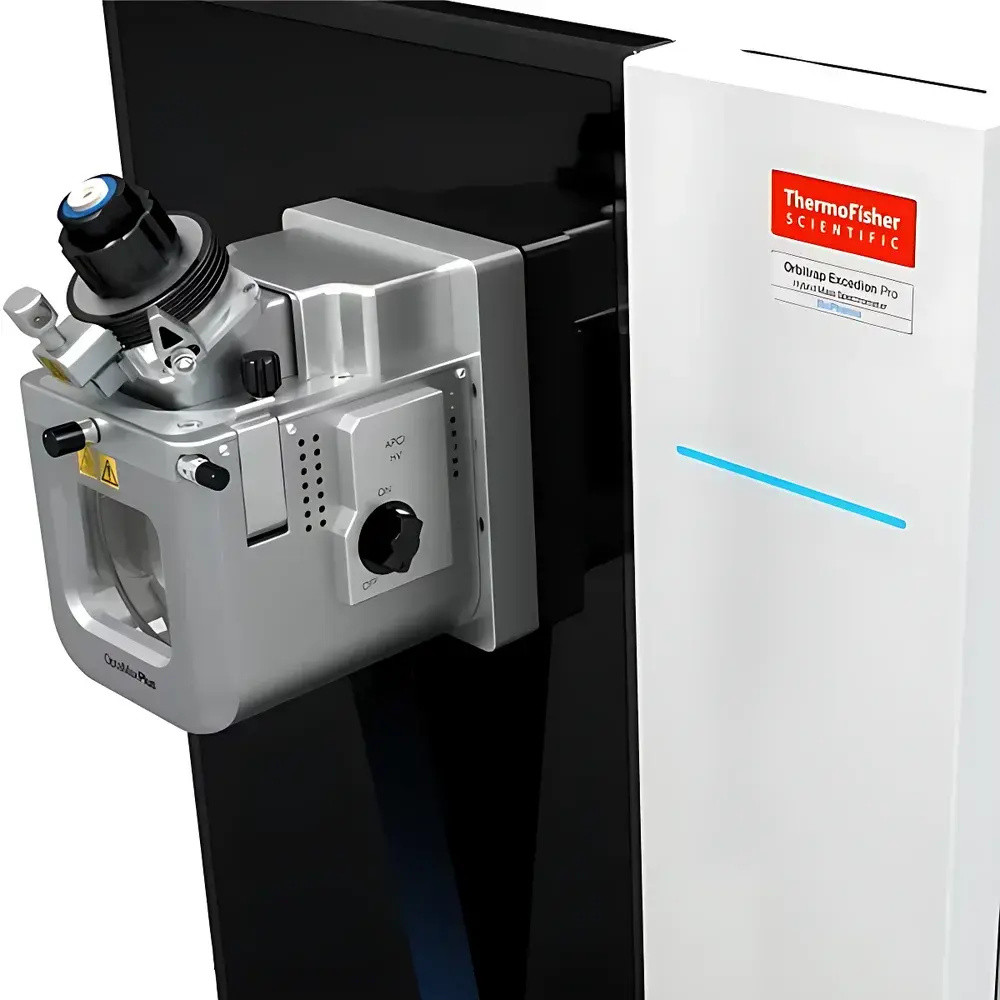
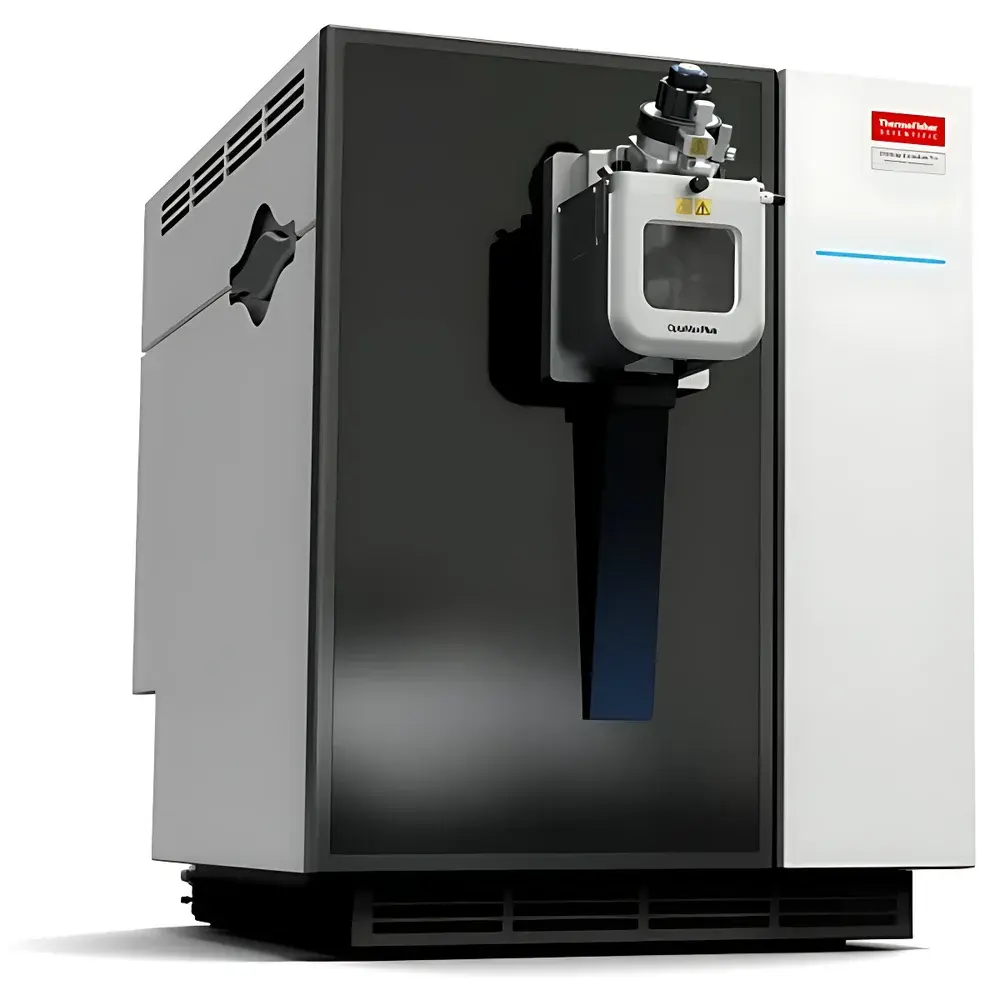
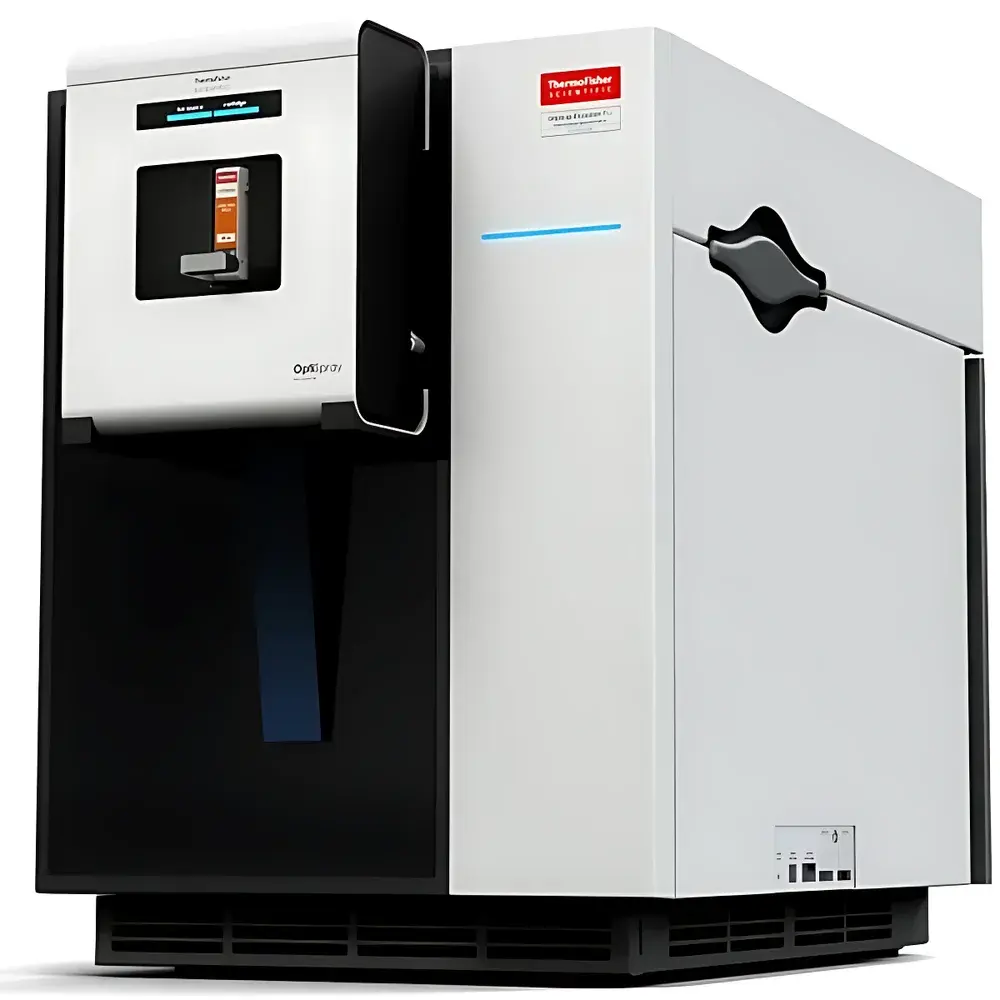
Thermo Fisher Orbitrap Excedion Pro Mass Spectrometer with EASY
| Brand | Thermo Fisher |
|---|---|
| Origin | Shanghai, China |
| Manufacturer Type | Authorized Distributor |
| Product Origin | Domestic (China) |
| Model | Orbitrap Excedion Pro Mass Spectrometer with EASY |
| Pricing | Available upon Request |
Overview
The Thermo Fisher Orbitrap Excedion Pro Mass Spectrometer with EASY is a high-performance, ultra-high-resolution hybrid mass spectrometer engineered for next-generation proteomics, biopharmaceutical characterization, and comprehensive metabolomics/lipidomics workflows. At its core lies an enhanced Orbitrap mass analyzer—featuring improved ion trapping efficiency, optimized electric field geometry, and advanced signal processing algorithms—that delivers routinely achieved mass resolution up to 500,000 FWHM at m/z 200, with sub-ppm mass accuracy under standard calibration conditions. Coupled with a dual-pressure linear ion trap and integrated EASY-nLC nano-flow liquid chromatography system, the platform supports data-dependent acquisition (DDA), data-independent acquisition (DIA), and targeted parallel reaction monitoring (PRM) modes. Its measurement principle relies on electrostatic ion trapping followed by Fourier-transform detection of image current oscillations, enabling simultaneous high mass accuracy, high resolution, and quantitative reproducibility across diverse biological matrices.
Key Features
- Enhanced Orbitrap technology with improved ion transmission optics and faster transient acquisition, enabling scan rates up to 20 Hz in full MS mode without compromising resolution or sensitivity.
- Extended dynamic range scanning (eDR) mode—capable of detecting analytes spanning five orders of magnitude in a single acquisition—optimized for deep proteome profiling and low-abundance PTM identification.
- Multi-modal fragmentation support: HCD (higher-energy collisional dissociation), optional ETD (electron-transfer dissociation), and EThcD (electron-transfer/higher-energy collision dissociation), facilitating complementary sequence coverage and confident localization of labile post-translational modifications.
- Electrically driven ion funnel design minimizes in-source fragmentation of thermally labile metabolites and lipids, preserving structural integrity during ionization and improving precursor signal-to-noise ratios.
- Native and denatured intact protein analysis capability with reliable mass measurement up to m/z 12,000, supporting charge state deconvolution and higher-order structure assessment in biopharmaceutical development.
- Integrated EASY-nLC system with nanoflow gradient delivery, low dead volume interconnects, and real-time pressure monitoring ensures robust chromatographic reproducibility and minimal carryover.
Sample Compatibility & Compliance
The Orbitrap Excedion Pro accommodates a broad range of sample types—including complex cell lysates, purified monoclonal antibodies, plasma-derived exosomes, tissue homogenates, and polar/non-polar metabolite extracts—across both bottom-up and top-down proteomics, as well as untargeted and targeted metabolomics applications. It complies with internationally recognized analytical validation frameworks, including ISO/IEC 17025 requirements for testing laboratories and supports audit-ready operation under GLP and GMP environments. Data integrity features align with FDA 21 CFR Part 11 requirements, including electronic signature support, user access control, and immutable audit trails for method parameters, acquisition logs, and raw data handling.
Software & Data Management
Instrument control and data acquisition are managed via Thermo Scientific™ Compound Discoverer™ and Proteome Discoverer™ 3.0 software suites, which provide end-to-end workflow automation—from peak detection and alignment to spectral library searching, quantification (including TMTpro™ 32-plex support), and statistical analysis. All raw files adhere to the open mzML format, ensuring compatibility with third-party tools such as MaxQuant, FragPipe, and Skyline. The system supports centralized data storage through Thermo Scientific™ Chromeleon™ Chromatography Data System (CDS) integration and enables secure, role-based access within enterprise network environments.
Applications
- Deep proteome profiling with enhanced detection of low-abundance proteins and site-specific PTMs (e.g., phosphorylation, ubiquitination, glycosylation).
- Intact mass analysis of therapeutic proteins under native and denatured conditions, supporting comparability studies and biosimilarity assessments.
- Structural characterization of lipid isomers and regioisomers using retention time–mass correlation and diagnostic fragment ion filtering.
- Untargeted metabolite identification in biofluids with improved coverage of polar metabolites (e.g., nucleotides, organic acids) and reduced matrix suppression effects.
- High-throughput biomarker discovery in clinical cohorts using multiplexed isobaric labeling strategies and large-scale DIA libraries.
FAQ
What is the maximum m/z range supported for intact protein analysis?
The system reliably measures intact proteins up to m/z 12,000 under optimized denatured conditions, with charge state deconvolution enabled via built-in algorithms in Proteome Discoverer.
Does the platform support regulatory-compliant data handling for pharmaceutical submissions?
Yes—it supports 21 CFR Part 11 compliance through electronic signatures, audit trail logging, and secure user authentication when configured with Chromeleon CDS or Thermo Scientific™ TraceFinder™ software.
Can the instrument perform both DDA and DIA acquisitions in a single run?
While DDA and DIA are distinct acquisition strategies, the Excedion Pro allows method-defined switching between them within a single LC-MS sequence, enabling hybrid experimental designs.
Is ETD hardware included as standard or optional?
ETD functionality is available as a configurable option; users may select ETD-enabled configurations at time of order or upgrade existing systems via authorized service channels.
How does eDR scanning improve metabolite detection in complex biological matrices?
eDR dynamically adjusts AGC target values and maximum injection times per scan cycle, maintaining optimal signal intensity for both high- and low-abundance precursors—effectively extending detectable concentration ranges by one full order of magnitude in heterogeneous samples.




