
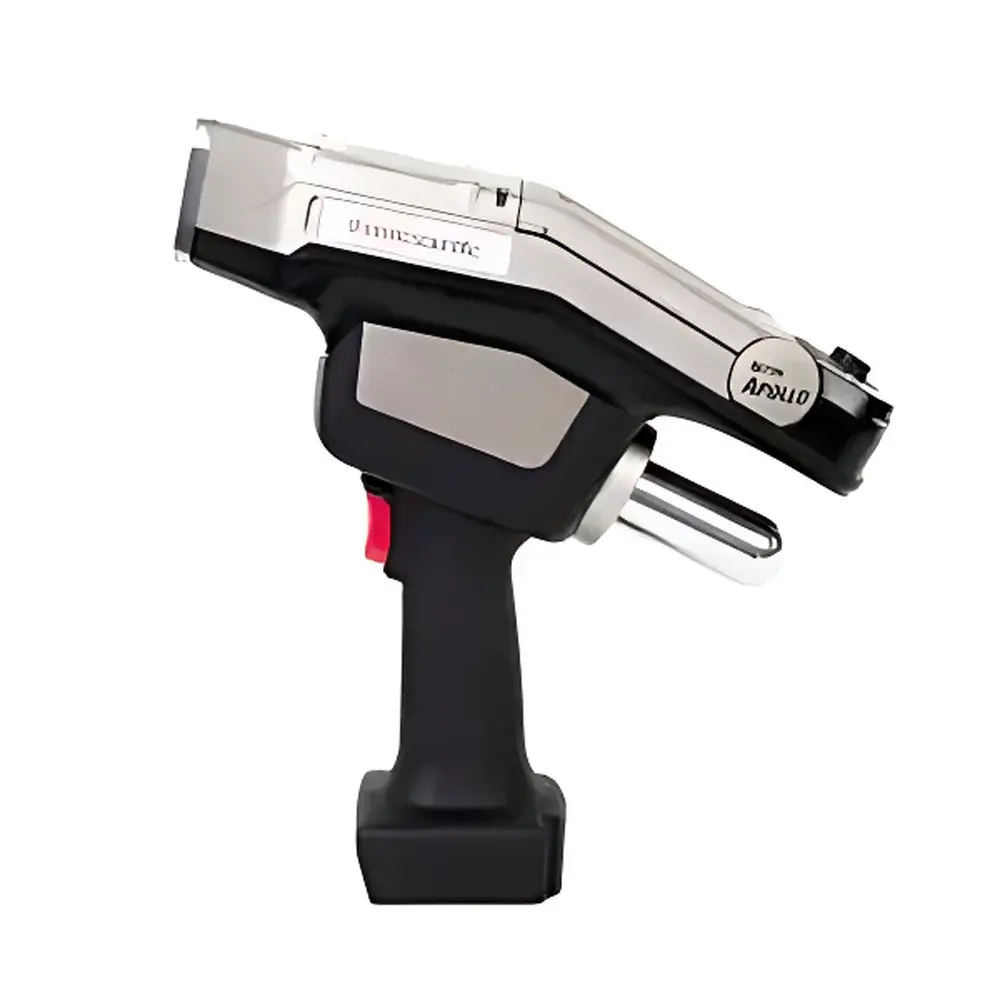
Thermo Scientific Niton Apollo LIBS Analyzer
| Brand | Thermo Scientific |
|---|---|
| Origin | USA |
| Manufacturer Type | Manufacturer |
| Origin Category | Imported |
| Model | Niton Apollo LIBS |
| Instrument Type | Handheld |
| Integration | Integrated |
Overview
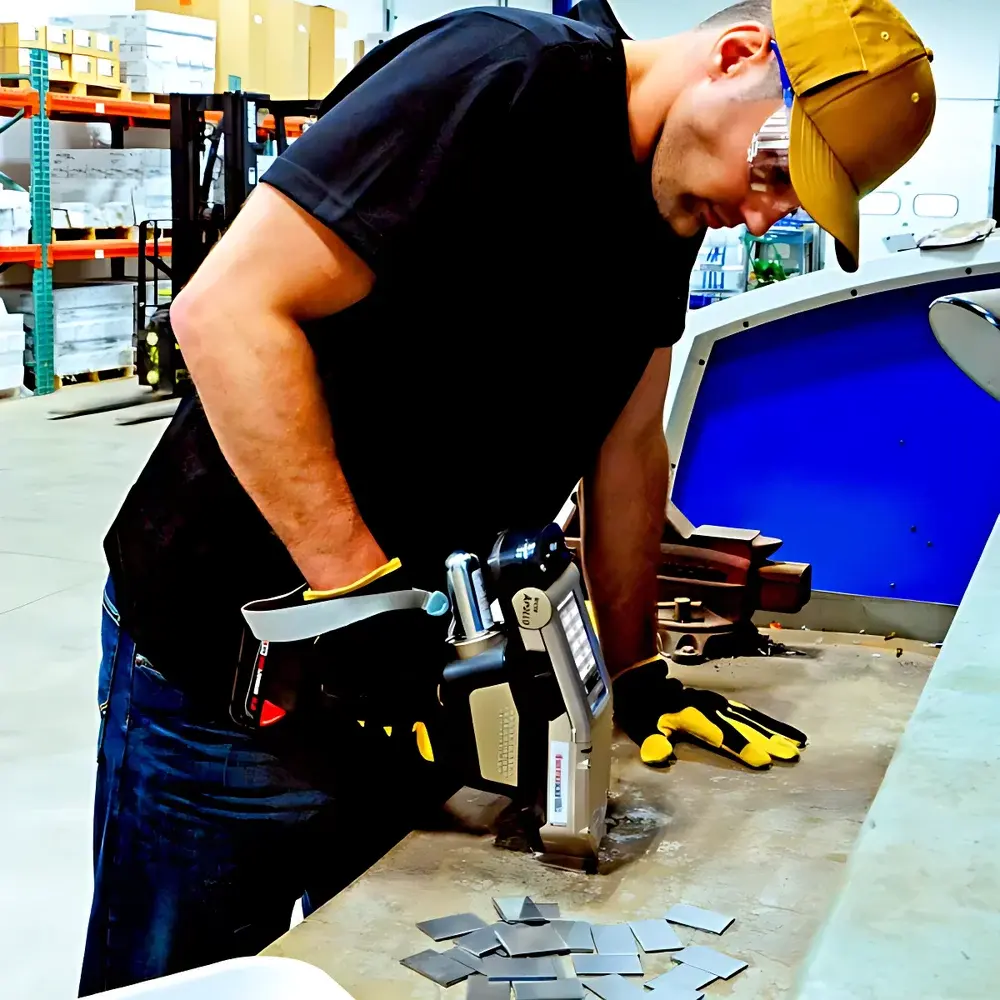
The Thermo Scientific Niton Apollo LIBS Analyzer is a handheld, field-deployable laser-induced breakdown spectroscopy (LIBS) instrument engineered for rapid, in-situ elemental analysis—particularly optimized for carbon and light-element quantification in metallic alloys. Unlike traditional optical emission spectroscopy (OES) systems requiring argon purging via external gas cylinders or fixed laboratory setups, the Niton Apollo integrates a high-repetition-rate pulsed laser, on-board high-purity argon purge delivery, and a compact echelle spectrometer into a single ergonomic platform. Its core measurement principle relies on laser ablation of a micro-volume of sample surface (typically <100 µm crater diameter), generating a transient plasma whose emitted atomic/ionic line spectra are resolved across 190–850 nm with sub-nanometer spectral resolution. This enables simultaneous detection of C, Si, Mn, Cr, Ni, Mo, V, Cu, Al, and other key alloying and trace elements at detection limits ranging from 10–100 ppm for most metals—validated per ASTM E2926-22 (Standard Test Method for Determination of Carbon in Steel by LIBS). Designed for industrial environments—from refinery piping to fabrication yards—the Niton Apollo delivers lab-grade analytical confidence directly at the point of need.
Key Features
- Handheld form factor weighing only 2.9 kg (6.4 lbs), enabling access to confined spaces, overhead welds, and vertical pipe interiors without scaffolding or equipment repositioning.
- Cone-shaped probe nose with integrated macro/micro dual-camera system for precise targeting, real-time visual alignment, and image-annotated spectral data capture.
- On-demand argon purge with regulated flow control ensures consistent plasma stability and minimizes atmospheric nitrogen/oxygen interference—critical for accurate carbon quantification below 0.10 wt%.
- Hot-swappable Milwaukee® Li-ion battery system supports continuous operation during shift changes; battery status and remaining runtime displayed in real time.
- Triple-redundant laser safety interlock architecture: chamber pressure monitoring, spectral signature validation, and CMOS camera-based dark-field/light-field verification—all independently certified to IEC 60825-1:2014 Class 1 requirements.
- Intuitive touchscreen interface with glove-compatible gesture support (swipe, tap, hold); optional physical navigation keypad available for high-noise or low-visibility conditions.
Sample Compatibility & Compliance
The Niton Apollo is validated for direct analysis of ferrous and non-ferrous metals—including carbon steels, stainless steels, duplex/super duplex grades, aluminum alloys, titanium, and nickel-based superalloys—in solid, flat, curved, or irregular geometries. Surface preparation requirements are minimal: removal of heavy oxidation, paint, or coatings is recommended, but mill scale up to 50 µm thickness does not significantly impair carbon accuracy when using the built-in calibration correction algorithm. The analyzer complies with ISO/IEC 17025:2017 for testing laboratories (when operated within defined method scopes), supports audit-ready data logging aligned with FDA 21 CFR Part 11 (electronic records/signatures), and meets GLP/GMP documentation requirements for PMI (Positive Material Identification) workflows per ASME B31.4 and API RP 578. It is not intended for clinical or diagnostic use and carries no medical device registration.
Software & Data Management
Niton Apollo operates on the proprietary Niton Connect™ software platform, which provides full method configuration, spectral library management, and statistical reporting. All analyses are timestamped, geotagged, and associated with user ID, sample ID, and instrument serial number. Spectral raw data (intensity vs. wavelength) and processed results are exportable in CSV, XML, and PDF formats. Wi-Fi and Bluetooth 5.0 enable secure over-the-air synchronization with enterprise LIMS or ERP systems; optional cloud-based Niton Cloud™ service supports remote firmware updates, centralized fleet diagnostics, and role-based access control. Audit trails record all parameter modifications, calibration events, and user logins—fully compliant with ISO 9001:2015 clause 8.5.2 (Identification and traceability) and ASTM E2926 Annex A1 (Data integrity guidelines).
Applications
- Carbon equivalent (CE) calculation per IIW, AWS D1.1, and EN 1011-1 standards to assess weldability of pipeline and structural components.
- Positive material identification (PMI) for ASME Section IX, NACE MR0175/ISO 15156 compliance—verifying alloy grade authenticity of valves, flanges, heat exchangers, and reactor vessels.
- Incoming inspection and outgoing QC in metal service centers, foundries, and OEM fabrication lines—replacing destructive spark-OES sampling with non-contact, non-destructive screening.
- Scrap sorting and contamination control: detection of tramp elements (e.g., Sn, As, Pb) and residual elements (e.g., Cu, Ni) in recycled steel feedstock per ISO 14001 environmental management protocols.
- Field verification of heat treatment verification (HTV) compliance through multi-point C/Si/Mn ratio trending across quenched-and-tempered components.
FAQ
What is the typical analysis time per measurement?
A single LIBS measurement takes approximately 10 seconds, including laser firing, plasma acquisition, spectral processing, and result display—consistent across ambient temperatures from –10 °C to 50 °C.
Does the Niton Apollo require external gas supply?
No—it contains an internal high-purity argon reservoir (≥1,200 shots per fill) with automatic pressure regulation and leak-tight purge path engineering.
Can it analyze coated or painted surfaces?
Paint, enamel, and thin polymer coatings (<25 µm) can be ablated through; thicker layers or galvanized/zinc coatings require mechanical cleaning prior to analysis for reliable carbon quantification.
Is calibration transferable between instruments?
Yes—calibration models are stored as encrypted, version-controlled files and can be deployed across multiple Niton Apollo units using Niton Connect™’s fleet management module.
How is data security ensured during wireless transmission?
All Wi-Fi transfers use WPA3-Enterprise encryption with TLS 1.3 tunneling; local storage employs AES-256 full-disk encryption meeting NIST SP 800-111 standards.





