
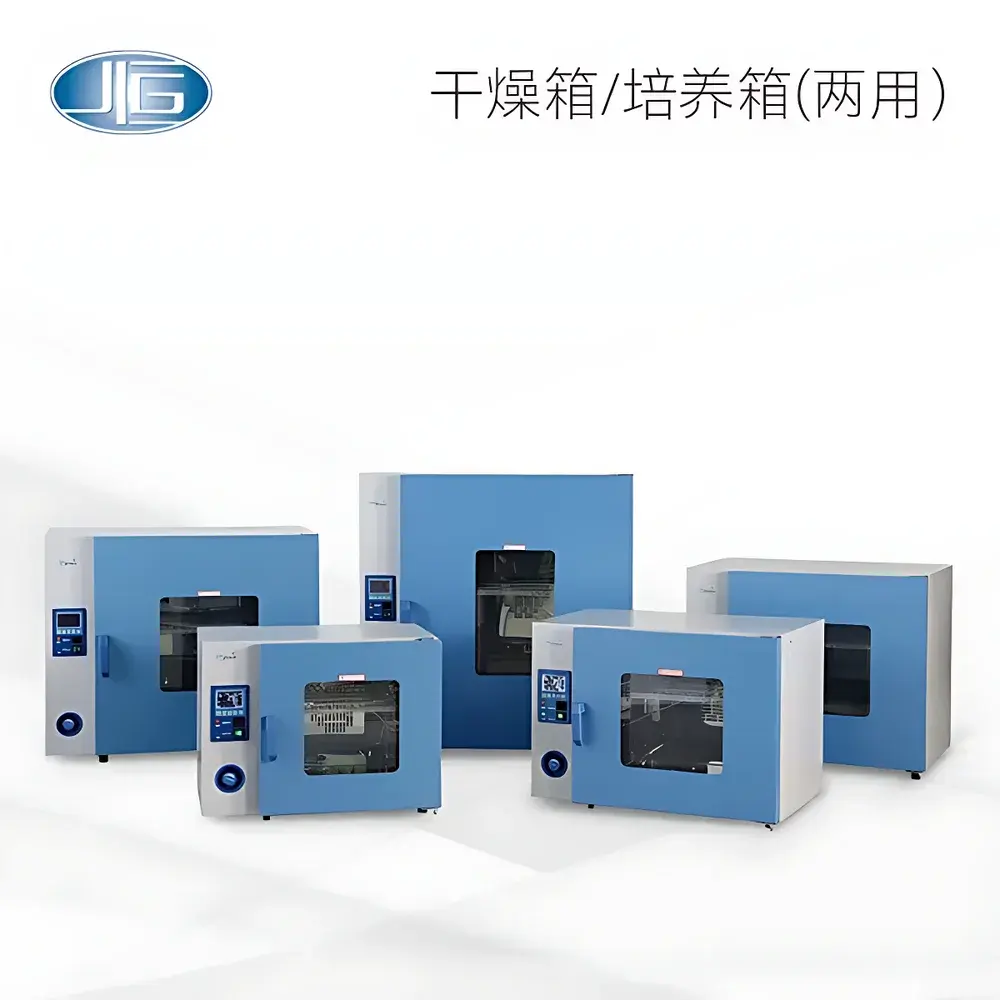
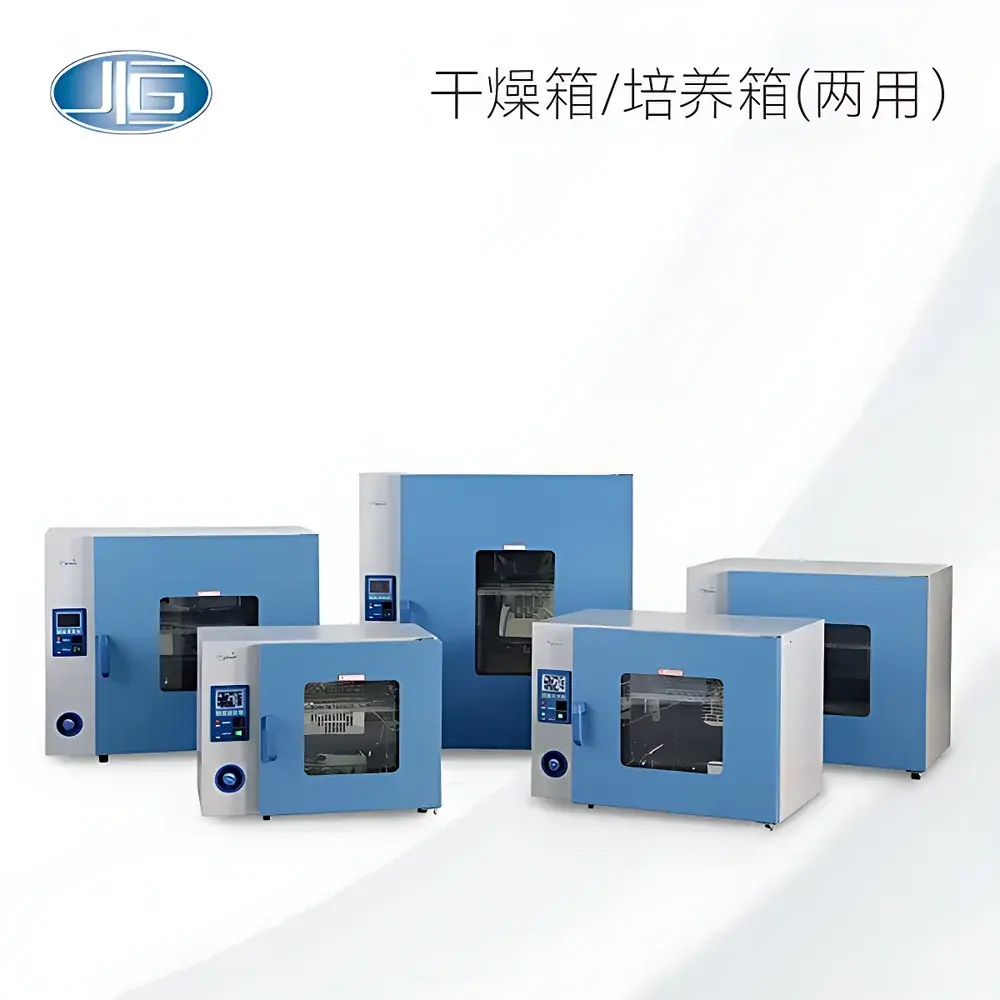
Yiheng DHP-9000 Series Dual-Function Incubator & Drying Oven
| Brand | Yiheng |
|---|---|
| Origin | Shanghai, China |
| Manufacturer Type | Direct Manufacturer |
| Product Category | Domestic (China-Made) |
| Model | DHP-9000 Series (Dual-Function Incubator & Drying Oven) |
| Instrument Type | General-Purpose Forced-Air Oven |
| Temperature Range | Incubation Mode: RT+5°C to 80°C |
| Drying Mode | 80°C to 220°C |
| Temperature Uniformity | ±0.5°C (Incubation), ±1.0°C (Drying) |
| Temperature Resolution | 0.1°C |
| Operating Ambient Temperature | +5°C to +35°C |
| Interior Material | Mirror-Finish Stainless Steel (AISI 304) |
| Heating Method | Natural Convection with Forced Warm-Air Circulation |
| Door Seal | High-Efficiency Silicone Rubber Gasket |
| Viewing Window | Double-Layer Tempered Glass |
| Safety Interlock | Automatic Cut-off of Heating and Air Circulation Upon Door Opening |
| Interior Dimensions | See Manufacturer’s Technical Brochure |
| External Dimensions | See Manufacturer’s Technical Brochure |
| Pricing Range | USD 520 – 1,470 (FOB Shanghai) |
Overview
The Yiheng DHP-9000 Series Dual-Function Incubator & Drying Oven is an engineered solution for laboratories requiring precise thermal control across two distinct operational regimes: biological incubation and moisture removal or thermal stabilization of samples. Unlike single-mode ovens, this unit integrates dual calibrated temperature domains—incubation (RT+5°C to 80°C) and drying (80°C to 220°C)—within a single robust enclosure. Its design adheres to fundamental thermodynamic principles governing convective heat transfer, leveraging natural convection enhanced by a low-turbulence warm-air circulation system to achieve high spatial uniformity and temporal stability. The chamber operates without mechanical fans in standard configuration, minimizing vibration-sensitive interference—critical for cell culture, enzyme assays, or polymer curing where microenvironmental disturbance must be avoided. The dual-range architecture eliminates the need for separate dedicated units, reducing footprint, energy overhead, and calibration maintenance burden while maintaining traceable performance within ISO 17025–aligned validation protocols.
Key Features
- Mirror-finish AISI 304 stainless steel interior with seamless, radius-rounded corners—resistant to corrosion, non-porous, and compliant with cleaning validation requirements per cGMP Annex 1 and USP .
- Microprocessor-based LCD controller with real-time temperature display, programmable ramp-soak profiles, and adjustable PID parameters for application-specific tuning.
- Forced warm-air circulation system optimized for laminar flow distribution—ensuring ≤±0.5°C uniformity across the working volume in incubation mode and ≤±1.0°C in drying mode (per IEC 61000-4-2 test conditions).
- Double-layer tempered glass observation window with argon-filled interstitial gap—providing thermal insulation and optical clarity without condensation under humid incubation conditions.
- Integrated safety interlock circuitry: heating elements and air circulation motor deactivate immediately upon door opening, preventing thermal overshoot and ensuring operator safety per EN 61010-1.
- Silicone rubber door gasket with compression-molded cross-section—maintaining seal integrity over >10,000 open/close cycles and supporting routine sterilization via vaporized hydrogen peroxide (VHP) decontamination.
Sample Compatibility & Compliance
The DHP-9000 accommodates a broad spectrum of sample formats—including Petri dishes, multi-well plates, flasks, glassware, and metal trays—without compromising thermal homogeneity. Its stainless steel construction meets ASTM A240 standards for laboratory-grade corrosion resistance. The unit complies with key regulatory frameworks applicable to lab equipment: IEC 61010-1 (safety), IEC 61326-1 (EMC), and ISO 8573-1 Class 4 for compressed air–free operation. While not certified for sterile manufacturing environments, its design supports qualification activities aligned with FDA 21 CFR Part 11 data integrity requirements when paired with optional RS-485/Modbus communication modules and validated logging software.
Software & Data Management
The embedded controller logs temperature setpoints, actual readings, and alarm events with timestamping (YYYY-MM-DD HH:MM:SS). Optional USB data export enables CSV-formatted records compatible with LIMS integration. For advanced validation, third-party software packages (e.g., EasyLog Cloud, LabVIEW-based DAQ systems) can interface via Modbus RTU to support IQ/OQ/PQ documentation, audit trail generation, and electronic signature workflows compliant with ALCOA+ principles.
Applications
- Cell and microbial incubation (bacterial growth, fungal culture, tissue explant maintenance) at stable low-temperature setpoints.
- Drying of filter papers, chromatography media, ceramic substrates, and pharmaceutical excipients under controlled airflow.
- Thermal aging studies of polymers, adhesives, and coatings per ASTM D573 and ISO 188.
- Pre-conditioning of hygroscopic reference materials prior to gravimetric analysis.
- Stabilization of calibration standards (e.g., NIST-traceable reference thermometers) before metrological verification.
FAQ
Can this unit operate continuously at 220°C for extended periods?
Yes—the heating system and insulation are rated for continuous duty at maximum drying temperature, provided ambient conditions remain within +5°C to +35°C and ventilation clearance meets manufacturer specifications (≥10 cm rear/side clearance required).
Is the temperature resolution of 0.1°C traceably calibrated?
The controller displays and regulates to 0.1°C resolution; field calibration using NIST-traceable reference thermometers (e.g., Fluke 1523) is recommended annually per ISO/IEC 17025 Clause 6.6.
Does the unit support GLP-compliant data archiving?
With optional communication hardware and validated software, full audit trails—including user ID, timestamp, parameter changes, and alarm history—can be generated and exported in PDF or CSV format for GLP audit readiness.
What is the typical recovery time after door opening during incubation mode?
From a 37°C setpoint, full thermal recovery to ±0.5°C tolerance typically occurs within 4–6 minutes under standard loading (50% chamber volume occupied), verified per ISO 15189 Annex A.3.3.



