
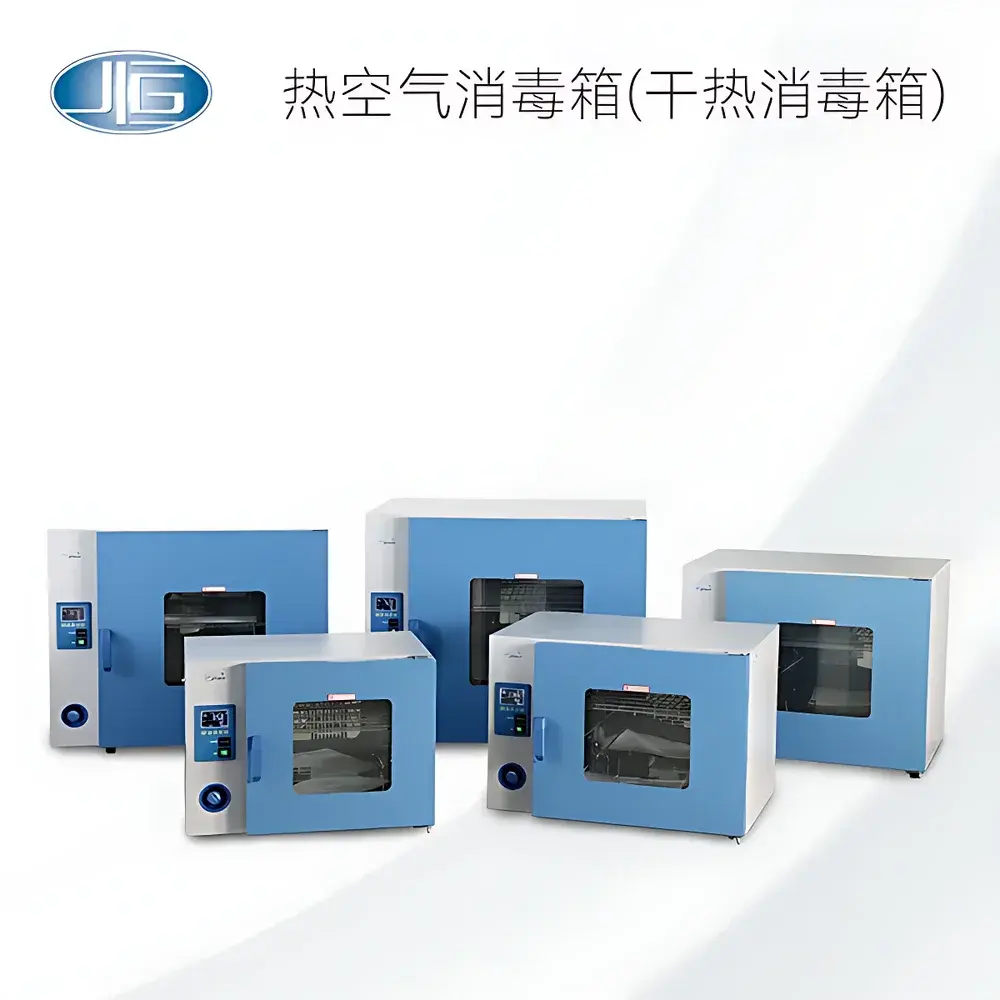
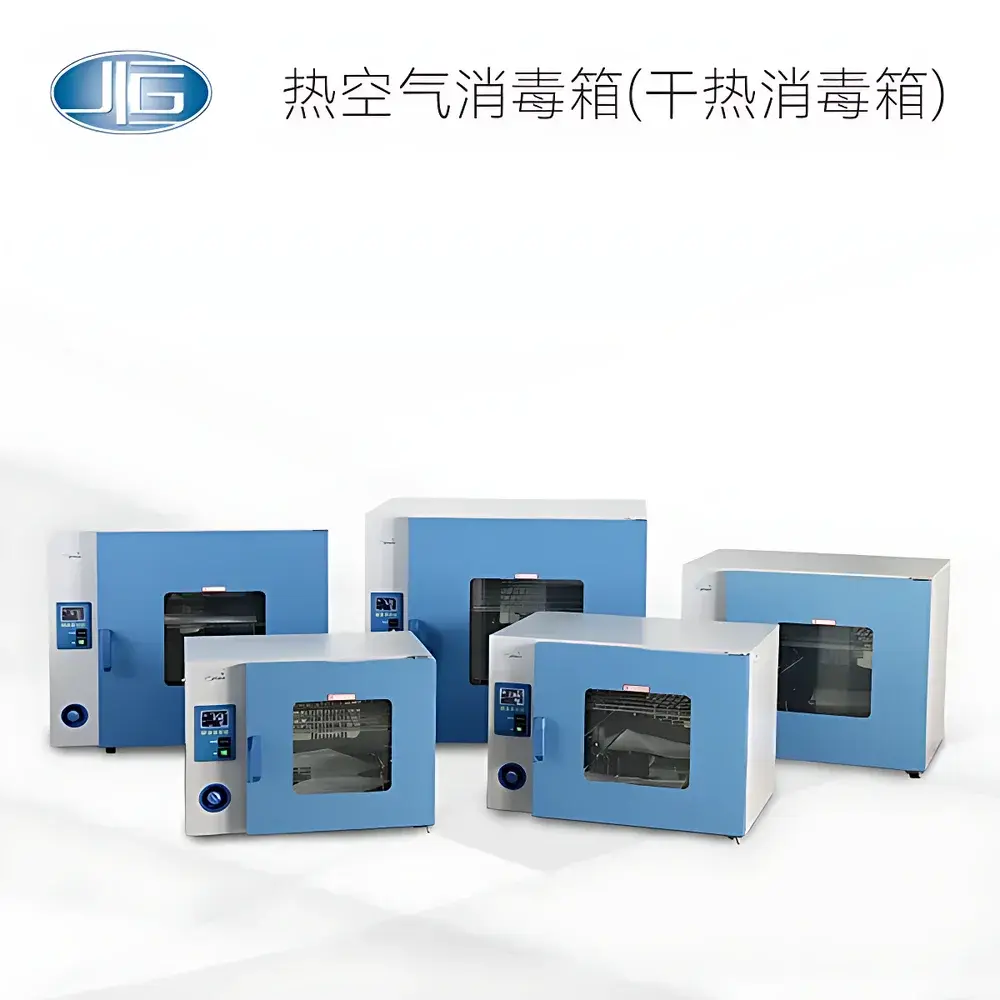
Yiheng GRX Series Hot Air Sterilization Oven
| Brand | Yiheng |
|---|---|
| Origin | Shanghai, China |
| Manufacturer Type | Direct Manufacturer |
| Product Category | Domestic |
| Model | GRX Series |
| Instrument Type | High-Temperature Forced-Air Oven |
| Temperature Range | RT+10°C to 200°C / RT+10°C to 250°C |
| Temperature Uniformity | ±1°C |
| Temperature Resolution | 0.1°C |
| Operating Ambient Temperature | +5°C to +40°C |
| Chamber Material | Stainless Steel (AISI 304) |
| Heating Method | Electric Resistive Heating |
| Fan Speed Control | Three-Step Adjustable |
| Timer Function | Programmable On/Off Timing |
| Safety Features | Independent Over-Temperature Cut-Off Protection |
| External Dimensions | Model-Dependent |
| Internal Chamber Dimensions | Model-Dependent |
Overview
The Yiheng GRX Series Hot Air Sterilization Oven is a precision-engineered forced-convection laboratory oven designed for dry-heat sterilization, thermal decontamination, moisture removal, and stable temperature aging of samples and equipment. Utilizing a robust electric resistive heating system combined with a high-efficiency axial fan and optimized airflow ducting, the GRX series ensures rapid heat-up times and exceptional temperature uniformity across the stainless steel chamber. Unlike natural convection ovens, this model employs active air circulation—directing heated air uniformly over all surfaces—to accelerate drying kinetics and achieve reliable microbial inactivation through sustained elevated temperatures (e.g., 160°C for 2 hours or 180°C for 30 minutes per ISO 17665-1 and USP ). Its microprocessor-based PID temperature controller delivers stable setpoint maintenance within ±1°C, supporting routine compliance with GLP, GMP, and ISO/IEC 17025 laboratory quality systems.
Key Features
- Precision digital PID temperature control with 0.1°C resolution and real-time display on a backlit LCD interface
- Forced-air circulation system with three-speed adjustable fan for optimized heat transfer and process flexibility
- Stainless steel (AISI 304) interior chamber and door liner—corrosion-resistant, non-porous, and easy to decontaminate
- Independent mechanical over-temperature safety cut-off device (non-resettable fuse) for fail-safe operation
- Programmable timer (up to 9999 minutes) enabling unattended operation and repeatable cycle execution
- Removable, adjustable stainless steel shelves facilitating full-chamber access for cleaning and validation
- Insulated double-wall construction with mineral wool insulation minimizes external surface temperature rise and improves energy efficiency
Sample Compatibility & Compliance
The GRX series accommodates a wide range of laboratory items including glassware (pipettes, Petri dishes, flasks), metal instruments, ceramic components, filter membranes, and powder samples requiring moisture-free thermal treatment. It meets fundamental requirements for dry-heat sterilization validation per ISO 14644-1 (cleanroom-compatible operation), ASTM E2500 (verification of laboratory equipment), and supports IQ/OQ documentation protocols. While not certified to EN 61010-1 or IEC 61010-2-010 out-of-the-box, its electrical architecture complies with standard Class I protection principles, and optional third-party calibration certificates (traceable to NIST or CNAS) are available upon request. The chamber design allows for placement of calibrated thermocouples or data loggers during performance qualification (PQ).
Software & Data Management
The GRX oven operates via embedded firmware without external PC dependency; however, it supports analog output (0–10 V or 4–20 mA) for integration into centralized building management or LIMS environments. Optional RS485 Modbus RTU communication enables remote monitoring of setpoint, actual temperature, timer status, and fault codes. All operational parameters—including start time, duration, and temperature profile—are retained in non-volatile memory during power interruption. For regulated environments, the instrument can be configured to generate printed or exported audit trails when paired with compatible thermal printers or SCADA systems—supporting 21 CFR Part 11 readiness when used with validated electronic record workflows.
Applications
- Dry-heat sterilization of surgical tools, glass containers, and heat-stable labware in clinical and pharmaceutical QC labs
- Residual solvent removal from polymer films, coatings, and composite substrates prior to mechanical testing
- Thermal conditioning of reference standards, calibration weights, and humidity-sensitive materials
- Accelerated stability testing of packaging materials under controlled thermal stress (per ICH Q1A)
- Pre-drying of soil, sediment, or botanical samples prior to gravimetric analysis (ASTM D2216, ISO 11465)
- Dehydrogenation and oxidation pretreatment of catalysts and battery electrode materials
FAQ
What is the maximum operating temperature for the GRX series?
The GRX series offers two configurations: up to 200°C and up to 250°C. Select models are rated for continuous operation at their specified upper limit.
Is the oven suitable for sterilizing plastic or rubber items?
No—dry-heat sterilization requires materials that withstand prolonged exposure to ≥160°C. Plastics, elastomers, and lubricated instruments must be processed using alternative methods (e.g., autoclaving or ethylene oxide).
Can the GRX oven be validated for GMP use?
Yes. Its consistent temperature uniformity, programmable timing, and mechanical safety interlocks support installation qualification (IQ), operational qualification (OQ), and performance qualification (PQ) per Annex 15 and EU GMP guidelines.
Does the unit include calibration documentation?
Factory calibration is performed prior to shipment. NIST-traceable calibration certificates and as-found/as-left reports are available as optional add-ons.
How often should preventive maintenance be performed?
We recommend quarterly inspection of door gaskets, fan operation, and temperature sensor response—especially in high-use or high-humidity environments. Full service intervals are typically every 12–18 months depending on usage frequency and load profile.



