
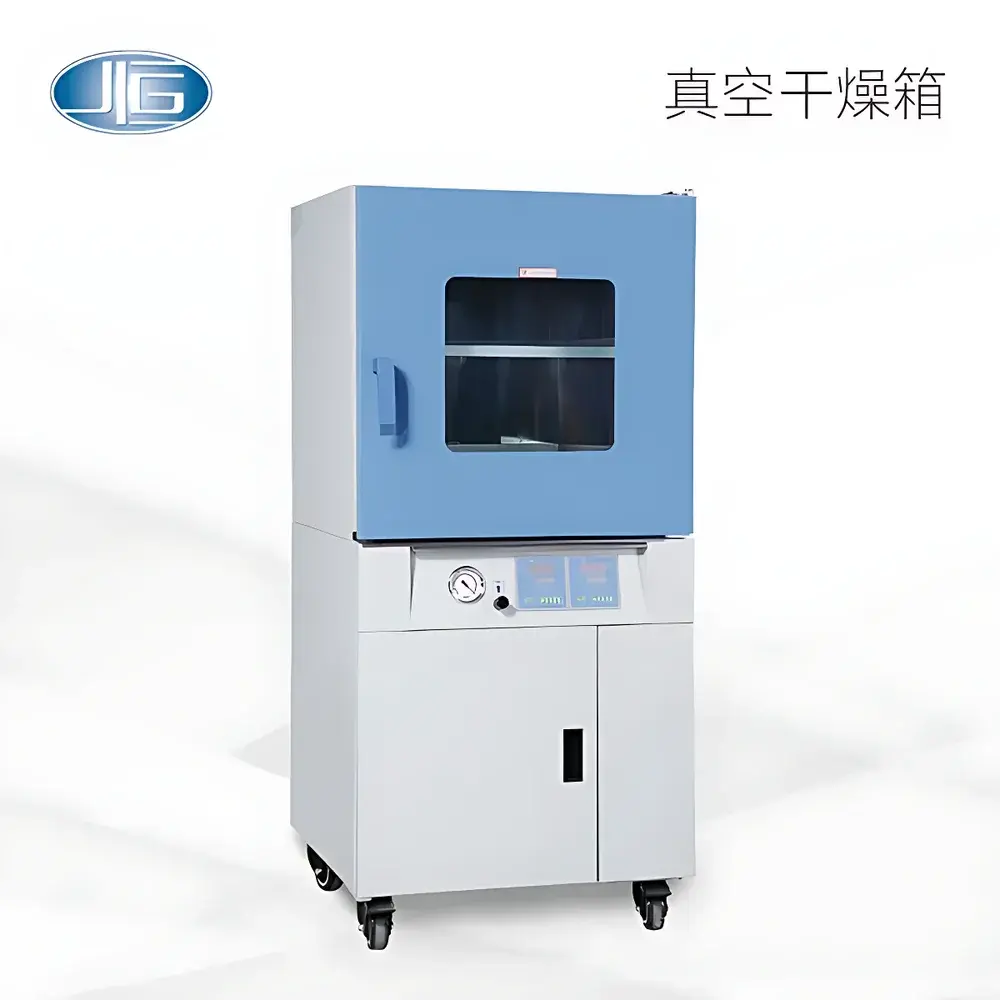
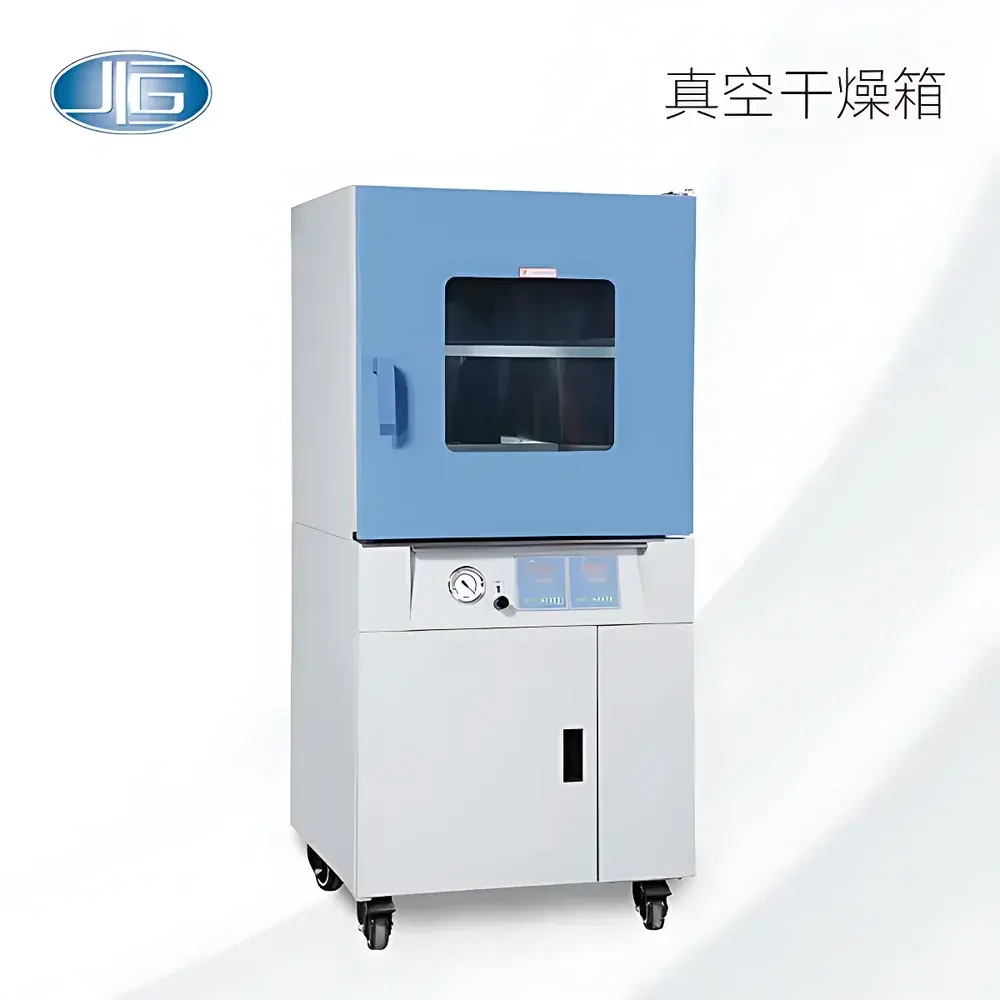
YiHeng BPZ-6213 Vacuum Drying Oven
| Brand | YiHeng |
|---|---|
| Origin | Shanghai, China |
| Manufacturer Type | Direct Manufacturer |
| Product Category | Domestic |
| Model | BPZ-6213 |
| Instrument Type | Vacuum Oven |
| Temperature Range | RT+10 °C to 200 °C |
| Temperature Uniformity | ±1 °C |
| External Dimensions | 720 × 740 × 1530 mm |
| Internal Chamber Dimensions | 540 × 575 × 635 mm |
| Temperature Resolution | 0.1 °C |
| Operating Ambient Temperature | +5 °C to +40 °C |
| Chamber Material | Stainless Steel (SUS304) |
| Ultimate Vacuum Level | 133 Pa |
| Optional Features | Over-Temperature Protection Circuit, Programmable Control Module, Low-Noise Vacuum Pump (B-Series Integrated) |
Overview
The YiHeng BPZ-6213 Vacuum Drying Oven is an engineered solution for controlled thermal processing under reduced-pressure conditions. Designed in accordance with fundamental principles of vacuum thermodynamics, it enables moisture removal, solvent evaporation, and heat-sensitive material stabilization without oxidative degradation or thermal decomposition. Unlike conventional convection ovens, the BPZ-6213 operates by evacuating ambient air to achieve a stable low-pressure environment—typically down to 133 Pa—thereby lowering the boiling point of volatile components and facilitating gentle, uniform drying at precisely regulated temperatures ranging from ambient +10 °C to 200 °C. Its stainless steel (SUS304) chamber construction ensures chemical resistance, structural integrity, and long-term dimensional stability under repeated thermal cycling and vacuum stress. The unit is intended for routine use in quality control laboratories, R&D facilities, and production support environments where reproducible, non-oxidative drying protocols are required per ISO 554, ASTM D1711, and internal GLP-compliant workflows.
Key Features
- Robust SUS304 stainless steel inner chamber with seamless welding and electropolished finish—resistant to corrosion, easy to sanitize, and compliant with pharmaceutical cleaning validation requirements.
- Rectangular vacuum chamber geometry optimized for volumetric efficiency and uniform pressure distribution across loaded samples.
- Dual-layer tempered glass observation door with adjustable compression mechanism and integrally molded silicone gasket—maintains vacuum integrity while enabling real-time visual monitoring without process interruption.
- Precision digital PID temperature controller with 0.1 °C resolution and ±1 °C uniformity across the full working volume—calibration traceable to NIST-traceable reference standards.
- Dedicated over-temperature protection circuit (optional) providing independent hardware-level cutoff at user-defined thresholds—meets IEC 61010-1 safety requirements for laboratory equipment.
- Integrated low-noise vacuum pump interface (B-series models include branded pump); compatible with external vacuum gauges and secondary gas inlet ports for inert atmosphere purging (e.g., nitrogen backfill).
Sample Compatibility & Compliance
The BPZ-6213 accommodates a broad range of sample types—including powders, granules, thin films, polymer composites, electronic components, and biological specimens—provided they remain thermally stable within the specified temperature and vacuum envelope. Its chamber dimensions (540 × 575 × 635 mm) support standard ISO/IEC 17025-compliant sample trays and stacked rack configurations. The system complies with CE marking directives (2014/30/EU EMC, 2014/35/EU LVD), conforms to GB/T 5170.11–2017 (Chinese national standard for environmental testing equipment), and supports audit-ready documentation when paired with optional programmable logic control. Vacuum performance meets ISO 2859-1 sampling plans for batch release testing and aligns with USP guidance on container closure integrity verification methodologies.
Software & Data Management
While the base configuration features a stand-alone microprocessor-based controller with LED display and manual setpoint input, the optional programmable module enables up to 30-step ramp-soak-hold cycles—including coordinated sequencing of heating, vacuum hold, and nitrogen purge phases. All parameter changes, alarm events, and runtime logs are timestamped and stored onboard with non-volatile memory retention. When connected to a PC via RS485 (Modbus RTU protocol), the system exports CSV-formatted operational records suitable for 21 CFR Part 11–compliant data archiving when deployed with validated third-party acquisition software. Audit trails include operator ID, parameter modification history, and cycle completion status—supporting GMP-aligned change control and deviation investigation processes.
Applications
- Residual solvent removal from APIs and excipients prior to lyophilization or tablet compression.
- Moisture content determination per AOAC 950.46 and ISO 712 for food, feed, and agricultural commodities.
- Pre-baking of PCB assemblies and semiconductor packaging substrates to eliminate outgassing contaminants.
- Stabilization of hygroscopic reference standards used in analytical calibration workflows.
- Drying of nanomaterial dispersions and ceramic precursors where oxidation must be avoided during thermal treatment.
- Accelerated aging studies under controlled humidity depletion conditions per ASTM F1980.
FAQ
What is the maximum operating temperature and vacuum level this oven can sustain continuously?
The BPZ-6213 is rated for continuous operation at temperatures up to 200 °C and maintains a stable ultimate vacuum of ≤133 Pa under standard ambient conditions (+5 °C to +40 °C).
Is the stainless steel chamber electropolished or passivated?
The inner chamber is constructed from SUS304 stainless steel with a mechanically polished surface finish; electropolishing and citric acid passivation are available as factory-installed options upon request.
Can the unit be integrated into a centralized lab automation network?
Yes—via optional RS485 Modbus RTU interface, the oven supports remote parameter setting, real-time status polling, and event-triggered notifications when interfaced with SCADA or LIMS platforms.
Does the system meet FDA requirements for use in regulated manufacturing?
The base unit satisfies mechanical and electrical safety requirements per IEC 61010-1; full 21 CFR Part 11 compliance requires implementation of validated software controls, electronic signatures, and audit trail management—available through certified integration partners.
What maintenance intervals are recommended for the vacuum pump and sealing system?
For B-series integrated pumps: oil change every 500 hours of cumulative operation; silicone door gasket inspection and replacement every 12 months or after 2,000 vacuum cycles—whichever occurs first.



