
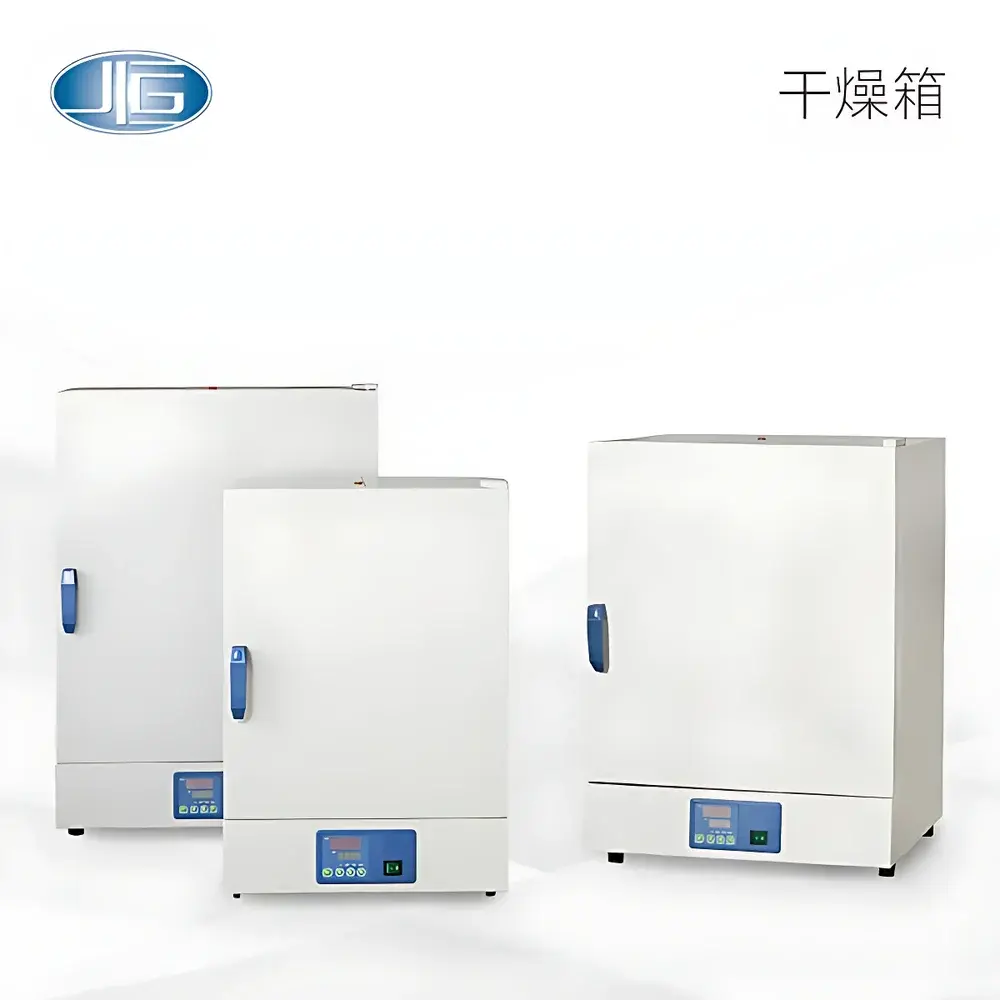
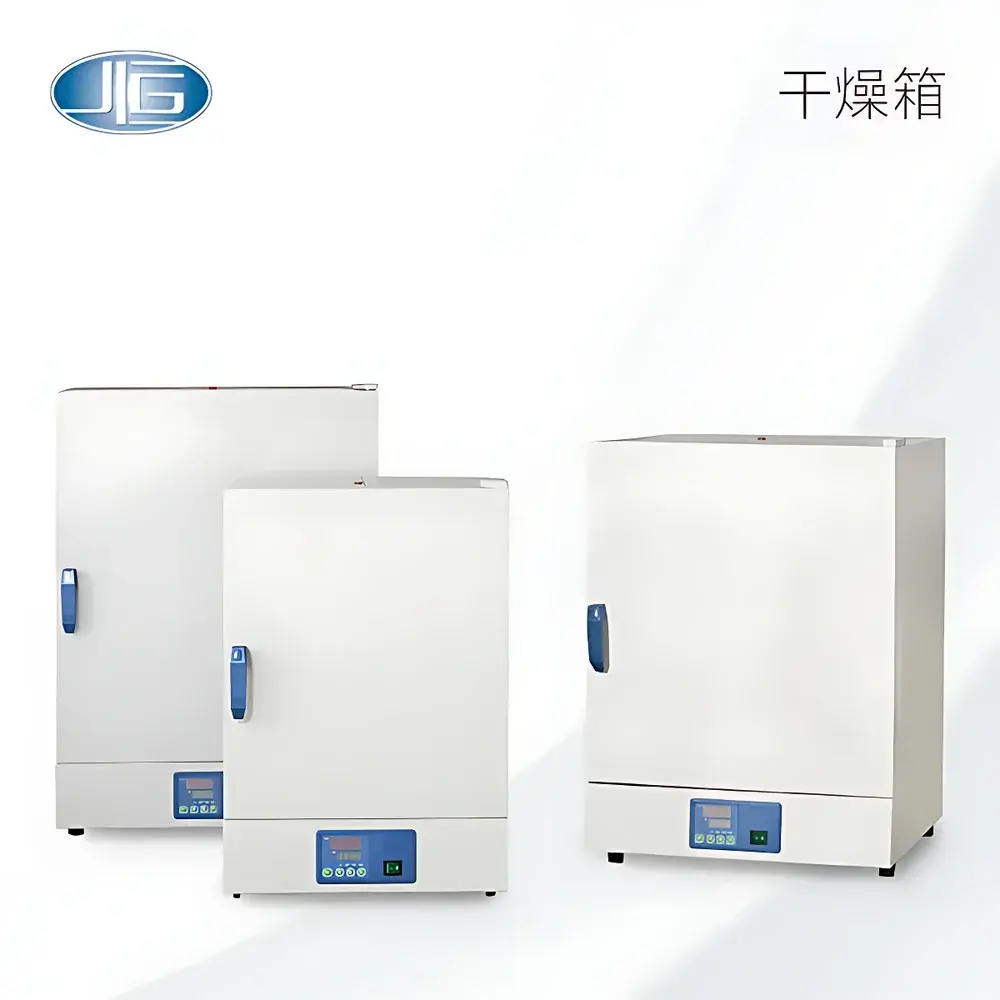
Yiheng DHG Series Natural Convection Drying Oven
| Brand | Yiheng |
|---|---|
| Origin | Shanghai, China |
| Manufacturer Type | Direct Manufacturer |
| Product Line | DHG Series |
| Instrument Type | High-Temperature Drying Oven |
| Temperature Range | RT+10°C to 200°C |
| Temperature Uniformity | ±0.5°C |
| Temperature Resolution | 0.1°C |
| Internal Chamber Dimensions (W×D×H) | 320 × 300 × 355 mm |
| External Dimensions (W×D×H) | 460 × 520 × 660 mm |
| Operating Ambient Temperature | +5°C to +35°C |
| Chamber Material | Stainless Steel (AISI 304) |
| Heating Method | Natural Convection (Gravity-Driven Airflow) |
| Optional Accessories | RS485 Communication Interface, Thermal Printer Output, Multi-Stage Programmable Controller (7 Programs × 9 Steps Each, Max. Step Duration: 5999 min) |
Overview
The Yiheng DHG Series Natural Convection Drying Oven is an entry-level yet rigorously engineered thermal processing instrument designed for routine laboratory drying, baking, sterilization, and low-temperature heat treatment applications. Unlike forced-air ovens, this model relies on gravity-driven natural convection—where heated air rises and cooler air descends—to achieve gentle, uniform thermal distribution without mechanical fans. This principle eliminates airflow-induced sample disturbance, minimizes particulate generation, and ensures silent operation—critical for sensitive biological specimens, volatile organic compounds, or powder-based materials prone to dispersion. The oven’s operational envelope spans from ambient +10°C to 200°C, supporting ASTM E145-compliant drying protocols and ISO 17025-aligned calibration traceability when used with external reference thermometers. Its stainless steel (AISI 304) chamber features seamless, radius-rounded internal corners to prevent residue accumulation and facilitate GLP-compliant cleaning validation.
Key Features
- Stainless steel interior chamber (AISI 304) with fully rounded internal corners—designed for ease of decontamination and compliance with hygiene-critical workflows.
- Natural convection heating architecture—no blower or fan components—ensuring zero acoustic noise (<25 dB(A)) and negligible air turbulence during operation.
- Microprocessor-based P.I.D. temperature controller with digital LED display, offering 0.1°C resolution and ±0.5°C temperature stability across the full range (RT+10°C to 200°C).
- Dual-stage thermal safety system: independent over-temperature cut-off circuit (mechanical backup) plus software-enforced deviation alarm—fully compliant with IEC 61010-1 safety requirements for laboratory equipment.
- Standard timer function (0–9999 minutes) with automatic shutdown; optional multi-stage programmable controller supports up to 7 user-defined programs, each containing 9 sequential steps (temperature setpoint, dwell time, ramp rate), enabling complex thermal profiles such as slow ramp-up from ambient to target temperature.
Sample Compatibility & Compliance
The DHG Series accommodates standard laboratory glassware (e.g., Petri dishes, weighing boats, aluminum pans) and non-volatile solid samples including pharmaceutical excipients, soil aggregates, polymer pellets, and filter papers. Its absence of forced airflow prevents cross-contamination between adjacent samples and preserves sample integrity in moisture-content determination (per ASTM D2231 or ISO 1189) and residual solvent analysis prep. The unit meets CE marking requirements under the EU Machinery Directive 2006/42/EC and Low Voltage Directive 2014/35/EU. While not certified for Class II biosafety or explosion-proof use, it is routinely deployed in QC labs operating under cGMP Annex 11 and ISO/IEC 17025 frameworks—particularly where audit-ready temperature logging (via optional RS485 interface) and electronic record retention are required.
Software & Data Management
The base configuration includes a front-panel controller with real-time temperature readout, elapsed time tracking, and audible end-of-cycle alert. For enhanced data governance, the optional RS485 serial interface enables bidirectional communication with host PCs running third-party SCADA or LIMS platforms. When paired with compatible software, users can export timestamped temperature logs compliant with FDA 21 CFR Part 11 requirements—including operator ID, parameter changes, and event timestamps—supporting ALCOA+ data integrity principles. Optional thermal printer output provides hard-copy verification for batch release documentation. All firmware revisions maintain backward compatibility and support password-protected parameter lockdown to prevent unauthorized configuration changes.
Applications
- Moisture content determination in food, feed, and agricultural products (AOAC 950.46, ISO 665)
- Drying of filter membranes post-filtration in environmental water testing (EPA Method 160.1)
- Baking of ceramic crucibles and quartz ware prior to ashing procedures
- Melt-point stabilization of paraffin and beeswax in histology laboratories
- Pre-conditioning of desiccants and silica gel before gravimetric humidity calibration
- Low-risk sterilization of non-critical lab tools via dry-heat exposure at ≥160°C for ≥2 hours (per WHO TRS 961 Annex 2)
FAQ
Is the DHG Series suitable for sterilization of surgical instruments?
No—this model is not validated for medical device sterilization per ISO 17665. It supports only non-critical item decontamination and dry-heat conditioning.
Can the oven maintain temperature uniformity across the full chamber volume?
Yes—natural convection design achieves ≤±0.5°C variation across the specified working volume (320×300×355 mm) at steady state, verified per ASTM E145 Annex A3 test methodology.
Does the optional programmable controller support ramp-and-soak cycles?
Yes—the 7-program, 63-step controller allows independent setting of ramp rate (°C/min), soak duration, and final hold temperature, enabling precise simulation of thermal aging or desorption kinetics.
What calibration documentation is provided?
Each unit ships with a factory calibration certificate (traceable to NIM, China), covering three points (100°C, 150°C, 200°C) using a calibrated PT100 probe; full IQ/OQ documentation kits are available upon request.
Is remote monitoring supported without additional hardware?
No—RS485 interface or thermal printer must be ordered separately; no built-in Ethernet or Wi-Fi capability is included in standard configuration.
Related Products



