
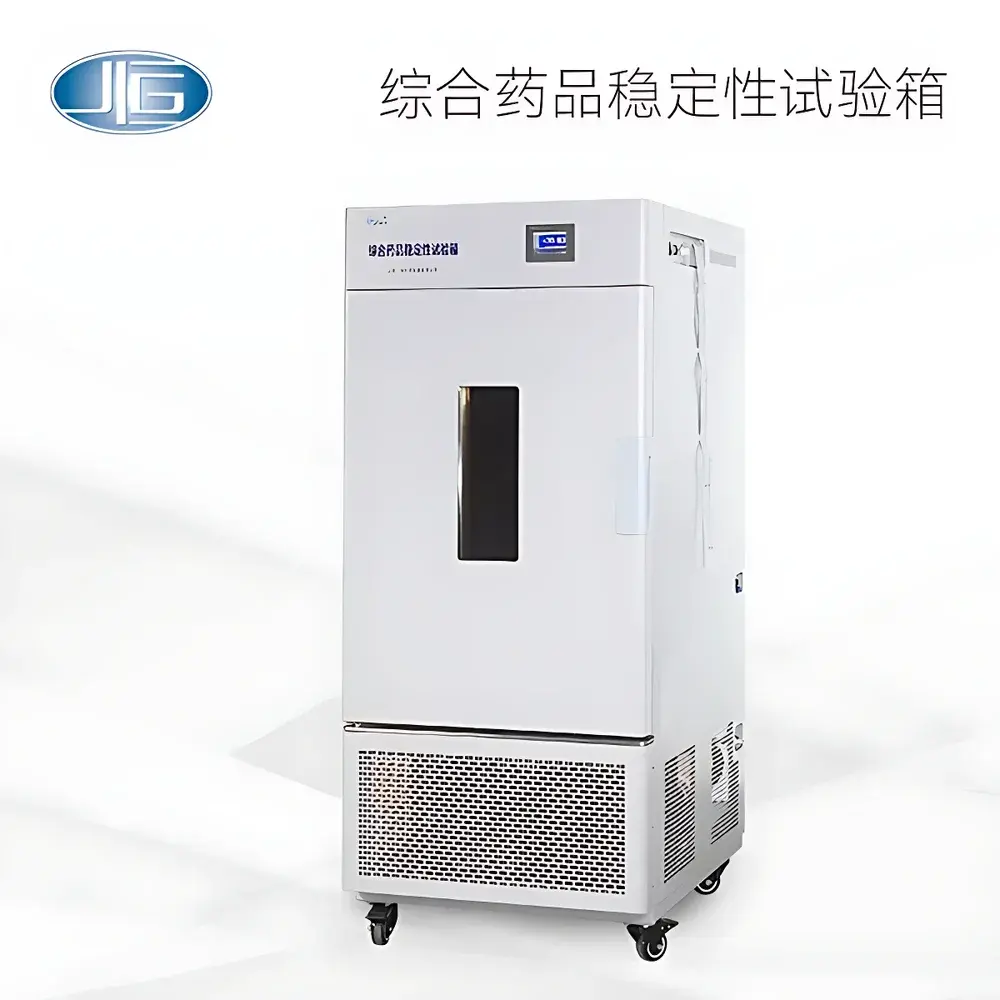
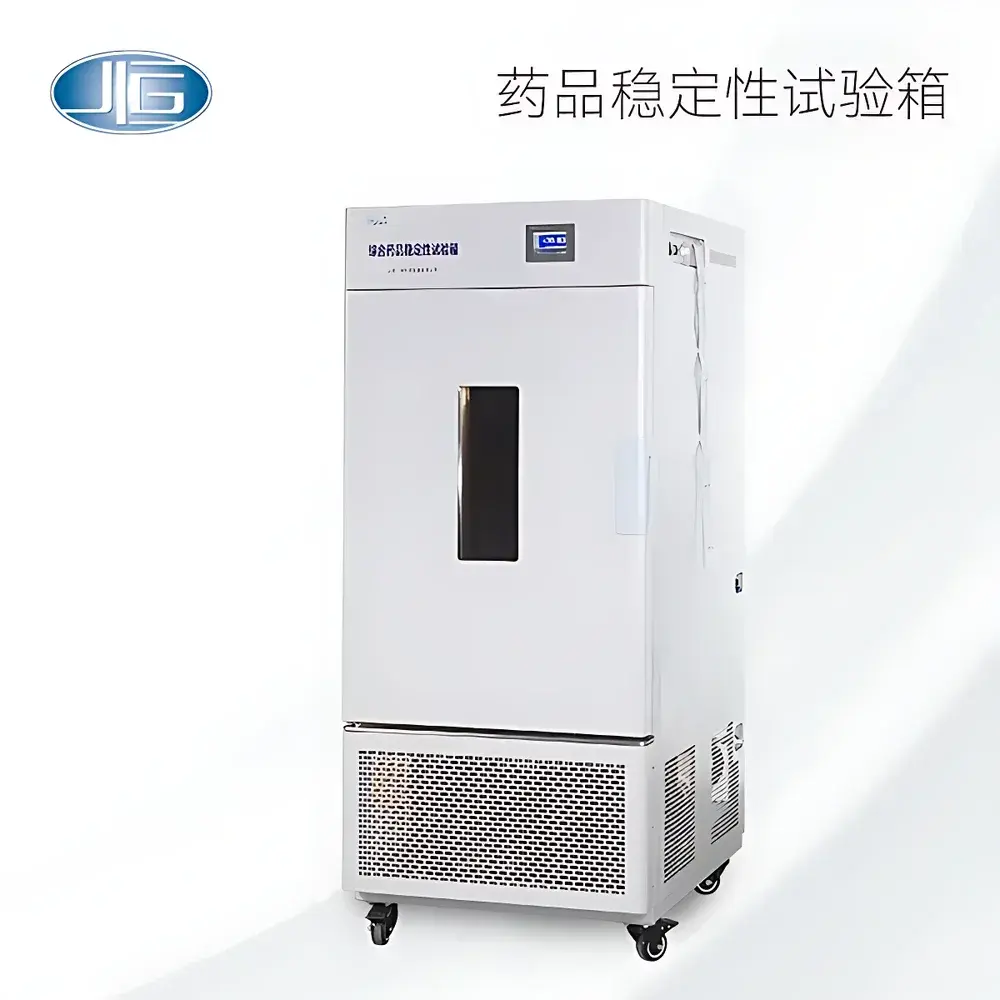
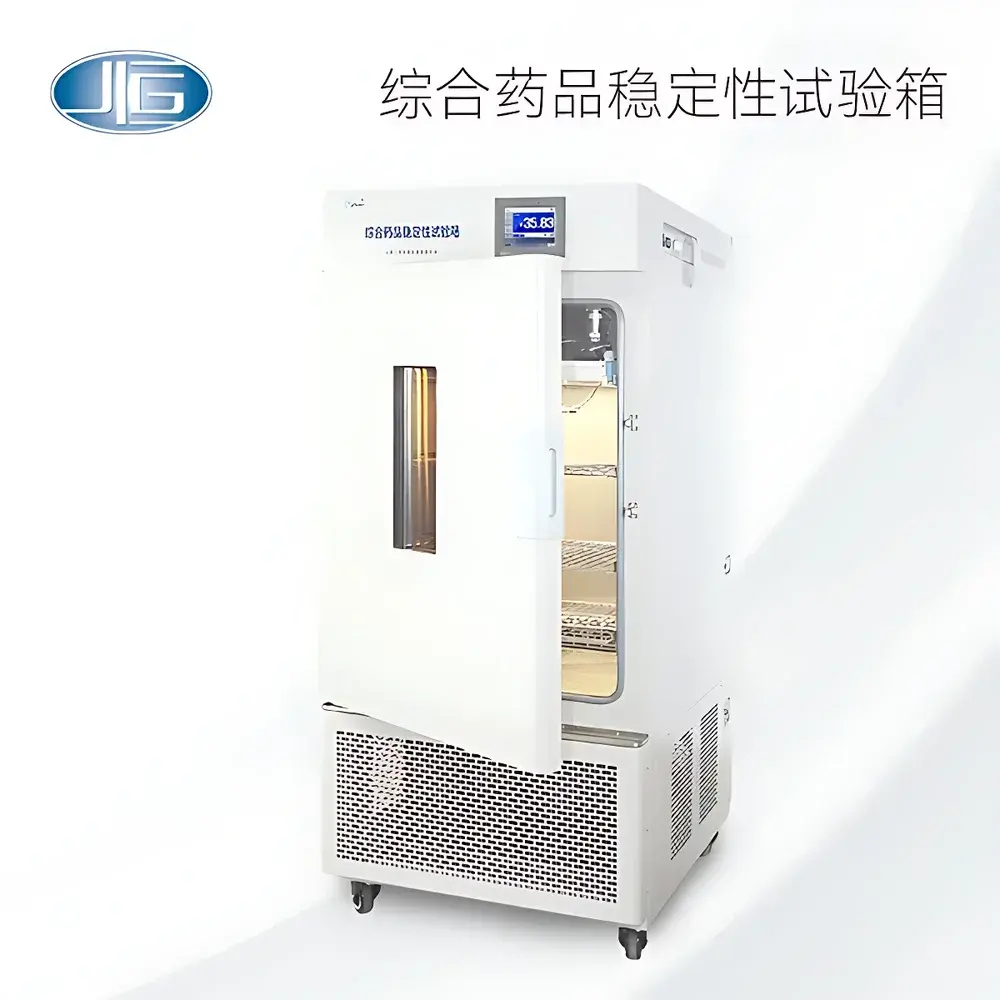
YiHeng LHH-250SD Drug Stability Testing Chamber
| Brand | YiHeng |
|---|---|
| Origin | Shanghai, China |
| Manufacturer Type | OEM Manufacturer |
| Country of Origin | China |
| Model | LHH-250SD |
| Price | USD 5,600 (FOB Shanghai) |
Overview
The YiHeng LHH-250SD Drug Stability Testing Chamber is an ICH-compliant environmental simulation system engineered for pharmaceutical stability studies in accordance with ICH Q1A(R2), Q1B, Q5C, and the Chinese Pharmacopoeia (2020 Edition) guidelines. It provides precise, long-term control of temperature (±0.5 °C typical stability), relative humidity (±3% RH over 30–75% RH range), and optional photometric irradiance (4500 ±500 lx, visible spectrum), enabling execution of accelerated, long-term, intermediate, high-humidity, and photostability testing protocols. The chamber employs a dual-compressor cascade refrigeration architecture with automatic redundancy switching—eliminating single-point failure risk—and features a non-frosting continuous-operation design to prevent thermal/hygrometric transients during extended runs (e.g., 6-month accelerated or 12-month long-term studies). Its stainless steel 304 interior, aerodynamically optimized air distribution system, and ISO 14644-1 Class 8–compatible UV-C sterilization option (optional) ensure sample integrity, process repeatability, and GMP-aligned operational hygiene.
Key Features
- Dual independent进口 compressors with auto-failover logic—ensures uninterrupted operation for ≥6 months without manual defrost cycles or performance degradation.
- Microprocessor-based PID controller with touchscreen HMI (7-inch TFT LCD), supporting 100 programmable profiles, up to 1000 segments per profile, and 999 loop repetitions; interface available in English/Chinese.
- High-accuracy capacitive humidity sensor rated for continuous operation at 85 °C and 95% RH—eliminates wet-bulb maintenance and drift-related calibration errors.
- Uniform airflow design with rear-mounted centrifugal blower and perforated rear wall—achieving ±0.8 °C temperature uniformity and ±2.5% RH uniformity across working volume (250 L).
- Integrated safety architecture: independent mechanical over-temperature cutout, dual-stage RH deviation alarm (high/low), audible/visual fault indication, and password-protected parameter locking.
- Standard 25 mm diameter access port (left side) for real-time probe insertion or data cable routing—compatible with external loggers and PAT sensors.
- Optional UV-C germicidal lamp (254 nm) mounted on rear chamber wall—validated for >3-log reduction of airborne and surface-associated microorganisms in recirculated air and humidification reservoir.
- Optional irradiance monitoring & control module: calibrated silicon photodiode sensor + dimmable LED light array—enables closed-loop luminance regulation per ICH Q1B requirements, compensating for lamp aging in real time.
Sample Compatibility & Compliance
The LHH-250SD accommodates standard pharmaceutical packaging formats including blister packs, HDPE/PP bottles, glass vials, ampoules, and semi-permeable containers (e.g., LDPE infusion bags). Its environmental profiles meet regulatory validation requirements for GxP environments: temperature accuracy conforms to ASTM E2874-22 (pharmaceutical stability chambers); humidity control satisfies ISO 12780-2:2021 traceability standards; and irradiance uniformity complies with ICH Q1B Annex 2 (≥90% spatial uniformity within sample zone). All firmware and controller logs support 21 CFR Part 11-compliant audit trails when connected to validated LIMS or ELN systems via RS-485 or optional Ethernet gateway. Calibration certificates (NIST-traceable) are provided for temperature, humidity, and irradiance sensors upon factory acceptance testing.
Software & Data Management
The embedded controller supports real-time data logging at user-defined intervals (1–60 min), storing ≥30 days of timestamped temperature/humidity/irradiance values internally. Via RS-232/RS-485 serial interface, it integrates with third-party SCADA platforms (e.g., Siemens Desigo, Ignition SCADA) or custom Python-based data acquisition scripts. Optional PC software enables remote programming, live graphing (dual-Y axis), deviation reporting (with configurable alert thresholds), and PDF report generation—including compliance summaries against ICH Q1A(R2) acceptance criteria. All event logs (alarms, setpoint changes, door openings) are time-stamped and immutable—supporting GLP/GMP audit readiness.
Applications
- ICH Q1A(R2)-compliant accelerated stability studies (40 °C ±2 °C / 75% RH ±5% RH, 6 months)
- Long-term storage condition simulation (25 °C ±2 °C / 60% RH ±5% RH, 12 months)
- Intermediate condition testing (30 °C ±2 °C / 65% RH ±5% RH)
- High-humidity stress testing (40 °C ±2 °C / 92% RH ±5% RH)
- Photostability assessment per ICH Q1B: near-UV (320–400 nm) and visible light (400–800 nm) exposure at 1.2 million lux·hr and 200 W·hr/m²
- Stability testing of biologics in semi-permeable packaging (e.g., 40 °C ±2 °C / 25% RH ±5% RH)
- Reference standard storage under controlled conditions per USP
FAQ
Does the LHH-250SD comply with 21 CFR Part 11 for electronic records and signatures?
Yes—when configured with optional audit trail-enabled firmware and paired with validated PC software, it meets Part 11 requirements for secure login, electronic signatures, and immutable record retention.
What is the maximum allowable ambient temperature for continuous operation?
The chamber is rated for ambient temperatures up to 32 °C with ≤60% RH; performance specifications assume room temperature ≤25 °C per ICH Q1A(R2) guidance.
Can humidity be maintained at 95% RH without condensation?
Yes—the chamber’s dew-point-controlled humidification system and anti-condensation heater array prevent surface moisture accumulation even at 95% RH, 40 °C.
Is IQ/OQ documentation available?
Factory-issued IQ/OQ protocols compliant with ASTM E2500-22 are supplied; PQ execution requires site-specific verification using NIST-traceable reference standards.
How often does the UV-C lamp require replacement?
The low-pressure mercury UV-C lamp has a rated service life of 8,000 hours; output decay is monitored via integrated photodiode feedback, triggering replacement alerts at 70% initial intensity.





