
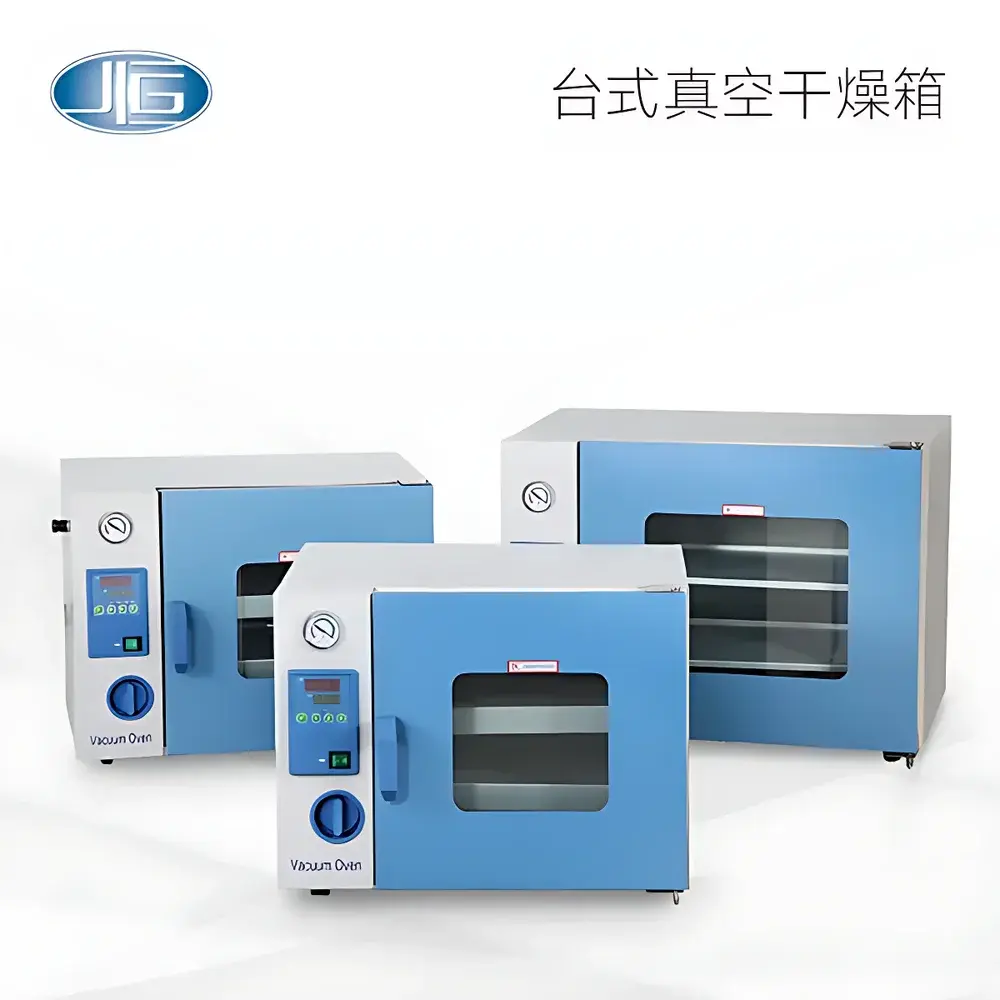
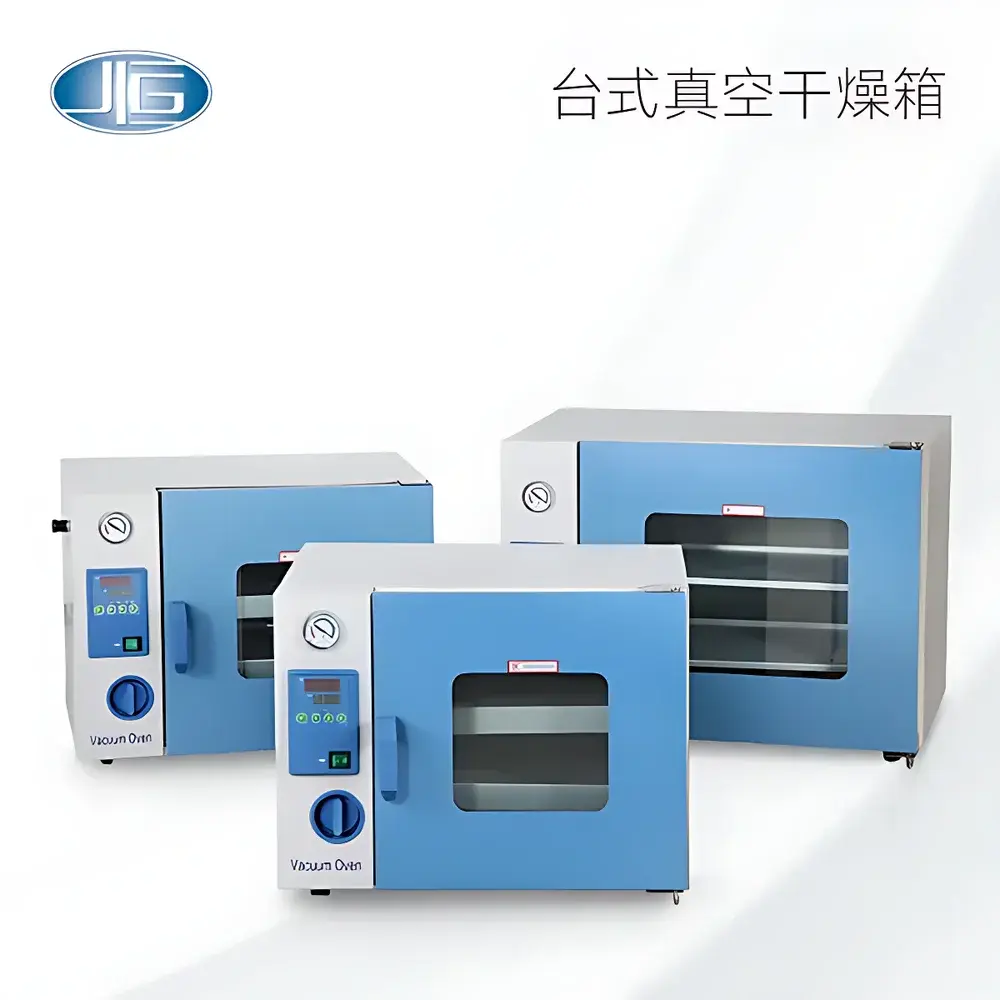
YiHeng DZF-6032 Vacuum Drying Oven
| Brand | YiHeng |
|---|---|
| Origin | Shanghai, China |
| Manufacturer Type | Direct Manufacturer |
| Product Category | Domestic |
| Model | DZF-6032 |
| Price Range | USD 1,050–1,140 (FOB Shanghai) |
| Instrument Type | Vacuum Oven |
| Temperature Range | RT+10°C to 200°C |
| Temperature Uniformity | ±1°C |
| External Dimensions (W×D×H) | 630 × 510 × 490 mm |
| Internal Chamber Dimensions (W×D×H) | 320 × 320 × 300 mm |
| Temperature Resolution | 0.1°C |
| Chamber Material | AISI 316 Stainless Steel |
| Heating Method | Forced-Air Circulation with Vacuum Compatibility |
| Ultimate Vacuum Level | ≤133 Pa |
Overview
The YiHeng DZF-6032 Vacuum Drying Oven is an engineered solution for controlled thermal processing under reduced pressure environments. It operates on the principle of lowering the boiling point of solvents and moisture through vacuum application—enabling efficient dehydration of thermally labile, oxidation-prone, or chemically unstable samples without structural degradation. Unlike conventional convection ovens, the DZF-6032 integrates a sealed stainless steel chamber, precision PID temperature control, and vacuum-tight mechanical architecture to maintain stable sub-atmospheric conditions during heating. This makes it suitable for applications where oxygen exclusion, solvent recovery, or low-temperature drying is essential—such as in pharmaceutical active ingredient stabilization, polymer film curing, catalyst activation, and analytical sample preparation prior to gravimetric or chromatographic analysis.
Key Features
- Chamber constructed from AISI 316 stainless steel—providing superior corrosion resistance against acidic vapors, halogenated solvents, and high-humidity condensates commonly encountered in chemical synthesis workflows.
- Forced-air circulation system optimized for uniform heat distribution under vacuum, minimizing thermal gradients across the 320 × 320 × 300 mm working volume (29.8 L net capacity).
- Double-layer tempered glass observation door with integrated silicone gasket seal—allowing real-time visual monitoring while preserving vacuum integrity; door compression force is fully adjustable to accommodate gasket aging or thermal expansion.
- Microprocessor-based PID temperature controller with 0.1°C resolution and ±1°C stability over the full operating range (RT+10°C to 200°C), compliant with ISO 17025 traceability requirements when calibrated using NIST-traceable reference probes.
- Vacuum interface compatible with standard KF-16 or NW16 flanged vacuum pumps; achieves ≤133 Pa base pressure within 15 minutes using a two-stage rotary vane pump (pump not included).
- Optional inert gas purge port (standard on DZF-6032) supports nitrogen or argon backfilling to <100 ppm O₂ residual—critical for lithium battery electrode drying, metal-organic framework (MOF) activation, and peroxide-sensitive compound handling.
Sample Compatibility & Compliance
The DZF-6032 accommodates a broad spectrum of sample formats—including glass Petri dishes, aluminum weighing boats, ceramic crucibles, and custom-fabricated trays—without compromising vacuum integrity or thermal homogeneity. Its design conforms to key international safety and performance standards relevant to laboratory drying equipment: IEC 61010-1 (electrical safety), EN 60529 (IP20 ingress protection), and ASTM E145–22 (Standard Specification for Gravity-Convection and Forced-Ventilation Ovens). While not certified for Class I Div 1 hazardous locations, its construction meets GLP/GMP environmental control expectations for stability-indicating drying protocols. Documentation packages support audit readiness for FDA 21 CFR Part 11-compliant data management when paired with validated external logging systems.
Software & Data Management
The DZF-6032 features a standalone front-panel interface with password-protected parameter locking, programmable ramp-soak profiles (up to 8 segments), and real-time display of chamber temperature and vacuum status. For integration into centralized lab informatics ecosystems, optional RS485 Modbus RTU output enables connection to SCADA platforms or LIMS via industrial gateways. Raw time-stamped temperature and vacuum readings can be exported in CSV format using third-party data acquisition software. Audit trails—including operator ID, setpoint changes, door open/close events, and alarm history—are retained in non-volatile memory for ≥30 days, satisfying basic ALCOA+ data integrity criteria when used in conjunction with procedural controls.
Applications
- Drying of hygroscopic reagents (e.g., LiAlH₄, PCl₅) under inert atmosphere to prevent hydrolysis.
- Removal of residual solvents from synthesized nanoparticles prior to TEM grid mounting.
- Stabilization of reference standards for USP chromatographic methods.
- Dehydration of biological tissues for SEM sample preparation without shrinkage artifacts.
- Curing of photoresist-coated wafers in microelectronics R&D labs where oxygen inhibition must be eliminated.
- Pre-conditioning of humidity-sensitive sensors and optical coatings prior to calibration.
FAQ
Can the DZF-6032 operate continuously at 200°C under full vacuum?
Yes—the chamber and door seal are rated for continuous operation up to 200°C at ≤133 Pa; however, prolonged exposure above 180°C may accelerate silicone gasket aging and require more frequent replacement.
Is external vacuum pump included with purchase?
No—the DZF-6032 requires a separately sourced vacuum pump (recommended: two-stage oil-sealed rotary vane pump with ≤5 Pa ultimate vacuum and ≥10 m³/h pumping speed).
What is the maximum load weight the shelf can support?
Each standard stainless steel shelf supports up to 15 kg evenly distributed; total chamber loading should not exceed 30 kg to maintain thermal uniformity and vacuum integrity.
Does the unit support validation documentation (IQ/OQ/PQ)?
Factory-provided test certificates include temperature mapping reports (per ISO/IEC 17025) and vacuum decay test logs; full qualification packages are available upon request with additional lead time and service fee.
How often should the door gasket be inspected or replaced?
Inspect visually and functionally every 6 months; replace if cracking, permanent compression set exceeds 20%, or vacuum hold time drops below 30 minutes at 133 Pa.
Related Products



