
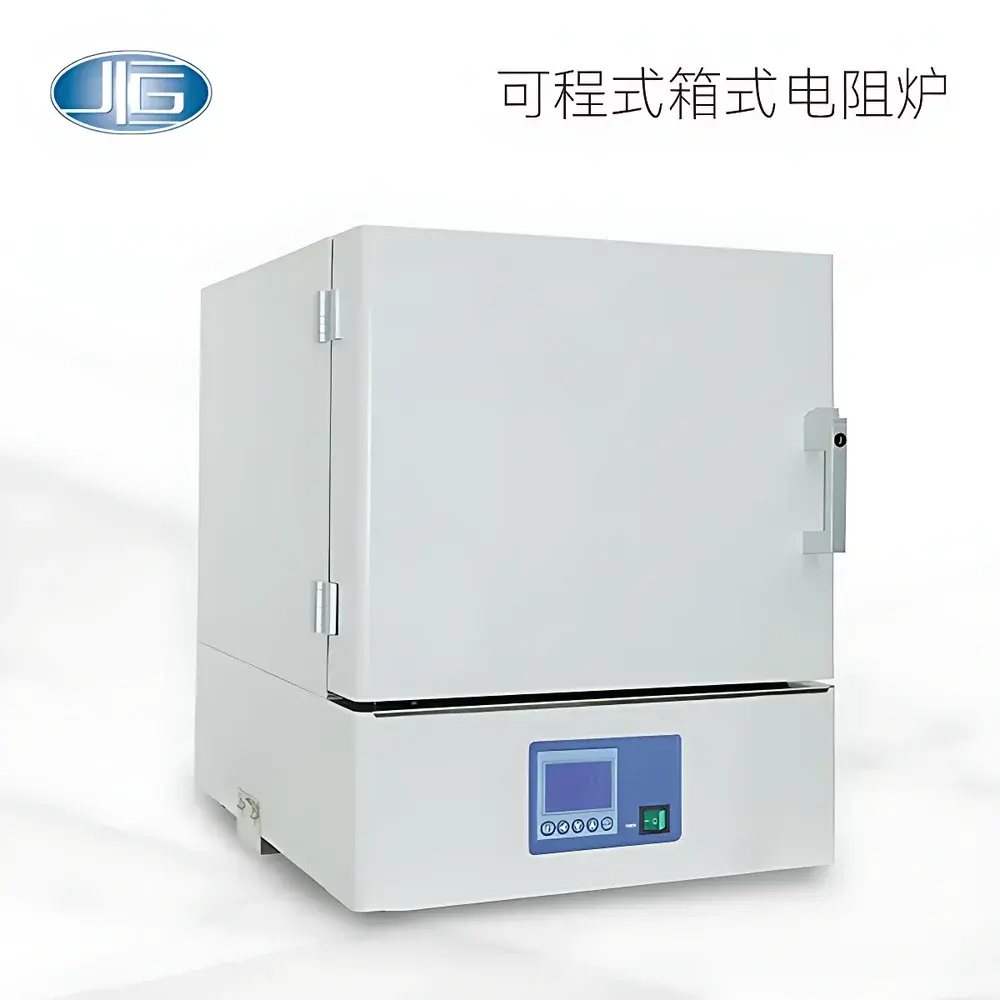
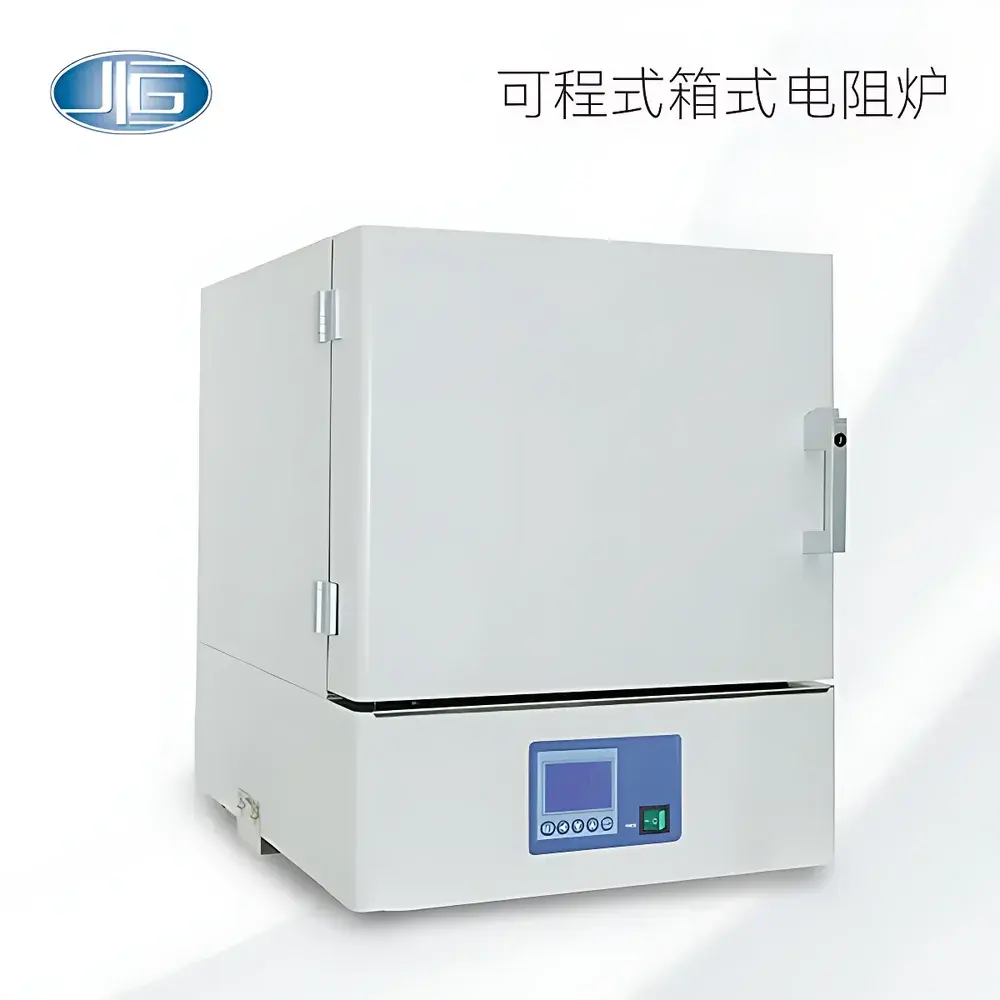
YIHENG BSX2-2.5-12TP Programmable Box-Type Muffle Furnace
| Brand | YIHENG |
|---|---|
| Origin | Shanghai, China |
| Manufacturer Type | Direct Manufacturer |
| Country of Origin | China |
| Instrument Type | Box Furnace |
| Max Temperature | 1200 °C |
| Temperature Control Accuracy | ±1 °C |
| Rated Power | 2.5 kW |
| Heating Rate (to max temp) | ≤45 °C/min |
| Heating Element | Fe-Cr-Al Alloy Resistance Wire |
| Internal Chamber Dimensions | 200 × 120 × 80 mm |
| Nominal Volume | 2 L |
Overview
The YIHENG BSX2-2.5-12TP is a compact, programmable box-type muffle furnace engineered for precision thermal processing in academic laboratories, materials research centers, and quality control environments. It operates on resistive heating principles using high-stability Fe-Cr-Al alloy wire elements embedded within a lightweight, low-thermal-mass ceramic fiber insulation chamber. This architecture enables rapid thermal response, energy-efficient operation, and exceptional temperature uniformity across the 2 L working volume. Designed to meet routine sintering, ashing, calcination, and heat-treatment requirements, the furnace complies with fundamental thermal safety and repeatability expectations for Class I laboratory furnaces per IEC 61010-1 and GB/T 13926 (Chinese national standard for electrical safety in laboratory equipment). Its maximum operating temperature of 1200 °C supports applications involving metal oxides, ceramics, catalysts, and inorganic powders—consistent with ASTM E1111 and ISO 5667-17 thermal treatment protocols.
Key Features
- Lightweight ceramic fiber insulation (silicon-alumina composition) reduces thermal inertia, enabling ≤45 °C/min ramp rates to 1200 °C while minimizing standby power consumption.
- Dual-layer chamber and outer casing design with integrated axial cooling fan maintains external surface temperature near ambient (<45 °C at 1200 °C hold), improving lab ergonomics and reducing HVAC load.
- Microprocessor-based PID temperature controller delivers ±1 °C accuracy over the full 0–1200 °C range, with auto-tuning capability and real-time deviation compensation.
- 7-segment, 63-step programmable logic controller (PLC) interface allows storage of up to seven independent thermal profiles; each step supports dwell time from 0 to 5999 minutes and ramp rate definition.
- Comprehensive hardware-level safety system includes independent overtemperature cut-off (mechanical limit switch), door interlock circuitry, heater open-circuit detection, thermocouple break alarm, EEPROM error monitoring, and audible/visual fault indication.
Sample Compatibility & Compliance
The BSX2-2.5-12TP accommodates crucibles, boats, and shallow trays up to 200 × 120 × 80 mm internal dimensions. Compatible sample forms include powdered solids, pressed pellets, thin-film substrates, and pre-weighed filter papers for gravimetric ash analysis. The muffle configuration ensures atmospheric isolation during heating, eliminating cross-contamination risks inherent in open-tube systems. The furnace meets baseline functional safety requirements for unattended operation under GLP-compliant workflows when paired with external data loggers. While not certified to UL 3101 or CE EN 61000-6-3 out-of-the-box, its electrical architecture conforms to EMC immunity thresholds typical of industrial-grade laboratory instruments. Documentation supports traceable calibration via PtRh/Pt thermocouples (Type S) and NIST-traceable reference standards.
Software & Data Management
The built-in controller provides local parameter entry and real-time display of setpoint, actual temperature, elapsed time, and active step number. Though no proprietary PC software is bundled, the RS485 serial interface (Modbus RTU protocol) enables integration with third-party SCADA platforms, LIMS systems, or custom Python/Node-RED scripts for automated data capture. All program parameters—including ramp rates, dwell durations, and fault logs—are retained in non-volatile memory and survive power interruption. Audit trail functionality is implemented at firmware level: every profile modification, start/stop command, and alarm event is timestamped and stored in a cyclic buffer (last 100 entries). For regulated environments requiring 21 CFR Part 11 compliance, external validation packages and electronic signature modules must be deployed separately.
Applications
- Quantitative ash content determination in food, pharmaceutical excipients, and environmental samples per AOAC 942.05 and USP <281>.
- Pre-sintering of oxide ceramics (e.g., Al2O3, ZrO2) and ferrite precursors prior to hot-pressing or spark plasma sintering.
- Thermal decomposition studies of battery cathode materials (LiCoO2, NMC) and carbonaceous anodes under inert or air atmospheres.
- Residue-on-ignition testing of catalyst supports and filtration media in petrochemical QA/QC labs.
- Calibration verification of thermogravimetric analyzers (TGA) using certified reference materials with known decomposition onset temperatures.
FAQ
What type of thermocouple is used for temperature sensing?
A Type K (chromel-alumel) thermocouple is factory-installed as the primary sensor; optional Type S (platinum-rhodium) probes can be retrofitted for extended stability above 1000 °C.
Is the furnace suitable for use under inert gas purge?
Yes—the chamber features a dedicated gas inlet/outlet port (M8 thread) compatible with standard stainless steel tubing; recommended flow rate: 50–200 mL/min for nitrogen or argon.
Can multiple units be synchronized for parallel thermal profiling?
Not natively; however, RS485 daisy-chaining with Modbus addressing permits coordinated start triggers and centralized status polling via master controller.
What maintenance intervals are recommended for long-term reliability?
Ceramic fiber integrity should be visually inspected quarterly; heating element resistance measured semiannually; fan bearing lubrication performed annually per manufacturer service bulletin SB-BSX2-2023-04.
Does the unit support remote monitoring via Ethernet or Wi-Fi?
No native Ethernet/Wi-Fi module is included; connectivity requires external protocol converter (e.g., RS485-to-Ethernet bridge) configured in transparent mode.



