
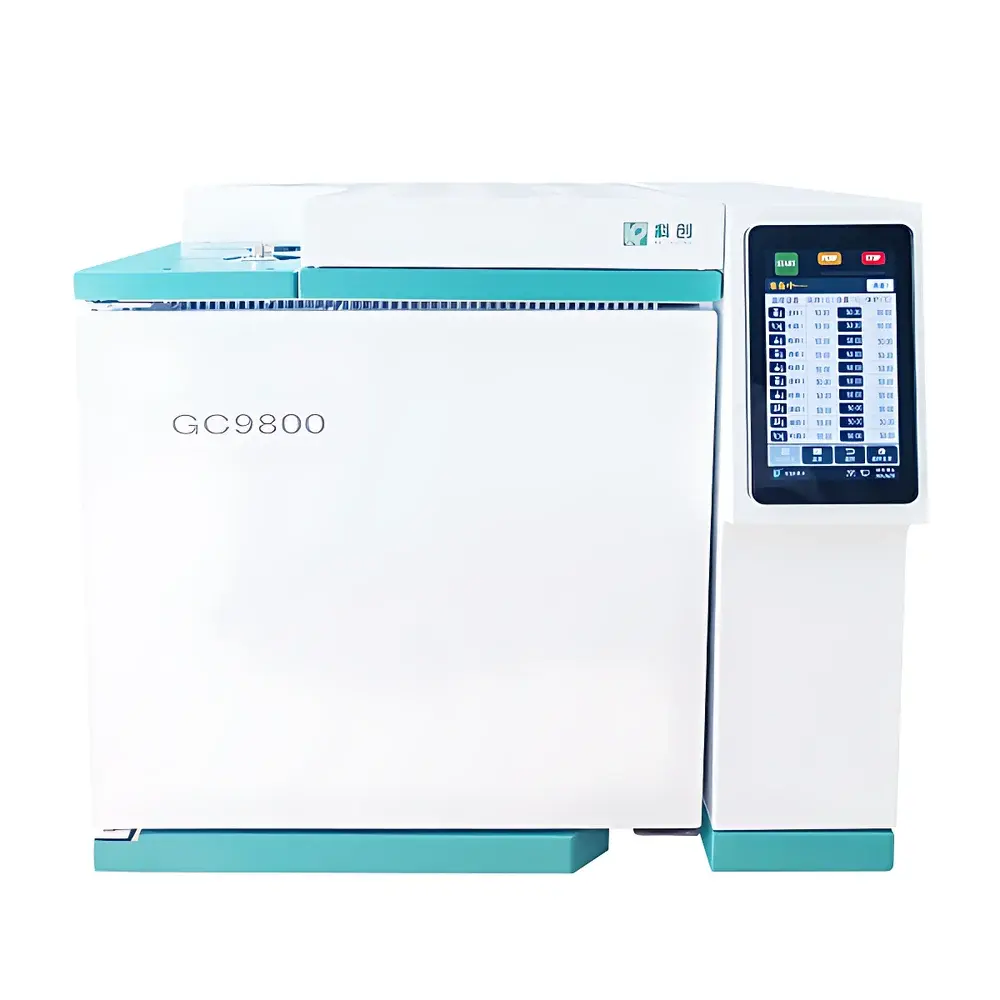
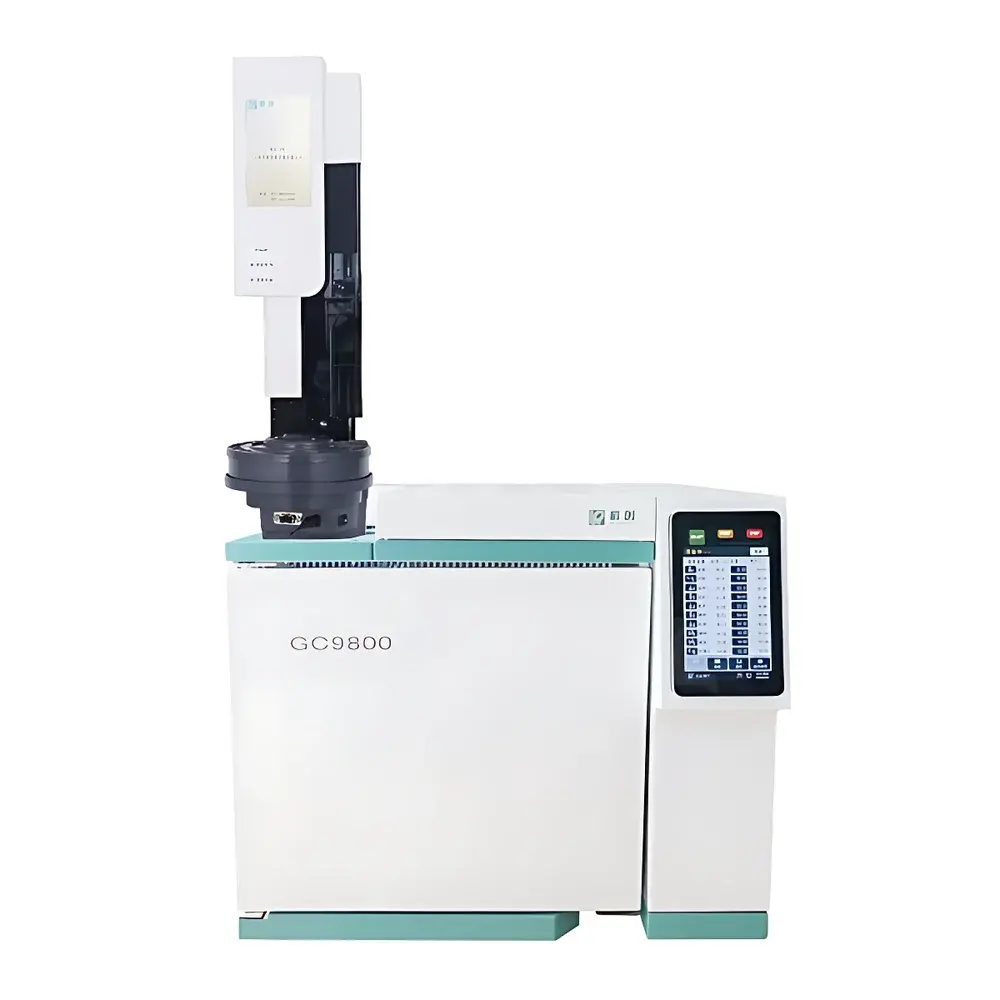
科创 GC9800 Liquefied Petroleum Gas (LPG) Dedicated Gas Chromatograph
| Brand | KeChuang |
|---|---|
| Origin | Shanghai, China |
| Manufacturer Type | Direct Manufacturer |
| Regional Category | Domestic (China) |
| Model | GC9800 LPG-Dedicated Gas Chromatograph |
| Instrument Type | Laboratory Gas Chromatograph |
| Application Field | Petrochemical Industry-Specific |
| Oven Temperature Range | Ambient + 8 °C to 400 °C |
| Ramp Rate | 0.1–40 °C/min |
| Cooling Rate | 400 °C → 50 °C in ≤4 min |
| Carrier Gas Flow Range & Control | 0–100 mL/min |
| Carrier Gas Pressure Range & Control | 0–250 kPa |
| Injector Max Operating Temperature | 300 °C |
| Injector Pressure Setpoint Range | 0–250 kPa |
| Injector Total Flow Setpoint Range | 0–1200 mL/min |
Overview
The KeChuang GC9800 Liquefied Petroleum Gas (LPG) Dedicated Gas Chromatograph is a high-precision, laboratory-grade analytical instrument engineered for quantitative and qualitative analysis of hydrocarbon composition in LPG streams—including propane, propylene, butane, isobutane, butylenes, and trace contaminants such as hydrogen sulfide, methanol, and mercaptans. It operates on the fundamental principle of gas-liquid partition chromatography, where sample components are separated based on differential volatility and affinity toward the stationary phase under controlled temperature and carrier gas flow conditions. Designed specifically for petrochemical quality control laboratories, refinery off-gas monitoring, and custody transfer verification, the GC9800 integrates advanced electronic pressure and flow control (EPC/EFC), dual independently programmable ovens, and multi-detector signal routing—enabling robust, reproducible, and regulatory-compliant analysis per ASTM D2163, ASTM D1835, ISO 6974-2, and GB/T 12208 (Chinese national standard for LPG composition analysis).
Key Features
- 10-channel independent temperature control system, including two fully programmable column ovens with ±0.01 °C thermal stability and up to 16-stage (extendable to unlimited) ramp programming;
- Integrated EPC/EFC system with pressure resolution of 0.001 psi and flow resolution of 0.001 mL/min; supports constant-pressure, constant-flow, and multi-step programmed pressure/flow profiles (up to 8 steps);
- 7-inch industrial-grade capacitive touchscreen interface with real-time baseline monitoring, chromatogram display, and local instrument control;
- RJ45 Ethernet interface enabling digital signal transmission, remote operation, and centralized fleet management—up to 253 units controllable from a single workstation;
- Dual-column oven architecture with rapid cooling capability (350 °C → 50 °C in ≤4 min via motorized backdoor actuation);
- Onboard diagnostics with real-time fault localization, overtemperature cut-off across all heated zones, and automatic thermal safety interlock;
- Modular detector architecture supporting simultaneous TCD, FID, ECD, and FPD configurations with cross-channel signal routing and time-programmed detector switching;
- Embedded chromatography workstation firmware with GLP-compliant audit trail logging, user access levels, and 21 CFR Part 11-ready electronic signature support (when deployed with validated software suite).
Sample Compatibility & Compliance
The GC9800 is optimized for gaseous and liquefied hydrocarbon samples introduced via split/splitless injectors, gas-tight syringes, or automated valve-based sampling systems (e.g., 10-port rotary valves). It accommodates standard capillary columns (e.g., Al₂O₃/KCl PLOT, CP-Low Oxide, or DB-ALC1) and packed columns for C₁–C₅ hydrocarbon separation. The system meets essential requirements for ISO/IEC 17025-accredited testing laboratories and supports full traceability per GMP/GLP documentation workflows. Its temperature stability (<0.1 °C deviation per 10 °C ambient shift) and retention time repeatability (<0.008% RSD) ensure compliance with method validation criteria outlined in USP , EP 2.2.46, and ASTM E1510.
Software & Data Management
The GC9800 runs an embedded Linux-based control firmware with a browser-accessible web UI and optional Windows-native chromatography data system (CDS). The CDS provides ICH-compliant raw data archiving, peak integration with customizable baselines, calibration curve generation (linear, quadratic, or polynomial), and report templates aligned with ISO 17025 reporting clauses. All acquisition parameters, sequence logs, and audit trails are stored in encrypted SQLite databases with immutable timestamps. Remote data export supports CSV, PDF, and .cdf (NetCDF) formats. When configured with network authentication and role-based permissions, the system satisfies FDA 21 CFR Part 11 requirements for electronic records and signatures.
Applications
- Quantitative determination of C₃/C₄ hydrocarbon ratios in commercial LPG per ASTM D2163;
- Trace sulfur compound profiling (H₂S, COS, mercaptans) using FPD or Pulsed Flame Photometric Detection;
- Residual solvent analysis in LPG-derived chemical feedstocks;
- Online process monitoring via automated loop injection and unattended 24/7 operation;
- Refinery alkylation unit feedstock characterization and impurity screening;
- Quality assurance for LPG cylinder filling stations and bulk terminal custody transfer.
FAQ
Is the GC9800 compatible with third-party chromatography data systems?
Yes—the instrument supports standard ASTM E1510-compliant data export and offers optional OPC UA and Modbus TCP interfaces for integration into LIMS or MES environments.
What carrier gases are supported, and how is gas selection managed?
N₂, H₂, He, and Ar are fully supported. EPC/EFC modules auto-detect gas type via user-defined viscosity and compressibility parameters and adjust control algorithms accordingly.
Can the system perform unattended multi-day analysis sequences?
Yes—equipped with 8 programmable external event timers and hardware-triggered autosampler compatibility, it supports scheduled injections, column bake-outs, and detector tuning without manual intervention.
Does the GC9800 meet environmental certification standards for laboratory emissions?
The instrument complies with IEC 61000-6-3 (EMC emission limits) and GB/T 18268.1-2010 (industrial EMC requirements); optional catalytic exhaust scrubbers are available for FID/H₂-rich effluent management.
How is method transfer handled between GC9800 units in multi-site deployments?
Method files—including temperature programs, EPC setpoints, detector configurations, and integration parameters—are stored as portable XML packages and can be validated and deployed across instruments with identical hardware configuration.




