
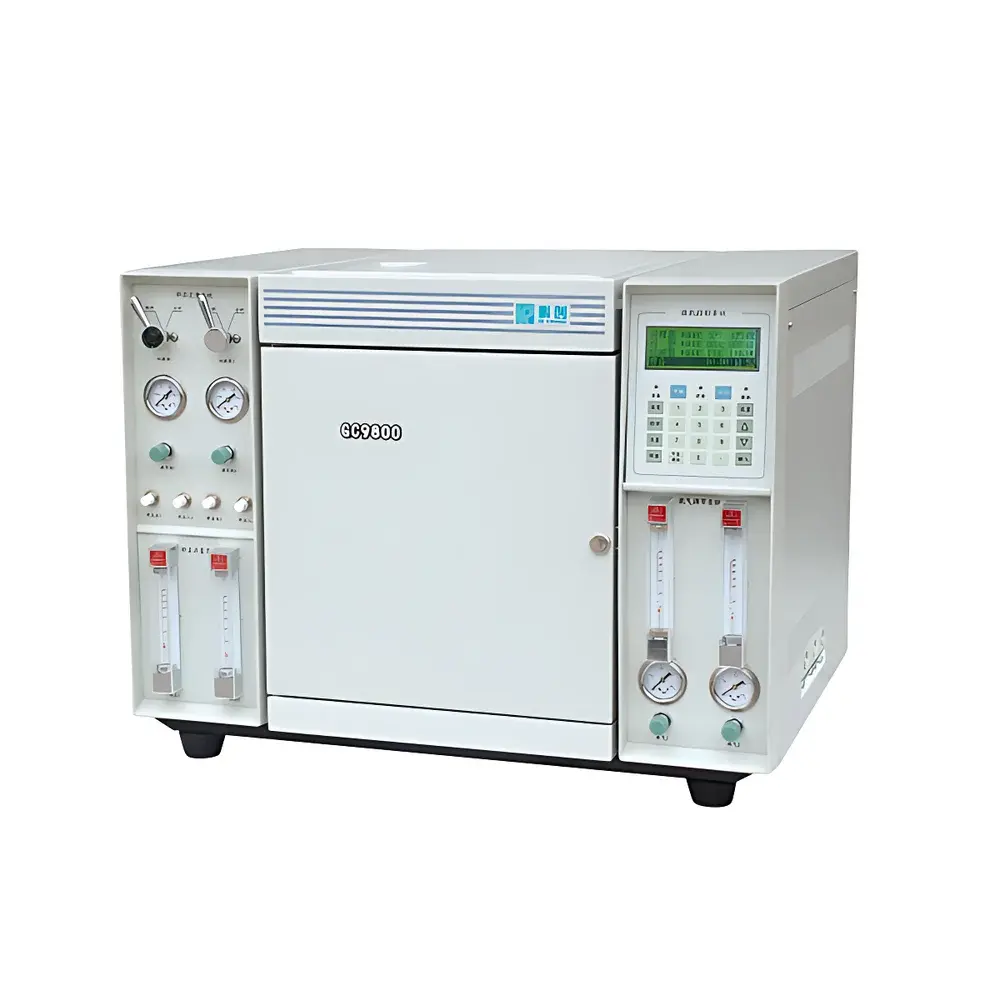
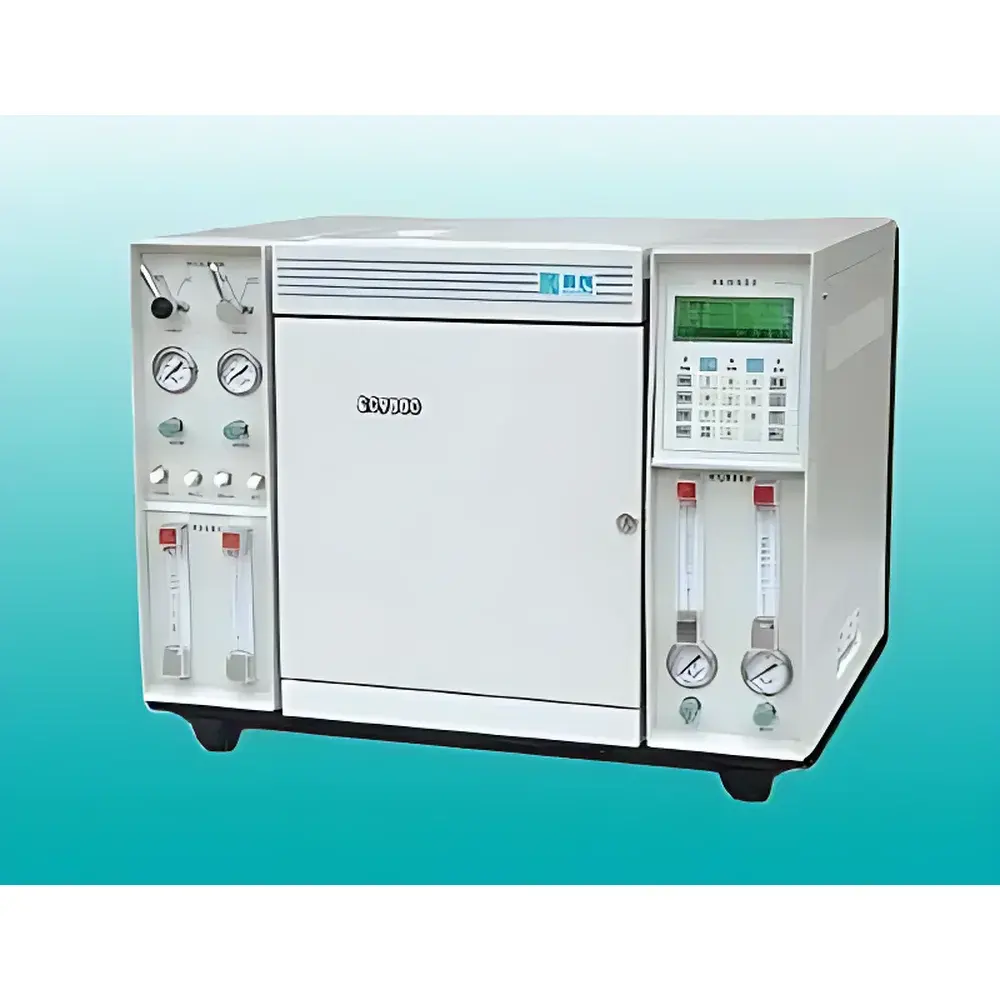
SciTech GC9800 High-Purity Gas Analysis Gas Chromatograph (N/TFH Configuration)
| Brand | SciTech |
|---|---|
| Origin | Shanghai, China |
| Manufacturer Type | Direct Manufacturer |
| Instrument Type | Laboratory Gas Chromatograph |
| Application | Dedicated to High-Purity Gas Analysis |
| Oven Temperature Range | 8 °C above ambient to 400 °C |
| Ramp Rate | 0.1–40 °C/min |
| Cooling Rate | 400 °C → 50 °C in ≤4 min |
| Carrier Gas Flow Control Range | 0–100 mL/min |
| Carrier Gas Pressure Control Range | 0–250 kPa |
| Injector Maximum Temperature | 300 °C |
| Injector Pressure Setting Range | 0–250 kPa |
| Injector Total Flow Setting Range | 0–1200 mL/min |
| Detector Configuration | TCD (TC-1H) + FID + Ni Methanizer + Gas Sampling System + Capillary/Packed Column System |
| Temperature Control Accuracy | ±0.5% of setpoint |
| Programmable Temperature Steps | 8 |
| Linear Range (FID) | 10⁷ |
| Linear Range (TCD) | 10⁵ |
| FID Detection Limit | ≤1×10⁻¹¹ g/s (n-hexadecane) |
| TCD Sensitivity | ≥3000 mV·mL/mg (benzene) |
| FID Baseline Noise | ≤1×10⁻¹³ A |
| TCD Baseline Noise | ≤10 µV |
| FID Baseline Drift | ≤6×10⁻¹³ A/30 min |
| TCD Baseline Drift | ≤60 µV/30 min |
Overview
The SciTech GC9800 is a dedicated laboratory gas chromatograph engineered for high-purity gas analysis in semiconductor manufacturing, ultra-high-purity (UHP) gas production, and electronic specialty gas quality assurance. It operates on the fundamental principle of gas-phase separation—where volatile analytes are partitioned between a mobile carrier gas phase and a stationary phase coated inside fused-silica or stainless-steel capillary/packed columns. The instrument employs dual detection architecture: a flame ionization detector (FID) optimized for hydrocarbon impurities (e.g., CH4, C2H6, C2H4) and a high-sensitivity thermal conductivity detector (TCD, model TC-1H) coupled with a nickel-catalyzed methanizer for trace-level CO/CO2 quantification down to sub-ppb levels. Its column oven supports precise temperature programming (8 ramp steps, 0.1 °C/min resolution) and rapid thermal stabilization—critical for reproducible retention time alignment across multi-day validation runs required under ISO 8573-5 and SEMI F57 standards.
Key Features
- Modular dual-detector configuration: FID + TCD with integrated Ni methanizer enables simultaneous detection of permanent gases (H2, O2, N2, CH4, CO, CO2) and hydrocarbons in a single injection.
- Advanced thermal management: Column oven with automatic rear-opening mechanism achieves cooling from 400 °C to 50 °C in ≤4 minutes, minimizing cycle time without compromising baseline stability.
- Full microprocessor-based control system with six independent temperature zones (oven, injector(s), detectors, methanizer, transfer lines, valve oven) and four time-programmable event sequences for automated valve switching and backflushing.
- Ethernet-enabled architecture (10/100 Mbps) supporting remote instrument control, real-time data streaming, and centralized fleet management—compatible with LIMS integration and FDA 21 CFR Part 11-compliant audit trail modules when deployed with validated software packages.
- Embedded digital signal processing: Analog-to-digital conversion occurs onboard; chromatographic signals are transmitted via Ethernet as calibrated digital data streams—eliminating analog cable noise and enabling deterministic latency-free acquisition.
- Self-diagnostic firmware with real-time fault logging: Identifies heater failures, sensor drift, pressure regulator anomalies, and communication timeouts; triggers automatic thermal shutdown if any zone exceeds user-defined safety thresholds.
Sample Compatibility & Compliance
The GC9800 is validated for analysis of high-purity gases including nitrogen, argon, helium, hydrogen, oxygen, and synthetic air at purity grades ≥99.999% (5.0 grade) and up to 99.9999% (6.0 grade). It accommodates both stainless-steel and fused-silica capillary columns (e.g., ShinCarbon ST, Hayesep Q, PoraPLOT U), as well as packed columns for legacy method transfer. Sample introduction is performed via automated gas-tight syringe, pressure-controlled loop injectors (0.25–5 mL), or direct-line sampling with heated transfer lines. The system complies with ASTM D1945 (analysis of natural gas), ISO 6142-1 (gas mixtures by gravimetry), and supports method development aligned with USP and EP 2.2.27 for residual solvent testing in pharmaceutical excipients where inert gas blank integrity is critical.
Software & Data Management
The GC9800 ships with SciTech ChromaView™, a Windows-based chromatography data system (CDS) featuring GLP/GMP-ready functionality. It provides full electronic signature support, user role-based access control (admin, analyst, reviewer), and immutable audit trails for all acquisition, integration, and reporting actions. Raw data files (.scd) are stored in vendor-neutral format with embedded metadata (instrument ID, method version, calibration status, environmental conditions). Export options include CSV, PDF analytical reports, and XML for seamless ingestion into enterprise quality management systems (QMS) or statistical process control (SPC) platforms. Remote monitoring dashboards allow supervisors to view live chromatograms, system health metrics, and QC sample pass/fail status across distributed laboratories.
Applications
- Trace impurity profiling in bulk and cylinder-grade electronic gases (e.g., detecting ppb-level H2O, CO, CO2, total hydrocarbons in Ar for EUV lithography tool purge gas).
- Residual air component verification in high-purity hydrogen used in fuel cell stack qualification per SAE J2719.
- Leak test gas composition verification (He/N2 blends) per ASTM E1417.
- Process gas monitoring in silicon epitaxy reactors—quantifying dopant precursors (e.g., SiH4, PH3, B2H6) and decomposition by-products.
- Calibration gas certification in national metrology institutes requiring certified reference materials (CRMs) traceable to NIST SRMs.
FAQ
Is the GC9800 compliant with regulatory requirements for GMP environments?
Yes—the instrument supports 21 CFR Part 11 compliance when operated with validated ChromaView™ software, including electronic signatures, audit trails, and secure user authentication.
Can the system be integrated into an existing LIMS or MES infrastructure?
Yes—via standard Ethernet TCP/IP protocols and configurable OPC UA or RESTful API endpoints for bidirectional data exchange.
What column types are recommended for permanent gas analysis?
ShinCarbon ST (30 m × 0.53 mm ID) for CO/CO2/CH4 separation, or Hayesep Q PLOT columns for O2/N2/Ar resolution at sub-ppm levels.
Does the GC9800 support unattended overnight operation?
Yes—equipped with robust thermal stability, auto-recovery after power interruption, and scheduled run queuing for multi-sample batches.
How is detector performance verified and maintained?
Built-in hardware diagnostics monitor filament resistance (TCD) and jet voltage (FID); routine verification uses certified gas standards traceable to ISO/IEC 17025-accredited providers.



