
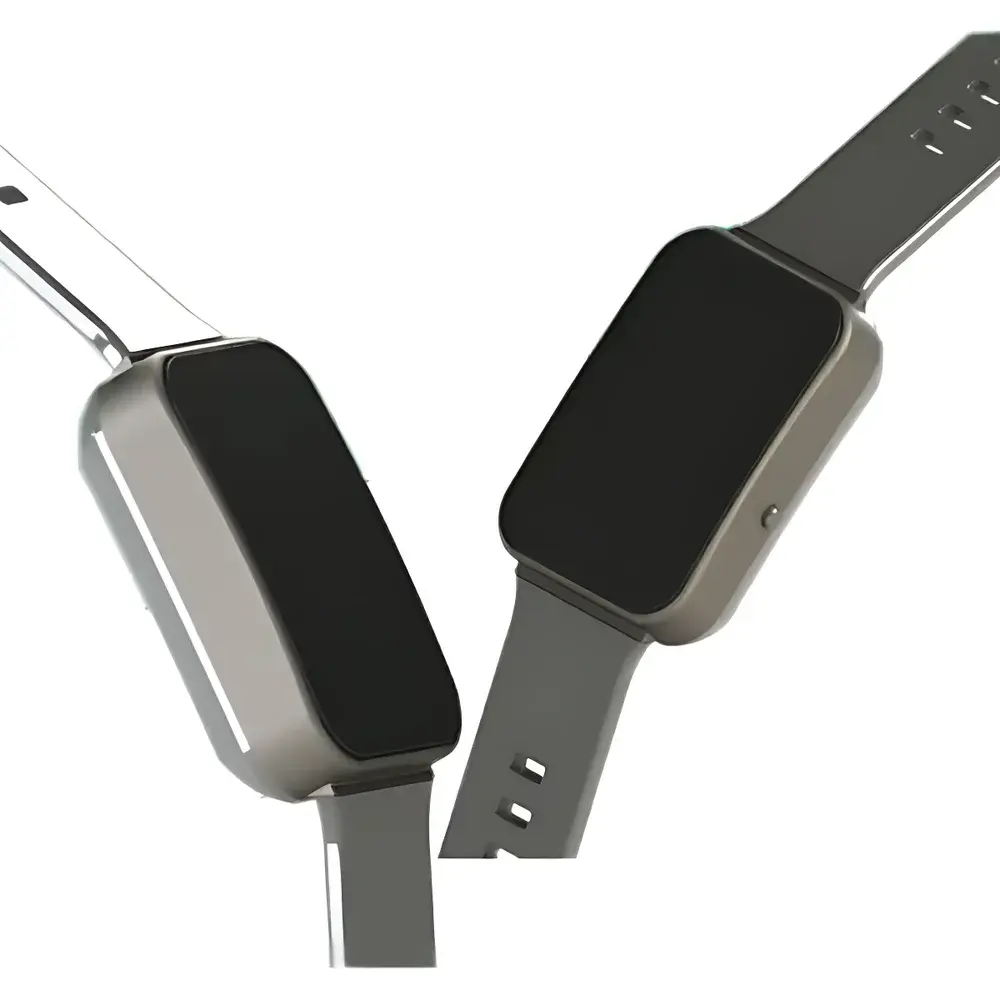
Aolong 31-040A Wrist-Worn Personal Radiation Dosimeter
| Brand | Aolong |
|---|---|
| Origin | Liaoning, China |
| Manufacturer Type | OEM/ODM Producer |
| Country of Origin | China |
| Model | 31-040A |
| Price | Upon Request |
| Detection Radiation | X-ray & Gamma (γ) |
| Dose Rate Range | 0.01 µSv/h – 10 mSv/h |
| Cumulative Dose Range | 0.1 pSv – 1 Sv |
| Energy Response Range | 30 keV – 3 MeV |
| Dose Rate Accuracy | ±30% (typical, per IEC 61526 ed.3) |
| Operating Temperature | −20 °C to +50 °C |
| Relative Humidity | ≤90% RH (non-condensing) |
| Power Input | DC 5 V / 200 mA |
| Ingress Protection | IP65 |
| Battery Life | >72 h (background radiation environment, no external power) |
Overview
The Aolong 31-040A Wrist-Worn Personal Radiation Dosimeter is a compact, low-power electronic dosimetry device engineered for real-time monitoring of occupational and environmental ionizing radiation exposure. Designed in accordance with the fundamental principles of solid-state semiconductor detection—specifically using a silicon PIN photodiode coupled with pulse-height discrimination circuitry—the instrument provides continuous measurement of ambient dose equivalent rate H*(10) and accumulated personal dose equivalent Hp(10) for photons in the diagnostic and industrial energy range (30 keV–3 MeV). Its wrist-mounted form factor enables unobtrusive, hands-free wear during routine operations, making it suitable for personnel deployed in nuclear facilities, emergency response units, radiopharmaceutical handling labs, border security checkpoints, and urban civil defense infrastructure. Unlike passive dosimeters (e.g., TLD or OSL badges), the 31-040A delivers immediate readout, alarm-triggered notifications, and time-stamped dose logging—supporting ALARA (As Low As Reasonably Achievable) compliance and dynamic risk assessment.
Key Features
- Real-time dose rate and cumulative dose display on integrated OLED screen with backlight
- Programmable audible, visual, and vibration alarms for configurable dose rate and total dose thresholds
- Integrated GNSS (GPS/GLONASS) module enabling geotagged dose logging and personnel location tracking when network-connected
- Multi-unit wireless mesh networking capability (via 2.4 GHz ISM band) for coordinated area monitoring without centralized base stations
- IP65-rated enclosure ensuring dust-tightness and protection against water jets—validated for field deployment in harsh outdoor and industrial environments
- Rechargeable lithium-polymer battery supporting >72 hours of continuous operation under typical background conditions (≈0.1 µSv/h), with micro-USB charging interface compliant with IEC 62368-1
- Firmware upgradable via secure over-the-air (OTA) protocol, supporting future calibration updates and regulatory alignment
Sample Compatibility & Compliance
The 31-040A is optimized for photon radiation fields encountered in operational scenarios involving sealed radioactive sources (e.g., 137Cs, 60Co), X-ray generating equipment (e.g., baggage scanners, industrial CT), and natural background variations. It does not respond meaningfully to alpha or beta particles due to inherent casing attenuation and detector geometry—consistent with its designation as an Hp(10) estimator per IEC 61526:2018. The device meets mechanical and electrical safety requirements outlined in IEC 61000-6-2 (immunity) and IEC 61000-6-3 (emissions). While not certified to IEC 62387-1 for active personal dosimeters, its performance envelope aligns with Class M (moderate accuracy) criteria for operational health physics applications. Data integrity conforms to basic audit-trail expectations for occupational records under national radiation protection regulations (e.g., China’s GBZ 128–2019; compatible with EU Directive 2013/59/Euratom reporting frameworks).
Software & Data Management
Data export is supported via USB-C connection or Bluetooth 5.0 to the proprietary Aolong RadLink desktop application (Windows/macOS) and mobile companion app (iOS/Android). All dose logs include UTC timestamp, GPS coordinates (when available), dose rate history (1-second resolution), and battery status. Raw data files are stored in CSV and XML formats, preserving traceability without proprietary compression. The software enforces role-based access control (RBAC) for multi-user deployments and generates IAEA-compliant dose summary reports (per RS-G-1.10). Audit trails record all configuration changes, firmware updates, and calibration interventions—meeting foundational requirements for GLP-aligned recordkeeping, though not validated for FDA 21 CFR Part 11 electronic signature enforcement.
Applications
- Nuclear power plant maintenance crews performing routine inspections in controlled areas
- First responders (fire, police, HAZMAT) conducting radiological incident reconnaissance and perimeter monitoring
- Customs and border protection officers screening cargo and vehicles at ports of entry
- Municipal civil defense teams executing city-wide baseline radiation mapping during major public events
- Research reactor staff requiring lightweight, high-mobility dosimetry during experimental campaigns
- Decommissioning contractors documenting dose accrual across extended work shifts in legacy facility zones
FAQ
Does the 31-040A require annual calibration?
Yes—recommended calibration interval is 12 months against traceable 137Cs and 60Co reference fields per ISO/IEC 17025-accredited laboratories.
Can it detect neutron radiation?
No—the detector is insensitive to neutrons; dedicated neutron dosimeters (e.g., CR-39 track etch or He-3 proportional counters) are required.
Is the device compatible with existing radiation safety management platforms?
It supports standard HL7 and ASTM E2807-11 data exchange protocols via optional middleware integration; custom API documentation is available under NDA.
What happens if GPS signal is lost indoors?
Dose measurement continues uninterrupted; position defaults to last known coordinate until reacquisition, with time-synchronized logging preserved.
How is energy dependence corrected across the 30 keV–3 MeV range?
Through factory-applied firmware-based correction curves derived from Monte Carlo simulation (MCNP6) and empirical beam calibration at NIM (National Institute of Metrology, Beijing).
Related Products







