
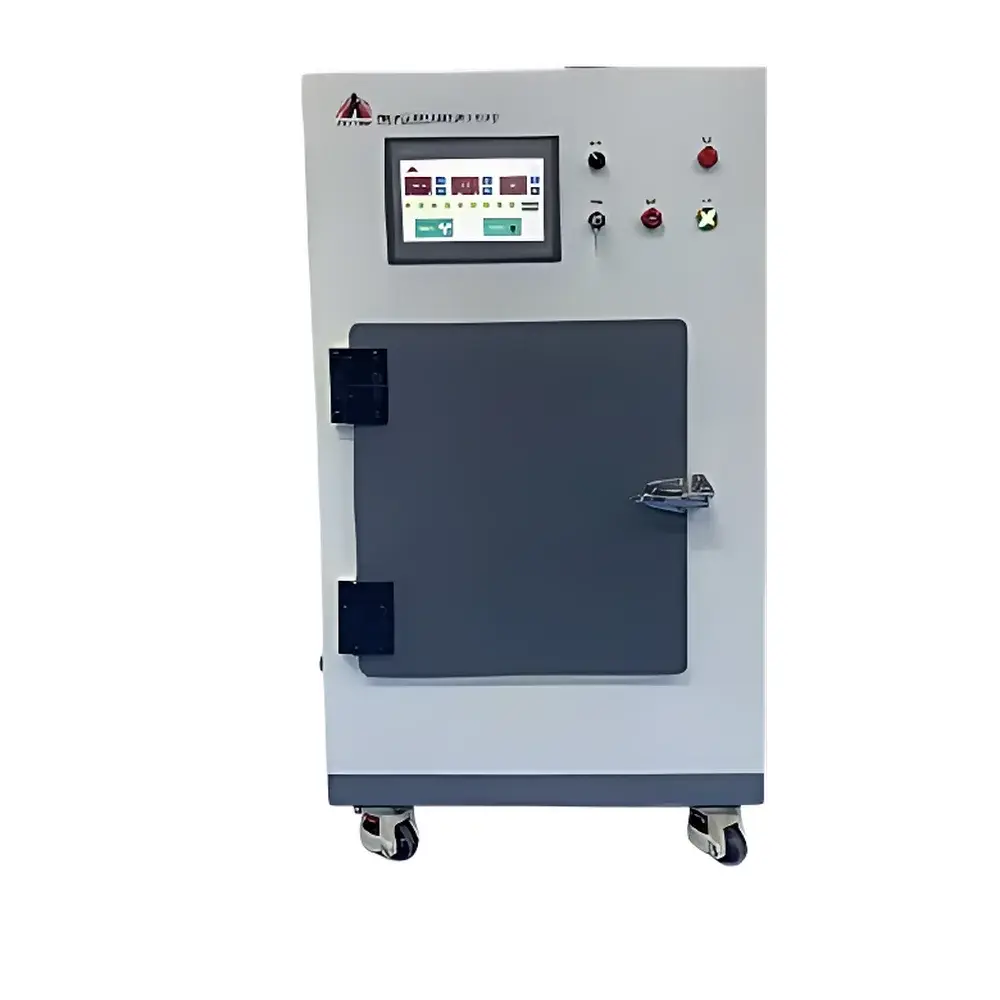
Aolong ChiRad 160C X-ray Irradiator for Biological and Food Irradiation
| Brand | Aolong |
|---|---|
| Origin | Liaoning, China |
| Manufacturer Type | Direct Manufacturer |
| Product Origin | Domestic (China) |
| Model | ChiRad 160C |
| Price | Upon Request |
| X-ray Energy Range | 40–160 kV |
| Tube Current | 10 mA |
| System Power | 800 W (configurable) |
| Focal Spot Size | 1.2 mm |
| Beam Coverage Diameter | 40 cm |
| Source-to-Object Distance | 13–55 cm |
| Exposure Time | 1–180 min |
| Input Power | 220 VAC ±10%, 50/60 Hz, Single-phase, 9 kVA |
| Cooling | Integrated Closed-loop Heat Exchanger |
| Sample Turntable | Motorized, 2 RPM |
| Internal Chamber Dimensions | 335 × 375 × 395 mm (W×D×H) |
| External Dimensions | 730 × 560 × 1300 mm (W×D×H) |
| Weight | 660 kg |
| Leakage Dose | <0.5 µSv/hr at 10 cm from surface (max energy operation) |
Overview
The Aolong ChiRad 160C is a benchtop-to-floor-standing X-ray irradiator engineered for precise, reproducible, and biologically relevant irradiation of biological samples—including mammalian cells, primary tissues, microorganisms, insects, and food matrices—under controlled laboratory conditions. Operating in the 40–160 kV energy range, the system delivers medium-penetrating X-rays optimized for shallow-depth applications: >90% of the absorbed dose is deposited within the first 5 mm of tissue-equivalent material, making it ideal for in vitro cell culture irradiation, bacterial inactivation studies, insect sterilization (SIT), preclinical stem cell ablation, and low-dose food preservation trials. Unlike radioactive isotope-based sources, the ChiRad 160C utilizes a sealed, air-cooled X-ray tube with programmable kV/mA control, eliminating regulatory burdens associated with isotopic licensing while maintaining traceable, NIST-traceable dosimetry compatibility. Its design complies with IEC 60601-2-28 (Medical Electrical Equipment – Particular Requirements for X-ray Equipment for Radiation Therapy) and adheres to national radiation safety standards (e.g., GBZ 126–2011 in China), ensuring safe integration into GLP-compliant laboratories and university core facilities.
Key Features
- Integrated ionization chamber-based real-time dose monitoring—calibrated per ASTM E2627 for X-ray dosimetry—enabling position-specific dose verification across the 40 cm beam field.
- Dual interlocked safety door system with electromagnetic lock, mechanical latch, and emergency stop circuit compliant with ISO 13857 and IEC 61508 SIL2 requirements.
- Motorized sample turntable (2 RPM) with optional high-uniformity rotating stage accessory to improve dose homogeneity (±3% CV over 35 mm diameter at 30 cm SSD).
- Programmable exposure parameters (kV, mA, time, distance) stored in non-volatile memory; unlimited protocol library with user-defined naming and versioning.
- PLC-based control architecture interfaced with Windows 10 IoT Enterprise frontend—supporting audit trail logging, user role management (admin/operator/guest), and password-protected access tiers.
- Thermally stabilized X-ray tube housing with closed-loop heat exchanger ensures consistent output stability (<±0.5% kV drift over 60-min continuous operation).
- Modular irradiation chamber (335 × 375 × 395 mm internal) accommodates multi-well plates, T-flasks, Petri dishes, vials, and custom irradiation jigs; optional OEM integration for robotic sample loading or environmental chamber coupling.
Sample Compatibility & Compliance
The ChiRad 160C supports diverse sample formats without requiring secondary shielding: adherent and suspension cell cultures (e.g., Jurkat, HEK293, primary PBMCs), microbial suspensions (E. coli, S. aureus, L. monocytogenes), insect pupae (Drosophila, Ceratitis capitata), rodent tissues (spleen, thymus, bone marrow aspirates), and packaged food units (spices, herbs, frozen berries). All irradiation protocols are compatible with ISO/IEC 17025-accredited dosimetry practices and align with FDA guidance for food irradiation (21 CFR Part 179) and USP for radiobiological assay validation. The system’s leakage dose (<0.5 µSv/hr at 10 cm) meets IAEA RS-G-1.9 requirements for “radiation generating equipment” used in non-clinical research settings, eliminating the need for dedicated vault construction in most institutional environments.
Software & Data Management
The proprietary ChiRad Control Suite runs on a dedicated Windows-based HMI with full 21 CFR Part 11 compliance options: electronic signatures, immutable audit trails, session timeout, and encrypted database storage. Each irradiation event logs operator ID, timestamp, protocol name, kV/mA/timer settings, measured dose (Gy), chamber temperature, and turntable status. Data export is supported in CSV, XML, and PDF formats—compatible with LIMS integration via RESTful API. Optional IQ/OQ/PQ documentation packages are available for GMP-regulated labs conducting radioprotectant screening or irradiated vaccine development.
Applications
- Immunology & Hematology: Myeloablation prior to bone marrow transplantation; T-cell anergy induction; dendritic cell maturation inhibition.
- Cancer Biology: Clonogenic survival assays; radiosensitizer screening; DNA double-strand break kinetics (γH2AX foci quantification); tumor spheroid irradiation.
- Microbiology: Sterilization validation for probiotics; radiation-resistant strain isolation; DNA repair pathway characterization (e.g., recA mutants).
- Insect Pest Control: Sterile Insect Technique (SIT) dose optimization for Lepidoptera and Diptera species.
- Food Safety Research: Pathogen log-reduction validation (Salmonella, Listeria); shelf-life extension studies; nutrient retention analysis post-irradiation.
- Drug Development: Radioprotectant efficacy testing (e.g., amifostine analogs); radiomimetic compound screening.
FAQ
Is the ChiRad 160C suitable for small animal irradiation?
Yes—optimized for superficial irradiation of mice (e.g., skin, tail vein, ear pinna) and localized organ targeting under anesthesia; not intended for whole-body deep-tissue irradiation.
Does the system require external radiation shielding?
No—its structural design and leakage performance (<0.5 µSv/hr) meet international exemption criteria for installation in standard laboratory rooms without additional lead lining.
Can dose calibration be performed in-house?
Yes—using traceable alanine/EPR or radiochromic film dosimeters; factory-provided calibration certificate references NIST-traceable standards and includes uncertainty budget per ISO/IEC 17025.
What maintenance is required for the X-ray tube?
Annual preventive maintenance recommended; tube lifetime exceeds 5,000 hours under typical usage (10–30 min/session, ≤3 sessions/day).
Is remote operation supported?
Yes—via secure RDP or VPN-enabled network interface; full control and real-time dose monitoring accessible from authorized workstations within institutional intranet.
Related Products







