
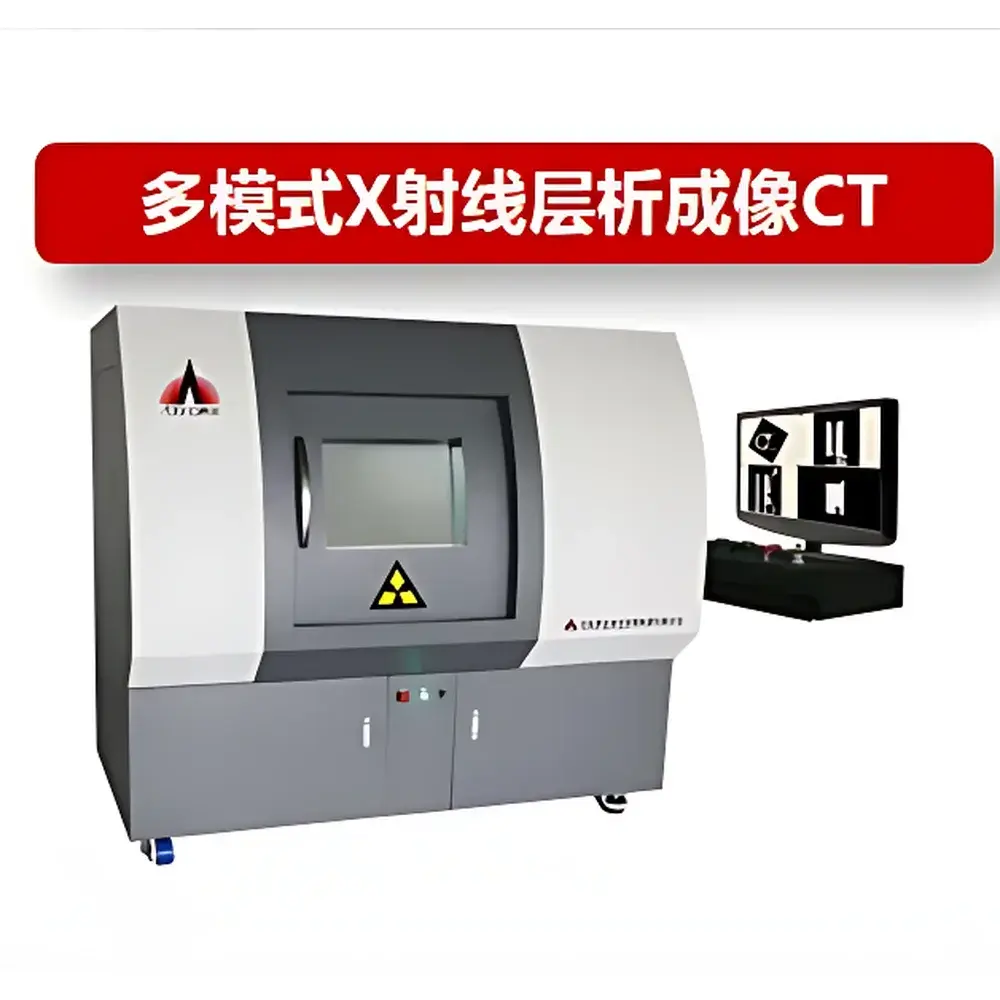
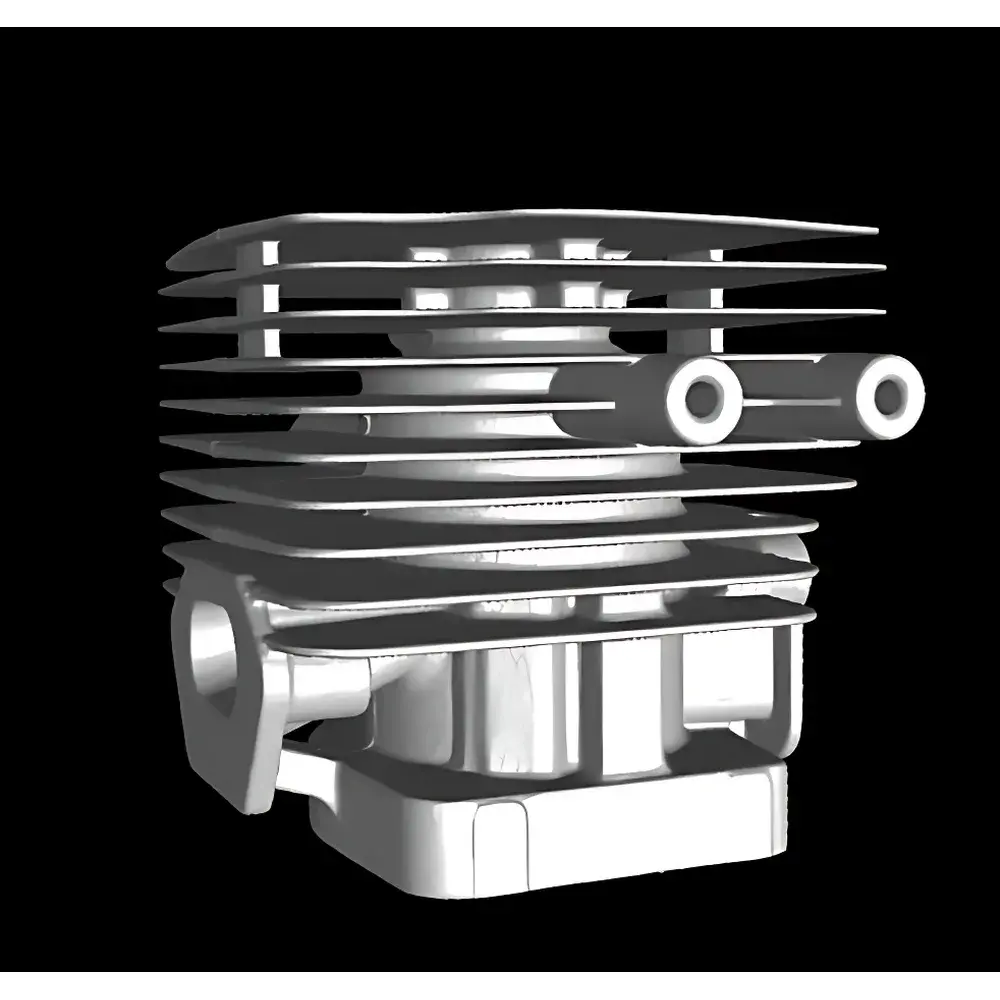
Aolong AL-CT-1000 Industrial Multi-Mode X-ray Computed Tomography System
| Brand | Aolong |
|---|---|
| Origin | Liaoning, China |
| Manufacturer Type | OEM Manufacturer |
| Country of Origin | China |
| Model | AL-CT-1000 |
| X-ray Energy Range | 20–450 kV |
| Steel Penetration Capacity | 50 mm (A3 steel) |
| Spatial Resolution | 3.0 LP/mm |
| Density Resolution | 0.5% |
| Field of View | 43 × 43 cm |
| Dimensional Measurement Accuracy | ±1 µm |
| Density Measurement Accuracy | ±1 µg/cm³ |
| Detection Modes | Cone-beam CT, Helical CT, Planar CT, Limited-angle CT, Dual-Energy Spectral CT |
Overview
The Aolong AL-CT-1000 Industrial Multi-Mode X-ray Computed Tomography System is a high-flexibility, laboratory- and production-floor-deployable micro-CT platform engineered for non-destructive internal structure characterization, dimensional metrology, and density-based material analysis. Based on the physical principle of X-ray attenuation tomography—where differential absorption across multiple projection angles enables volumetric reconstruction—the AL-CT-1000 supports quantitative 3D imaging with sub-micrometer metrological traceability. Its modular X-ray source architecture accommodates micro-focus (≤5 µm focal spot), small-focus (≤30 µm), and large-focus (≥100 µm) configurations, enabling adaptive selection of resolution, flux, and penetration depth per application requirement. Designed for industrial-grade robustness and long-term stability, the system integrates a precision rotary/linear scanning stage, high-dynamic-range flat-panel detector array, and real-time reconstruction engine—making it suitable for both R&D validation and inline QA/QC environments.
Key Features
- Multi-mode acquisition architecture: Supports cone-beam CT, helical CT, planar (laminographic) CT, limited-angle CT, and dual-energy spectral CT—each with dedicated geometric calibration and reconstruction protocols.
- Triple-focus X-ray source system: Enables dynamic switching between micro-focus (high-resolution defect detection), small-focus (balanced throughput/resolution), and large-focus (high-flux thick-section imaging) modes without hardware reconfiguration.
- Dual-energy spectral acquisition: Simultaneous or sequential low/high kV projections allow material decomposition, effective atomic number mapping, and suppression of beam-hardening artifacts in heterogeneous metal components.
- Real-time 2D/3D AI-assisted defect recognition: Integrated deep learning inference engine performs automated classification (porosity, cracking, inclusions), localization, and morphometric quantification directly on reconstructed volumes or projection streams.
- Metrology-grade mechanical design: Linear encoders with ±0.5 µm repeatability, air-bearing rotation stage (±2 arcsec angular accuracy), and thermal drift compensation ensure traceable dimensional measurement compliance with ISO 15530-3 and VDI/VDE 2634 Part 2 standards.
Sample Compatibility & Compliance
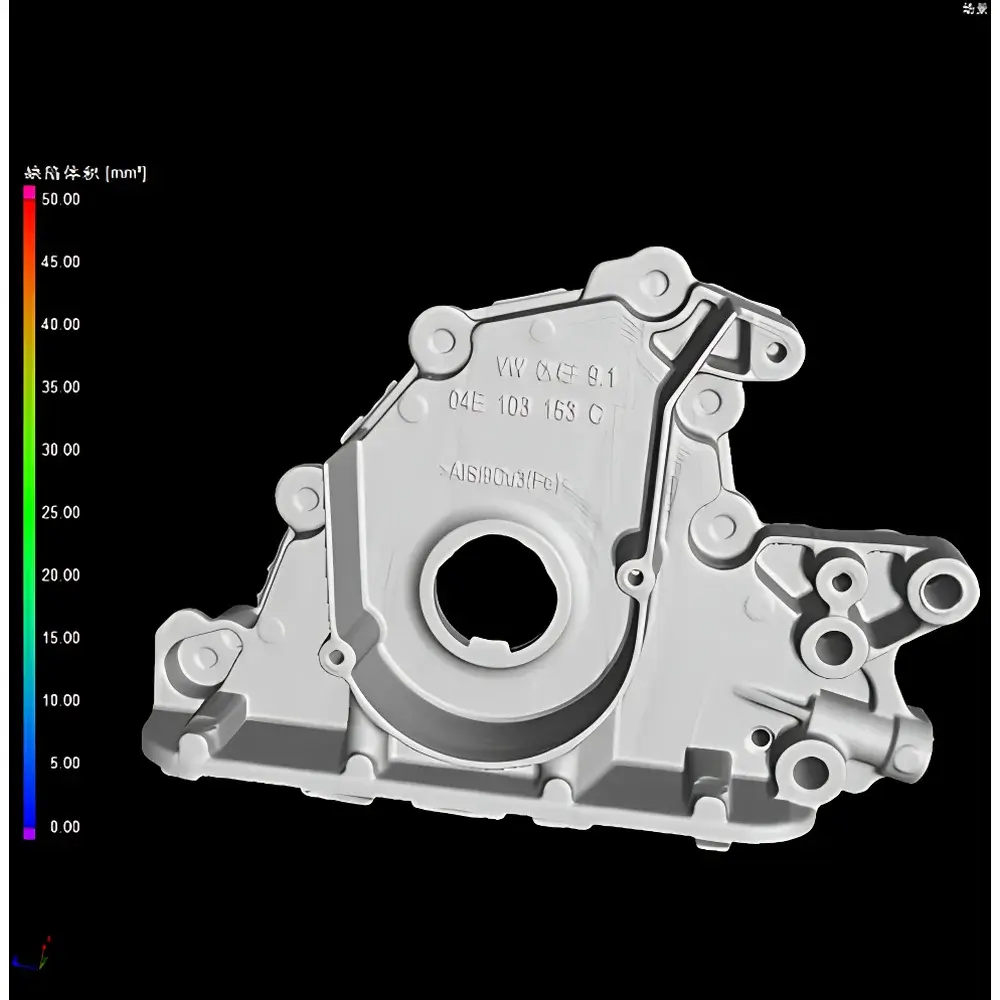
The AL-CT-1000 accommodates samples up to 43 × 43 cm in lateral dimension and up to 50 mm thickness in A3 structural steel—covering a broad range of electronic assemblies, turbine blades, additive-manufactured metal parts, composite laminates, and archaeological artifacts. Its dual-energy capability is particularly effective for single-material but geometrically complex components (e.g., cast aluminum housings with varying wall thicknesses) where conventional monoenergetic CT suffers from contrast saturation or streak artifacts. The system complies with IEC 61331-1 (radiation protection), ISO 12504-2 (NDT terminology), and supports audit-ready documentation per ISO/IEC 17025 and GLP/GMP requirements. Optional FDA 21 CFR Part 11-compliant software modules provide electronic signatures, role-based access control, and immutable audit trails for regulated industries.
Software & Data Management
Built on a modular, API-accessible software framework, the AL-CT-1000 includes three core applications: ScanMaster (geometry-aware scan planning with automatic trajectory optimization), ReconPro (GPU-accelerated FDK, iterative SART, and model-based reconstruction with scatter correction), and InspectAI (AI-powered volumetric analysis with customizable U-Net architectures trained on domain-specific defect libraries). All software modules support DICOM-CT export, ASTM E2737-21 metadata embedding, and direct integration with common PLM (e.g., Teamcenter, Windchill) and MES platforms via RESTful APIs. Raw projection data, reconstructed volumes (NIfTI, TIFF stack), and measurement reports are stored in a versioned, timestamped repository with SHA-256 checksum integrity verification.
Applications
- Advanced Manufacturing: Porosity mapping in laser powder bed fusion (LPBF) components; as-built vs. CAD deviation analysis; internal channel verification in conformal cooling molds.
- Aerospace & Defense: Inspection of turbine disk dovetail joints; detection of intergranular oxidation in nickel superalloys; fiber orientation analysis in carbon-fiber-reinforced polymer (CFRP) laminates.
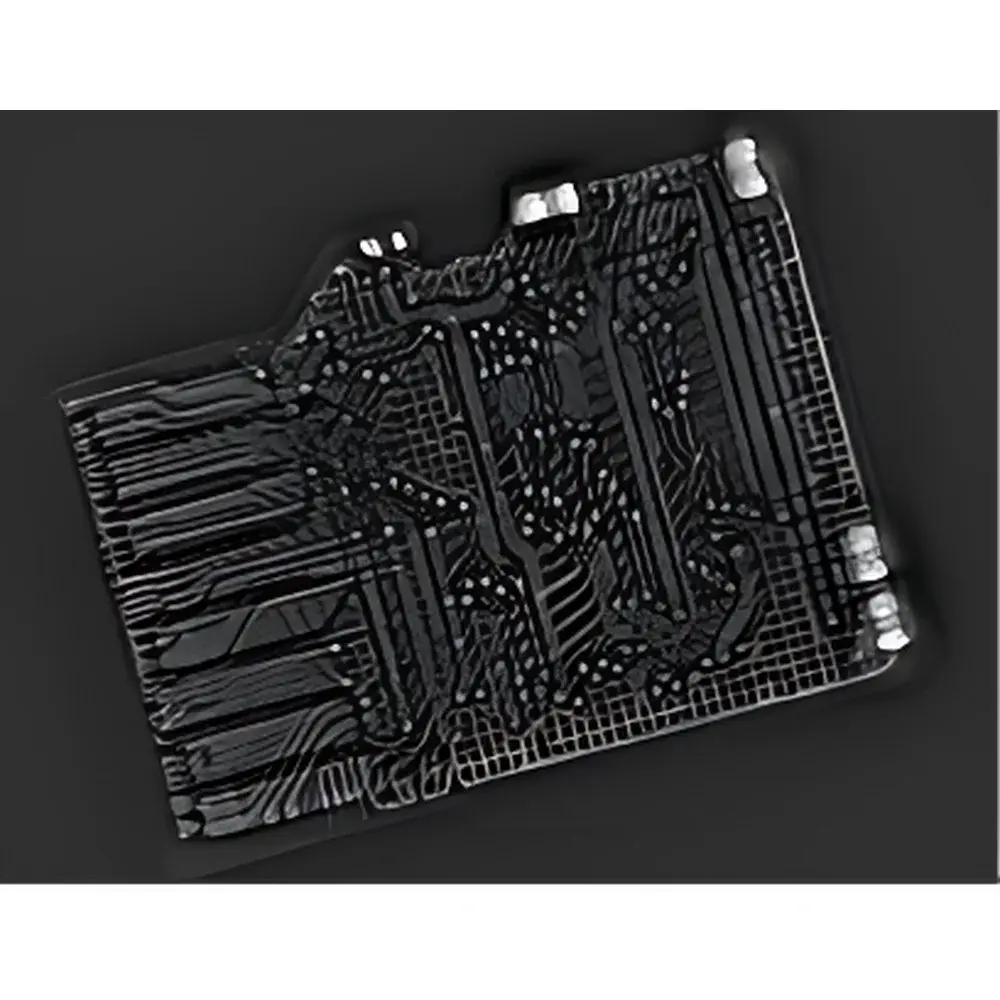
- Electronics: Void detection in solder joints (IPC-A-610 Class 3); wire bond integrity assessment; encapsulant delamination quantification in stacked-die packages.
- Materials Science Research: In situ deformation studies using load-stage-compatible sample holders; phase distribution analysis in multiphase alloys; pore network modeling for battery electrode characterization.
- Cultural Heritage: Non-invasive stratigraphic analysis of painted layers; corrosion product identification in bronze artifacts; internal joinery verification in wooden sculptures.
FAQ
What regulatory standards does the AL-CT-1000 support for quality-critical inspection?
The system supports documentation workflows compliant with ISO 9001, AS9100, and ISO/IEC 17025. Optional software modules provide full 21 CFR Part 11 compliance—including electronic signatures, audit trail generation, and user privilege management—for pharmaceutical, medical device, and aerospace QA departments.
Can the AL-CT-1000 perform quantitative density measurements across heterogeneous materials?
Yes—via dual-energy spectral CT acquisition and basis material decomposition algorithms, the system delivers calibrated electron density (e⁻/cm³) and effective atomic number (Zeff) maps with ±1 µg/cm³ accuracy under controlled calibration conditions using NIST-traceable phantoms.
Is the AI defect recognition module customizable for proprietary defect types?
Yes—InspectAI supports transfer learning with user-provided annotated datasets. Customers may train custom models for unique failure modes (e.g., specific crack morphologies in investment-cast titanium) and deploy them without vendor dependency.
How is geometric accuracy validated and maintained over time?
The system includes a certified reference phantom (traceable to PTB/NIM) for daily geometric calibration. Software-driven self-check routines verify stage positioning linearity, detector pixel pitch stability, and source-detector alignment every 8 operational hours—or prior to critical measurement sessions.



