
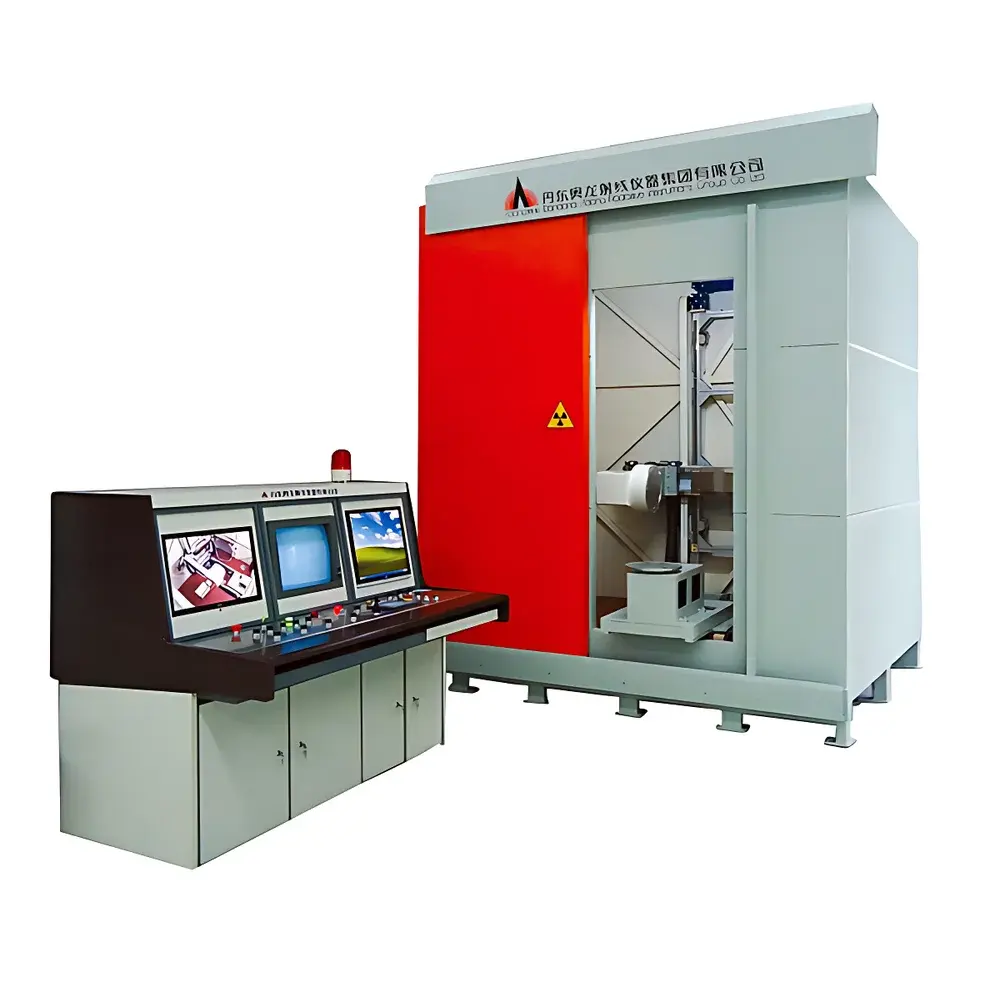
Aolong XYD-225 Industrial Real-Time X-ray Imaging System
| Brand | Aolong |
|---|---|
| Origin | Liaoning, China |
| Manufacturer Type | OEM Manufacturer |
| Country of Origin | China |
| Model | XYD-225 |
| Price | Upon Request |
| X-ray Tube Voltage | 20–450 kV |
| X-ray Tube Current | 0–20 mA |
| System Spatial Resolution | 16–60 lp/cm |
| System Sensitivity | 0.7–2.0% |
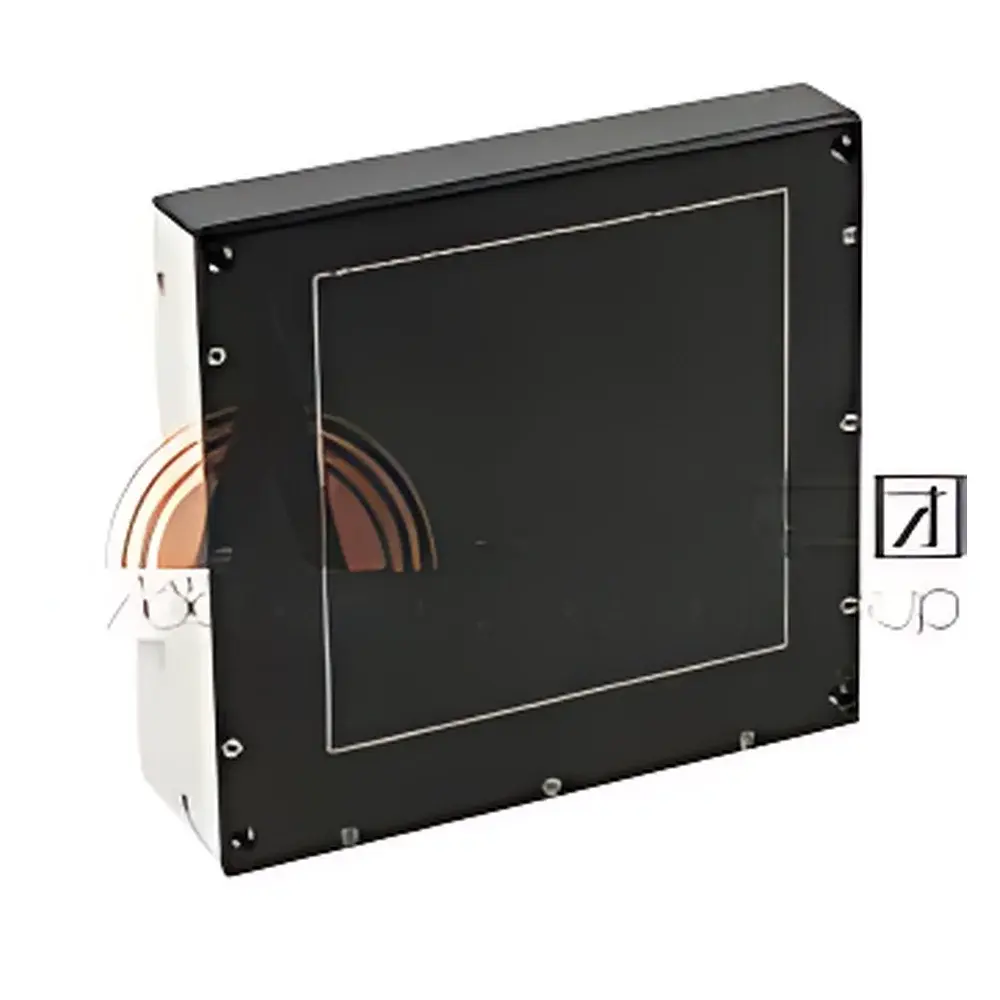
| Detector Options | Digital Flat Panel Detector / Micron-Grade Linear Array Detector / Image Intensifier |
| Motion Platform Axes | 4–N axes (Basic / Standard / Advanced configurations) |
| Radiation Safety Compliance | Certified per CNPC-GBZ 138–2019 and GB 18871–2002 |
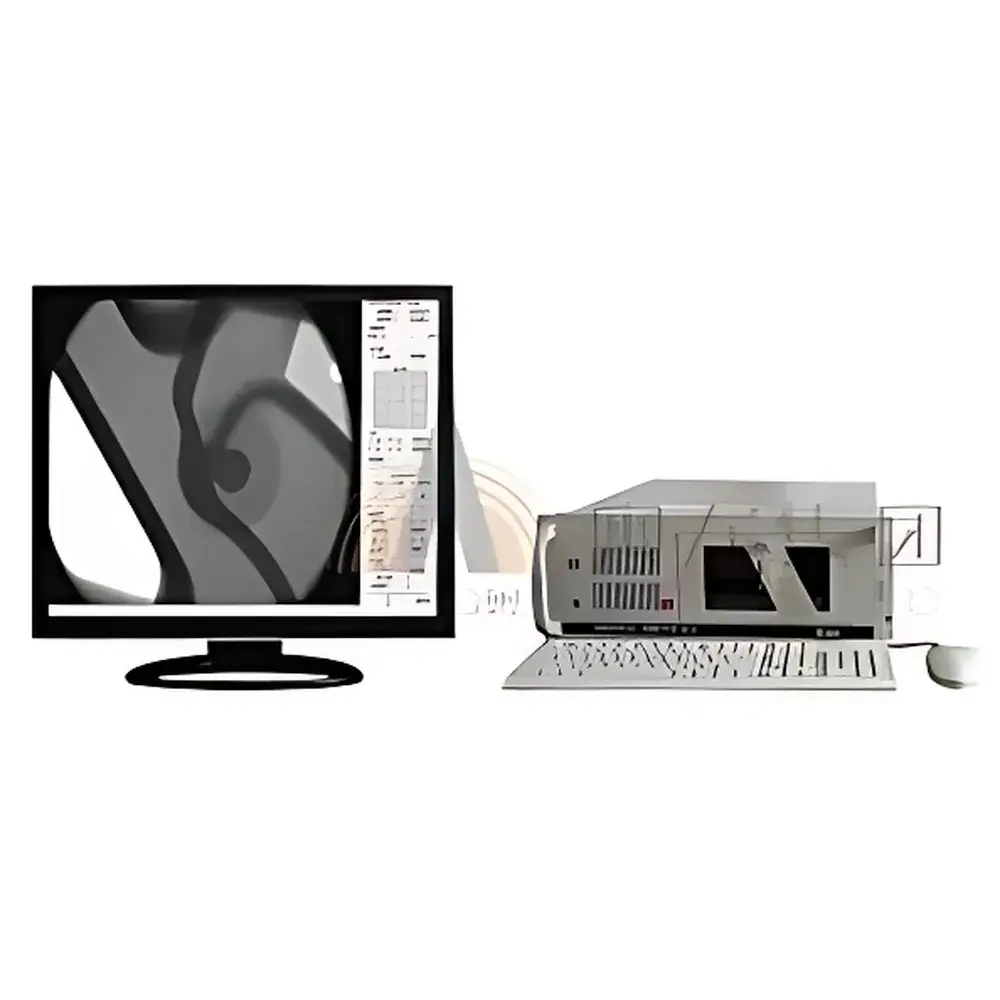
| Software Features | Real-time dynamic imaging, defect quantification (size/gray-level), automated reporting, audit-trail-enabled data logging, dynamic playback, laser positioning, edge enhancement, pseudo-color mapping, noise reduction (2–512 frame averaging), window/level adjustment, GLP-compliant metadata tagging (part ID, operator, timestamp, inspection parameters) |
Overview
The Aolong XYD-225 Industrial Real-Time X-ray Imaging System is a high-performance, CE-compliant NDT platform engineered for non-destructive evaluation of internal structural integrity across mission-critical components. Based on real-time radiographic imaging principles—utilizing controlled X-ray transmission through materials followed by digital detection—the system delivers dynamic, high-fidelity projection images with sub-millimeter spatial resolution. Unlike static film-based or batch-scanned CT systems, the XYD-225 enables continuous in-line monitoring of moving or rotating parts, making it suitable for high-throughput production environments including aerospace turbine housing inspection, automotive wheel casting verification, and pressure vessel certification. Its modular architecture integrates a high-stability X-ray generator, programmable multi-axis mechanical handling system, radiation-shielded enclosure, and ISO/IEC 17025-aligned image acquisition pipeline—all designed to meet the repeatability, traceability, and regulatory requirements of ASME BPVC Section V, ASTM E2737, and ISO 17636-2.
Key Features
- Multi-voltage X-ray source (20–450 kV) with digitally regulated tube current (0–20 mA), enabling optimized penetration for aluminum, steel, titanium, and composite assemblies
- Selectable detector architectures: high-dynamic-range flat-panel detectors (FPDs), micron-resolution linear array sensors for tire cord imaging, or high-luminance image intensifiers for legacy compatibility
- Configurable motion platforms: 4-axis (X/Y/Z/rotation), 5-axis (with tilt), or fully customizable N-axis scanning for complex geometry alignment and tomographic reconstruction readiness
- Real-time imaging engine supporting ≥30 fps frame rate at full detector resolution, with hardware-accelerated dynamic range compression and motion artifact suppression
- Integrated lead-lined shielding cabin compliant with national radiation safety standards (GB 18871–2002), certified by provincial nuclear regulatory authorities
- Onboard laser crosshair projection and encoder-synchronized positional metadata capture for metrological traceability of defect coordinates
Sample Compatibility & Compliance
The XYD-225 accommodates samples ranging from small electronic encapsulated modules (≤50 mm diameter) to large industrial pressure vessels (up to Ø1,200 mm × 2,500 mm L). It supports standardized inspection protocols for castings (ASTM E505), welded joints (ISO 10675-1), composite laminates (ASTM D790), and rubber-tire assemblies (SAE J2673). All system firmware and software logs maintain timestamped, user-authenticated records aligned with FDA 21 CFR Part 11 requirements for electronic signatures and audit trails. Radiation output profiles are validated annually per IAEA SSG-46 guidelines, and dose maps are archived with each inspection dataset for ALARA compliance documentation.
Software & Data Management
The proprietary Aolong VisionSuite™ v4.2 software provides a unified interface for acquisition control, image enhancement, quantitative analysis, and report generation. Core capabilities include dual-energy subtraction, gray-level histogram equalization, adaptive median filtering (2–512 frame temporal averaging), and sub-pixel edge localization algorithms compliant with ISO 5577 definitions of contrast sensitivity. Defect measurement tools support ISO 10893-2-compliant flaw sizing with uncertainty estimation per GUM (JCGM 100:2008). All datasets are stored in DICOM 3.0 format with embedded EXIF metadata; optional integration with enterprise LIMS or MES via HL7/FHIR APIs ensures seamless QA/QC workflow integration. Software validation documentation (IQ/OQ/PQ) is provided for GMP-regulated facilities.
Applications
- Aerospace: Inspection of turbine blades, honeycomb panels, and additively manufactured structural brackets for porosity, inclusions, and layer delamination
- Automotive: In-process verification of aluminum die-cast wheels, brake calipers, and EV battery enclosures for shrinkage cavities and cold shuts
- Energy: Certification of LNG cylinder welds, pipeline girth welds, and wind turbine gearbox housings per API RP 1104 and EN 1435
- Tire Manufacturing: Automated detection of steel belt misalignment, fabric ply separation, and foreign object debris (FOD) in radial and bias-ply tires
- Rail & Heavy Transport: Structural assessment of bogie frames, couplers, and axle forgings under EN 1369 and UIC 801-2
- Electronics: Void analysis in solder joints, wire bond integrity checks, and PCB laminate layer registration verification
FAQ
Does the XYD-225 support automated defect classification?
Yes—VisionSuite™ includes configurable rule-based AI modules trained on industry-specific defect libraries (e.g., ASTM E2862 for casting anomalies). Classification outputs are exportable as CSV with confidence scoring and can be linked to MES-triggered quarantine workflows.
Can the system be integrated into an existing production line conveyor?
Absolutely—the mechanical platform offers PLC-compatible I/O interfaces (PROFINET, EtherCAT, Modbus TCP) and supports custom fixture mounting for inline integration with upstream/downstream automation.
Is remote diagnostics and software update capability available?
Yes—secure TLS 1.3-enabled remote access allows authorized service engineers to perform firmware updates, calibration validation, and log analysis without on-site visits.
What documentation is supplied for regulatory audits?
Full technical file per MDR Annex II, including radiation safety certificates, electromagnetic compatibility (EMC) test reports (GB/T 18268.1–2010), software validation summary, and traceable calibration records for all critical subsystems.
Are training and application support services offered internationally?
Aolong provides factory-certified operator training (3-day onsite or virtual), application engineering consultation for process-specific setup, and annual preventive maintenance contracts with SLA-governed response times.



