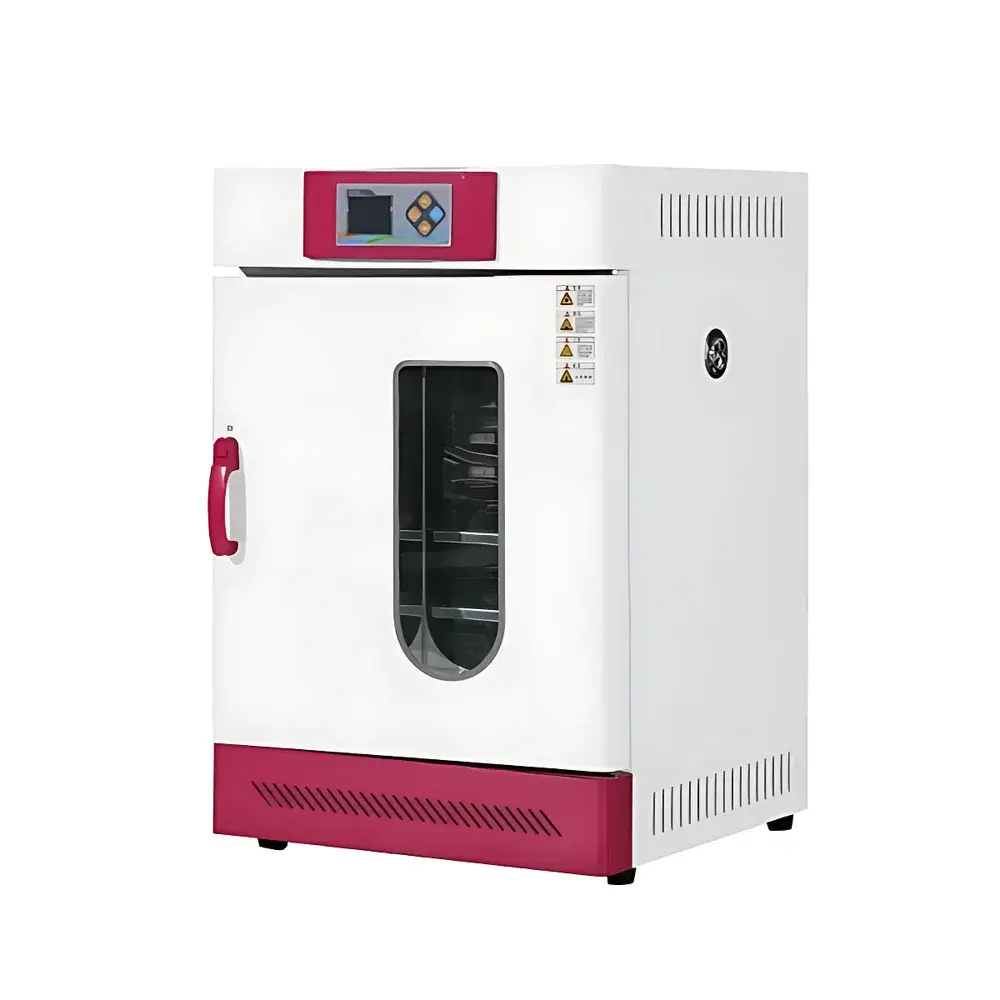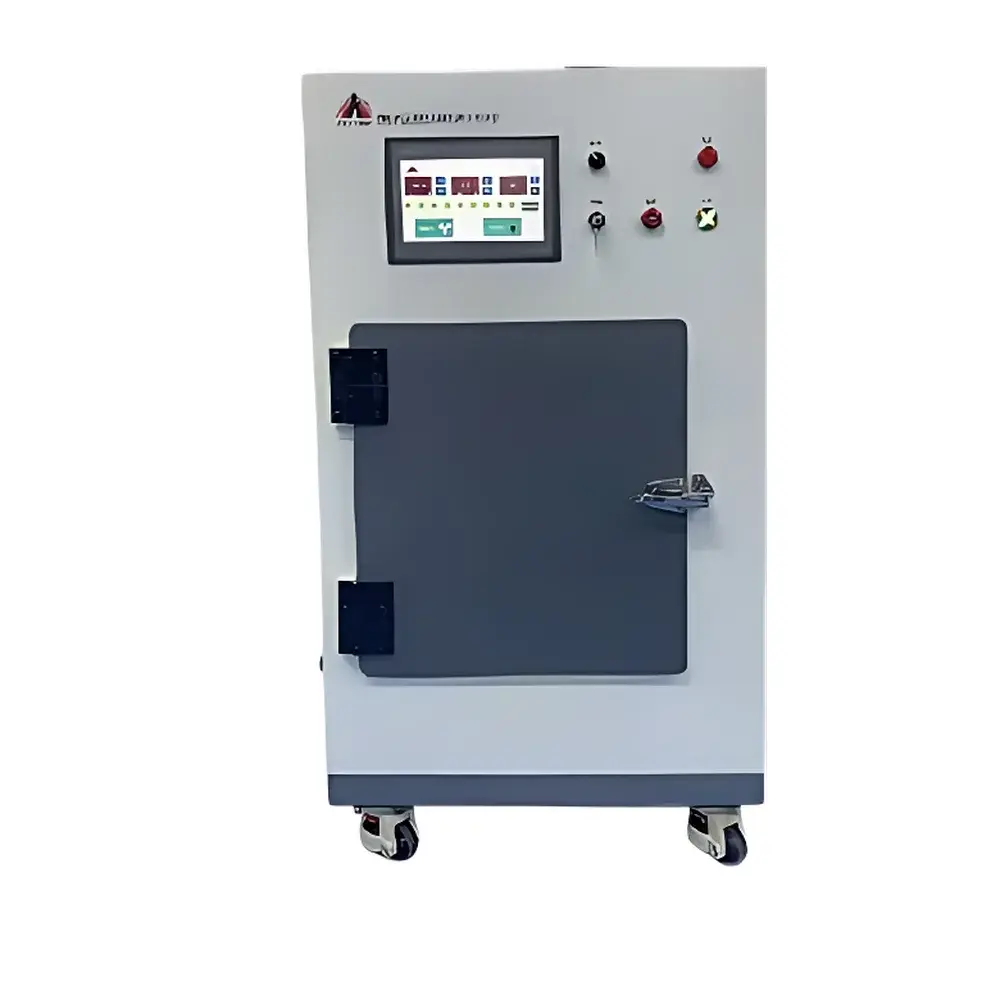
Aolong ChiRad 160D X-ray Irradiator for Cell and Biological Sample Irradiation
| Brand | Aolong |
|---|---|
| Origin | Liaoning, China |
| Manufacturer Type | Direct Manufacturer |
| Country of Origin | China |
| Model | ChiRad 160D |
| Price | Upon Request |
| Tube Voltage | 30–160 kV |
| Tube Current | 0.1–5 mA |
| Maximum Tube Power | 600 W |
| Beam Divergence Angle | 40° |
| Maximum Irradiation Field Diameter | 30 cm |
| Source-to-Object Distance | 40 cm |
| Exposure Time Range | 10 s – 180 min |
| Input Voltage | 100–230 VAC ±10%, 50–60 Hz |
| Cooling System | Closed-loop Liquid Cooling |
| Sample Rotation Stage | Motorized, Programmable Rotation |
| Integrated Dosimetry | Real-time Dose Monitoring Sensor |
Overview
The Aolong ChiRad 160D X-ray Irradiator is a benchtop, self-shielded irradiation system engineered for precise, reproducible, and biologically relevant ionizing radiation delivery to cultured cells, blood products, small animal models, tissue explants, and nanomaterial suspensions. Unlike gamma or electron-beam sources, the ChiRad 160D utilizes a high-stability, air-cooled (with supplemental closed-loop liquid cooling) X-ray tube operating in the diagnostic-to-therapeutic energy range (30–160 kV), enabling tunable photon spectra optimized for radiobiological studies where dose rate, spectral quality, and spatial uniformity are critical experimental variables. Its design adheres to IEC 61010-1 safety standards for laboratory electrical equipment and incorporates a fully integrated lead-lined cabinet (≥2 mm Pb equivalent), interlocked access doors, and real-time dose feedback—eliminating the need for external shielding infrastructure or specialized radiation safety officer (RSO) oversight beyond standard institutional biosafety and radiation use authorization protocols.
Key Features
- Integrated lead-shielded enclosure with dual-interlock door mechanism and emergency stop circuitry, compliant with international radiation safety requirements for Class II B X-ray equipment.
- Motorized, programmable sample rotation stage (0–360°, step resolution ≤1°) ensuring homogeneous dose distribution across multi-well plates, Petri dishes, or vial racks—critical for minimizing intra-sample dose gradients in clonogenic assays or cytokine profiling.
- Touchscreen HMI with preloaded irradiation protocols (e.g., 2 Gy for T-cell depletion, 10 Gy for dendritic cell maturation, 50 Gy for sterilization of feeder layers) and user-defined method storage supporting GLP-compliant workflow traceability.
- Onboard real-time dosimetry via calibrated solid-state sensor (traceable to national metrology institutes), logging dose rate (Gy/min), cumulative dose (Gy), and exposure time with timestamped audit trail exportable in CSV format.
- Automated tube warm-up sequence and duty-cycle management extend X-ray tube service life (>5,000 h typical operational lifetime under recommended usage conditions).
- Compact footprint (W × D × H: 720 × 680 × 1,350 mm) suitable for BSL-2 laboratories, core facilities, or shared irradiation service platforms without requiring dedicated vault construction.
Sample Compatibility & Compliance
The ChiRad 160D accommodates standard biological containers including 6–96-well microplates, T25/T75 flasks, 15/50 mL conical tubes, cryovials (up to 2 mL), and small animal holders (mice ≤25 g, rats ≤100 g). Its 40° beam divergence and fixed 40 cm source-to-object distance yield a uniform irradiation field up to Ø30 cm at the sample plane—validated per ASTM E2232-21 for flat-field dose mapping. The system supports regulatory compliance workflows: dose logs meet FDA 21 CFR Part 11 requirements for electronic records when paired with password-protected user accounts and audit-trail-enabled software; irradiation protocols align with ISO 11137-1 for sterilization validation and USP for radiation-based bioburden reduction in biologics manufacturing environments.
Software & Data Management
ChiRad Control Suite (v3.2+) provides intuitive protocol configuration, real-time dose monitoring, and automated report generation. Each irradiation session generates a PDF certificate containing operator ID, date/time stamp, tube parameters (kV/mA), exposure duration, measured dose (±2% uncertainty), and system calibration status. Data export supports CSV, XML, and LIMS-compatible HL7 ADT messages. Software architecture follows ICH GCP Annex 11 principles for computerized system validation, with role-based access control (RBAC), electronic signatures, and version-controlled method templates—enabling seamless integration into QA/QC pipelines in academic, pharmaceutical, and contract research organizations.
Applications
- Cell biology: Induction of DNA double-strand breaks for ATM/ATR pathway analysis, senescence modeling, and CRISPR-Cas9 off-target assessment.
- Immunology & transfusion medicine: Leukoreduction of platelet and granulocyte concentrates (25–50 Gy), T-cell inactivation in allogeneic transplants, and dendritic cell tolerization studies.
- Radiobiology & oncology: Fractionated low-dose irradiation for bystander effect characterization, radiosensitizer screening, and hypoxia-modulated response assays.
- Gene therapy & virology: Inactivation of replication-competent lentiviral vectors (RC-LV) and adenovirus stocks while preserving transduction efficiency.
- Plant science: Mutation breeding of crop seedlings, pollen irradiation for hybrid development, and stress-response phenotyping under controlled ionizing stress.
- Nanotoxicology: Radiolabel-free functionalization of metal oxide nanoparticles and evaluation of radiation-induced surface chemistry changes.
FAQ
Does the ChiRad 160D require radioactive licensing or a dedicated radiation vault?
No. As a Class II B X-ray generating device operating below 300 kV, it is exempt from nuclear regulatory licensing in most jurisdictions (e.g., NRC general license exemption in the U.S., RSSB guidance in the UK) when installed within its certified shielded cabinet and operated per manufacturer instructions.
Can dose uniformity be validated for custom sample geometries?
Yes. The system includes a reference dosimetry port and supports third-party film or TLD verification. Users may perform flat-field mapping using Gafchromic® EBT3 film per ISO/IEC 17025-accredited procedures.
Is remote operation or integration with LIMS possible?
Yes. Ethernet connectivity enables remote monitoring via web browser; API documentation (RESTful JSON) is provided for LIMS or ELN integration.
What maintenance is required for the X-ray tube and cooling system?
Annual recalibration of the dosimeter and visual inspection of coolant levels and tubing integrity are recommended. No routine tube replacement is needed within the first 3 years under normal usage (≤4 hrs/day, 5 days/week).
How does the ChiRad 160D compare to Cs-137 or Co-60 gamma irradiators in terms of dose rate control?
Unlike isotopic sources with fixed decay-driven dose rates, the ChiRad 160D offers fully adjustable kV/mA settings and exposure timing—enabling precise modulation of dose rate (0.05–2.5 Gy/min typical range), essential for studying dose-rate effects in radiobiology.