
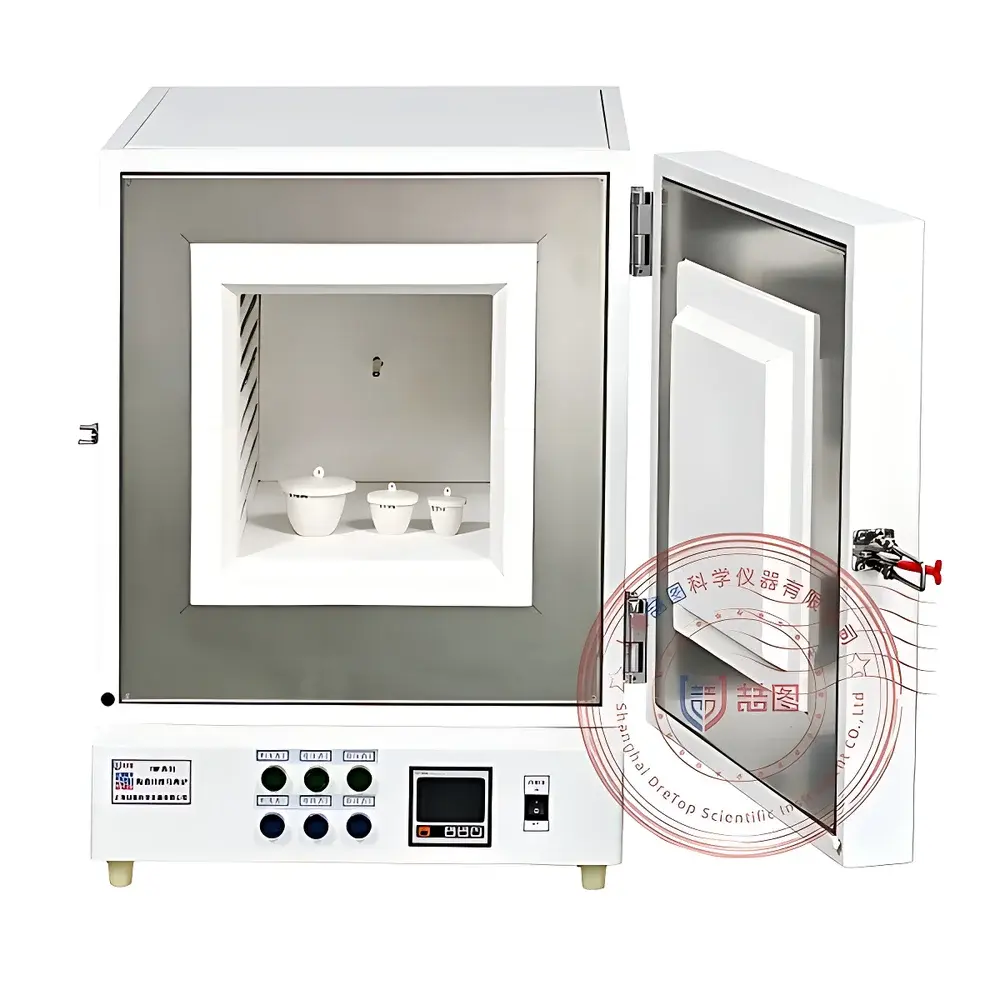
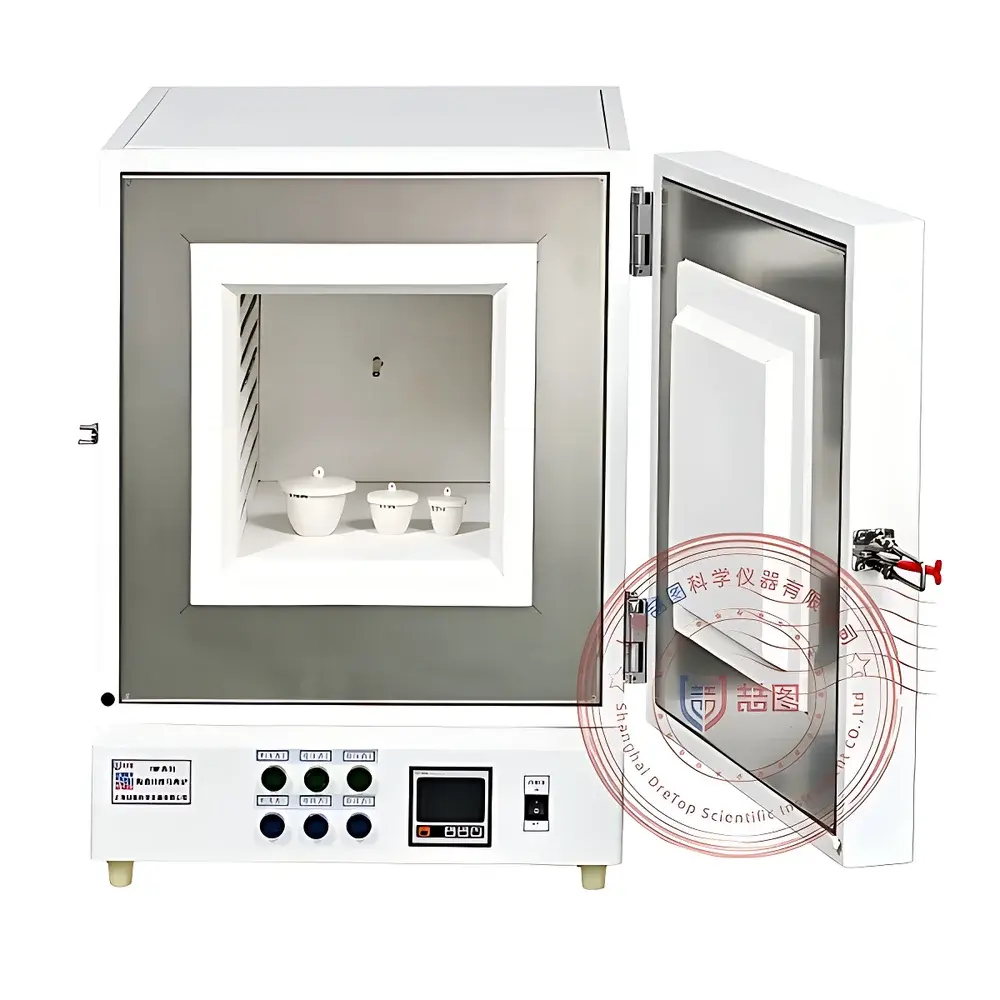
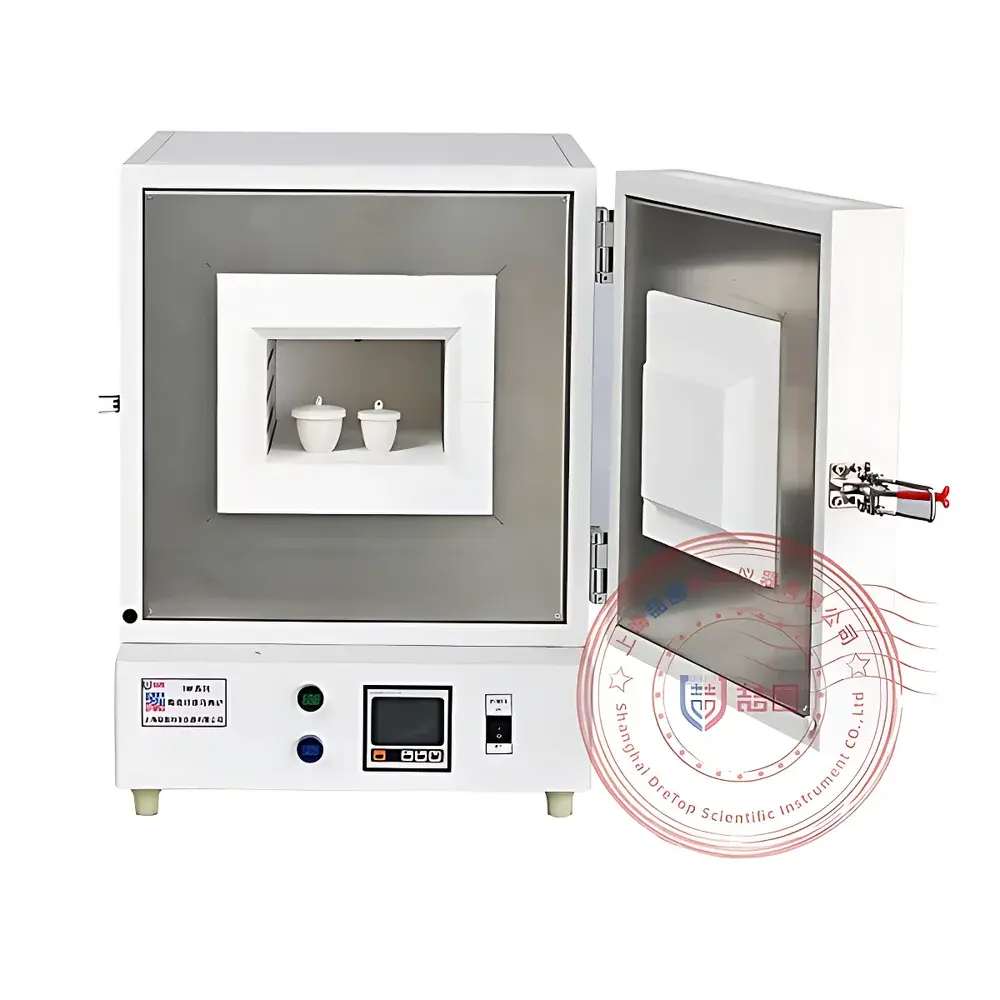
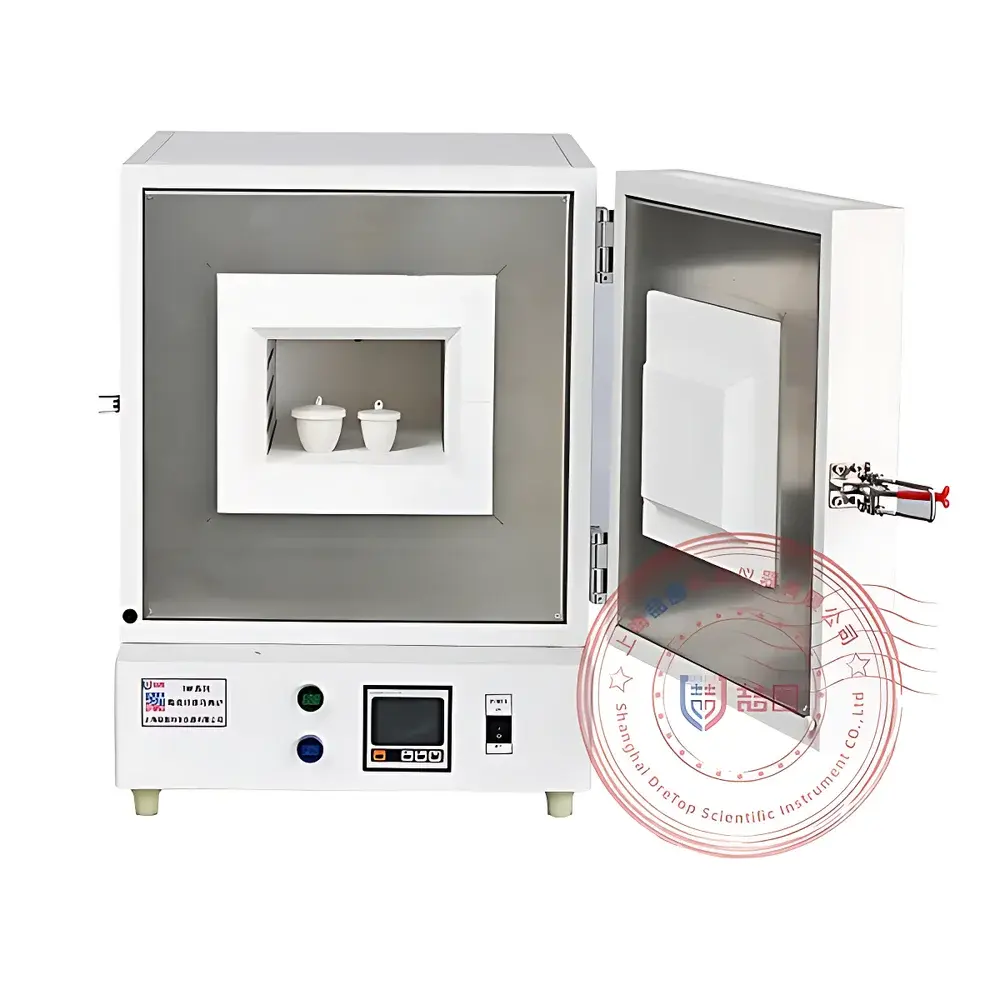
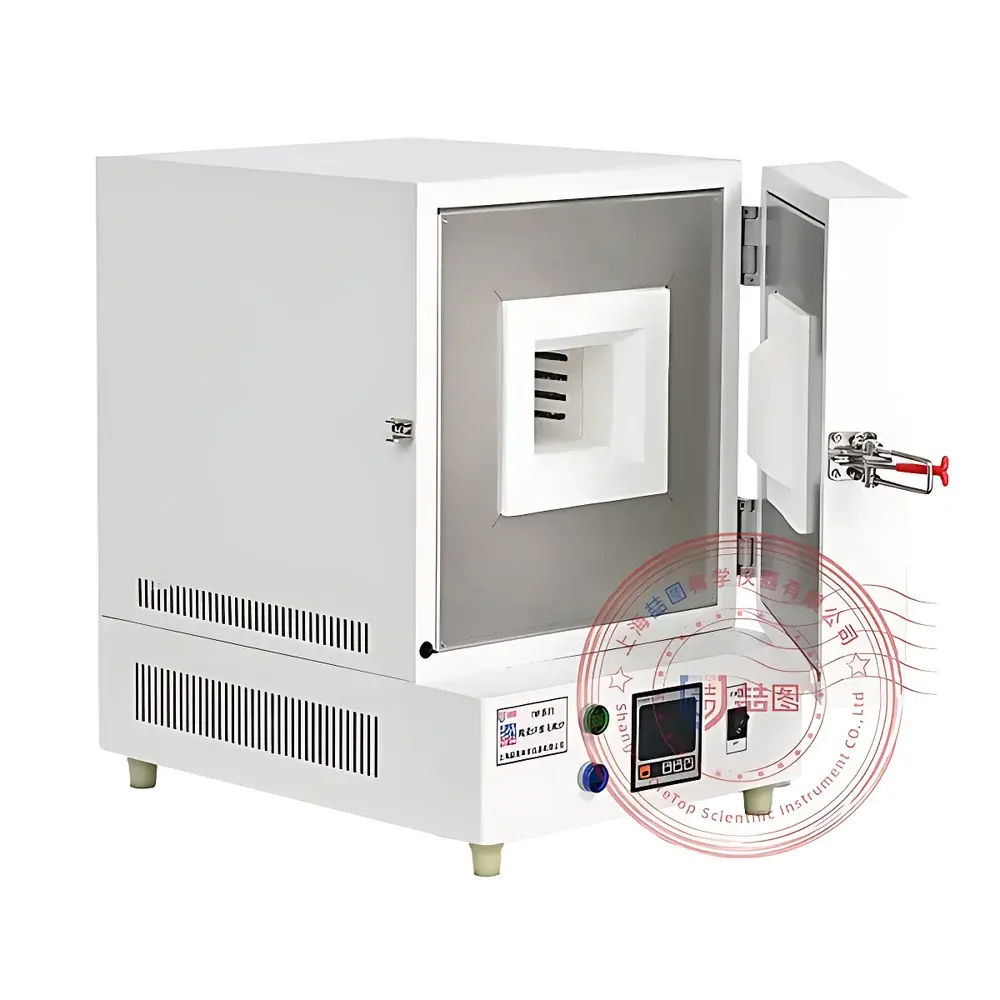
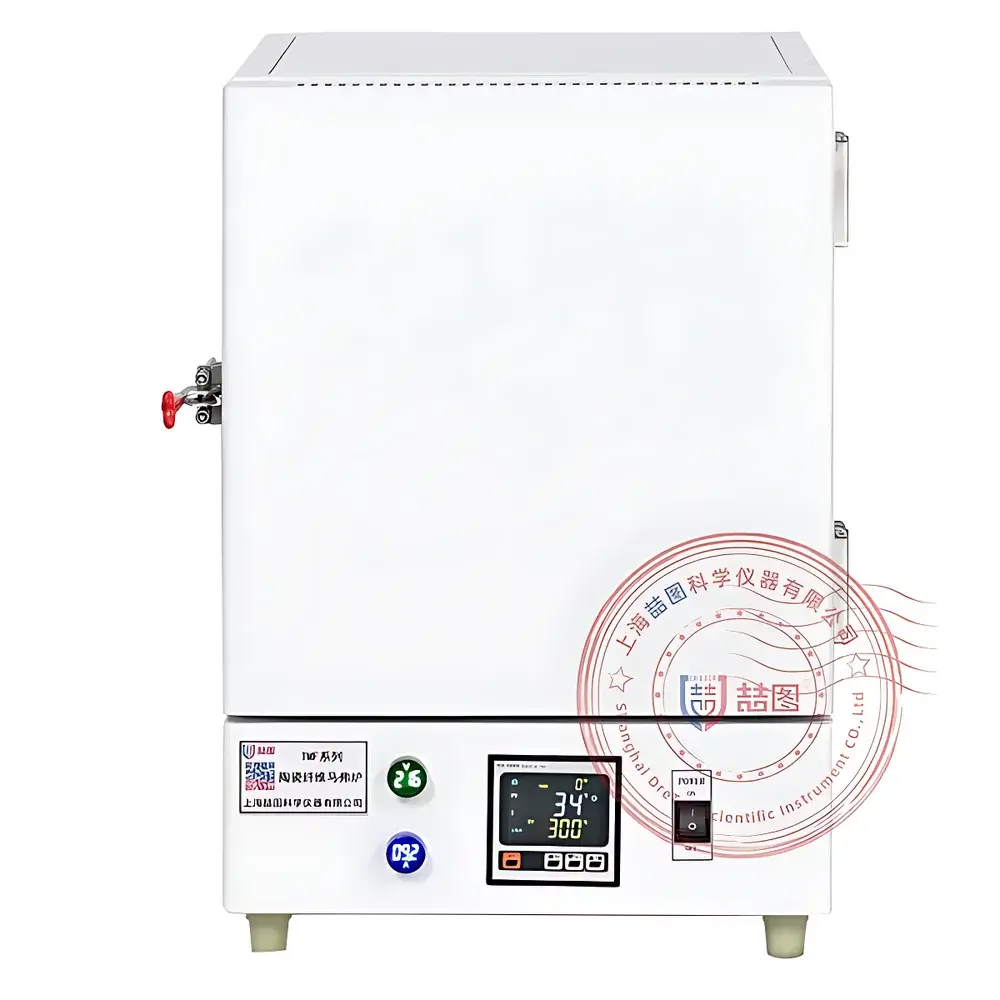
DRETOP TMF-2-10TP Compact Ceramic Fiber Muffle Furnace
| Brand | DRETOP |
|---|---|
| Origin | Shanghai, China |
| Model | TMF-2-10TP |
| Instrument Type | Box-Type Muffle Furnace |
| Max Temperature | 1000 °C |
| Temperature Control Accuracy | ±1 °C |
| Rated Power | 2500 W |
| Heating Rate (to 1000 °C) | 25–35 °C/min (reaches 1000 °C in ≤40 min) |
| Heating Element | Ni-Cr-Mo Alloy |
| Internal Chamber Dimensions | 120 × 200 × 80 mm (L×W×H) |
| Nominal Volume | 2 L |
| Insulation Material | Vacuum-Microporous Ceramic Fiber Board |
| Heating Configuration | Triple-Wall Radiant Heating (front, back, top walls) |
| Voltage | 220 V AC |
| Safety Features | Dual-Stage Over-Temperature Protection, Door-Interlocked Power Cut-off, Phase Loss & Thermocouple Break Detection, Auto-Restart with Power Failure Memory |
Overview
The DRETOP TMF-2-10TP is a compact, high-performance ceramic fiber muffle furnace engineered for precision thermal processing in space-constrained laboratory environments. Designed around a vacuum-microporous ceramic fiber insulation architecture, it eliminates the thermal inertia and slow response typical of traditional refractory brick furnaces. Its triple-wall radiant heating system—featuring Ni-Cr-Mo alloy heating elements spirally wound into the front, back, and top furnace walls—ensures rapid thermal equilibration and exceptional temperature uniformity across the 2 L chamber (±3 °C at 1000 °C per ASTM E220). The furnace operates on standard 220 V AC power and achieves 1000 °C in under 40 minutes with a programmable ramp rate up to 35 °C/min, making it suitable for time-sensitive protocols including rapid ashing, controlled oxidation, sintering of nanomaterials, and thermal cycling of metallurgical samples.
Key Features
- Microprocessor-based PID temperature controller with large LCD display and 30-segment programmable ramp/soak profiles (P-series firmware), enabling precise replication of complex thermal cycles;
- Door-interlocked safety circuit: automatic power cutoff upon door opening, with seamless resumption upon closure—critical for intermediate sample inspection without thermal drift;
- Dual-stage over-temperature protection: primary controller limit + independent mechanical backup relay, compliant with IEC 61000-4-5 surge immunity and EN 60519-2 electrical safety standards;
- Integrated ambient temperature compensation algorithm that dynamically adjusts startup ramp based on real-time chamber base temperature—reducing overshoot and shortening stabilization time;
- Ergonomic bottom-hinged door design with stainless-steel inner sealing flange (2 mm thick) and high-density refractory baffle plate—minimizing heat loss at the aperture and improving axial temperature homogeneity;
- Phosphate conversion coating + high-temp epoxy powder-coated steel housing with reinforced thermal barrier; surface temperature remains <50 °C at full operating temperature;
- Digital voltage/current monitoring on main power line—provides real-time diagnostics for grid instability or element degradation;
- Modular internal structure using interlocking ceramic fiber panels—resistant to thermal shock, non-delaminating after >5000 thermal cycles at 1000 °C.
Sample Compatibility & Compliance
The TMF-2-10TP accommodates standard crucibles (up to Φ60 mm × 50 mm height) and flat-bottomed quartz or alumina boats. Its compact footprint (W320 × D380 × H450 mm) and optional glovebox integration kit (IP54-rated feedthrough interface) support inert-atmosphere processing with N₂ or Ar purge (via optional inlet valve). The furnace meets GLP documentation requirements through built-in event logging (door open/close, alarm triggers, setpoint changes) with timestamped records exportable via RS485. All electrical components comply with CE marking directives (2014/30/EU EMC, 2014/35/EU LVD), and thermal performance validation aligns with ISO/IEC 17025-accredited calibration practices using NIST-traceable Pt/Pt–13%Rh thermocouples.
Software & Data Management
Standard configuration includes local control only; optional color touchscreen module (7″ resistive LCD) adds graphical real-time temperature curve display, multi-level user access (operator/engineer/administrator), and USB data export of complete thermal profiles (CSV format). The RS485 interface supports Modbus RTU protocol for integration into centralized lab automation systems (e.g., LabWare LIMS, DeltaV DCS). Optional micro-printer provides hard-copy audit trail of critical events—fully traceable for FDA 21 CFR Part 11 compliance when paired with electronic signature-enabled software packages. Firmware supports firmware-over-the-air (FOTA) updates via secure HTTPS endpoint.
Applications
- Routine ashing of biological, pharmaceutical, and environmental samples per AOAC 990.18 and EPA Method 3010A;
- Sintering of oxide ceramics (Al₂O₃, ZnO, TiO₂), ferrites, and solid-state battery cathode precursors (LiCoO₂, NMC) under air or controlled gas;
- Thermal gravimetric analysis (TGA) pre-conditioning and residue quantification;
- Heat treatment of small metallic components: annealing, stress-relieving, and tempering of tool steels and titanium alloys;
- Crystallization and phase transformation studies in glass-ceramic systems (e.g., Li₂O–Al₂O₃–SiO₂) requiring precise nucleation hold steps;
- Pre-firing of catalyst supports and zeolite substrates prior to impregnation;
- Calibration reference source for infrared pyrometer validation (blackbody cavity approximation).
FAQ
Can the TMF-2-10TP be installed inside a nitrogen-purged glovebox?
Yes—optional glovebox mounting kit includes sealed feedthroughs for power, thermocouple, and gas inlet lines, rated for continuous operation at O₂ <1 ppm.
What is the expected service life of the heating elements at 1000 °C?
Ni-Cr-Mo alloy elements maintain stable resistance and dimensional integrity for ≥3000 hours at 1000 °C under cyclic operation (200 cycles/year).
Does the furnace support ramp-and-soak profiles with cooling steps?
The standard P-series controller supports only heating/holding; active cooling requires external forced-air or water-jacketed enclosure (not included).
Is calibration certificate included with shipment?
A factory-as-tested report (including as-found/as-left data at 500 °C and 1000 °C) is provided; NIST-traceable calibration certificate is available as optional add-on.
Can the unit be operated continuously at maximum temperature?
Yes—rated for indefinite dwell at 1000 °C when ambient temperature remains ≤30 °C and ventilation clearance ≥100 mm on all sides.



