
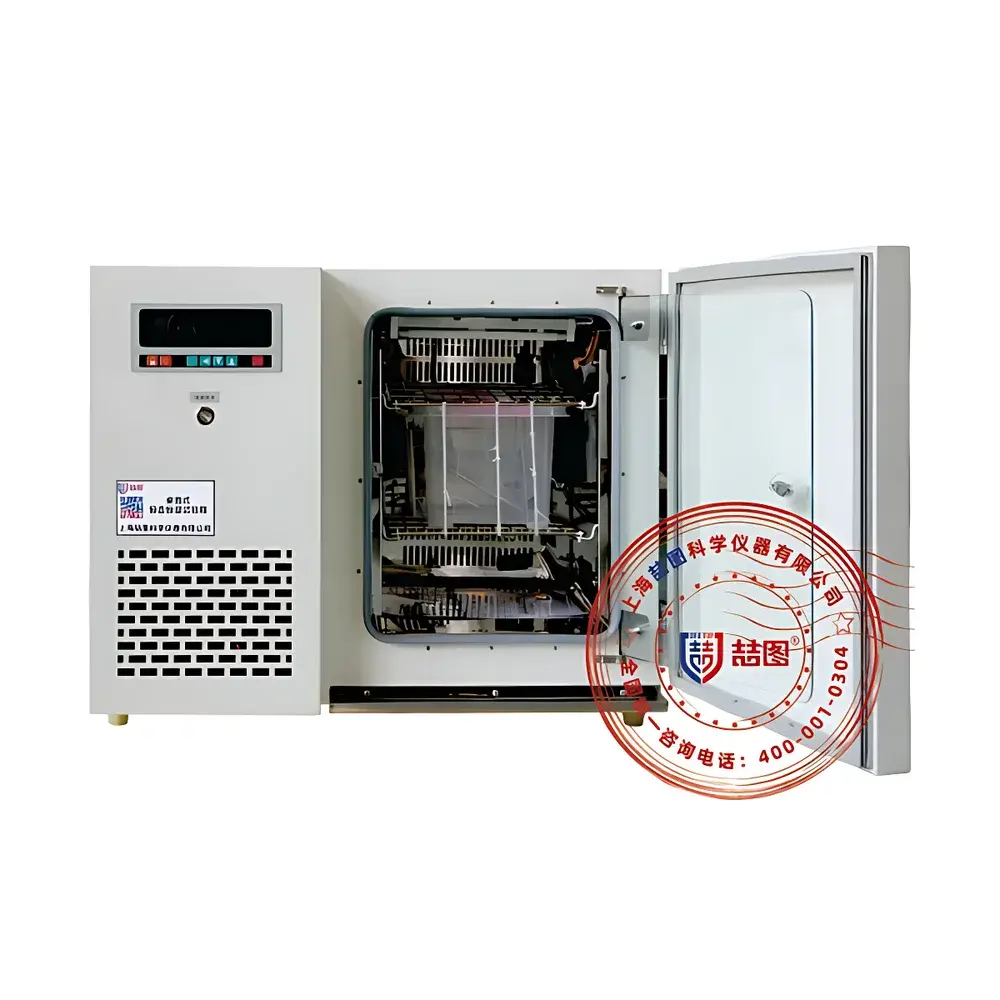
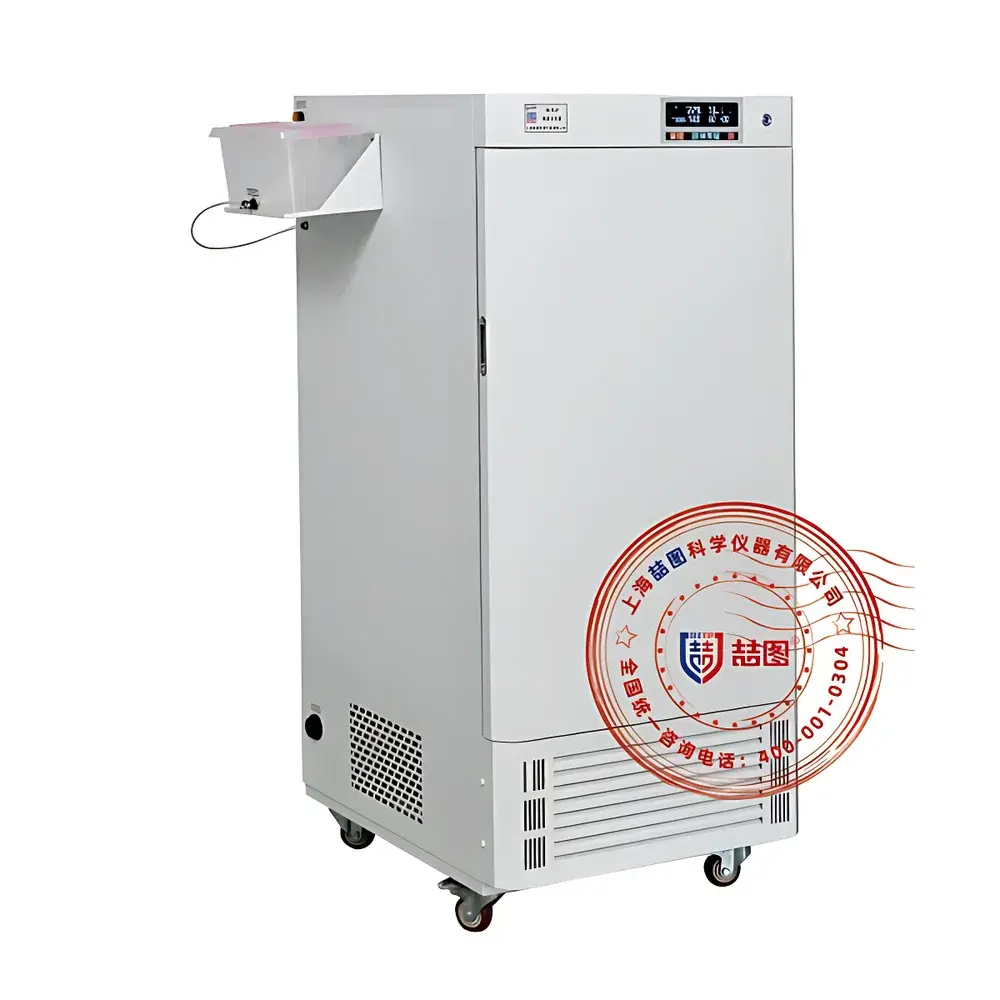
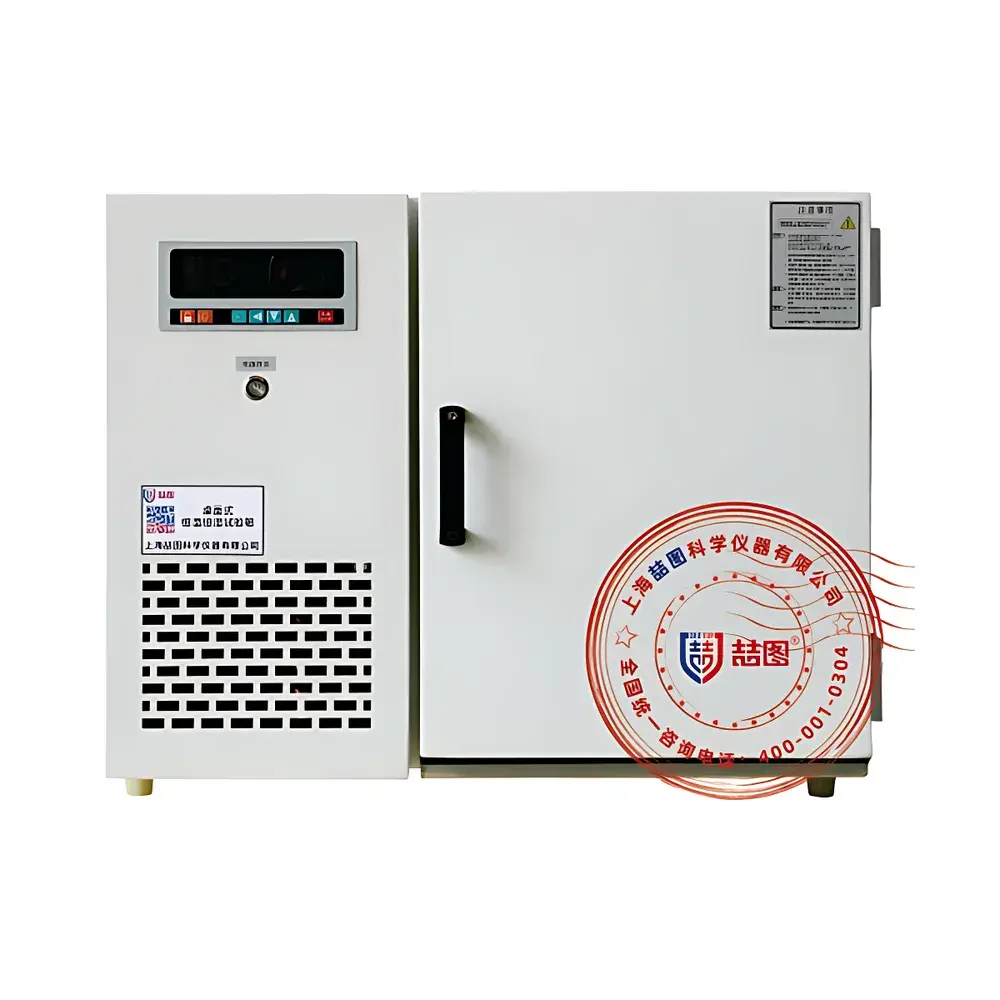
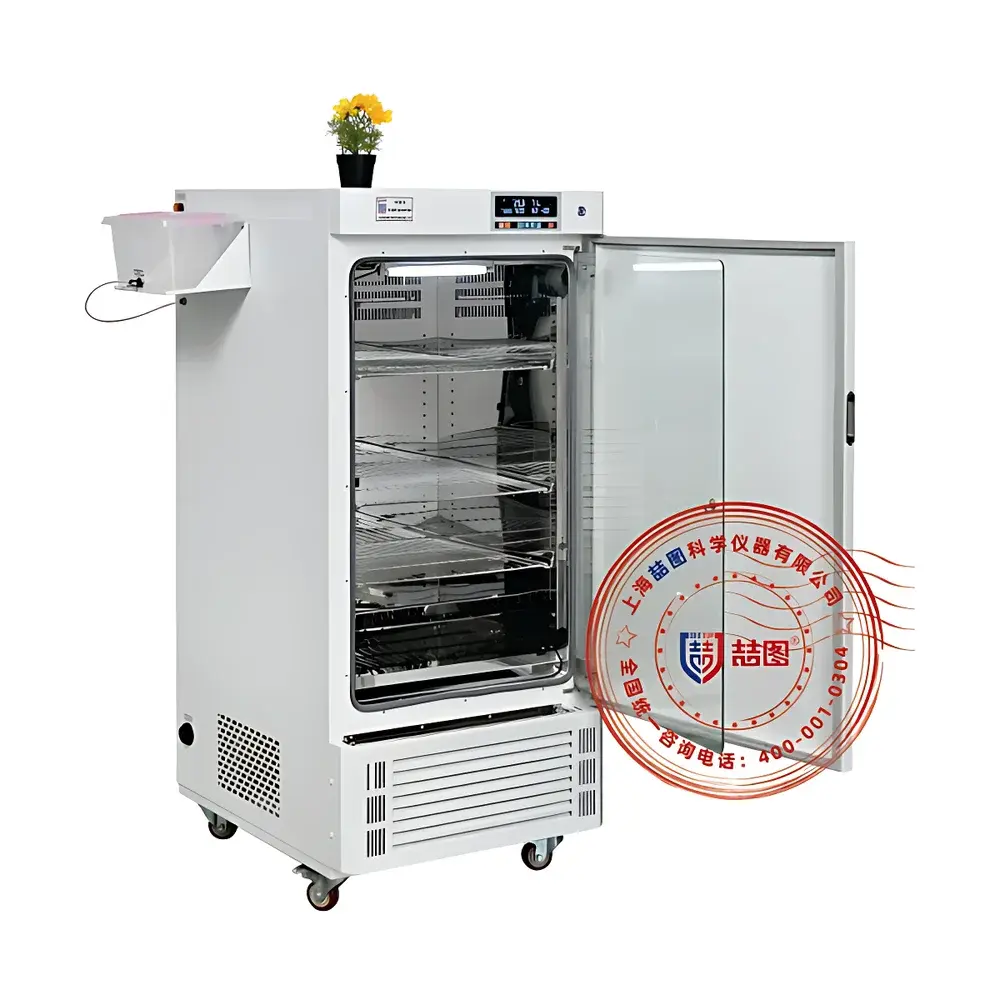
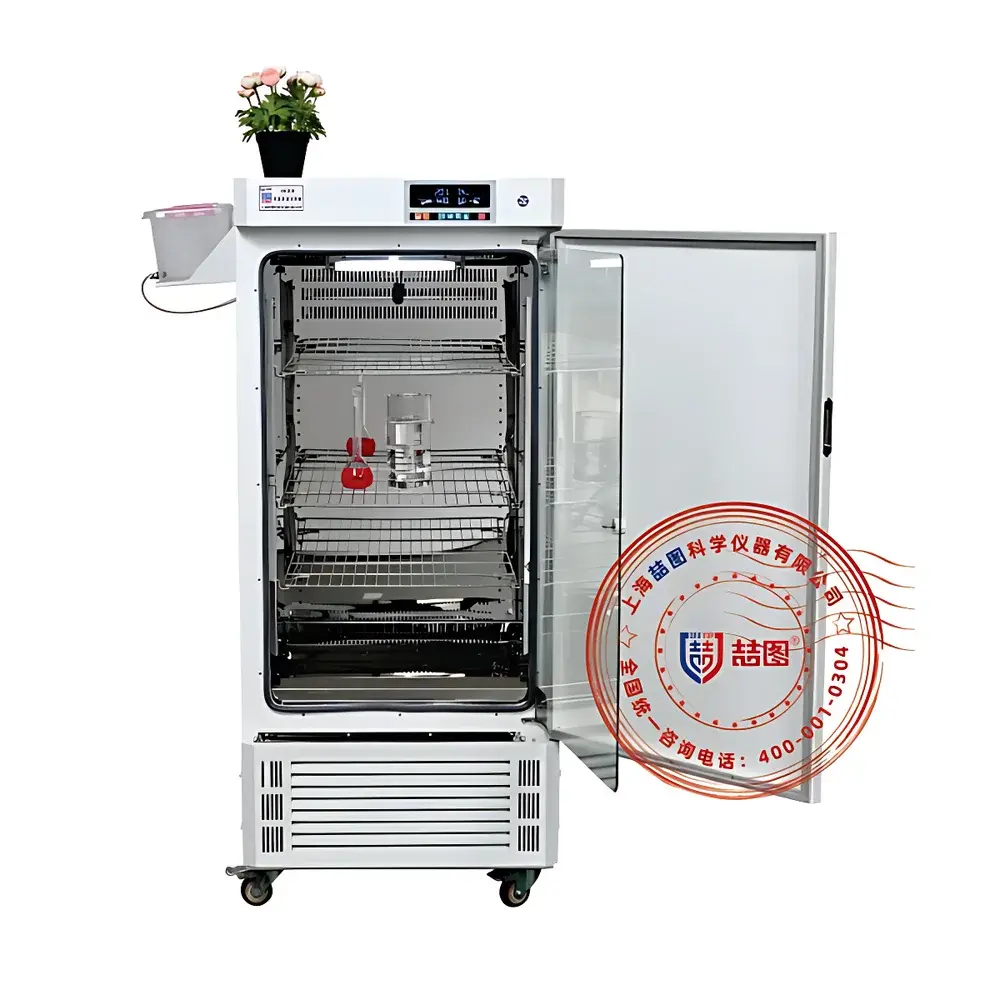
DRETOP ZHS-100HC Temperature and Humidity Controlled Incubator
| Brand | DRETOP |
|---|---|
| Origin | Shanghai, China |
| Model | ZHS-100HC |
| Heating Method | Air-jacketed |
| Cooling Method | Compressor-based |
| Humidification Reservoir | Integrated water tank |
| Temperature Range (with humidification) | 15–45 °C |
| Temperature Range (without humidification) | 10–45 °C |
| Temperature Fluctuation | ±0.5 °C at high setpoints, ±1 °C at low setpoints |
| Temperature Uniformity | ±0.1 °C |
| Humidity Range | 40–95 % RH |
| Humidity Accuracy | ±3 % RH |
| Chamber Capacity | 100 L |
| External Dimensions (W×D×H) | 600×670×1180 mm |
Overview
The DRETOP ZHS-100HC Temperature and Humidity Controlled Incubator is an engineered environmental simulation system designed for precise, long-term maintenance of biological, pharmaceutical, and material samples under tightly regulated thermal and hygrometric conditions. It operates on a dual-control principle: air-jacketed heating ensures rapid, uniform thermal response across the chamber volume, while a hermetically sealed compressor-based cooling circuit—paired with an integrated evaporative humidification reservoir—enables stable, repeatable control of both temperature and relative humidity. This architecture meets the fundamental requirements of stability testing per ICH Q1A(R2), accelerated aging protocols (ASTM F1980), and long-term storage validation under GLP-compliant laboratory environments. The ZHS-100HC is not a general-purpose warming cabinet; it is a calibrated, closed-loop incubation platform where temperature uniformity (±0.1 °C) and humidity reproducibility (±3 % RH) are validated across the full operational envelope—including at boundary conditions such as 15 °C/95 % RH or 45 °C/40 % RH.
Key Features
- Microprocessor-based P.I.D. temperature and humidity control system with real-time digital display and intuitive touch-key interface;
- 30-segment programmable controller supporting time-dependent ramp-and-soak profiles, enabling unattended multi-phase experiments (e.g., cyclic humidity stress testing);
- Stainless steel interior chamber with removable, height-adjustable shelves—designed for autoclave compatibility and residue-free decontamination;
- Dual-door observation window: inner tempered glass pane with magnetic door seal and outer insulating frame, minimizing thermal bridging and condensation;
- Optimized airflow architecture using tangential (axial-flow) fans and laminar baffle ducting to ensure uniform convective circulation without localized turbulence or dead zones;
- Modular refrigeration assembly with built-in compressor delay protection, cycle interval management, and over-temperature cut-off safeguards;
- Power-loss recovery function preserving setpoints and runtime data during grid interruption—critical for multi-day stability studies;
- Four-corner rounded internal geometry and cold-rolled steel exterior shell enhance structural integrity and ease of cleaning.
Sample Compatibility & Compliance
The ZHS-100HC accommodates standard ISO 8573-compliant petri dishes, multi-well plates, vials, and sample trays up to 480 mm (W) × 390 mm (D). Its 100 L chamber volume supports concurrent placement of ≥12 x 150 mL Erlenmeyer flasks or ≥24 x 50 mL centrifuge tubes. The unit complies with EN 61000-6-2 (immunity) and EN 61000-6-4 (emission) electromagnetic compatibility standards. While not certified to UL 61010-1 or IEC 61010-1 out-of-the-box, its safety architecture—including independent mechanical over-temperature limiter (optional), Class B insulation, and grounded chassis—facilitates third-party validation for use in ISO 17025-accredited laboratories. Humidity control performance aligns with USP environmental conditioning specifications for stability chambers used in pharmaceutical packaging integrity assessment.
Software & Data Management
The incubator supports optional RS485 serial communication (Modbus RTU protocol) for integration into centralized lab monitoring systems (e.g., LabVantage, Thermo Fisher SampleManager). When equipped with the optional color touchscreen module, users gain access to audit-trail-enabled operation logs—including timestamped setpoint changes, alarm events, and humidity drift diagnostics—structured to satisfy FDA 21 CFR Part 11 requirements when paired with appropriate electronic signature workflows. All parameter configurations are stored in non-volatile memory and survive power cycles. Data export is available via USB flash drive in CSV format, with column headers compliant with ASTM E2500-22 metadata conventions for environmental test records.
Applications
- ICH Q5C biopharmaceutical stability testing (real-time and accelerated) under defined temperature/humidity stress conditions;
- ISO 11737-1 microbial recovery validation requiring controlled ambient exposure prior to enumeration;
- Textile and polymer aging per AATCC TM150 and ASTM D4332—evaluating dimensional stability and tensile degradation under cyclic humidity;
- Seed germination and plant tissue culture where diurnal RH modulation impacts morphogenesis;
- Pre-conditioning of packaging materials (blister foils, desiccant sachets) prior to permeability measurement per ASTM F1249;
- Calibration verification of hygrometers and thermistors using traceable reference standards placed inside the chamber.
FAQ
What is the minimum operating temperature with active humidification?
The ZHS-100HC maintains stable humidification down to 15 °C. Below this threshold, condensation risk increases significantly, and the integrated reservoir may not sustain consistent vapor output.
Can the unit be validated for GMP-compliant stability studies?
Yes—when configured with optional independent temperature/humidity sensors, 21 CFR Part 11–capable software, and IQ/OQ documentation packages, the ZHS-100HC meets baseline qualification requirements for Category II stability chambers per WHO TRS 992 Annex 6.
Is remote monitoring supported natively?
Native Ethernet or Wi-Fi connectivity is not included; however, the RS485 interface enables connection to industrial gateways (e.g., Advantech ECU-1251) for cloud-based telemetry via MQTT or OPC UA.
How often does the integrated humidification reservoir require refilling?
Under continuous operation at 95 % RH and 37 °C, the reservoir typically requires replenishment every 48–72 hours—depending on ambient room humidity and door-opening frequency.
Does the unit support dry heat sterilization cycles?
No—the maximum temperature rating is 45 °C with humidification enabled and 85 °C only in non-humidified ZHS-M variants. Dry heat decontamination is outside its design envelope.



