
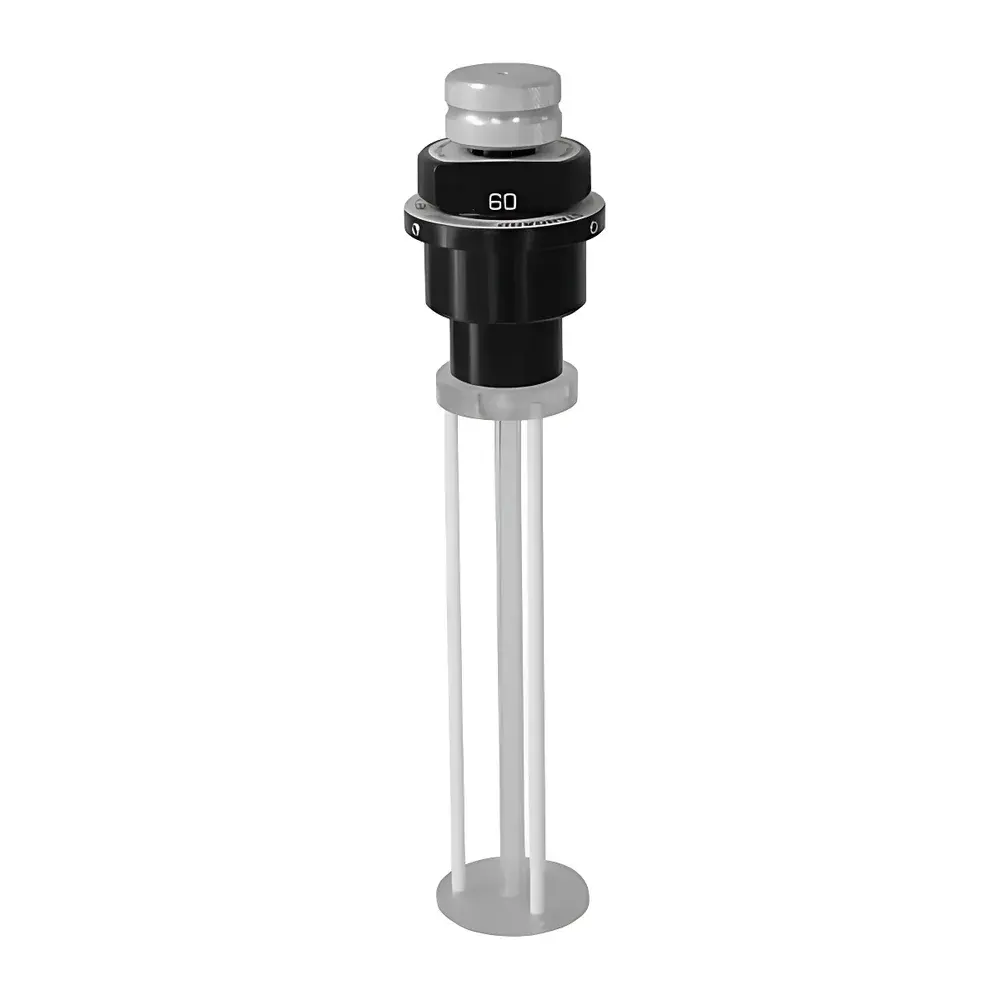
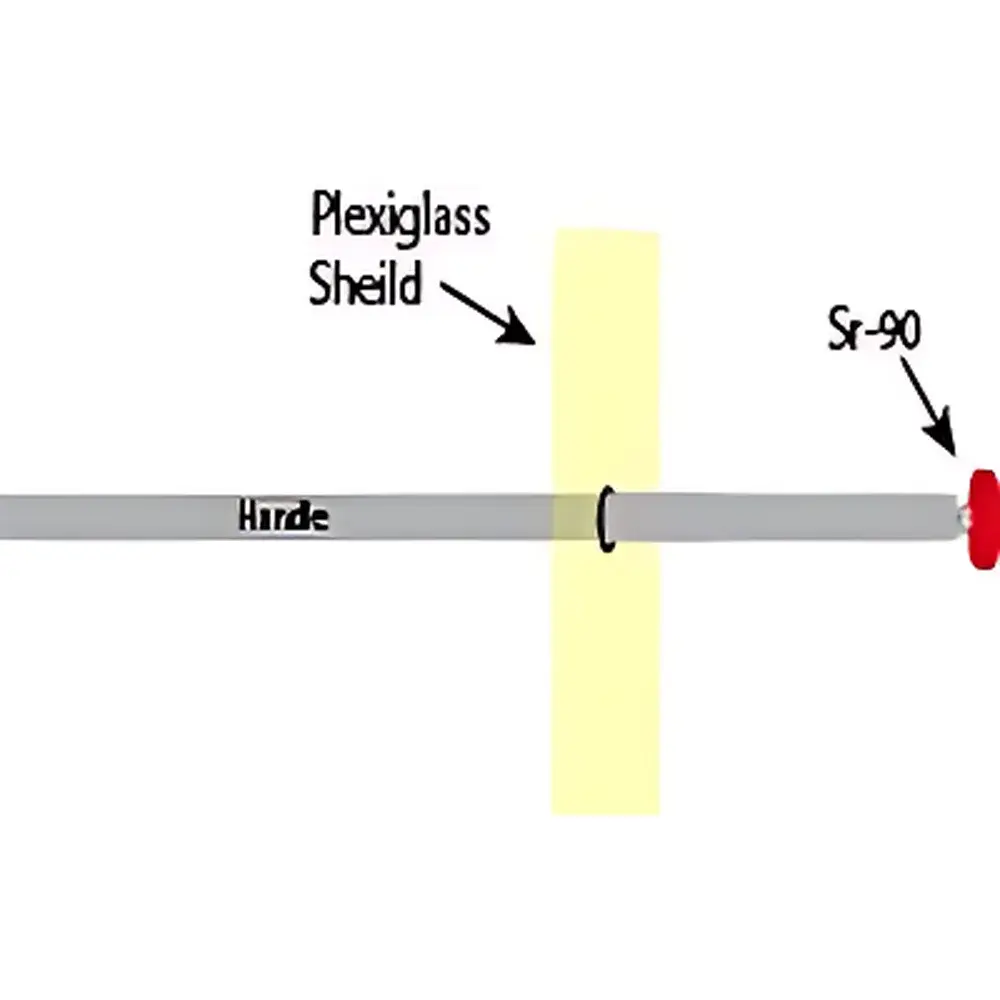
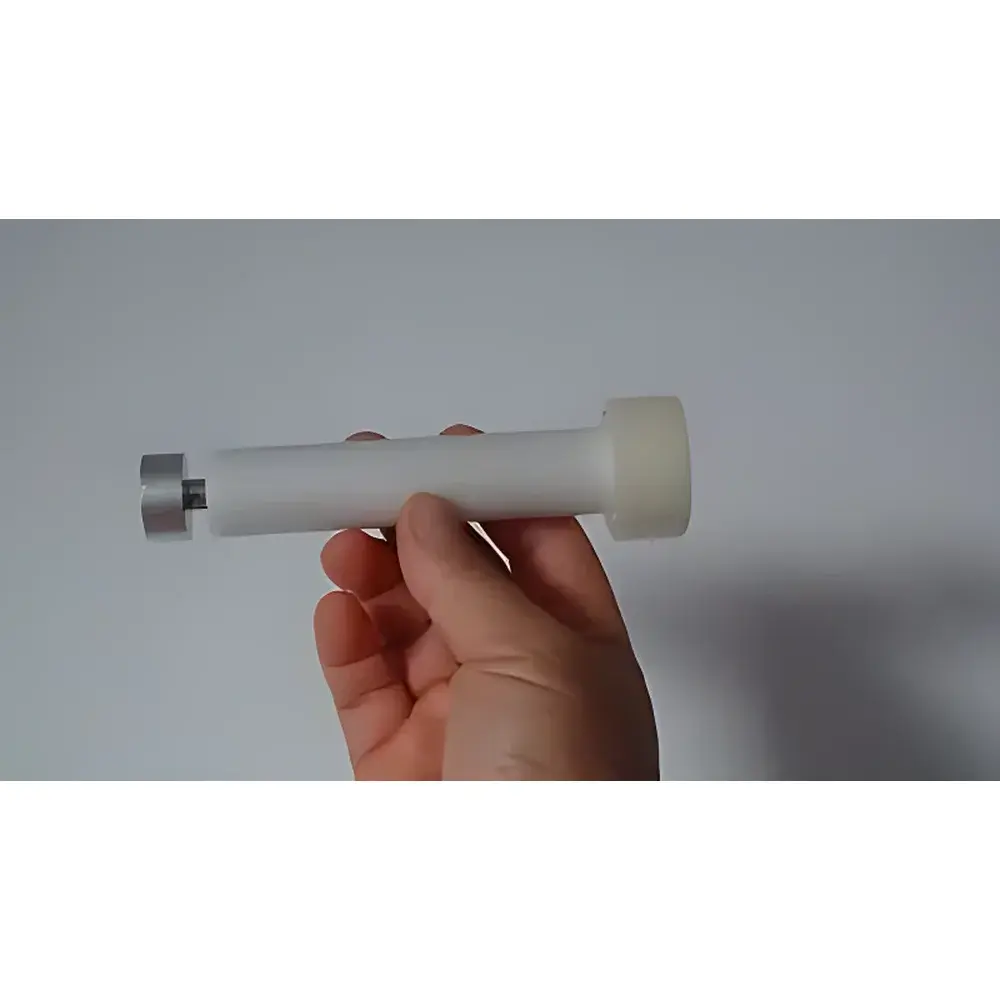
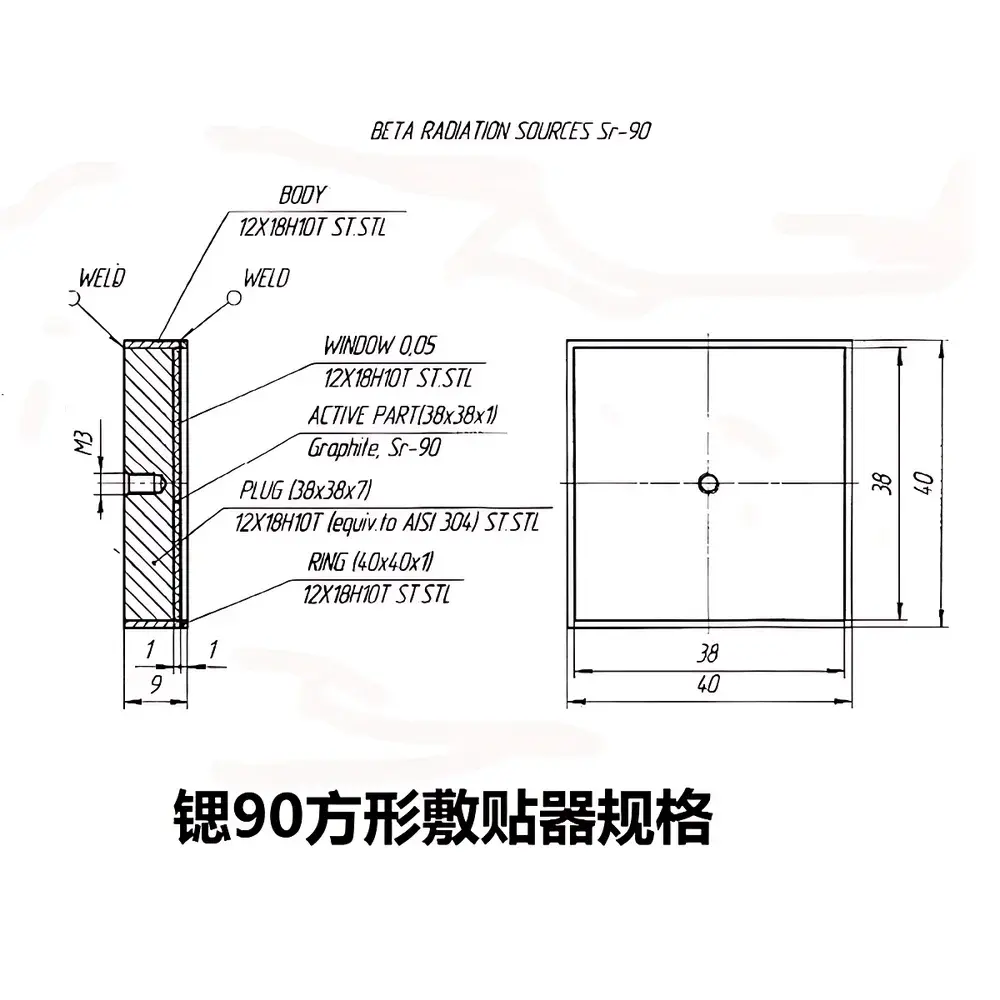
Sentinain SY90 Strontium-90 Beta-Emitting Applicator for Superficial Radiotherapy
| Brand | Sentinain |
|---|---|
| Origin | Russia |
| Manufacturer Type | Authorized Distributor |
| Origin Category | Imported |
| Model | SY90 |
| Instrument Type | Contact Beta-Ray Applicator |
| Sample Form Factor | Circular and Square Configurations |
| Active Source | ⁹⁰Sr/⁹⁰Y sealed source (β⁻ emitter, Eₘₐₓ = 0.53 MeV) |
| Penetration Depth in Tissue | 1–4 mm |
| Temperature Control | Not applicable (non-thermal device) |
| Compliance | IEC 61017, IAEA SSG-46, GOST R IEC 61017-2016 |
| Regulatory Status | Class IIb Medical Device (RU, CE-equivalent per Russian registration) |
Overview
The Sentinain SY90 Strontium-90 Beta-Emitting Applicator is a precision-engineered, sealed-source radiotherapeutic device designed for controlled superficial brachytherapy of benign dermatological lesions. It utilizes the radioactive decay of strontium-90 (⁹⁰Sr), which undergoes beta-minus (β⁻) decay to yttrium-90 (⁹⁰Y), emitting high-energy electrons with a maximum energy of 0.53 MeV. These β⁻ particles deposit their energy within a well-defined depth range of 1–4 mm in human tissue—ideal for targeting epidermal and upper dermal pathologies without affecting deeper structures. Unlike thermal PCR instruments (with which it is erroneously categorized in some databases), the SY90 is a passive, non-electronic contact applicator requiring no power supply, temperature cycling, or software control. Its clinical utility lies in its ability to deliver reproducible, localized ionizing radiation doses to hyperproliferative skin tissues—including infantile hemangiomas, keloids, psoriasis plaques, lichen simplex chronicus, oral mucosal leukoplakia, and plantar warts—while preserving surrounding healthy epidermis through physical collimation and timed exposure.
Key Features
- Sealed ⁹⁰Sr/⁹⁰Y source encapsulated in stainless steel or titanium alloy housing, compliant with IAEA TS-G-1.8 and IEC 61017 for source integrity and leakage resistance.
- Two standard geometries: circular and square applicator heads—each featuring a calibrated active surface area and integrated lead shielding to minimize lateral scatter.
- Adhesive-backed polymeric interface layer (white silicone-based film + pressure-sensitive rubber adhesive) ensures stable, conformal contact during treatment and protects adjacent normal skin.
- Robust storage container: thick-walled lead-lined cylindrical shield (≥5 mm Pb equivalent) with interlocked lid and radiation warning labels per ISO 2919:2012.
- Accessory kit includes pre-cut, size-graded elastic occlusion rings for precise lesion isolation—critical for dose homogeneity and margin control.
- No moving parts, batteries, or firmware; maintenance-free operation with annual leak-test verification per national regulatory requirements (e.g., Roszdravnadzor Order No. 317).
Sample Compatibility & Compliance
The SY90 applicator is indicated exclusively for external, direct-contact radiotherapy of superficial lesions ≤4 mm in depth. It is not intended for internal use, intraoperative application, or systemic administration. Each unit is supplied with a Certificate of Conformance referencing GOST R IEC 61017-2016 (equivalent to IEC 61017:2013) and Russian Federal Service for Surveillance in Healthcare (Roszdravnadzor) registration number. The device meets essential requirements of Directive 93/42/EEC (Medical Devices Directive) as applied under Russian Technical Regulation TR CU 019/2011. All units undergo mandatory source calibration traceable to the D.I. Mendeleyev Institute for Metrology (VNIIM) and include documented half-life correction factors (T₁/₂ = 28.8 years for ⁹⁰Sr). Use requires authorization under national radiation safety legislation and operator certification in radiological protection (e.g., NRPP or equivalent).
Software & Data Management
The SY90 is a purely mechanical, analog therapeutic device with no embedded electronics, firmware, or digital interfaces. Dose delivery is governed by time–distance–activity principles: prescribed exposure duration is calculated using source-specific calibration certificates, lesion geometry, and published depth–dose curves (e.g., AAPM TG-60, ICRU Report 72). Treatment records—including date, operator ID, applicator serial number, exposure time, and clinical indication—are manually entered into patient charts per GLP-compliant documentation standards. While no proprietary software is provided, integration with hospital EMR systems is supported via standardized DICOM-RT or HL7 ADT messaging for procedure logging, subject to local IT policy approval.
Applications
Clinical evidence supports the SY90’s efficacy in multiple dermatological indications where shallow ionization is therapeutically advantageous: infantile capillary hemangiomas (especially strawberry-type, <2 cm²), hypertrophic scars and keloids post-surgical excision, localized plaque-type psoriasis, chronic actinic cheilitis, oral vestibular leukoplakia, vulvar lichen sclerosus, and recalcitrant verrucae vulgaris. Published studies (e.g., *Pediatric Dermatology*, 2019; *Journal of the European Academy of Dermatology and Venereology*, 2021) report complete regression rates of 82–94% for early-stage hemangiomas treated before 6 months of age, with negligible long-term pigmentary changes or scarring. The modality is particularly valuable in pediatric populations due to its non-invasive nature, absence of anesthesia, and low systemic burden.
FAQ
Is the SY90 applicator FDA-cleared or CE-marked?
The SY90 is registered under Russian Federal Law No. 184-FZ and holds Roszdravnadzor registration. It is not FDA-listed nor CE-marked under EU MDR 2017/745, as it falls outside the scope of devices requiring EU conformity assessment for import into Russia. Export to EU/US markets requires separate regulatory pathway validation.
What is the recommended exposure time per session?
Exposure duration is lesion-specific and must be determined by a certified medical physicist using the source’s current activity (Bq), applicator geometry, and target depth. Typical ranges: 1–5 minutes for infantile hemangiomas; 3–10 minutes for keloids. Protocols follow IAEA Human Health Reports No. 12.
How often can treatments be repeated?
Minimum interval between sessions is 4–6 weeks to allow for biological response assessment and tissue recovery. Cumulative dose limits are defined per ICRP Publication 118 and national guidelines.
Does the device require periodic recalibration?
Yes. Annual leak testing and activity verification against a national standard are mandatory. Calibration certificates include decay-corrected activity values referenced to a stated date.
Can the SY90 be used on mucosal surfaces?
Yes—clinically validated for oral mucosa (e.g., leukoplakia) and external genitalia (e.g., vulvar白斑), provided strict adherence to mucosal dosimetry protocols and protective shielding of adjacent structures.




