
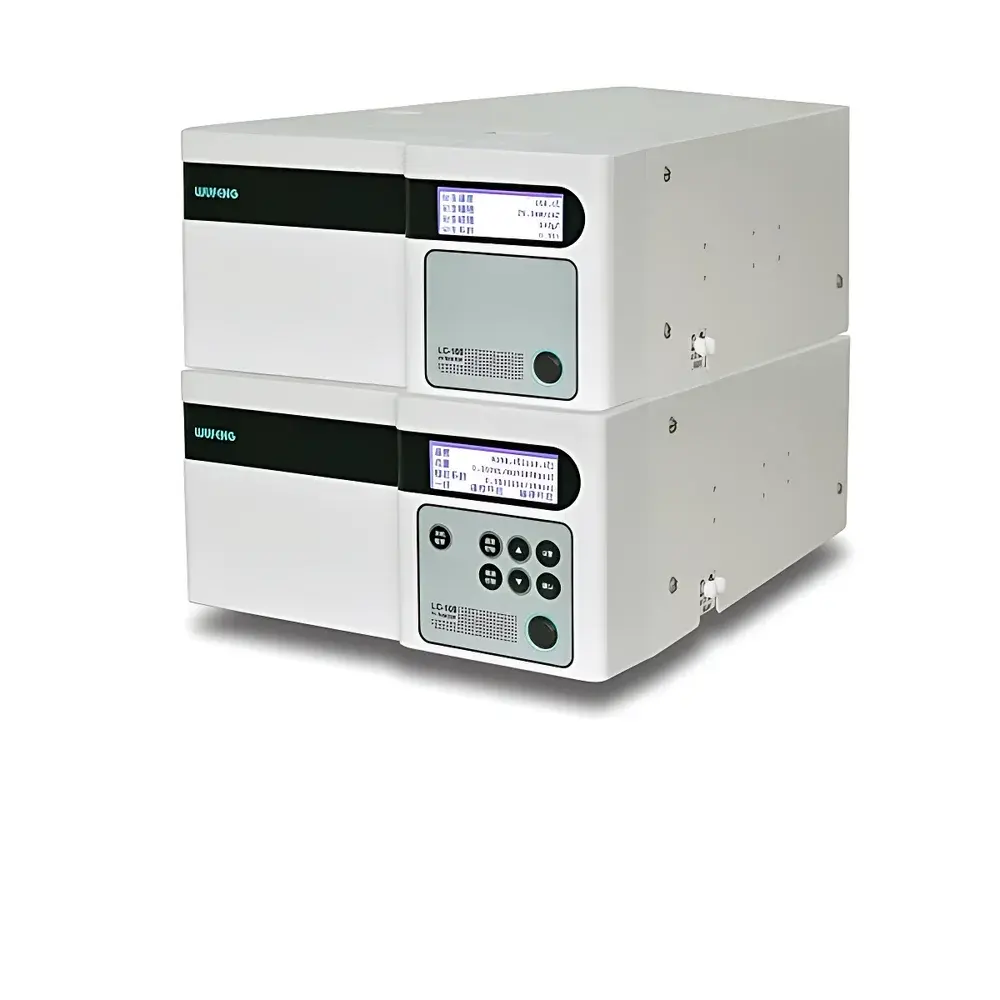
Wufeng LC-100 PC Reactor Post-Column Derivatization System
| Brand | Wufeng |
|---|---|
| Origin | Shanghai, China |
| Manufacturer Type | Authorized Distributor |
| Country of Origin | China |
| Model | LC-100 PC Reactor |
| Temperature Range | Ambient + 5.0 °C to 150.0 °C |
| Derivatization Reagent Flow Rate | 0.001–4.999 mL/min |
| Reaction Coils | High-inertness PEEK, available volumes: 0.50 mL, 0.75 mL, 1.00 mL, 1.50 mL |
Overview
The Wufeng LC-100 PC Reactor is a precision-engineered post-column derivatization (PCD) system designed for integration with high-performance liquid chromatography (HPLC) platforms. It enables controlled chemical derivatization of analytes immediately after column elution—prior to detection—thereby enhancing sensitivity, selectivity, and stability for compounds that lack native chromophores or fluorophores. The system operates on the principle of continuous-flow, temperature-regulated, on-line reaction kinetics, where eluent from the HPLC column merges with a precisely metered derivatization reagent stream within a thermostatically controlled, inert reaction coil. This architecture ensures reproducible residence time, minimized band broadening, and quantitative conversion under defined thermal and hydraulic conditions—critical for regulated environments such as food safety testing, traditional Chinese medicine (TCM) quality control, environmental residue analysis, and pharmaceutical impurity profiling.
Key Features
- Universal HPLC compatibility: Designed to interface seamlessly with any brand or model of analytical or preparative HPLC system via standard 1/16″ stainless steel or PEEK tubing connections.
- Modular architecture: Supports both single-stage (primary) and dual-stage (secondary) derivatization configurations—enabling sequential reactions (e.g., oxidation followed by condensation) without manual intervention.
- Dual-mode operation: All operational parameters—including reagent flow rate, reaction temperature, and coil selection—are controllable either via intuitive front-panel keypad navigation or through dedicated PC-based software using USB 2.0 communication.
- Extended pump longevity: Integrated plunger wash function automatically flushes the derivatization pump’s seal area between injections, significantly reducing carryover and extending seal service life under aggressive reagent conditions.
- Optimized reaction dynamics: Continuous, fully enclosed reaction coils with multi-directional internal geometry promote turbulent-like mixing and uniform radial dispersion—maximizing reagent-analyte contact efficiency while preserving chromatographic resolution.
- Configurable residence volume: Interchangeable PEEK reaction coils (0.50 mL, 0.75 mL, 1.00 mL, 1.50 mL) allow precise adjustment of reaction time (tR = Vcoil/Ftotal) to match kinetic requirements of diverse derivatization chemistries (e.g., o-phthalaldehyde, ninhydrin, fluorescamine, or dansyl chloride reactions).
- Comprehensive safety monitoring: Real-time pressure sensing triggers automatic pump shutdown upon overpressure (>35 MPa) or leak detection; temperature overshoot protection halts heating if coil temperature exceeds setpoint by >5 °C; optional derivatization stability monitoring provides real-time UV-Vis absorbance feedback at coil outlet for reaction consistency verification.
Sample Compatibility & Compliance
The LC-100 PC Reactor employs an entirely high-inertness fluidic path constructed from PEEK, titanium, and sapphire components—resistant to hydrolysis, oxidation, and corrosion across pH 0–14. This enables reliable use with strongly acidic (e.g., TFA/HCl-based o-phthalaldehyde reagents), strongly basic (e.g., NaOH/ninhydrin), or oxidizing (e.g., potassium permanganate) derivatization media. The system meets mechanical and electrical safety requirements per IEC 61010-1:2010 and supports audit-ready operation in GLP- and GMP-regulated laboratories. When operated with compliant data acquisition software, it satisfies FDA 21 CFR Part 11 requirements for electronic records and signatures—including user authentication, audit trail generation, and data integrity validation.
Software & Data Management
The LC-100 PC Reactor is supported by Wufeng’s PC-DerivControl v3.2 software (Windows 10/11, 64-bit), which provides synchronized parameter logging, method storage, and event-triggered protocol execution. Each run generates timestamped metadata files (.csv) containing temperature profiles, flow rate traces, pressure logs, and optional photometric stability metrics. Raw data exports are compatible with third-party chromatography data systems (CDS) including Thermo Chromeleon, Waters Empower, and Agilent OpenLab CDS—allowing direct correlation of derivatization status with peak area, retention time, and signal-to-noise ratio. All software modules undergo annual cybersecurity patching and support TLS 1.2+ encrypted communications for remote diagnostics.
Applications
- Amino acid analysis in infant formula, dairy, and plant-based proteins using ninhydrin or OPA derivatization.
- Mycoestrogen and pesticide residue quantification (e.g., aflatoxins, carbamates) in cereals and herbal matrices via photochemical or post-column iodination.
- Hydroxyproline and collagen hydrolysate profiling in TCM extracts using chloramine-T/DMAB chemistry.
- Aldehyde and ketone determination in drinking water and wastewater via DNPH derivatization and UV detection.
- Pharmaceutical stability-indicating assays requiring forced degradation product derivatization (e.g., hydrazide formation with aldehydic impurities).
FAQ
Can the LC-100 PC Reactor be used with UHPLC systems operating above 1000 bar?
Yes—the fluidic path is rated to 103 MPa (15,000 psi); however, optimal performance requires matching coil internal diameter (e.g., 0.13 mm ID for sub-2 µm particles) and minimizing extra-column volume through zero-dead-volume fittings.
Is gradient-compatible derivatization supported?
Yes—flow rate compensation algorithms maintain constant residence time during binary or quaternary gradient elution by dynamically adjusting reagent pump speed in proportion to main solvent flow.
Does the system support automated method development for derivatization optimization?
Yes—PC-DerivControl includes a built-in sequence scheduler that executes temperature/flow ramping protocols across up to 96 method variants, with automatic peak response evaluation and Pareto-optimal condition reporting.
What maintenance intervals are recommended for long-term reliability?
Derivatization pump seals should be inspected every 6 months or after 2000 injection cycles; reaction coils require replacement only if visible discoloration or pressure drift occurs—typically exceeding 12 months under routine use with non-aggressive reagents.
Are validation documents (IQ/OQ/PQ) available?
Yes—Wufeng provides factory-verified Installation Qualification (IQ) and Operational Qualification (OQ) templates aligned with ASTM E2500-13 and ISO/IEC 17025:2017; Performance Qualification (PQ) protocols are customizable per client SOPs.



