
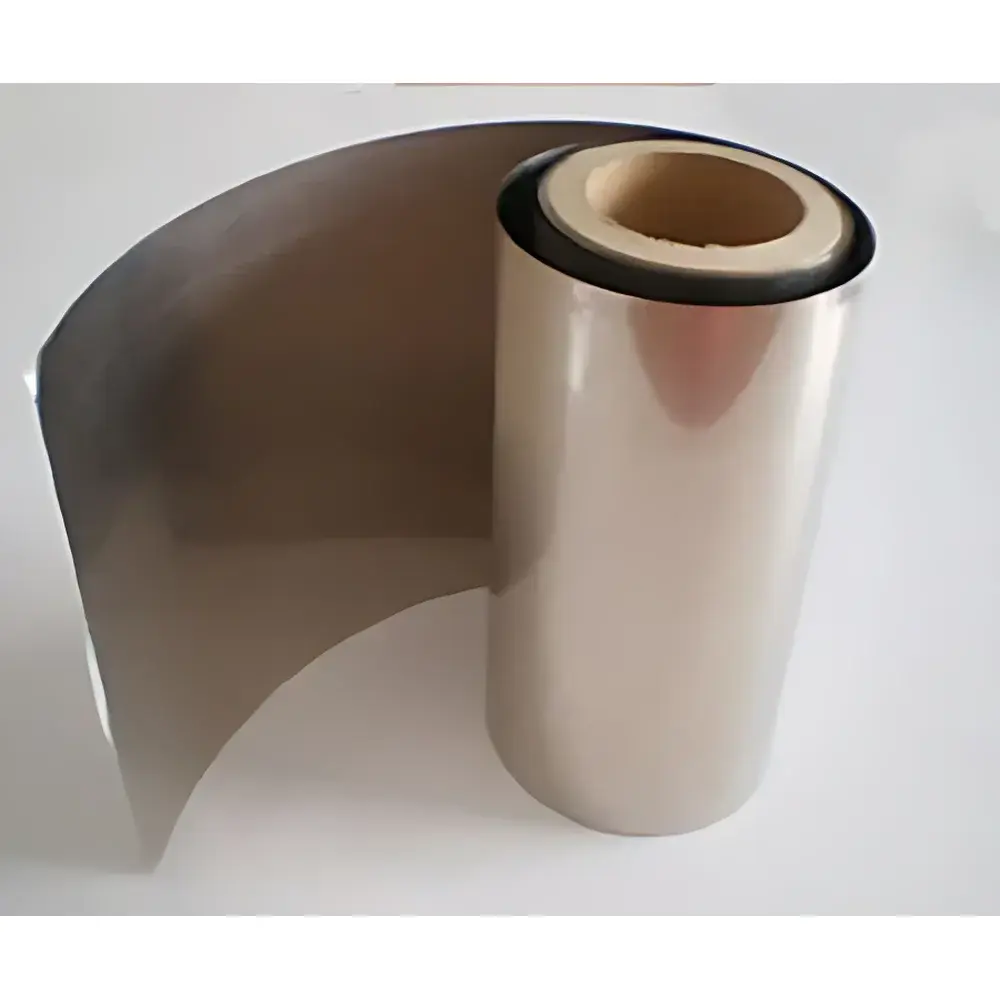
Chromium (Cr) Foil for Quartz Crystal Microbalance (QCM) Sensors
| Brand | Hefei Kejing |
|---|---|
| Origin | Anhui, China |
| Manufacturer Type | Authorized Distributor |
| Origin Classification | Domestic |
| Model | Cr Foil |
| Price Range | USD 0.15 – 1,500 (FOB) |
| Dimensions | 200 mm × 100 mm × 0.1 mm |
| Thickness Tolerance | ±5 µm |
| Average Surface Roughness (Ra) | < 0.3 nm |
| Grain Structure | As-deposited, non-annealed |
| Particle Size Distribution | 10–50 µm (nominal, per metallurgical cross-section analysis) |
| Packaging | Vacuum-sealed in Class 100 cleanroom bags, stored and shipped under inert gas (N₂ or Ar) atmosphere |
| Compliance | ASTM F1357-22 (Standard Specification for High-Purity Chromium Metal), ISO 80000-4:2019 (Quantities and units — Part 4: Mechanics) |
Overview
Chromium (Cr) Foil is a high-purity, ultra-thin metallic substrate engineered specifically for integration into quartz crystal microbalance (QCM) sensor platforms used in electrochemical and surface science applications. Unlike bulk chromium targets or sputtering targets, this foil is fabricated via precision rolling and controlled surface finishing to achieve consistent thickness (0.1 mm), low surface roughness (<0.3 nm Ra), and minimal native oxide formation—critical parameters for reliable mass-sensitive detection in real-time thin-film deposition monitoring, corrosion studies, and interfacial electrochemistry. The material adheres to ASTM F1357-22 specifications for high-purity chromium (≥99.95% Cr, trace Fe < 50 ppm, O < 100 ppm), ensuring electrochemical stability and reproducible QCM frequency shifts (Δf) under potentiostatic control. Its non-annealed microstructure preserves fine-grained crystallinity (10–50 µm grain size range), minimizing internal stress and enhancing adhesion to quartz resonator electrodes during thermal evaporation or sputter-coating processes.
Key Features
- High-purity chromium foil (≥99.95% Cr) with certified elemental composition and trace impurity profile
- Precisely controlled thickness of 0.1 mm (±5 µm) across full 200 mm × 100 mm sheet area
- Ultra-smooth surface finish (Ra < 0.3 nm), verified by atomic force microscopy (AFM), enabling uniform electrode coating and reduced acoustic damping
- Non-annealed metallurgical state preserves nanoscale grain boundaries, supporting stable charge transfer kinetics in QCM-EIS (electrochemical impedance spectroscopy) configurations
- Vacuum-compatible and outgassing-tested: total mass loss (TML) < 0.5% and collected volatile condensable materials (CVCM) < 0.05% per NASA ASTM E595
- Supplied in Class 100 cleanroom vacuum bags under inert gas (N₂ or Ar), minimizing native oxide growth and hygroscopic contamination
Sample Compatibility & Compliance
This Cr foil is compatible with standard 5–10 MHz AT-cut quartz crystals and supports both evaporative and sputter-based electrode fabrication protocols. It meets the dimensional and purity requirements for use in ISO/IEC 17025-accredited laboratories performing surface mass quantification per ISO 14644-1 (cleanroom classification) and ASTM D7212-19 (standard test method for measuring thin-film thickness by QCM). Storage and handling comply with OSHA 29 CFR 1910.1200 (Hazard Communication Standard) and GHS criteria for chromium metal (UN 3089, PG III). Material Safety Data Sheet (MSDS) is available upon request and conforms to REACH Annex XVII restrictions on hexavalent chromium precursors.
Software & Data Management
While the Cr foil itself is a passive consumable, its performance is fully traceable within QCM data acquisition workflows using industry-standard platforms such as QSense Connect (Biolin), NOVA (Metrohm Autolab), or custom LabVIEW-based systems. Frequency drift calibration curves generated using this foil are validated against NIST-traceable reference standards (e.g., SiO₂ calibration films). Audit trails—including lot number, packaging date, inert gas purge log, and AFM surface characterization report—are retained for GLP/GMP-aligned quality records. All documentation supports 21 CFR Part 11-compliant electronic signatures when integrated with validated LIMS environments.
Applications
- In situ monitoring of chromium electrodeposition kinetics and passivation layer formation in acidic sulfate electrolytes
- Reference substrate for calibrating QCM sensitivity factors (Sauerbrey constant) in corrosive media (e.g., simulated concrete pore solution, seawater)
- Working electrode material for studying oxygen reduction reaction (ORR) intermediates on Cr-modified surfaces
- Base layer for fabricating Cr/Cr₂O₃ bilayer sensors targeting selective H₂S or Cl⁻ detection in electrochemical gas sensing
- Substrate for pulsed laser deposition (PLD) of Cr-doped functional oxides where stoichiometric fidelity and interfacial coherence are critical
FAQ
Is this Cr foil suitable for high-temperature QCM operation (>150°C)?
No. This grade is optimized for ambient-to-moderate temperature applications (–20°C to +85°C). Prolonged exposure above 120°C may accelerate surface oxidation and degrade Sauerbrey linearity.
Can custom thicknesses or cut geometries be provided?
Yes. Hefei Kejing offers OEM processing per customer drawings—including slitting to 5 mm strips, circular punches (Ø3–25 mm), or photolithographic patterning—subject to minimum order quantity and cleanroom scheduling.
What is the typical shelf life under recommended storage conditions?
When maintained at ≤32°C, RH ≤75%, and under continuous inert gas seal, the foil retains specified surface integrity for up to 24 months from manufacturing date.
Does the foil require pre-cleaning before QCM electrode fabrication?
Yes. A standard protocol includes sequential ultrasonication in acetone (5 min), isopropanol (5 min), and oxygen plasma treatment (30 W, 60 s) to remove adventitious carbon and ensure hydrophilic surface activation.
Is material certification (CoA) provided with each shipment?
Yes. Each lot includes a Certificate of Analysis documenting ICP-MS trace metal assay, AFM surface roughness map, dimensional verification report, and inert gas purge validation record.
Related Products





