Diamond-on-Insulator (DOI) High-Resistivity Diamond Thin-Film Wafers
| Brand | 合肥科晶 |
|---|---|
| Origin | USA |
| Manufacturer Type | Authorized Distributor |
| Origin Category | Imported |
| Model | Diamond-on-Insulator (DOI) High-Resistivity Diamond Thin-Film Wafers |
| Price | Upon Request |
| Substrate Diameter | 4" (101.6 mm) |
| Substrate Thickness | 0.5 mm |
| Silicon Crystal Orientation | <100> ± 0.5° |
| Insulating Layer | SiO₂ |
| SiO₂ Thickness | 2 µm |
| Oxide Layer | 1 µm |
| Resistivity | 1 × 10³ – 1 × 10⁴ Ω·cm |
| Packaging | Vacuum-sealed in Class 100 cleanroom bags within Class 1000 cleanroom environment, or individual wafer cassette |
Overview
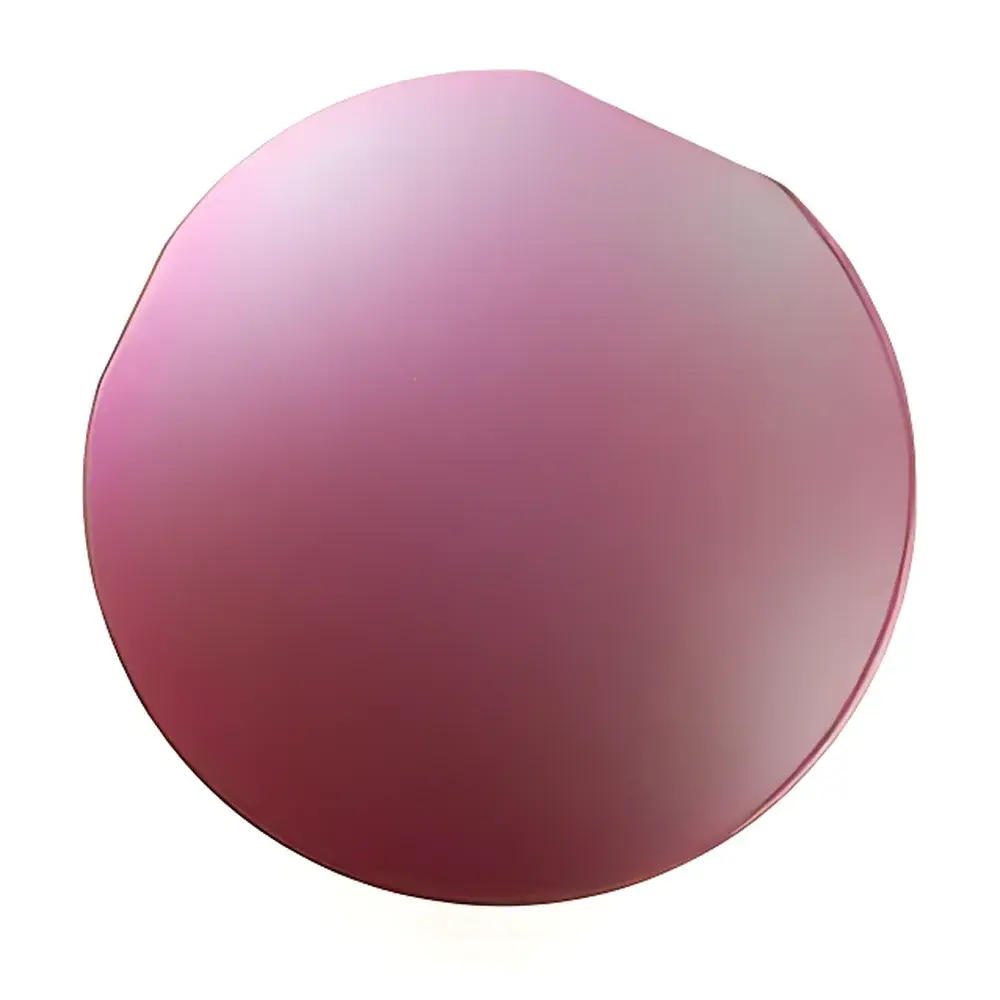
Diamond-on-Insulator (DOI) high-resistivity diamond thin-film wafers are engineered substrates designed for advanced microelectronic, MEMS, and high-frequency RF device fabrication where thermal management, electrical isolation, and radiation hardness are critical. These wafers integrate a high-purity, low-defect-density polycrystalline or single-crystal diamond film—grown via microwave plasma chemical vapor deposition (MPCVD)—onto a silicon substrate with a precisely controlled buried oxide (BOX) layer. The diamond film serves as both an ultra-high thermal conductivity (≈2000 W/m·K) heat-spreading medium and a wide-bandgap (5.47 eV), high-breakdown-field (>10 MV/cm) semiconductor layer, while the underlying SiO₂/Si stack provides robust dielectric isolation and CMOS-compatible process integration. Unlike conventional SOI wafers, DOI structures decouple thermal and electrical performance from silicon’s intrinsic limitations—enabling stable operation under high-power density, cryogenic, or extreme radiation environments.
Key Features
- High-resistivity diamond film (1 × 10³ – 1 × 10⁴ Ω·cm) ensures minimal leakage current and superior gate insulation integrity in high-voltage and high-frequency transistor architectures.
- Precisely engineered 2 µm SiO₂ insulating layer with 1 µm top oxide interface layer, optimized for stress mitigation and interfacial trap density control (Dit < 1 × 10¹¹ cm⁻²·eV⁻¹).
- 4-inch (101.6 mm) diameter silicon substrate with ± 0.5° crystal orientation—compatible with standard photolithography, etching, and metallization toolsets used in semiconductor pilot lines.
- Substrate thickness of 0.5 mm enables compatibility with backgrinding, dicing, and flip-chip bonding processes without warpage-induced yield loss.
- Class 100 cleanroom vacuum packaging minimizes particle contamination (<0.1 µm particles ≤ 100 per wafer) and preserves surface hydrophobicity and oxide stoichiometry prior to processing.
Sample Compatibility & Compliance
These DOI wafers are compatible with standard cleanroom protocols including RCA-1/RCA-2 cleaning, O₂ plasma descum, and HF-last surface passivation. They meet structural and metrological requirements defined in SEMI MF1530 (wafer flatness), SEMI MF1390 (particle count), and ASTM F1269 (resistivity mapping). The SiO₂ layer thickness uniformity (±3% across field) and diamond film RMS roughness (<1.2 nm over 5 × 5 µm) support sub-100 nm lithographic resolution. For regulated applications—including aerospace-grade power amplifiers and medical imaging ASICs—the wafers are supplied with full traceability documentation (lot ID, growth run log, ellipsometry report, four-point probe sheet resistance map), supporting ISO 9001:2015 and IATF 16949 audit readiness.
Software & Data Management
While DOI wafers themselves are passive substrates, their qualification data—including resistivity distribution, oxide thickness profile, and surface topography—are delivered in standardized formats (CSV, .xlsx, and SECS/GEM-compliant XML) compatible with factory automation systems (MES/SPC). Each wafer is assigned a unique serial identifier linked to its metrology dataset in secure cloud storage (AES-256 encrypted), enabling long-term trend analysis of material stability and process drift. Optional integration with JMP Pro or MATLAB-based statistical process control modules supports Cp/Cpk monitoring of key parameters such as oxide thickness CV and diamond film resistivity range.
Applications
- High-electron-mobility transistors (HEMTs) and RF power amplifiers operating above 30 GHz, where diamond’s thermal conductivity suppresses self-heating-induced gain compression.
- Radiation-tolerant mixed-signal ICs for spaceborne telemetry systems, leveraging diamond’s displacement threshold energy (≈40 eV) and negligible total ionizing dose (TID) degradation.
- Microbolometer arrays and quantum sensor platforms requiring ultra-low thermal mass substrates with minimized Johnson–Nyquist noise floor.
- Electrochemical microfluidic chips with integrated diamond electrodes, benefiting from wide electrochemical window (>3.5 V in aqueous media) and biofouling resistance.
- Heterogeneous integration test vehicles for 3D-stacked GaN-on-diamond and SiC-on-diamond co-packaging validation.
FAQ
What is the typical diamond film thickness on these DOI wafers?
Standard configurations feature 1–3 µm thick diamond films; custom thicknesses (0.5–10 µm) are available upon request with extended lead time.
Is the diamond layer doped or intrinsic?
All baseline wafers use undoped, semi-insulating diamond; boron-doped (p-type) or phosphorus-doped (n-type) variants can be supplied under NDA with additional qualification testing.
Can these wafers undergo standard CMOS backend processes (e.g., Cu damascene, low-k dielectrics)?
Yes—thermal budget compatibility has been verified up to 400 °C for ≤60 min; hydrogen annealing steps require pre-qualification due to potential SiO₂/diamond interfacial hydrogen diffusion.
Do you provide wafer-level electrical characterization reports?
Yes—each shipment includes four-point probe resistivity maps (25-point grid), ellipsometric oxide thickness profiles, and AFM surface roughness summaries.
Are these DOI wafers suitable for direct epitaxial growth of III–V materials?
Not without buffer layer engineering; diamond’s lattice mismatch with GaN (>10%) necessitates AlN or BN nucleation layers, which we support via collaborative process development agreements.