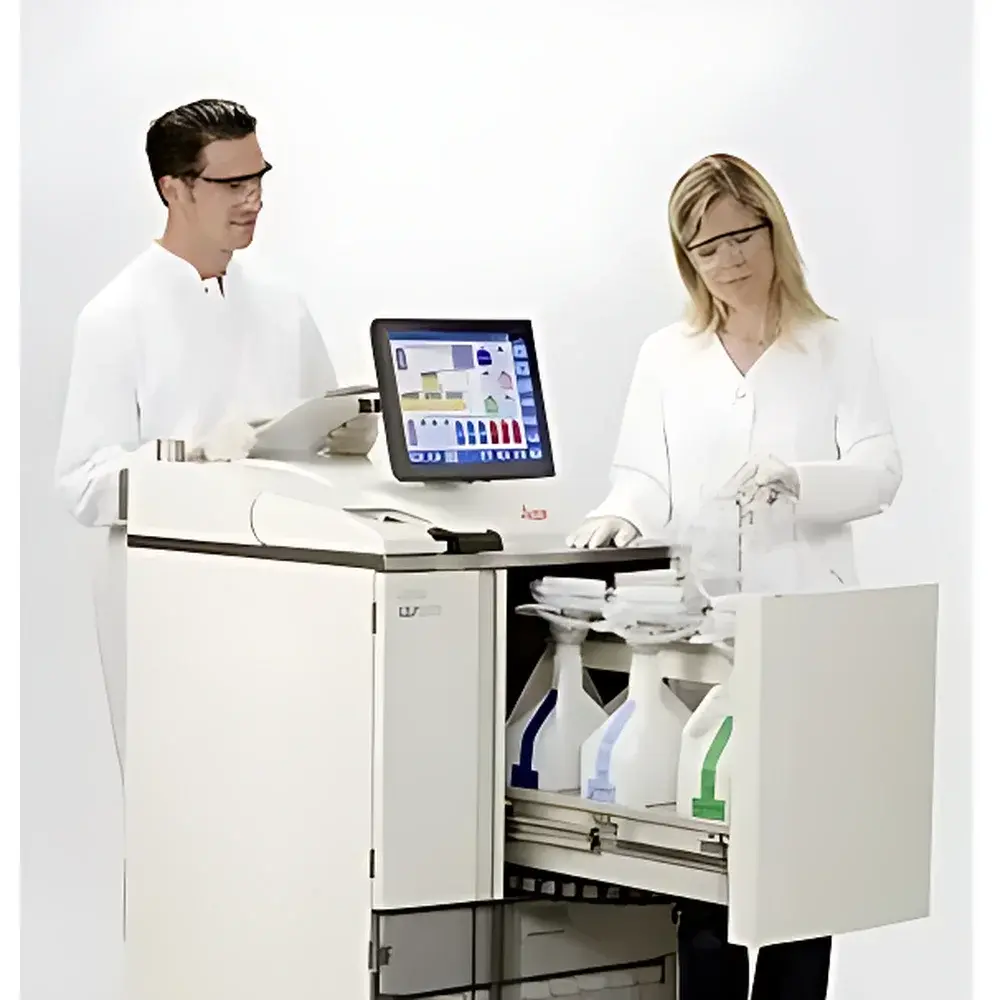
Leica ASP6025 Automated Vacuum Tissue Processor
| Origin | Germany |
|---|---|
| Manufacturer Type | Authorized Distributor |
| Origin Category | Imported |
| Model | ASP6025 |
| Pricing | Upon Request |
Overview
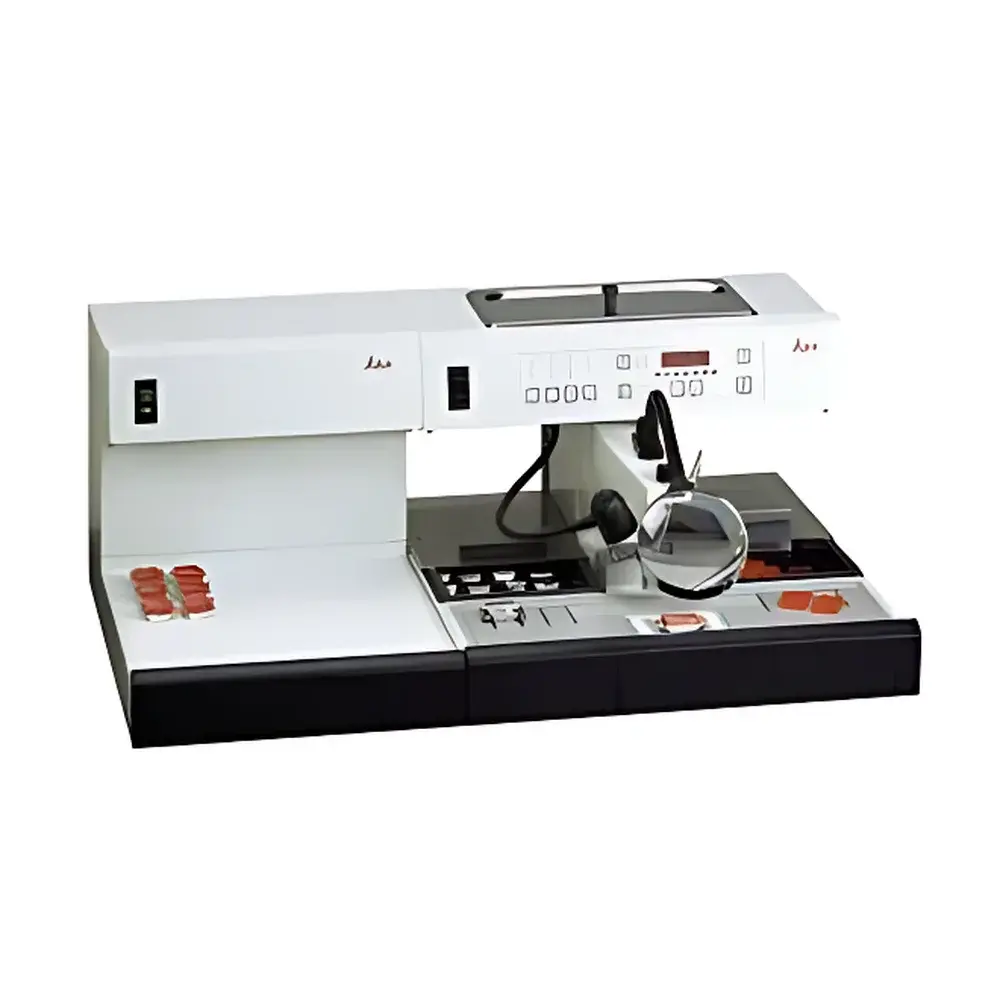
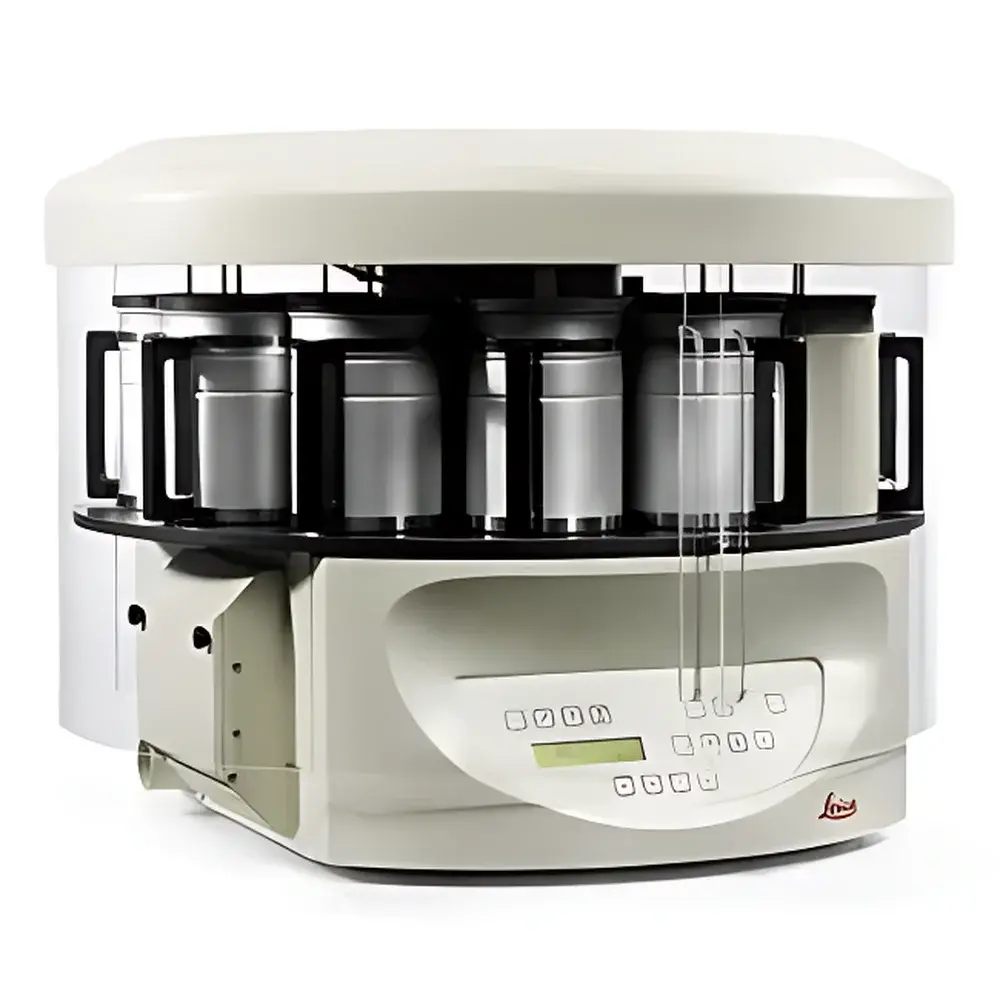
The Leica ASP6025 Automated Vacuum Tissue Processor is an advanced, fully programmable benchtop instrument engineered for high-fidelity histological tissue processing in diagnostic pathology and research laboratories. It employs vacuum-assisted infiltration under precisely controlled temperature, pressure, and reagent exchange cycles to achieve uniform, reproducible dehydration, clearing, and paraffin infiltration—critical prerequisites for high-quality microtome sectioning and downstream IHC, ISH, or molecular analysis. Designed to meet the stringent throughput and traceability demands of modern clinical labs, the ASP6025 integrates vacuum technology with real-time reagent monitoring and fail-safe environmental controls, ensuring compliance with GLP principles and supporting audit readiness per ISO 15189 and CAP accreditation requirements.
Key Features
- Vacuum-enhanced infiltration architecture: Optimized pressure cycling (up to –95 kPa) combined with programmable heating (30–65 °C) ensures complete penetration of reagents into dense or fatty tissues without structural distortion.
- Integrated alcohol concentration monitoring: Built-in refractometric sensors continuously measure ethanol/isopropanol concentration in real time, automatically triggering reagent replenishment or alerting operators to degradation—reducing solvent waste by up to 22% versus non-monitored systems (based on Leica internal validation data).
- Leica ParaLast™ technology: Enables xylene-free processing protocols validated per ASTM E2912-13 (Standard Practice for Xylene-Free Histological Processing), preserving nucleic acid integrity and enabling successful RT-qPCR and NGS from archival blocks.
- Uninterruptible power support: Internal backup battery sustains critical vacuum hold and safe reagent transfer during grid failure; upon outage, the processor autonomously fills processing chambers with buffered ethanol (70%) to prevent tissue desiccation or over-hardening.
- Pre-heated paraffin reservoir station: Dual independent paraffin baths maintain one bath at operational temperature (56–62 °C) while the second undergoes scheduled melt-and-filter cycles—eliminating downtime between runs and reducing average cycle time by 18 minutes per batch (typical 30-specimen load).
- Modular reagent cartridge system: Supports hot-swappable reagent cassettes (up to 12 positions), allowing mid-cycle reagent replacement without interrupting ongoing protocols—a feature essential for labs operating under Lean Six Sigma workflows.
Sample Compatibility & Compliance
The ASP6025 accommodates standard histology cassettes (e.g., Leica HistoCore BIOCORE-compatible) and supports tissue types ranging from delicate biopsies (e.g., renal needle cores, endometrial samples) to dense surgical resections (e.g., prostatectomies, mastectomies). Its vacuum-sealed chamber design minimizes volatile organic compound (VOC) emissions, meeting OSHA PEL and EU Directive 2004/37/EC occupational exposure limits for alcohols and chlorinated solvents. All firmware and protocol logs are timestamped and user-identifiable, fulfilling FDA 21 CFR Part 11 requirements for electronic records and signatures when paired with Leica Biosystems’ certified LIS integration modules.
Software & Data Management
Controlled via Leica Application Suite (LAS) v4.5+ software, the ASP6025 provides role-based access control, encrypted audit trails, and configurable protocol libraries compliant with ISO/IEC 17025 clause 7.7 (result reporting). Protocol versions are digitally signed and archived with SHA-256 hashing; all reagent usage, temperature excursions, vacuum cycles, and operator interventions are logged in CSV- and PDF-exportable formats. Optional integration with middleware (e.g., Sunquest, Cerner CoPath) enables bidirectional specimen tracking and automatic QC flagging based on predefined tolerance thresholds (e.g., ethanol drift > ±3% v/v).
Applications
- Routine diagnostic histopathology in high-volume hospital labs and reference centers
- Molecular-ready tissue processing for biomarker discovery and companion diagnostics development
- Toxicologic pathology studies requiring strict reagent lot traceability and environmental stability documentation
- Academic core facilities supporting multi-user scheduling with protocol versioning and cost-allocation reporting
- GLP-compliant preclinical safety assessment laboratories (OECD 407, 422)
FAQ
Is the ASP6025 compatible with existing Leica staining platforms?
Yes—the ASP6025 exports standardized cassette orientation and barcode metadata compatible with Leica ST5010, Bond RX, and BOND-MAX systems via HL7 and ASTM E1384 interfaces.
Does it support custom protocol development?
Absolutely: LAS software includes a validated protocol editor with parameter locking, inter-step dependencies, and thermal ramp profiling—fully compliant with CLIA §493.1253(b)(3) for laboratory-developed tests.
What maintenance intervals are required?
Daily visual inspection, weekly vacuum pump oil change, and quarterly sensor calibration using Leica-certified reference standards (Cat. No. 1404720000); full service recommended annually by Leica Field Service Engineers.
Can the ASP6025 be validated for ISO 13485 quality management systems?
Yes—Leica provides IQ/OQ/PQ documentation packages aligned with Annex A of ISO 13485:2016 and supports third-party validation oversight per GAMP 5 guidelines.