
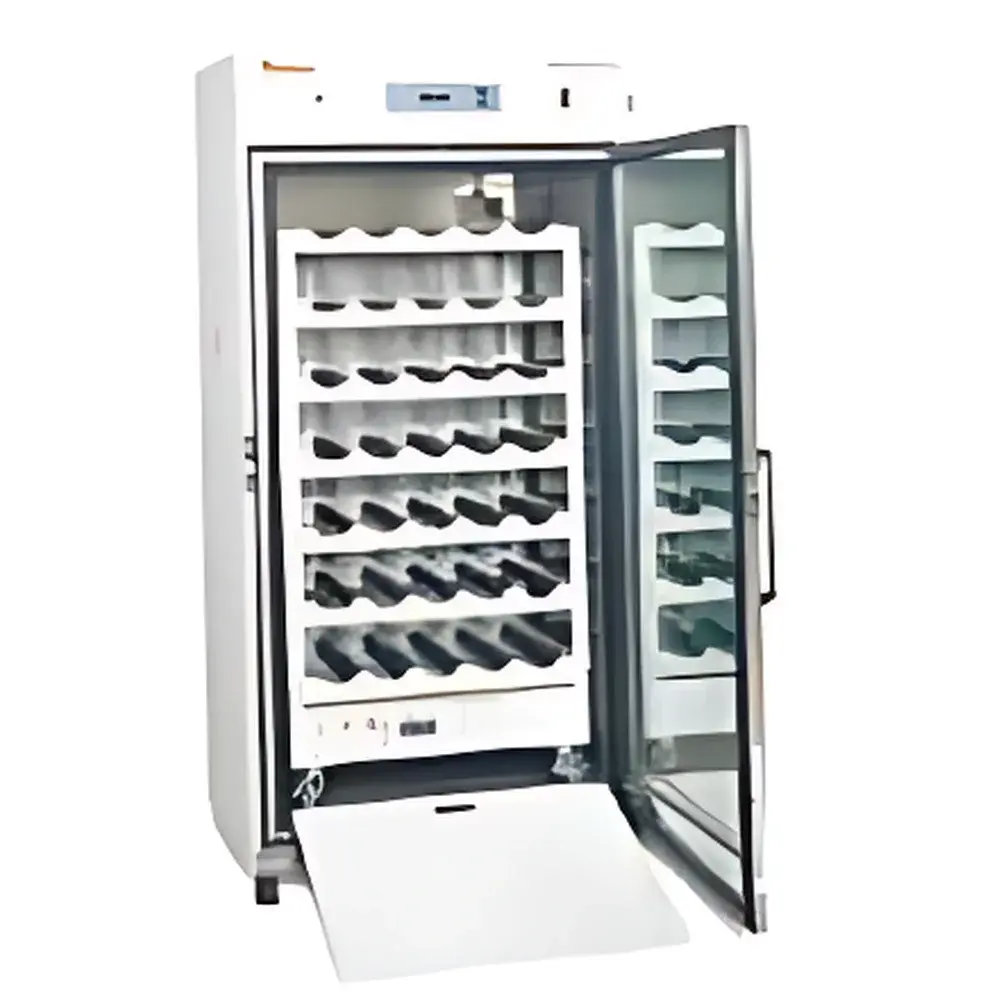
Thermo Fisher Scientific 3951 Reach-In CO₂ Incubator
| Brand | Thermo Fisher Scientific |
|---|---|
| Origin | USA |
| Model | 3951 |
| Temperature Range | Ambient +5°C to 60°C |
| CO₂ Range | 0–20% |
| CO₂ Control Accuracy | ±0.1% |
| Temperature Uniformity (at 37°C) | ±0.3°C |
| Temperature Control Accuracy | ±0.1°C |
| Humidity Options | Off / Medium (>80%) / High (>90%) |
| Internal Volume | 821.2 L |
| Internal Dimensions (W×H×D) | 787 × 1524 × 686 mm |
| External Dimensions (W×H×D) | 965 × 2032 × 838 mm |
| Shelf Capacity | 5 standard / up to 27 stainless steel shelves |
| Total Shelving Area | 13.5 m² |
| Humidity Reservoir Volume | 15.1 L |
| CO₂ Sensor Type | Thermal Conductivity (T/C) |
| Input Gas Pressure | 15 PSIG |
| Heated Inner Glass Door | Yes |
| Dual External Port Access (Left/Right) | Yes |
| Power Fail Memory for Setpoints & Calibration Values | Yes |
| Automatic CO₂ Cut-off on Outer Door Opening | Yes |
Overview
The Thermo Fisher Scientific 3951 Reach-In CO₂ Incubator is an engineered platform for high-throughput, long-term mammalian cell culture under tightly controlled physiological conditions. Designed around a robust microprocessor-based control architecture, it maintains stable CO₂ concentration, temperature, and humidity profiles across its 821.2 L internal chamber—optimized for scalability in academic core facilities, biopharmaceutical process development labs, and contract manufacturing organizations (CMOs). Its operation relies on dual-loop feedback control: a thermal conductivity (T/C) CO₂ sensor provides real-time gas concentration monitoring with ±0.1% accuracy, while a high-stability PT100 temperature probe and integrated humidity sensing system ensure compliance with ISO 13408-1 (aseptic processing of pharmaceuticals) and USP (cellular and gene therapy products) environmental requirements. The heated inner glass door prevents condensation during frequent access, preserving sterility and minimizing thermal disturbance to cultures.
Key Features
- Microprocessor-controlled environment with non-volatile memory: setpoints and calibration offsets persist through power interruption, supporting GLP/GMP audit readiness.
- Automatic CO₂ shutoff upon outer door opening—prevents uncontrolled gas loss and maintains chamber integrity during routine handling.
- Heated inner glass door eliminates moisture condensation, reducing contamination risk and improving visibility without compromising thermal stability.
- Dual external port access (left and right side) enables seamless integration with external sensors, data loggers, or peripheral devices such as CO₂ analyzers or O₂ monitors.
- Stainless steel shelving system supports up to 27 adjustable shelves; total usable surface area reaches 13.5 m²—compatible with stacked flasks, roller bottles, multi-layer cell factories, and horizontal orbital shakers.
- Multi-stage audible and visual alarm system triggers on deviation from user-defined thresholds for temperature, CO₂, humidity, door status, and sensor fault conditions.
Sample Compatibility & Compliance
The 3951 accommodates diverse culture formats including T-flasks (up to 175 cm²), CellSTACK® chambers, HYPERFlasks®, and roller bottle systems—making it suitable for adherent, suspension, and co-culture applications. Its stainless steel interior (electropolished finish), HEPA-filtered air circulation, and copper-enriched chamber surfaces support ISO Class 5 (Class 100) cleanroom-compatible workflows. The incubator meets key regulatory expectations for cell therapy manufacturing environments, including alignment with FDA 21 CFR Part 11 (electronic records/signatures) when paired with compliant data acquisition software, and supports traceable calibration per ISO/IEC 17025 requirements.
Software & Data Management
While the 3951 operates via an intuitive front-panel interface, optional connectivity modules enable RS-232 or Ethernet communication for integration into centralized lab management systems (e.g., LabVantage, STARLIMS). All critical parameters—including real-time CO₂%, temperature, humidity, door open/close events, and alarm logs—are timestamped and exportable in CSV format. Audit trail functionality records operator ID, parameter changes, and calibration actions—essential for FDA inspection preparedness and internal quality audits under ICH Q5D and Q9 frameworks.
Applications
- Large-scale expansion of primary human cells (e.g., mesenchymal stromal cells, dendritic cells) for clinical-grade production.
- Long-term maintenance of stem cell lines under low-oxygen priming conditions (when used with optional O₂ modulation kits).
- Co-culture studies requiring simultaneous control of multiple environmental variables across heterogeneous cell populations.
- Process validation studies supporting comparability assessments during scale-up from benchtop to bioreactor-based platforms.
- Regulatory submission support for IND/IMPD dossiers where environmental consistency data must be documented per ICH guidelines.
FAQ
Does the 3951 support remote monitoring and control?
Yes—via optional Ethernet module and Thermo Fisher’s IncuManager™ software suite, enabling secure web-based access to real-time parameters and historical trend analysis.
Is the CO₂ sensor factory-calibrated and field-serviceable?
The thermal conductivity sensor is pre-calibrated at the manufacturing site and includes a user-accessible zero-point adjustment function; full recalibration is supported by authorized service engineers using NIST-traceable reference gases.
Can the incubator operate in ambient rooms exceeding 30°C?
It maintains specified performance within ambient ranges of 15–32°C; operation above 32°C requires supplemental room cooling to prevent thermal overload of the compressor-based cooling system.
What validation documentation is provided with the unit?
Each shipment includes Factory Acceptance Test (FAT) report, IQ/OQ protocol templates aligned with ASTM E2500-13, and a Certificate of Conformance traceable to NIST standards.
Are third-party peripherals (e.g., external CO₂ analyzers) compatible with the dual-side ports?
Yes—the left and right ports are standardized ¼” NPT threaded interfaces, compatible with common pressure-rated tubing and sensor mounting hardware used in regulated laboratory environments.
Related Products



