
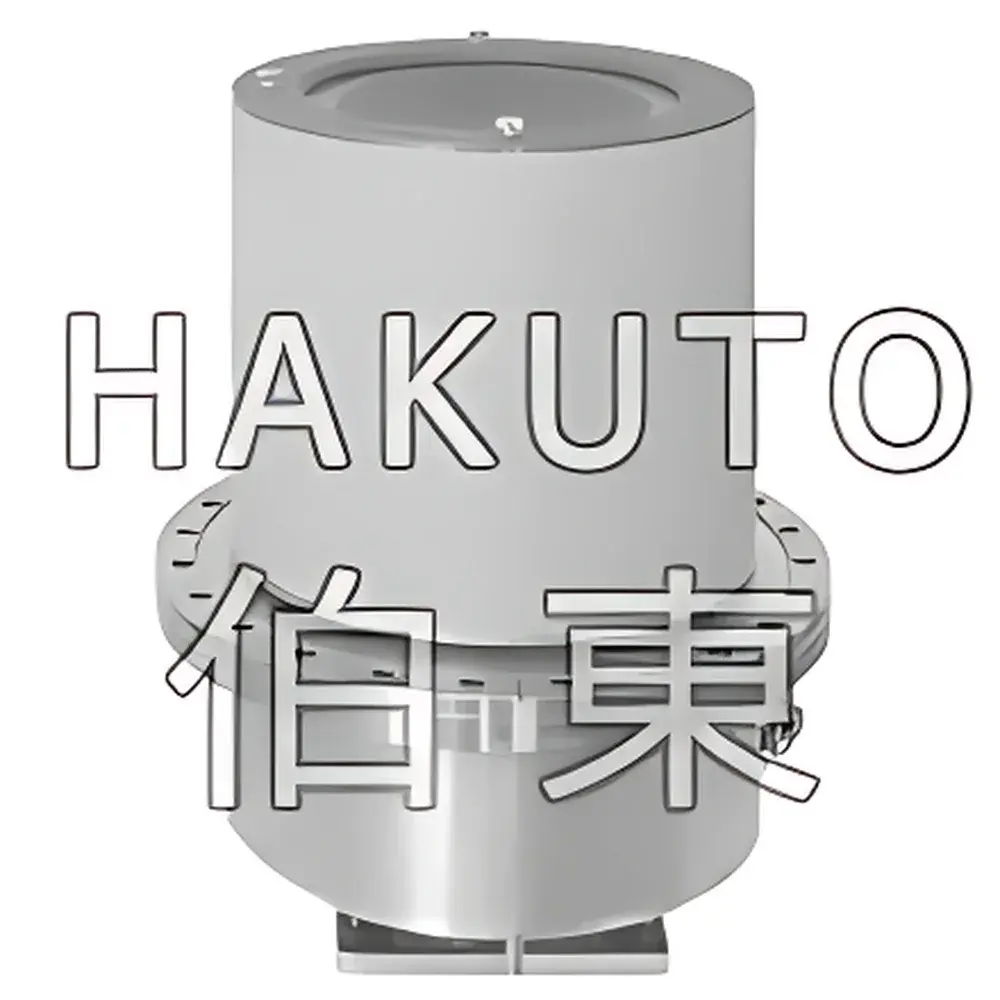
KRI RFICP 100 Kaufman-Type Radiofrequency Ion Source
| Brand | Kaufman (KRI) |
|---|---|
| Origin | USA |
| Model | RFICP 100 |
| Discharge Anode | RF |
| Ion Beam Current | >350 mA |
| Ion Energy Range | 100–1200 eV |
| Grid Diameter | 10 cm |
| Beam Optics | Focused, Parallel, or Divergent Configurations |
| Process Gases | Ar, Kr, Xe, O₂, N₂, H₂ |
| Operating Pressure | <0.5 mTorr |
| Length | 23.5 cm |
| Outer Diameter | 19.1 cm |
| Neutralizer | LFN-2000 |
| Flange | 10" CF |
Overview
The KRI RFICP 100 is a compact, high-performance radiofrequency (RF) driven Kaufman-type ion source engineered for precision surface engineering in ultra-high vacuum (UHV) environments. Unlike thermionic or DC-discharge ion sources, the RFICP 100 employs inductively coupled plasma (ICP) excitation to generate stable, long-lifetime plasma without internal electrodes—eliminating cathode sputtering, thermal drift, and contamination risks associated with filament-based systems. Its design adheres to the foundational Kaufman ion optics architecture developed by Dr. Richard Kaufman in the late 1970s, optimized for controllable ion extraction, energy uniformity, and beam current stability across extended operational cycles. The RFICP 100 delivers ion currents exceeding 350 mA at energies tunable from 100 eV to 1200 eV—enabling both low-energy surface activation (e.g., substrate pre-cleaning) and high-energy physical sputtering (e.g., ion beam sputter deposition or IBS). With its 10 cm diameter extraction grid and integrated beam-shaping optics, it supports focused, parallel, or divergent beam configurations tailored to specific process geometry and uniformity requirements.
Key Features
- RF-driven inductively coupled plasma generation—no consumable filaments, no internal electrodes, enhanced operational lifetime and process repeatability
- Compact form factor (23.5 cm length × 19.1 cm outer diameter) compatible with standard 10-inch ConFlat (CF) vacuum flanges
- Wide ion energy range (100–1200 eV) with fine-grained voltage control for precise kinetic energy tuning
- Beam current output ≥350 mA under typical Ar discharge conditions; scalable with gas type and pressure
- Multi-gas compatibility: optimized for inert gases (Ar, Kr, Xe) and reactive species (O₂, N₂, H₂) without hardware modification
- Integrated LFN-2000 low-energy electron neutralizer ensures space-charge compensation and stable beam transport
- Robust mechanical construction using oxygen-free copper and high-purity alumina insulators—designed for UHV service down to 5×10⁻¹⁰ Torr
Sample Compatibility & Compliance
The RFICP 100 is compatible with substrates ranging from silicon wafers and optical crystals to metallic foils and polymer films. Its low-pressure operation (<0.5 mTorr) and clean plasma generation minimize residual gas incorporation and hydrocarbon contamination—critical for applications requiring atomic-layer control, such as optical thin-film stacks or quantum device fabrication. The system conforms to standard UHV material outgassing specifications per ASTM E595 and ISO 15732. When integrated into larger deposition or etching platforms, the RFICP 100 supports GLP/GMP-aligned process documentation through analog/digital I/O interfaces (0–10 V, RS-232, and optional Ethernet), enabling traceable parameter logging and audit-ready configuration records.
Software & Data Management
While the RFICP 100 operates via analog setpoint inputs for RF power, grid voltage, and gas flow, it is fully compatible with third-party vacuum control systems (e.g., MKS Instruments Flow Controllers, Pfeiffer Vacuum SmartLine controllers) and SCADA platforms supporting Modbus TCP or EtherCAT protocols. KRI provides detailed pinout schematics and command syntax for integration into LabVIEW, Python-based automation frameworks, or PLC-controlled coating lines. All operational parameters—including forward/reflected RF power, beam current, neutralizer emission current, and process gas flow rates—can be logged with timestamped metadata for full experimental reproducibility and FDA 21 CFR Part 11-compliant electronic record retention when paired with validated data acquisition software.
Applications
- Ion beam-assisted deposition (IBAD) for stress control and adhesion enhancement in optical coatings (e.g., TiO₂/SiO₂ multilayers)
- Ion beam sputter deposition (IBSD) of high-purity, stoichiometric thin films—especially for magnetic, superconducting, or photonic materials
- Precision ion beam etching (IBE) with sub-5 nm depth resolution on compound semiconductors (GaAs, InP) and dielectric stacks
- In-situ substrate pre-cleaning and surface activation prior to evaporation or sputter deposition—removing native oxides without chemical residues
- Surface functionalization of biomedical implants via low-energy ion irradiation (e.g., increasing hydrophilicity of Ti-6Al-4V)
- Defect engineering in 2D materials (graphene, MoS₂) using controlled ion fluence and energy gradients
FAQ
What vacuum level is required for stable RFICP 100 operation?
The RFICP 100 achieves optimal plasma ignition and beam stability below 0.5 mTorr; for high-current, low-energy operation (e.g., <200 eV), base pressures ≤5×10⁻⁷ Torr are recommended to minimize scattering losses.
Can the RFICP 100 operate with reactive gases like O₂ or N₂ without compromising grid lifetime?
Yes—the RF-driven plasma eliminates hot cathodes vulnerable to oxidation; however, prolonged exposure to reactive gases at high power may accelerate grid erosion. KRI recommends periodic inspection and use of nickel-alloy grids for extended reactive operation.
Is remote monitoring and control supported?
Standard analog interfaces (0–10 V) allow real-time monitoring of beam current and RF parameters. Digital integration via RS-232 or optional Ethernet modules enables full remote configuration, alarm handling, and automated recipe execution.
How does the RFICP 100 compare to DC Kaufman sources in terms of maintenance frequency?
RFICP 100 eliminates filament replacement entirely and reduces scheduled maintenance intervals by ≥70% compared to equivalent DC sources—particularly in multi-shift production environments.
Does KRI provide application-specific beam optics kits?
Yes—customizable electrostatic lens assemblies (triple-grid, einzel lens, or immersion lens configurations) are available for specialized beam collimation, focusing, or angular dispersion control.



