
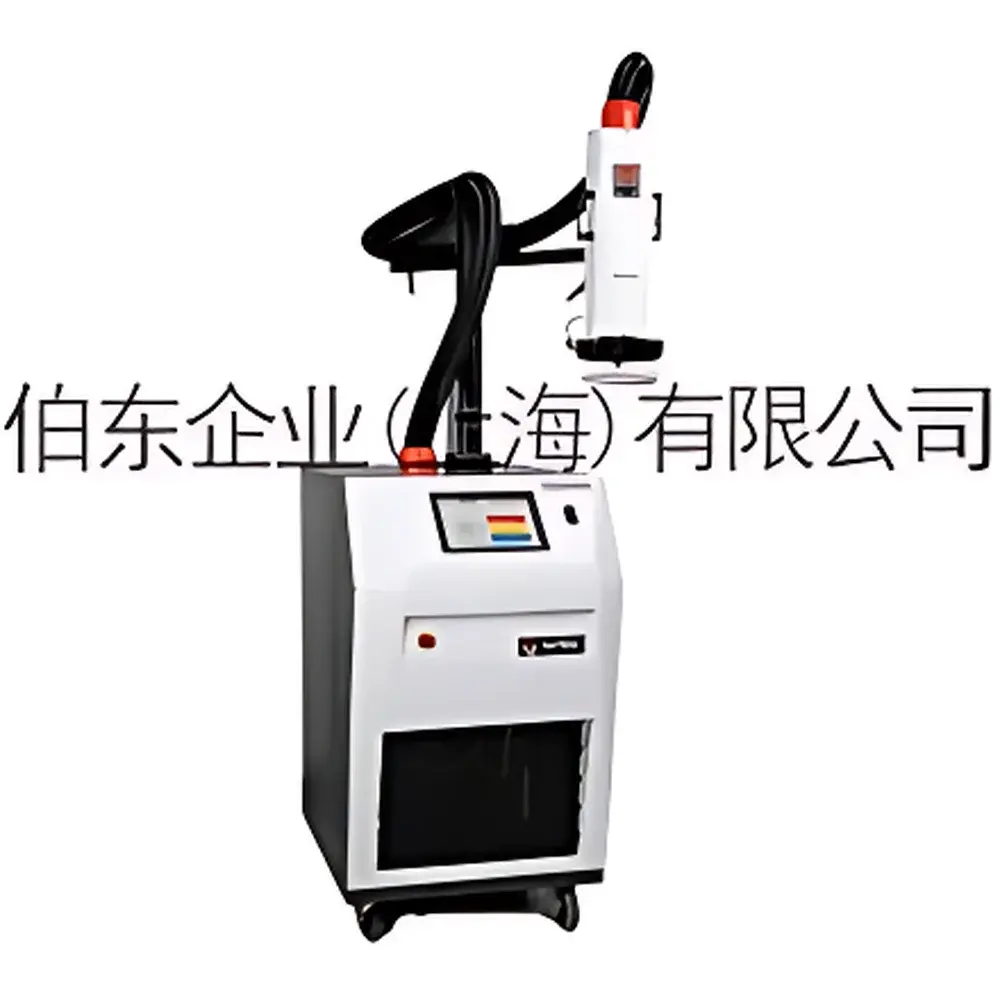
inTEST Temptronic ATS-710E ThermoStream® Thermal Shock Test System
| Brand | inTEST–Temptronic |
|---|---|
| Origin | USA |
| Model | ATS-710E |
| Temperature Range | −80 °C to +225 °C |
| Temperature Stability | ±0.01 °C |
| Ramp Rate | ~10 s from −55 °C to +125 °C |
| Ramp Rate | ~10 s from +125 °C to −55 °C |
| Airflow Output | 4–18 SCFM (1.8–8.5 L/s) |
| Temperature Accuracy | ±1 °C (NIST-traceable calibration) |
| Temperature Resolution | 0.1 °C |
| Sensor Type | T-type or K-type thermocouple |
| Control Interfaces | Ethernet, IEEE-488 (GPIB), RS-232 |
| Chiller | Non-ozone-depleting refrigerant, LN₂-free, LCO₂-free |
| Dehumidification | Dry-air purge (0.5–3 SCFM) |
| Safety Limits | User-configurable thermal cutoff up to +230 °C |
| Dimensions (W×D×H) | 61.0 × 72.4 × 108.0 cm |
| Net Weight | 236 kg |
| Enclosure Options | 4.5″ or 5.5″ ThermoStream® hood with cryo-rated gasket |
Overview
The inTEST Temptronic ATS-710E ThermoStream® Thermal Shock Test System is an engineered solution for high-fidelity, localized thermal stress testing of electronic components and printed circuit assemblies. Unlike conventional environmental chambers, the ATS-710E employs a directed, high-velocity gas stream—delivered via a precision-engineered thermal hood—to impose rapid, repeatable temperature transitions directly onto discrete devices under test (DUTs), such as power management ICs, ASICs, MEMS sensors, or bare die mounted on load boards. Its operational principle relies on closed-loop thermoelectric and compressor-based thermal conditioning combined with real-time thermocouple feedback at the DUT interface, enabling dynamic control of transient thermal profiles without affecting adjacent components. Designed for semiconductor reliability validation, ATE integration, and failure analysis labs, the system supports JEDEC JESD22-A104 (Temperature Cycling), JESD22-A106 (Thermal Shock), and MIL-STD-883 Method 1010.8 compliance workflows.
Key Features
- Ultra-fast thermal transition: Achieves <10-second ramp between −55 °C and +125 °C—enabled by proprietary OCM (Optimized Control Module) architecture and high-capacity refrigeration subsystem
- NIST-traceable temperature accuracy of ±1 °C across full operating range (−80 °C to +225 °C), with 0.1 °C display resolution and ±0.01 °C stability under steady-state conditions
- Dry-air purge system (0.5–3 SCFM) actively suppresses condensation on DUT surfaces during low-temperature exposure, eliminating frost-related measurement artifacts and device damage
- Fluorocarbon-free refrigerant chiller compliant with EPA SNAP and EU F-Gas Regulation; no reliance on liquid nitrogen (LN₂) or liquid CO₂ (LCO₂)
- Touchscreen HMI running embedded OS—decoupled from Windows dependencies—ensuring long-term software maintainability and cybersecurity resilience
- User-definable thermal safety limits, including over-temperature lockout configurable up to +230 °C, aligned with IPC-9701 and JEDEC stress profile constraints
- Modular hood design (4.5″ or 5.5″ diameter) with cryogenically rated elastomeric gasket ensures thermal isolation and mechanical repeatability across thousands of shock cycles
Sample Compatibility & Compliance
The ATS-710E accommodates a broad spectrum of sample configurations—including single ICs, BGA packages, QFNs, wafer-level CSPs, and populated PCBs—via customizable hoods and optional airflow adapters. Its localized heating/cooling approach eliminates thermal mass limitations inherent in chamber-based systems, permitting independent thermal cycling of individual devices on multi-component boards without cross-talk. The system meets functional requirements for ISO/IEC 17025-accredited laboratories when operated with documented NIST-traceable calibration records. It supports audit-ready data integrity per FDA 21 CFR Part 11 when paired with validated software configurations, and its deterministic thermal response enables reproducible execution of ASTM E1457 (Standard Practice for Thermal Shock Testing of Electronic Components) and IEC 60068-2-14 (Test Nb: Change of Temperature).
Software & Data Management
Control and monitoring are performed through an embedded web server accessible via Ethernet, supporting remote scripting via SCPI commands over GPIB (IEEE-488) or RS-232. The system logs timestamped temperature, airflow, and setpoint data internally and exports CSV files via USB storage. Optional integration with LabVIEW, Python (PyVISA), or MATLAB enables automated test sequencing and statistical process control (SPC) charting. All configuration changes, operator logins, and thermal event triggers are recorded in a tamper-resistant audit trail—essential for GLP/GMP environments requiring traceability and electronic signature capability.
Applications
- Power IC qualification under extreme thermal transients (e.g., automotive DC-DC converters subjected to engine bay thermal cycling)
- Failure analysis of solder joint fatigue in fine-pitch BGAs using accelerated thermal shock protocols
- Validation of thermal interface materials (TIMs) and underfill performance under cyclic thermal loading
- Reliability screening of MEMS oscillators and RF front-end modules prior to burn-in
- Development of thermal-aware firmware algorithms for adaptive voltage/frequency scaling (AVFS)
- Pre-compliance testing for AEC-Q200 Grade 0/1 passive component qualification
FAQ
What distinguishes the ATS-710E from traditional thermal shock chambers?
It delivers localized, non-contact thermal stress to individual components—not bulk chamber air—enabling faster ramp rates, higher spatial resolution, and elimination of thermal lag effects.
Is the system compatible with automated test equipment (ATE) platforms?
Yes: Standard SCPI command set, IEEE-488 and Ethernet interfaces support seamless integration into existing ATE racks and handler-controlled test sequences.
Does the ATS-710E require external cooling water or compressed air?
No: Fully self-contained refrigeration and dry-air generation; only standard 208–240 VAC / 50–60 Hz power input is required.
Can temperature profiles be programmed and repeated across multiple DUTs?
Yes: Up to 99 user-defined thermal profiles can be stored and recalled; each profile includes ramp rate, dwell time, cycle count, and safety thresholds.
How is calibration maintained over time?
The system accepts periodic verification using external NIST-traceable thermocouple calibrators; inTEST provides certified calibration certificates and on-site recalibration services per ISO/IEC 17025.
Related Products



